Family Yacht Charter Guide: Best Destinations, Boat Types & Practical Tips for 2026
Updated May 2026.
A family charter is a different week from a sailors’ week. Different boats, different routes, different rhythm. The kids set the schedule — the swim stops are mandatory, the late-night sails are optional, the marina with the playground gets prioritised. This guide covers the boat-type choice, the destinations that work best with kids, the safety considerations, the packing list, and the realistic budget for a 2026 family charter week.
The boat-type question, framed for families
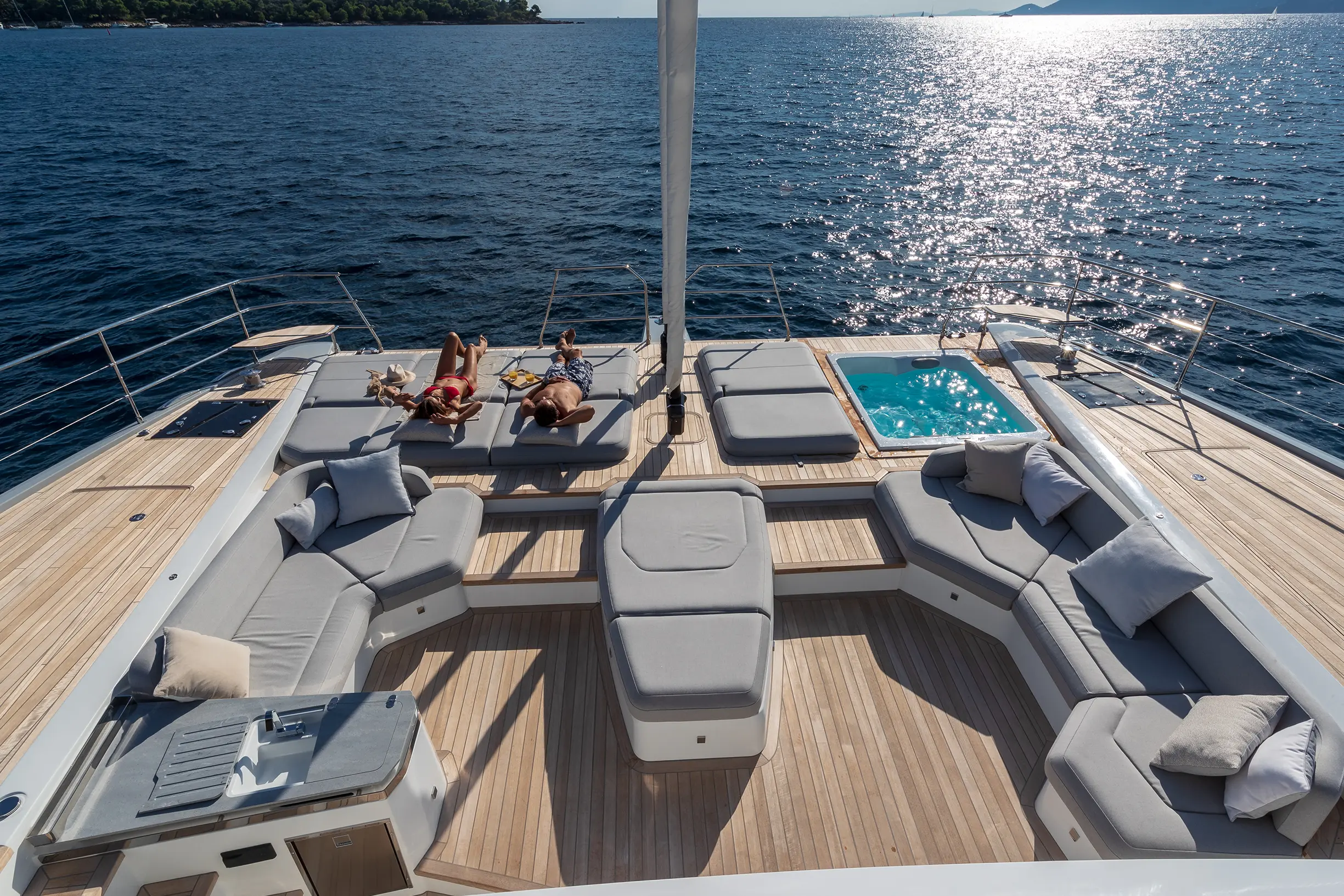
For families with kids under 12, the catamaran is almost always the right call. The reasons are physical: the wide flat deck stays level under sail, the swim platforms are huge and easy for small swimmers, the cabins are wider, and the cockpit is large enough to be a usable family living room for the week. Modern charter cats (Lagoon 46, Bali 4.6, Fountaine Pajot Tanna 47) sleep 8 in 4 cabins with private heads, fit families and another couple comfortably, and offer the storage that turns a stressed family week into a relaxed one. The full comparison is in the catamaran vs monohull guide.
The realistic family-charter cost in 2026
For two adults plus two children on a charter cat in mid-June 2026:
— 45-foot bareboat catamaran from Croatia or Greece: €13,000–18,000 boat + €1,800–2,500 expenses + €600–800 provisioning = €15,400–21,300 total. Per person, including kids: €3,850–5,330.
— Add a hostess: €1,300–1,500 + €200–300 hostess provisioning = total €17,000–23,000. The hostess upgrade is a strong fit for families — she handles the daily cooking, cabin turnover, and shore-side logistics that otherwise fall on the parents.
— Add a skipper if no one’s licensed: €1,750–2,000 = total €17,750–23,800.
— Fully crewed (skipper + hostess): €19,000–25,500. The premium tier where parents actually relax. The bareboat vs skippered guide covers the format choice in detail.
Destinations that work best with kids
Three things make a charter destination family-friendly: short distances (kids hate 6-hour sail days), sandy beaches (kids hate rocky cliff coasts), and safe anchorages (parents hate exposed mooring at 23:00).
The Greek Saronic Gulf — distances under 20 NM between marquee islands, sandy and pebble beaches, calm anchorages. Probably the easiest family charter ground in Greece. The Saronic guide goes deep.
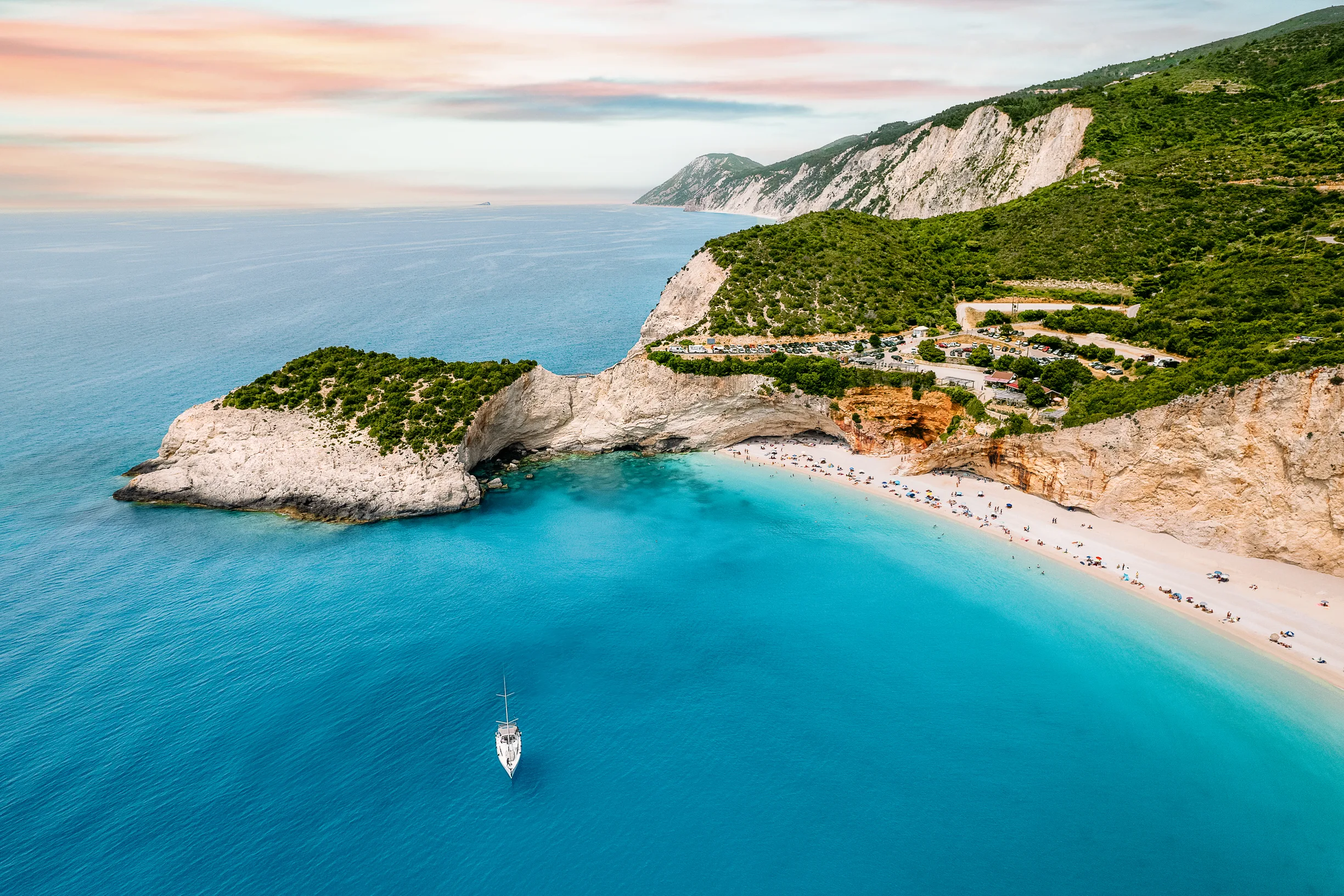
The Greek Ionian — Lefkas, Kefalonia, Ithaca, Meganisi. More sandy beaches than the Aegean, almost no meltemi, and Vasiliki’s wind-window for older kids who want to wind-surf. The Ionian deep-dive covers the area.
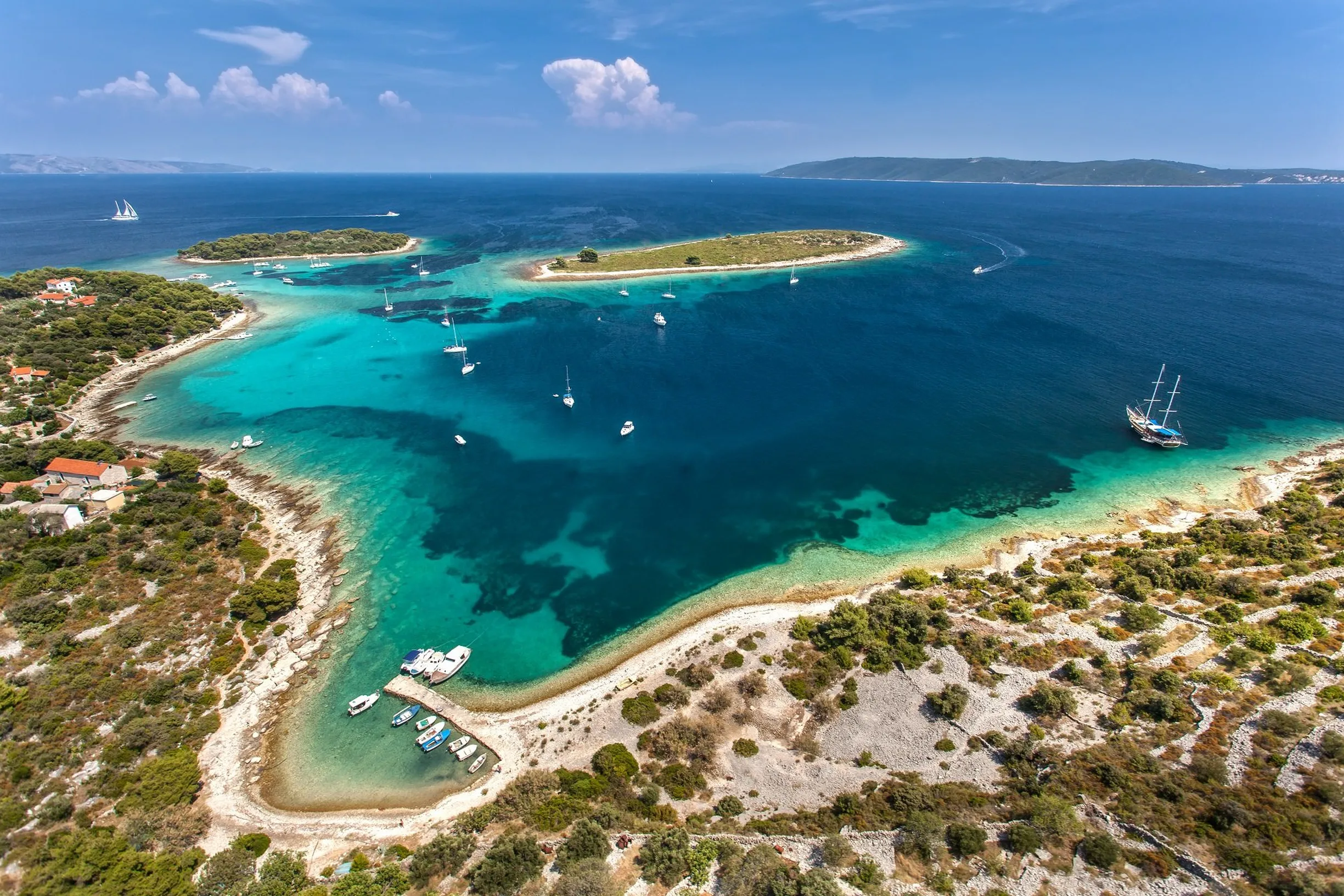
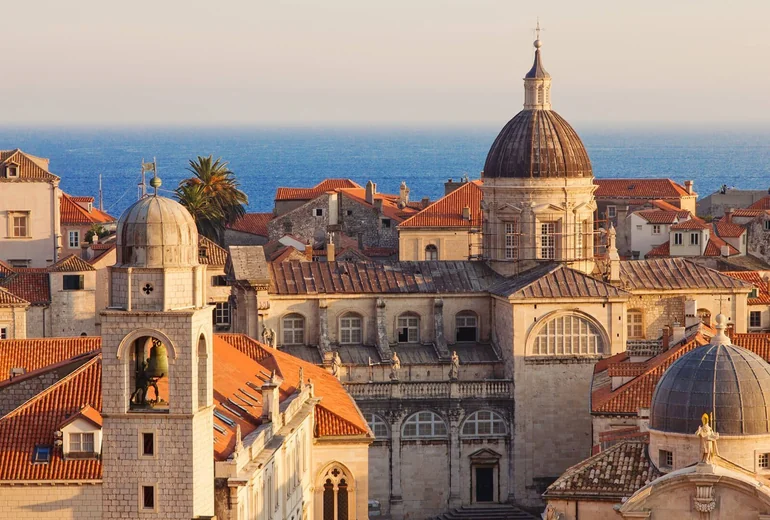
Croatia (Central Dalmatia) — short hops between islands, dense marina infrastructure, excellent provisioning, plenty of swim-stops. Hvar and Brač have sandy beaches alongside the limestone coastline. The Split itinerary is the route.
The Balearics (Mallorca south coast) — sandy calas, turquoise water, easy provisioning. Cabrera National Park is a unique kid-friendly destination if you can secure a permit buoy. The Balearics guide covers the regional choice.
Türkiye (Gökova or Göcek) — flat water, pine-clad bays, restaurant pontoons that take the cooking burden off parents, cheaper than other Mediterranean charter grounds. Excellent family fit. The Bodrum itinerary is the route.
Destinations to avoid with young kids
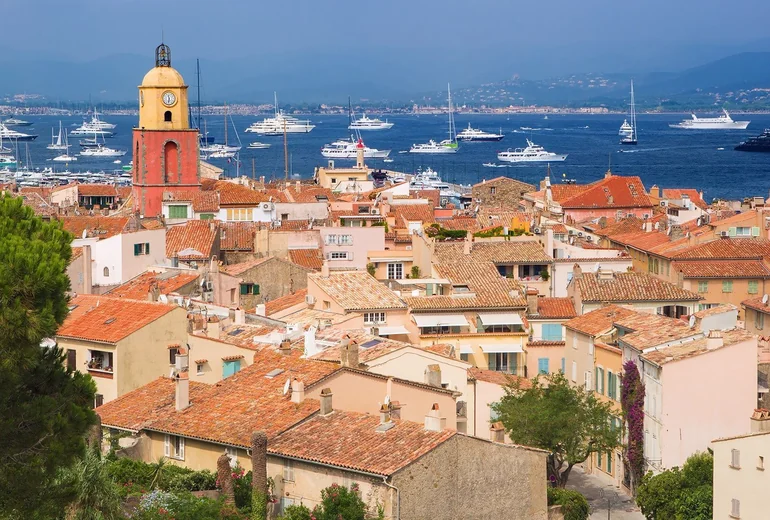
Some Mediterranean cruising grounds are objectively harder for families. The Cyclades in July-August — the meltemi gives 30-knot afternoons that are stressful for kids. The Amalfi Coast in peak season — restrictive mooring rules, day-tripper boat traffic, and uphill walks to almost every village. The French Riviera — premium pricing, marina-bound rhythm, less anchoring freedom. The Aeolian Islands — long crossings, active volcanism, less sandy-beach fit. None are impossible, but each requires more planning and more boat-handling skill than the family-friendly alternatives.
Safety considerations for kids on board
The safety basics: life jackets for kids under 12 at all times outside the cabin, including in the cockpit. Most charter boats include kid-sized life jackets but quality varies — bring your own properly-fitted jackets if your family includes water-cautious kids. Swim discipline — kids should swim only with an adult watching, never solo, never beyond the boat. Boat layout briefing — kids need to know where the head is, where the saloon hatches lock, where to grab in heavy weather. Sun protection — Mediterranean sun is intense; SPF 50+ at minimum, hats, UV-protection swim shirts for kids who don’t tolerate sunscreen.
The packing list — what families actually need
Charter operators typically include bedding, towels, snorkel sets (often adult-sized only), and basic galley equipment. Bring:
— Kid-sized snorkel sets (charter ones rarely fit kids under 12 properly).
— Properly-fitted life jackets for any child you plan to keep on board (charter sizing is generic).
— Reef shoes or aqua socks — Mediterranean rocky beaches are unforgiving on bare feet.
— Swim diapers if you have toddlers — most marina sea water doesn’t filter them properly.
— SPF 50+ sunscreen in family-size — marina shops mark up 200% of the price.
— Sea-sickness medication — Stugeron tablets for adults, kid-formula for under 12s. Even calm Mediterranean weeks have one rough leg.
— A first-aid kit with kid-friendly bandages, antiseptic wipes, paediatric paracetamol/ibuprofen.
— An iPad or tablet with offline content — for the inevitable rainy afternoon or long crossing.
— Books and small games — non-electronic activities that work on a moving boat.
The week structure that works for families
Family-charter weeks succeed when they have a flexible rhythm: shorter sailing days (3-4 hours, not 6-8); frequent swim stops (one mid-morning, one mid-afternoon at minimum); marina days in the middle of the week (kids love the access to ice cream, ATM cash, walking around the village); quiet anchorage nights for early bedtime and uninterrupted parent-time. Most charter operators offer “family-friendly” sample itineraries that work for first-time family crews.
Should you hire a hostess for a family charter?
If your charter budget can absorb it, yes. The hostess on a family charter handles three things parents would otherwise do: cooking 2–3 meals a day, daily cabin turnover, and shore-side restaurant bookings. Hostess rates are €1,300–1,500 per week in 2026. Crews who add a hostess universally describe it as the highest-leverage upgrade in family charter sailing. The bareboat vs skippered guide covers the formats in detail.
The realistic age cut-offs
Family charters work for almost any age, with rough guidelines:
— Under 2: possible but operationally heavy. Bring a marine baby carrier; the boat motion is fine for healthy babies.
— 3–6: the sweet spot for low-friction family charters. Kids are mobile, swim, sleep early, and don’t need entertainment plans. The catamaran is essential — heel and roll are too much for unsteady young legs.
— 7–12: peak family-charter age. Kids can swim independently with supervision, snorkel, paddleboard, help with simple boat tasks (deck-washing, halyard pulling). Family week works on monohulls or cats.
— Teens: the format starts to flex. Some teens love sailing and want to be involved; others find the boat boring. The fix: more shore-side stops, marina nights with WiFi, and a flexible itinerary. Teens who’ve sailed before tend to enjoy charter weeks more than first-timers.
Booking lead times and family-charter patterns
Family bookings consistently book earlier than couples-bookings. Peak family weeks (mid-July through mid-August) book 6–10 months ahead at most charter bases. The reason is the catamaran constraint — family-friendly cats are limited stock, and the late-booker gets the smaller monohull or pays the premium for last-minute cat upgrades. The smart pattern: book 8–10 months out for peak family weeks, hunt September deals if your school calendar permits.
The honest mistakes most family charterers make
The first is over-planning the route. A 7-day family week should have 5 sailing days, not 7, with 2 lay days at marquee anchorages. The second is under-budgeting the hostess. The hostess is the difference between a family holiday and a family chore-week. The third is booking the wrong destination. Cyclades in July with under-10 kids is a setup for sea-sickness and parental stress; Saronic or Ionian or Croatia is the right call. The fourth is packing too few water-protection items. Mediterranean sun is brutal; reef shoes, SPF 50+, and UV swim shirts make the difference between an enjoyable and an overheated week.
Frequently asked questions
What’s the right age to start charter sailing with kids?
Babies and toddlers can charter, but the easiest age is 3–8 — kids are mobile and curious, swim with supervision, and don’t need entertainment infrastructure. Catamarans are essential for under-6s. The cat vs monohull guide covers the boat type.
How do I keep kids entertained on charter for a week?
Plan 5 sailing days and 2 lay days. Marina mornings give kids village access and ice cream; afternoons are for swimming, snorkelling, paddleboarding. Rainy afternoons need offline-content tablets and books. The week’s rhythm matters more than any single activity.
Do I need to bring my own life jackets?
Charter boats include life jackets, but kid-fitting is generic. For families with strong-water-discipline kids, charter ones suffice. For families with under-6s or with kids who need a precise fit, bring your own.
What’s the best family-charter destination for first-time charter parents?
The Greek Saronic, Greek Ionian, or Croatian Central Dalmatia. All three combine short distances, sandy beaches, calm anchorages, and dense charter infrastructure. The Saronic, Ionian, and Split itinerary guides cover each.
Is a family charter really worth the cost in 2026?
Per-person cost on a hostess-included family charter runs €4,000–6,000 for a week — comparable to a premium villa rental but with the experience of moving between locations. Crews who’ve done both consistently rate the boat trip higher for family memories. The cost is real; the value is also real.
The right route pace for kids’ attention spans
Kids’ attention spans dictate route pace. Under-6s tolerate 2-3 hours of motion before they need a break; 7-12 year olds tolerate 4-5 hours; teens vary widely. The standard family-charter route should plan: morning departure (08:00-09:00 from anchorage), 2-hour sail to a swim stop, 1-2 hours of swimming and lunch, 2-3 more hours sailing to overnight anchorage by 16:00. Crews who try to push 6-hour straight legs find kids melting down by hour 4. The catamaran’s deck space helps — kids can move around, find shaded spots, change activities — but the fundamental physics still apply.
Handover-day logistics with kids
Saturday handover at most charter bases takes 60-90 minutes. With kids, the day becomes more complex — provisioning runs (90-120 minutes), boat-system briefings (kids generally bored), the first family meal on board. The smart pattern: arrive at the base by 14:00; check the kids into a marina cafe with snacks and tablets while the parents handle handover and provisioning; cast off by 17:00 for a short Day-1 leg to the first anchorage; aim for first dinner aboard by 20:00. Most family-charter days end with kids asleep by 21:30, leaving parents an hour or two for adult conversation.
Ideas for your next sailing vacation
More than 40 countries for boat rental & yacht charter with best prices