A Day in the Life on a Charter Yacht: Sunrise Coffee to Sundowner Anchorage
Updated May 2026.
A charter day has a rhythm that’s different from a hotel holiday or a road trip. The day is bookended by anchor-up in the morning and anchor-down in the evening, with sailing, swimming, and meals slotted between. The pace is slower than land-based travel because the boat sets the pace; the freedom is greater because you can change plans on a forecast or a recommendation. This piece walks through a realistic charter day, hour by hour, with the practical detail that makes it feel real.
06:30 — Sunrise coffee in the cockpit
The most reliable single moment of any charter day. Whoever wakes first puts the coffee on. The galley kettle takes 4 minutes to boil; the second person up usually walks to the foredeck to check the anchor, look at the sky, and breathe sea air. Sunrise comes at 06:00–06:30 in mid-summer Mediterranean, depending on latitude — the bay you anchored in last night looks completely different in the early light. This is the calmest hour of the day, before the wind picks up, before the day-tripper boats appear, before the first decision about breakfast.
07:30 — Breakfast on deck
Breakfast on a charter boat is fresh fruit, yogurt, bread (toasted on the gas hob if no toaster onboard), local jam, eggs done however the cook of the day wants them. Coffee continues. The crew gradually appears from cabins. Conversation is unhurried; the only schedule is whatever the day’s plan calls for, which is loose. If you’re moving to a new bay, departure is usually 09:00–10:00 — early enough to catch the morning light, late enough to let the wind start filling.
09:00–11:00 — Departure prep and morning sail
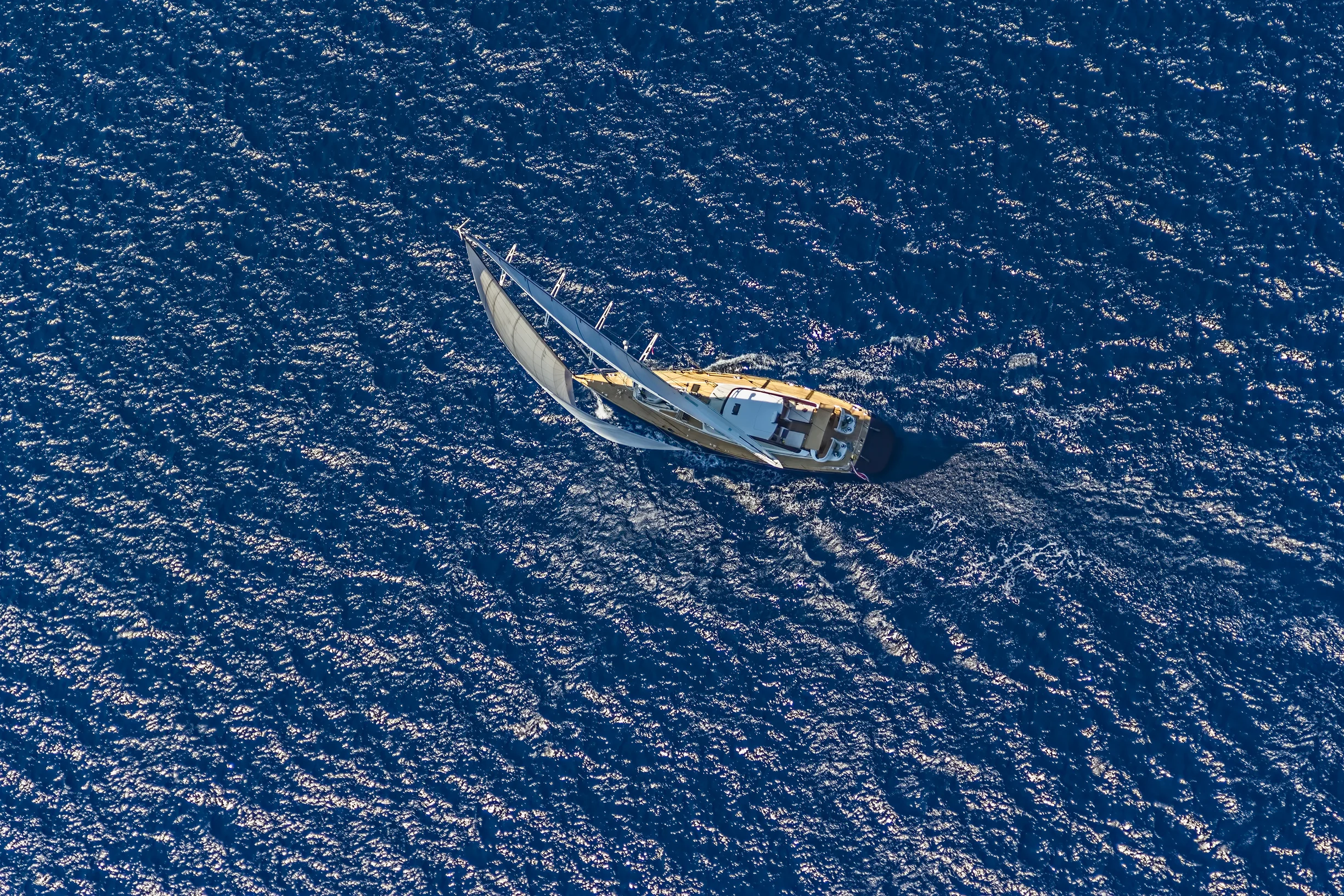
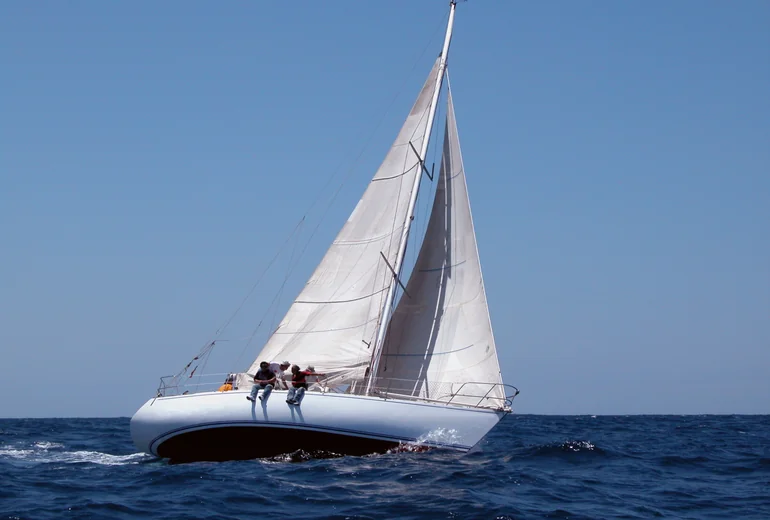
Anchor up around 09:00–09:30. The crew with the most experience runs the foredeck — checking the chain, watching the depth, communicating with the helm. Anchors lift quickly in calm Mediterranean conditions; takes 2–3 minutes if the chain is clean, longer if mud or weed clings. Once free, the boat motors out of the bay and heads toward open water. Sails go up at the first useable wind — 8 knots minimum for a working passage, 12+ for a proper sail. Most Mediterranean mornings start light and build through the morning; by 11:00 the maestral or thermal breeze typically reaches working strength.

11:00–13:00 — On passage
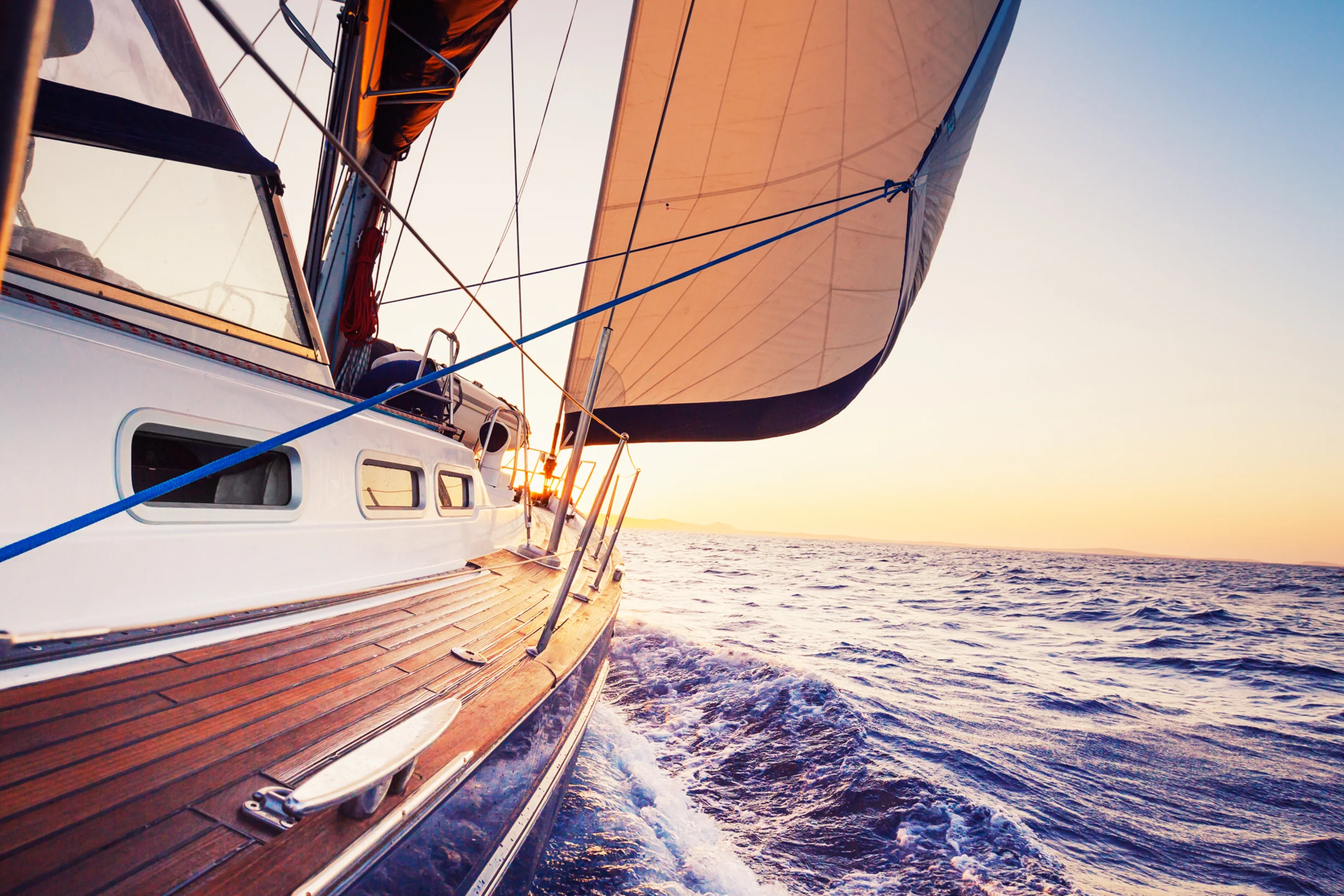
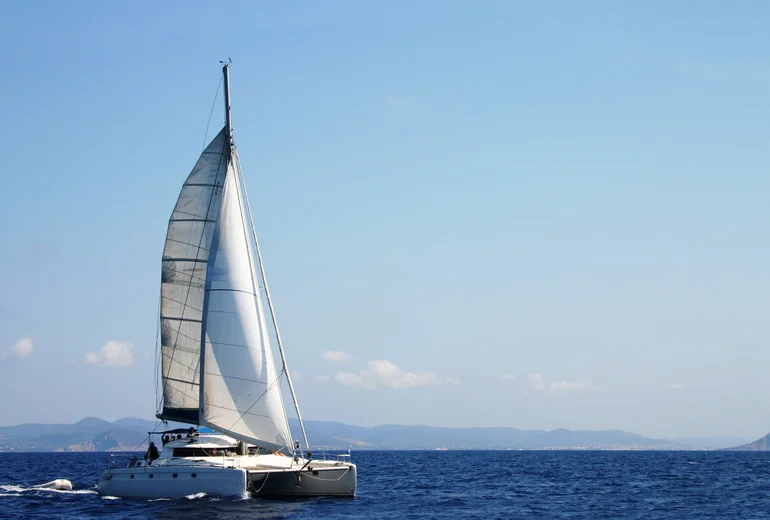
The middle of the morning is the active sailing window. The boat is heeled (if monohull) or running level (if catamaran), the helm rotation is up, and the crew is in proper sailing mode. Distances on a typical Mediterranean charter leg are 12–25 nautical miles, taking 2–4 hours. Lunch happens on passage if the weather allows — sandwiches, salads, fresh bread, easy food that doesn’t need a galley pause. If the wind goes light or the leg is short, the boat motors part of the way and arrives at the next anchorage by midday.
The single best part of the morning sail is when the destination first appears on the horizon — the small village or anchorage you’ve been heading to all morning, slowly resolving from a coastline into a place. The sense of arrival on a sailboat is fundamentally different from arriving by car or plane.
13:00–14:00 — Arrive, anchor, swim
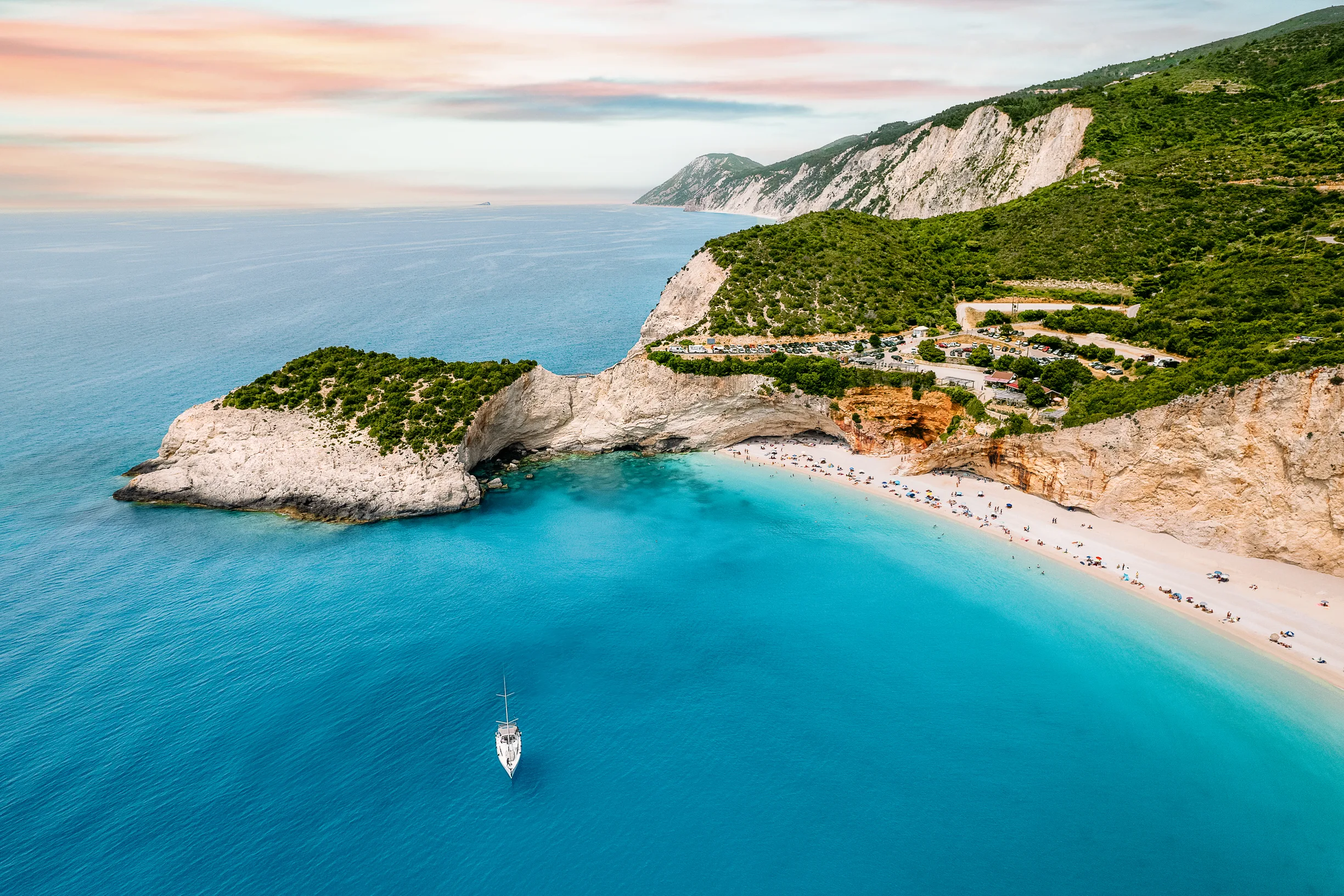
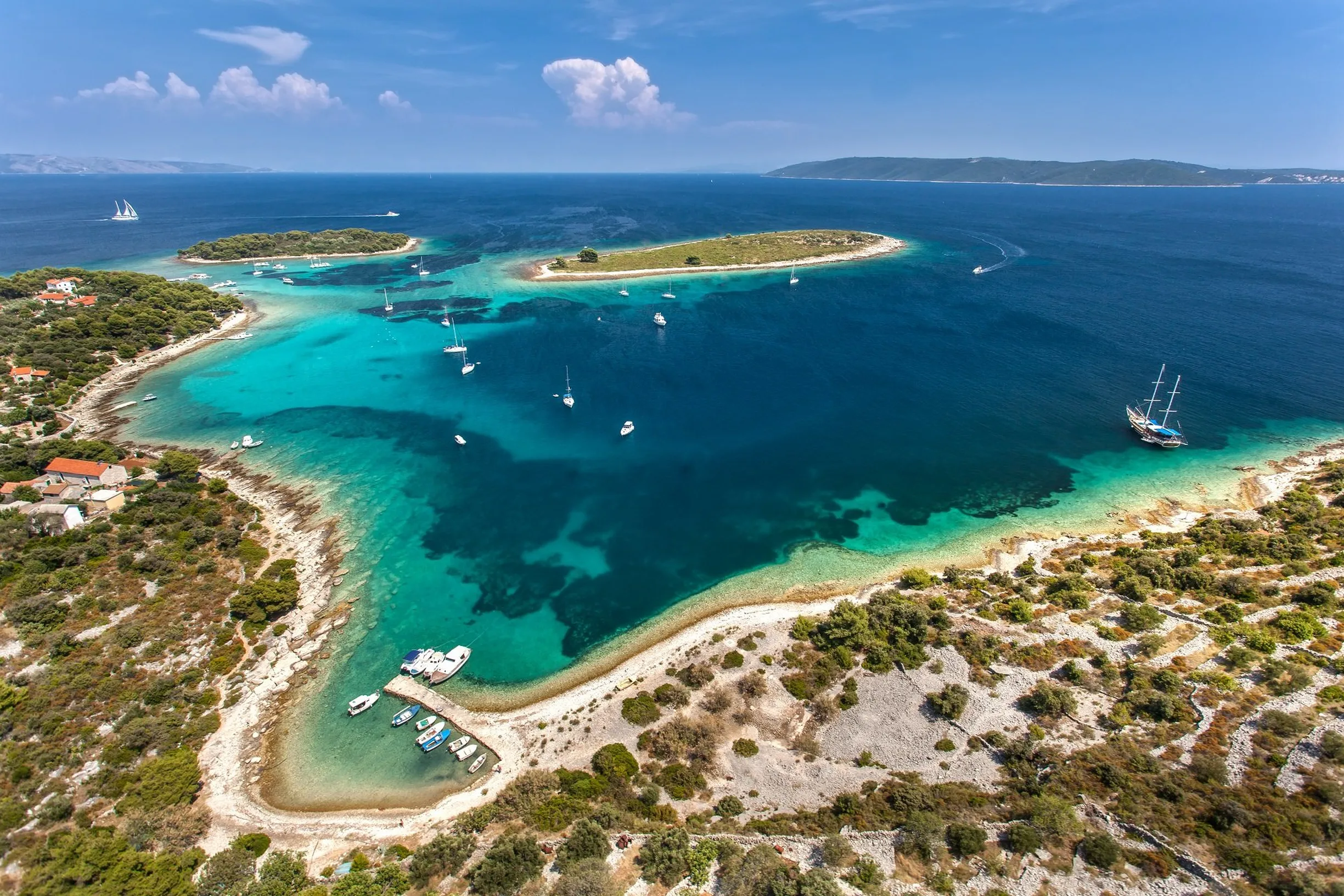
Anchor down around 13:00–14:00 at the next bay. Drop the hook in the right depth (8–12 metres typically), let out 4–5× scope of chain, reverse to set, watch the line tighten. Swim immediately — the first dive into the water on arrival is usually the best swim of the day. Most crews snorkel briefly to inspect the anchor’s set; if it’s holding cleanly, the rest of the afternoon is yours.
14:00–17:00 — Lay-day rhythm
Afternoon at anchor is when charter weeks earn their reputation. Options vary by crew and bay:
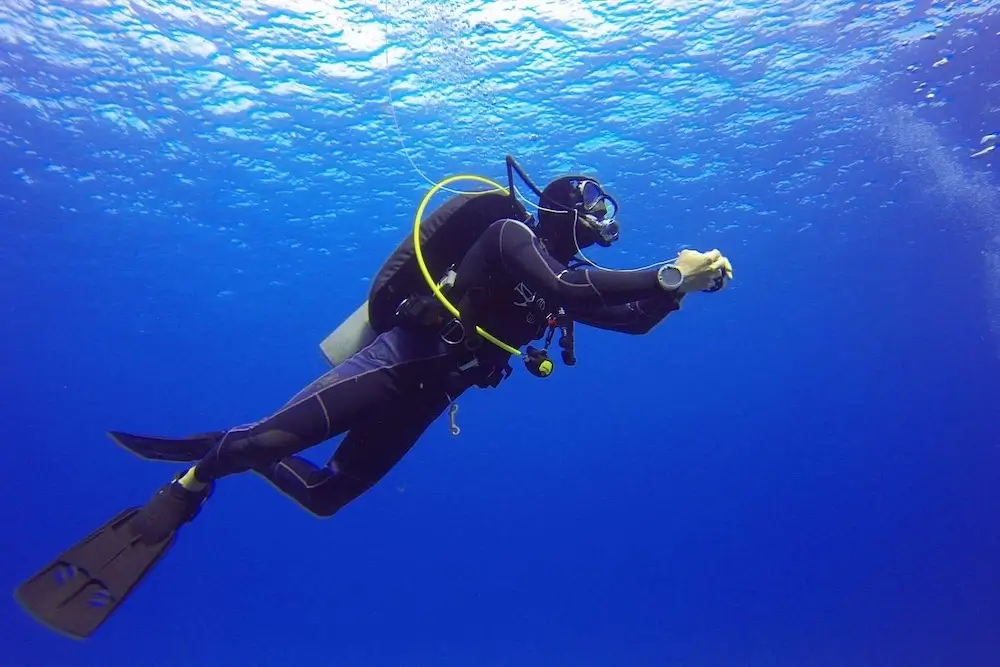
Swim and snorkel. Most charter cats and many monohulls carry snorkel sets for the crew. The clearest Mediterranean water (Cabrera, Antipaxos, parts of the Cyclades, La Maddalena) lets you see 15+ metres down. Fish, octopus, the occasional sea turtle.
Paddleboarding. Most modern charter boats include 1–2 paddleboards. The flat afternoon water is perfect for a 30-minute paddle around the bay or to a beach.
Tender to shore. Most bays have at least one shore-side village or beach reachable by tender. Walk the village, get an ice cream, return to the boat for the late-afternoon swim.
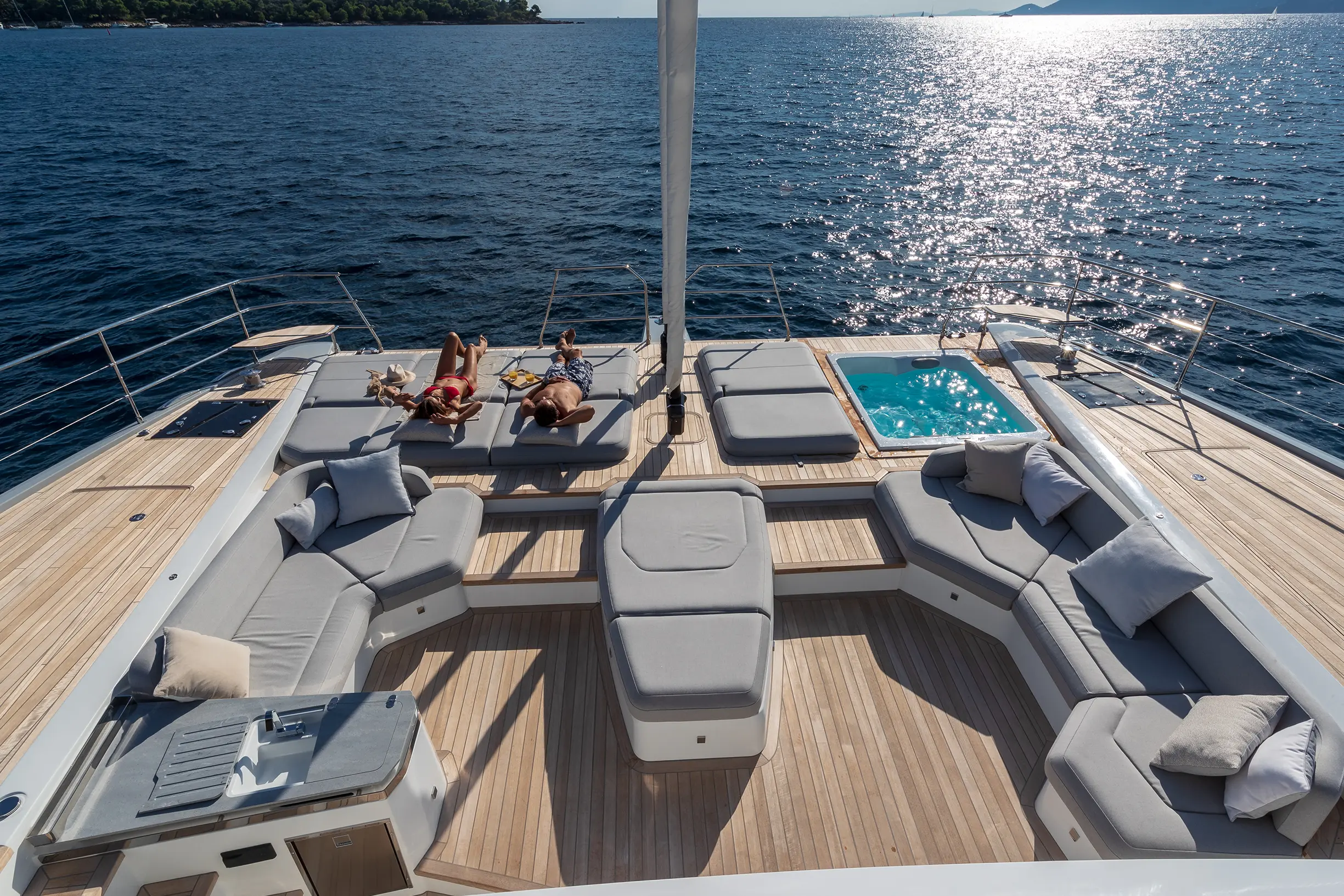
Read or sleep. The honest truth — many charter afternoons are spent reading on the foredeck, dozing in the saloon, or napping in the cabin with the hatches open. The boat’s gentle motion and the warm air make the best siesta of the year.
17:00–19:00 — Late afternoon
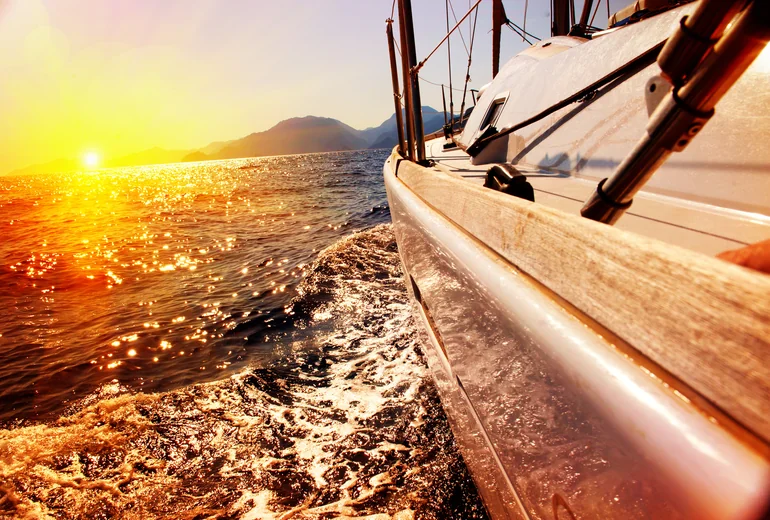
The transition between active afternoon and pre-dinner. The sun starts dropping but the air stays warm. Many crews do a final swim around 17:30–18:00 — the water is at peak temperature for the day, the light is golden, and the bay is at its quietest. Showers happen onboard (charter cats have proper showers, monohulls vary). The crew converges in the cockpit for sundowners — local wine, beer, often a small plate of something to nibble. Decisions are made about dinner: ashore at a konoba, or onboard.
19:00–22:00 — Dinner
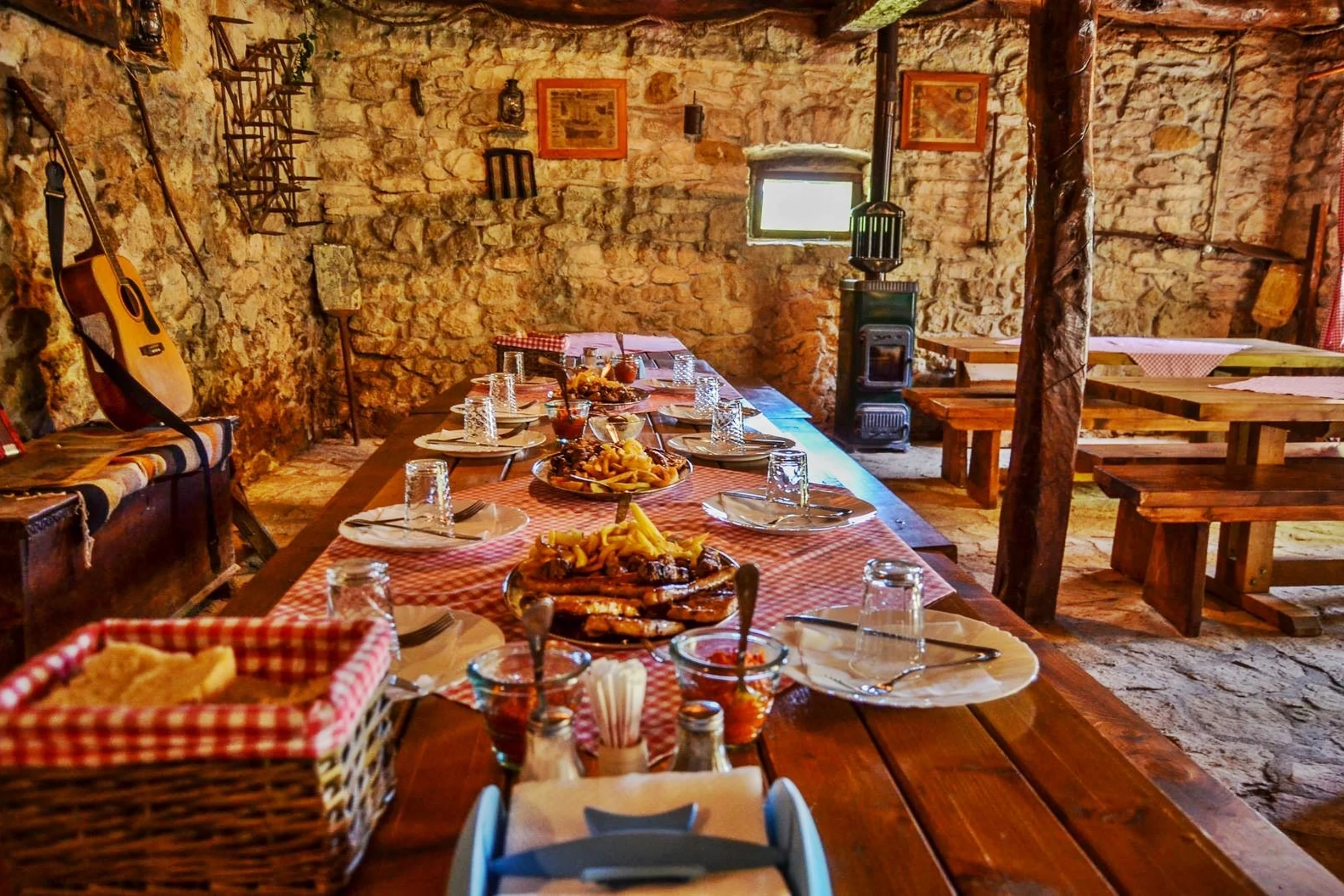
The dinner split is roughly 60% ashore, 40% onboard across a typical Mediterranean charter week. Ashore dinners are at konobas, tavernas, restaurant pontoons depending on the country — fresh fish, grilled vegetables, local wine, slow service, the rhythm of village evenings. Tender to shore around 19:30–20:00; dinner from 20:00; back to the boat by 22:30.
Onboard dinners are more varied. The cook of the day produces something — pasta with local seafood, grilled fish over rice, salad with regional cheese and bread. Wine flows. The cockpit table seats 6–8 comfortably. The conversation is unhurried because there’s nowhere else to go. If the bay is quiet, you can hear other boats’ conversations across the water; if the bay is busy, it has its own music.
22:00–23:30 — Evening watch and stars
After dinner, most crews stay on deck. The bay’s night sounds — water on the hull, the occasional voice from another boat, distant village music — replace the day’s noise. Bioluminescence appears in some Mediterranean bays (the south coast of Mallorca, parts of the Aeolian Islands, occasional Adriatic bays); a midnight swim in glowing water is a charter highlight if you’re lucky. Most crews stay up until 23:00–23:30, then turn in.
23:30 onwards — Sleep aboard
Sleeping on a charter boat takes a day or two of acclimatisation. The boat moves slightly at anchor — gentle, but constant. The cabin is cooler than land summer; most charter cabins have hatches that let in a steady night breeze. Some crew sleep on deck on hot nights — a sleeping bag on the foredeck, stars overhead, the boat’s slow swing on the chain. After two nights, the boat’s motion becomes invisible and the sleep becomes the best of the holiday.
The variations on this rhythm
The day described above is the standard rhythm at a calm anchorage. Variations:
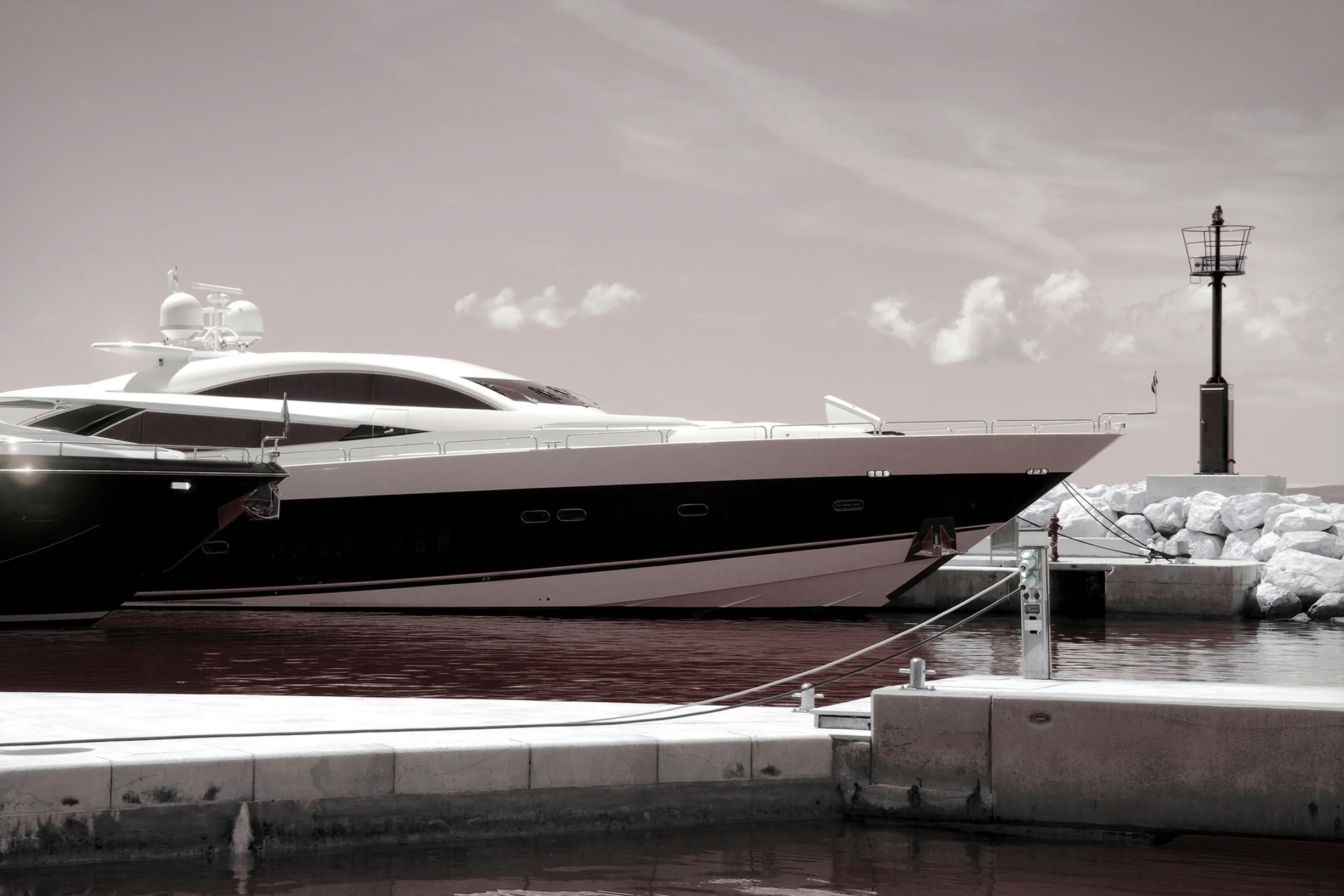
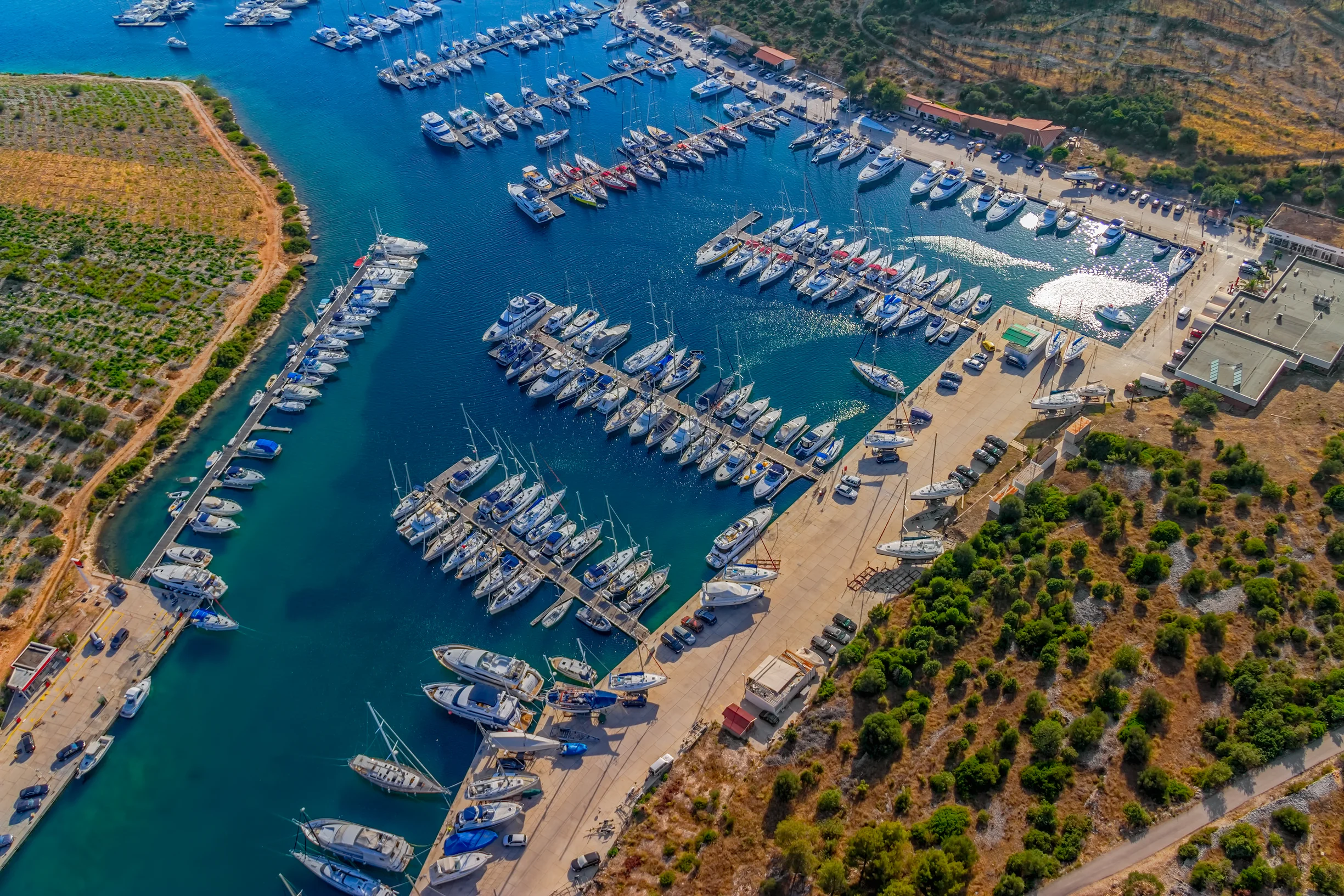
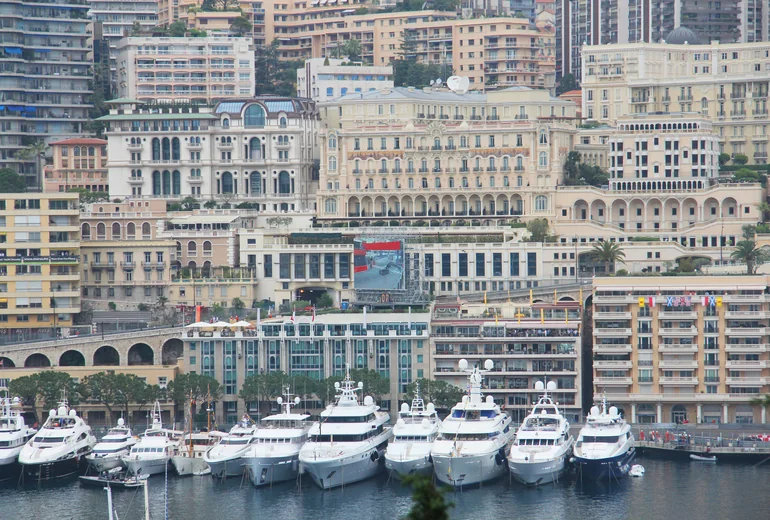
Marina days swap anchor-down for stern-to mooring at a marina. The advantage: walking village access, water and electricity at the dock, easier provisioning, ATM nearby. The trade-off: more boats around, harbour noise, slightly less privacy. Most weeks include 2–3 marina nights for the practical access; the rest are anchor or buoy.
Long-leg days compress the routine — earlier breakfast, longer morning sail, later arrival. Cyclades crossings or the Aeolian-Sicily run can take 6–8 hours under sail; the day’s rhythm shifts to “mostly on passage, late arrival, late dinner.”
Family days have a different middle. Kids set the swim cadence; the lay-day stretches longer and the morning sail is shorter. Bedtimes are earlier; the evening cockpit-talk is condensed. The family charter guide covers the family-specific rhythm.
Stormy days reshape the whole week. A serious bora forecast or a meltemi build-up means staying in the current bay or moving to a more sheltered one. Charter weeks include 0–2 stormy or partial-stormy days on average.
What’s NOT in this rhythm
Things that usually surprise first-time charterers:
— There’s not much “down time” in the modern sense. Most crews are doing something — sailing, swimming, cooking, walking ashore — for most of the daylight hours. The “doing nothing on the boat” mode is rarer than non-charterers expect.
— The night routine is short. Charter weeks are early-bed, early-up. Most crews sleep 22:30–07:00. The night-life seekers prefer Mykonos and Hvar specifically — see the Hvar sailing area guide and Cyclades itinerary.
— Mid-week becomes routine fast. By Day 3 or 4, the boat feels like home. Cabinets have your stuff in them, the cockpit feels familiar, the daily rhythm is automatic. This is when the charter starts to feel like a holiday in a way the first two days don’t.
— Saturday handover is a sharp transition. Going from the boat-rhythm to the airport-rhythm in 4 hours is jarring. Most crews talk about it being the hardest transition of the trip.
Frequently asked questions
Is the charter rhythm boring after a few days?
Most repeat charterers say the opposite — the rhythm gets better as the week progresses. By Day 4-5, the boat feels familiar, the schedule disappears, and the actual experience emerges. The trick is staying past Day 3, when first-time charterers sometimes feel restless.
How much swim time per day is realistic?
1-3 hours of total in-water time per day on a typical Mediterranean charter day. More on lay days, less on long-leg days. The water is warm enough (22-25 °C in mid-summer) for hour-plus immersion, but the cumulative sun exposure is the limiter.
Do I sleep well on a boat?
After night 2, yes — the gentle motion at anchor becomes invisible. The first night can feel different to land sleep; the cabin is darker than a hotel, the air smells of sea, the boat creaks gently. Most charter crews report sleeping deeper on charter than they do at home.
Should I cook every dinner aboard?
3-4 dinners aboard and 3-4 dinners ashore is the typical split. Cooking aboard saves money (€30 vs €150 for the same crew) and produces some of the best meals of the week. Eating ashore connects to the village rhythm and the local food culture. Most crews split the week. The provisioning guide covers the food side.
What’s the best part of a charter day?
Different for everyone. Most charterers cite the morning sunrise coffee or the late-afternoon swim. Some cite the dinner-on-deck rhythm. The honest answer is that there’s no single best moment — the day’s structure means many small good moments, not one big peak.
Ideas for your next sailing vacation
More than 40 countries for boat rental & yacht charter with best prices