7-Day Sailing Itinerary from Pula: Istria, Brijuni & the Quarnero Bay
Updated May 2026.
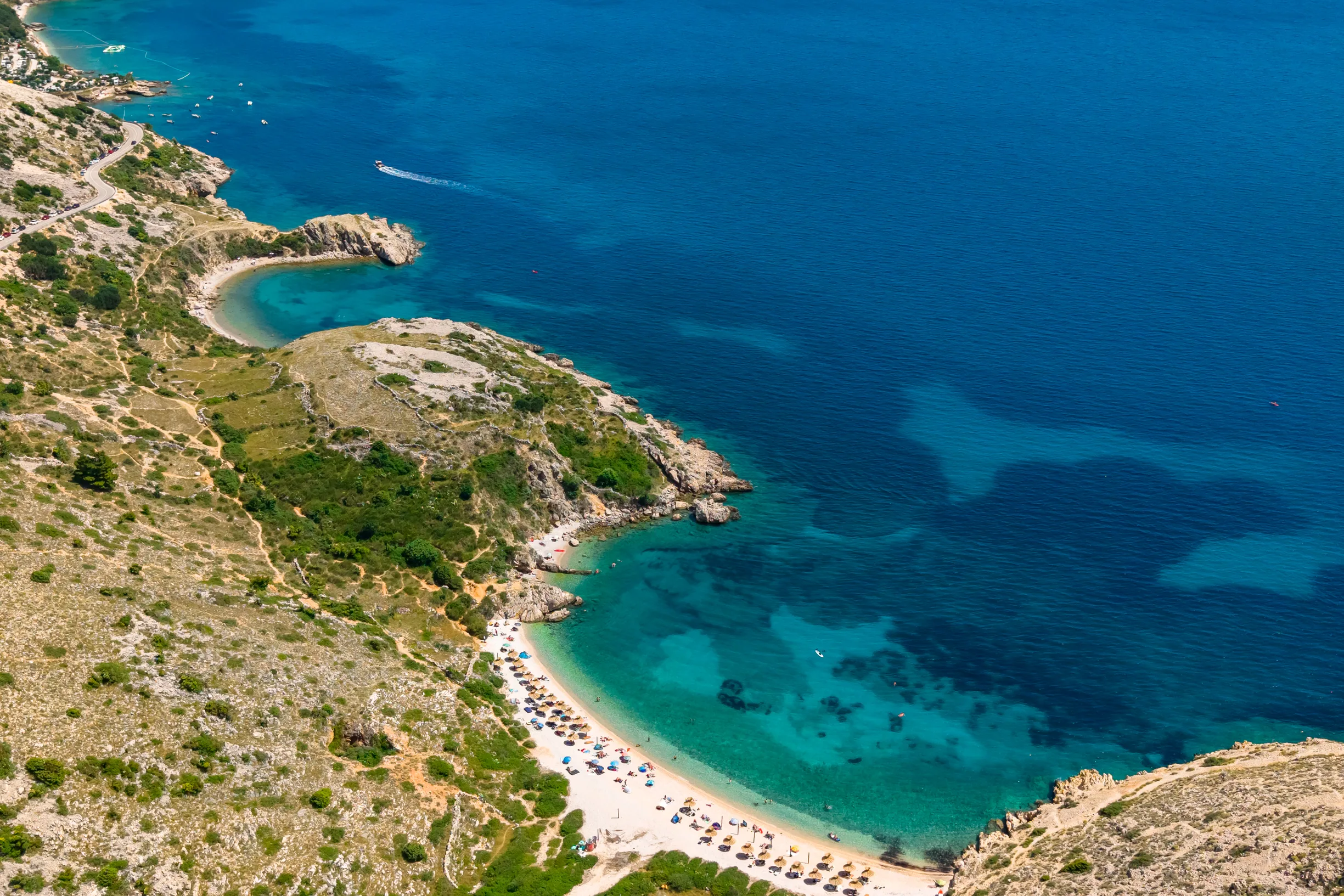
Pula is the southernmost charter base on the Croatian Istrian coast and the entry point to a different Croatia from the one that dominates the postcards. Where Central Dalmatia is busy, polished, and Mediterranean-Cycladic, Istria is quieter, cooler, more architectural — Roman amphitheatre in Pula, Venetian campaniles in Rovinj, the Brijuni Islands’ national park playing the role Tito’s holiday villa once played. Distances between stops are slightly longer than Dalmatia and the marina infrastructure is sparser, but the cruising ground rewards the trade-off.
Day 1 — Pula to Brijuni National Park (8 NM)
Pickup at ACI Pula or Marina Veruda. Provision at Konzum or Plodine in Pula. Cast off and run 8 NM north to the Brijuni National Park — 14 small islands designated as a national park since 1983, formerly Tito’s official summer residence. Anchoring inside the park is restricted; mooring is on permit buoys booked through the park website. The walking trails on the main island (Veliki Brijun) reveal Tito’s villa, a small zoo, and Roman ruins. A short, easy Day-1 with a meaningful cultural stop.
Day 2 — Brijuni to Rovinj (16 NM)
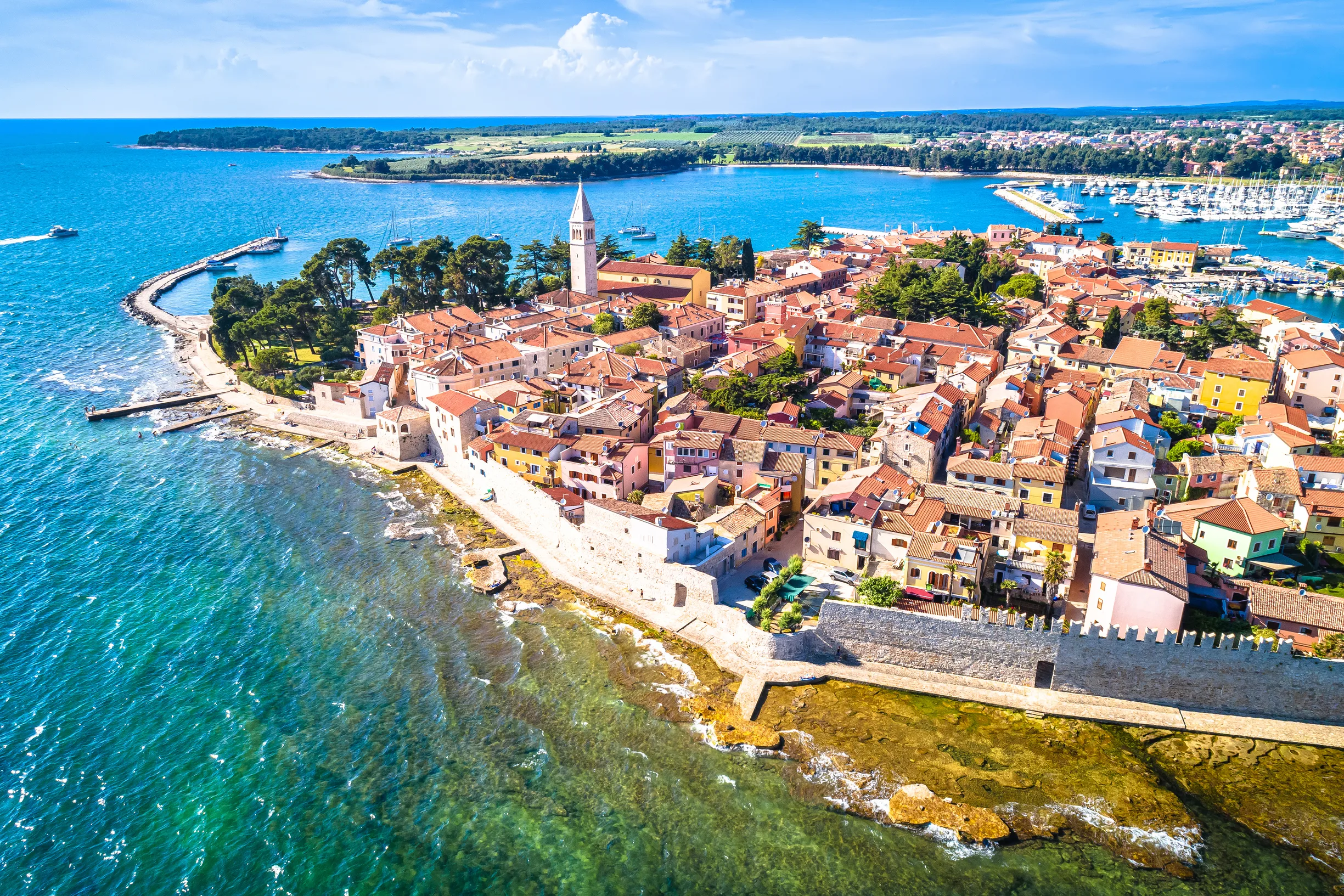
Northwest along the Istrian coast to Rovinj, the prettiest single town in Istria — a Venetian-Croatian harbour with a hilltop campanile, narrow stone streets, and a working fishing fleet. Marina ACI Rovinj is the standard berth; the town quay handles smaller charter boats. Konoba Veli Jože is the dinner reservation. Rovinj is to Istria what Korčula is to Dalmatia — the marquee architectural stop, walkable in 90 minutes, and worth a full afternoon.
Day 3 — Rovinj to Cres town (24 NM)
The first crossing, eastbound across the Quarnero strait to the island of Cres. Distance is real but the strait is sheltered enough in normal summer weather to be comfortable. Cres town is a small Venetian-Greek-style harbour with a deep, fully-sheltered bay — anchor in 8–12 metres or take a buoy. The town is quiet, the konobe (Bonaca, Riva) reliable, and the inland walks (the Tramuntana forest, the wild sheep tracks) interesting if you have a free morning.
Day 4 — Cres to Mali Lošinj (15 NM)
South along the eastern side of Cres island, through the narrow Osor channel (drawbridge opens twice daily) to Mali Lošinj. The channel cut between Cres and Lošinj is a working canal — one of the few drawbridges in Croatian waters. Mali Lošinj has the second-largest marina in Istria (Marina Mali Lošinj), excellent provisioning, and the strongest summer-evening atmosphere on the Istrian-Quarnero coast. The waterfront Restaurant Bora is the dinner reservation worth a phone call.
Day 5 — Mali Lošinj to Susak or Unije (10 NM)
Short hop to one of the smaller, quieter islands west of Lošinj. Susak is the unique one — a sandy island (rare in Croatia, where everything else is limestone), with traditional folk costume still worn in summer. Unije is similar but smaller. Anchor for the night, walk the village, swim off the boat. This is the Istrian week’s quietest day.
Day 6 — Susak/Unije to Rabac or Rovinj (28 NM)
Return crossing. Two options. The shorter, easier option is Rabac on the Istrian east coast — small fishing harbour, sheltered, provisioning available. The longer option is Rovinj for a second night and a bigger town. Most weeks pick Rovinj on the way back to Pula; the second visit reveals corners missed on Day 2.
Day 7 — Rovinj/Rabac to Pula (15–18 NM)
Direct return to Pula. Aim to arrive at ACI Pula or Marina Veruda by 13:00 for handover. Fuel up at the marina fuel dock before final berthing. Pula’s Roman amphitheatre is worth a 90-minute walk if you have time after handover and before airport transfer.
Total distances and difficulty
Approximately 120 NM across the week. The Quarnero strait crossings (Day 3 and Day 6) are the longest single legs. Wind in the northern Adriatic is more variable than Central Dalmatia — bora-style northeasterlies are uncommon in summer but can push 30 knots in fronts; maestral-style afternoon thermals are reliable but lighter. Recommended for crews comfortable with one open-water-style leg in the week. The route is more committed than Split or Trogir but less so than the Dubrovnik-Lastovo loop.
Why Istria sails differently from Dalmatia
Three things distinguish an Istrian week from a Dalmatian week. Cooler water: the northern Adriatic averages 2–3 °C below Central Dalmatia in mid-summer; the swim is shorter and brisker. Architectural texture: Venetian-Italian influence is stronger here than further south, which gives the towns a different aesthetic. Less density: charter boats per square kilometre run 30–50% below Central Dalmatia, marinas are smaller, anchorages emptier. The trade-off is fewer marquee stops — you won’t get the Hvar, Korčula, Mljet headline triple — but the week feels less like a tour and more like an exploration.
Provisioning, fuel and Istria-specific logistics
Provisioning is good in Pula, Rovinj, and Mali Lošinj — Konzum, Plodine, Studenac all within 5–10 minutes of the marinas. Cres has a small Konzum; Susak and Unije are village-shop only, so provision before reaching the small islands. Diesel is at Pula, Rovinj, Cres, Mali Lošinj. Marina overnights are €40–80 across the route — slightly cheaper than Central Dalmatia. Tommy and Lidl are absent in this region; smaller chains dominate. Cash is more useful in the smaller villages than in Pula/Rovinj.
Booking lead times and Istria-specific timing
Istrian charter bookings have shorter lead times than Dalmatian equivalents — peak weeks book 3–5 months ahead, shoulder weeks 1–3 months. The fleet is also smaller (Marina Veruda Pula, Marina Frapa, Marina Mali Lošinj) so boat choice narrows late. The smartest pattern: book peak weeks 4–5 months out, hunt shoulder-week last-minute deals if your dates flex. Most Italian and Slovenian markets feed Istria, so August carries an Italian-vacation crowd similar to the Dalmatian August. May, June, and September are the best windows.
Frequently asked questions
Is Istria a viable first-time Croatian charter destination?
Yes, but it’s a quieter and slightly more committed week than Central Dalmatia. If your group has at least one experienced sailor and you want fewer crowds, Istria is the smart pick. If you want maximum marquee anchorages and easiest sailing, see the Split itinerary.
How does Istria compare with the Italian Riviera?
Istria is calmer, cheaper, and architecturally different — the Italian Riviera is more polished and more expensive. Both share the northern-Adriatic-style aesthetic. See the Italy guide for the comparison.
Can I add the Krk-Rab archipelago to a Pula week?
Yes, but it adds 30+ NM to the route and pushes Day 4 hard. Most operators recommend a 10-day or 14-day charter if you want to stitch Istria + Quarnero + Krk fully.
What’s the season for Istrian sailing?
May through October. June, July, August, September are the practical sailing months. May and October work for sail-first crews who don’t mind cooler water.
Are there fewer charter boats in Istria than in Split?
Yes — Istria’s total fleet is roughly 15–20% of Split’s. Marinas are smaller, the choice of boat models is narrower, and last-minute availability is unpredictable. Plan ahead.
The Brijuni booking system, in detail
Brijuni National Park has the most-restrictive mooring system on the Croatian Adriatic. Buoy mooring permits go on sale 30 days before each date through the park website at np-brijuni.hr. Roughly 25 buoys are available for charter yachts; peak-summer slots fill within hours of release. Walking permits (for the main island) are separate from boat-mooring permits — both must be booked. The Brijuni patrol enforces strictly. Fines for unauthorised mooring run €200-500 per occurrence.
Istrian gastronomy as a charter feature
Istria has Croatia’s strongest food culture and a Michelin-starred restaurant on the Croatian inland coast. Charter weeks from Pula often build in inland food detours — to Konoba Morgan in Brtonigla (truffle specialities), Damir & Ornela in Novigrad (seafood), or Konoba Buščina near Umag (slow-food traditional). These are inland villages reachable by 30-45 minute taxi from charter ports. Worth a planned dinner or two on a Pula week, particularly outside peak season when reservations are easier.
The Istrian shoulder-season window
Late September and early October are the smartest Istrian charter weeks. Water at 22-23 °C, low charter pressure (Italian and Slovenian markets are back to school), maestral winds at their most predictable. The autumn light over the Istrian coast — softer, longer-shadowed than mid-summer — makes for the best photography of the season. Most marquee restaurants stay open through mid-October before scaling back. Charter rates drop 25-35% from August. Repeat Istrian charterers consistently pick the September week over peak-summer.
Brijuni’s cultural and natural draw
The Brijuni Islands hold a mix of historical and natural attractions unique on the Adriatic. The main island has Roman and Byzantine ruins, an 1,800-year-old olive tree, Tito’s preserved villa with his summer-residence guest book showing visits from world leaders of the 1950s-1970s, a small zoo with animals gifted by African heads of state during Tito’s non-aligned diplomacy. Most Brijuni visits are guided walks — self-guided access is limited. The cultural day on Brijuni is one of the few non-sailing highlights of an Istrian charter week.
Explore boats
Boats you can charter in the places this article covers.
Sail it yourself — suggested itineraries
View all Split itineraries →
Ideas for your next sailing vacation
Boat rental & yacht charter around the world at the best prices