7-Day Sailing Itinerary from Split, Croatia: A Realistic Week in Central Dalmatia
7-Day Sailing Itinerary from Split, Croatia: A Realistic Week in Central Dalmatia
Updated May 2026.
Split is the busiest charter base in the Adriatic — and for good reason. Inside a 30-mile radius you have Brač, Hvar, Vis, Šolta, the Pakleni archipelago, and the small islands and bays that string between them. Distances are short, the islands are different from each other, and the support infrastructure (marinas, fuel, provisioning, ATMs) is everywhere you need it. This is a working week, not a poster — the kind of route a returning charterer would plan, not the version that pretends every day is glassy.
Day 1 — Split to Maslinica, Šolta (12 NM)
Pick up the boat at ACI Split or Marina Kaštela, provision at Tommy or Plodine on the way out of town, and clear the harbour by 16:00. The first leg is intentionally short — Maslinica on the western tip of Šolta. The bay is well-protected from prevailing summer winds, the small village has three good konobe, and you’ll arrive in time for a swim before sunset. Mooring buoys cost €30–60 in peak season; you can also anchor in 6–9 metres if you arrive before 19:00.
Day 2 — Maslinica to Komiža, Vis (28 NM)
The longest leg of the week, but mostly downwind on the typical west-northwesterly. Aim to leave Maslinica by 09:00. Stop midway for a swim at the lee side of Biševo — the famous Blue Cave is on Biševo’s south side, but unless you’re chartering the small RIB at sunrise, you won’t get inside without queueing. Continue to Komiža for an early afternoon arrival. Komiža harbour fills early in July and August; if you’re past 14:00, head 4 NM to the bay of Stoncica on the north side of Vis instead.
Day 3 — Komiža to Vis Town (10 NM)
A relaxed morning. Round Vis from west to east — the south coast has the best swim stops at Stiniva (a 50-metre-wide gap into a tall-cliffed bay) and Srebrna. Plan a midday lunch stop at one of them, then continue to Vis Town for the night. The town’s harbour wall is the working option; ACI Vis (small marina) sometimes has space.
Day 4 — Vis to Hvar Town via the Pakleni Islands (22 NM)
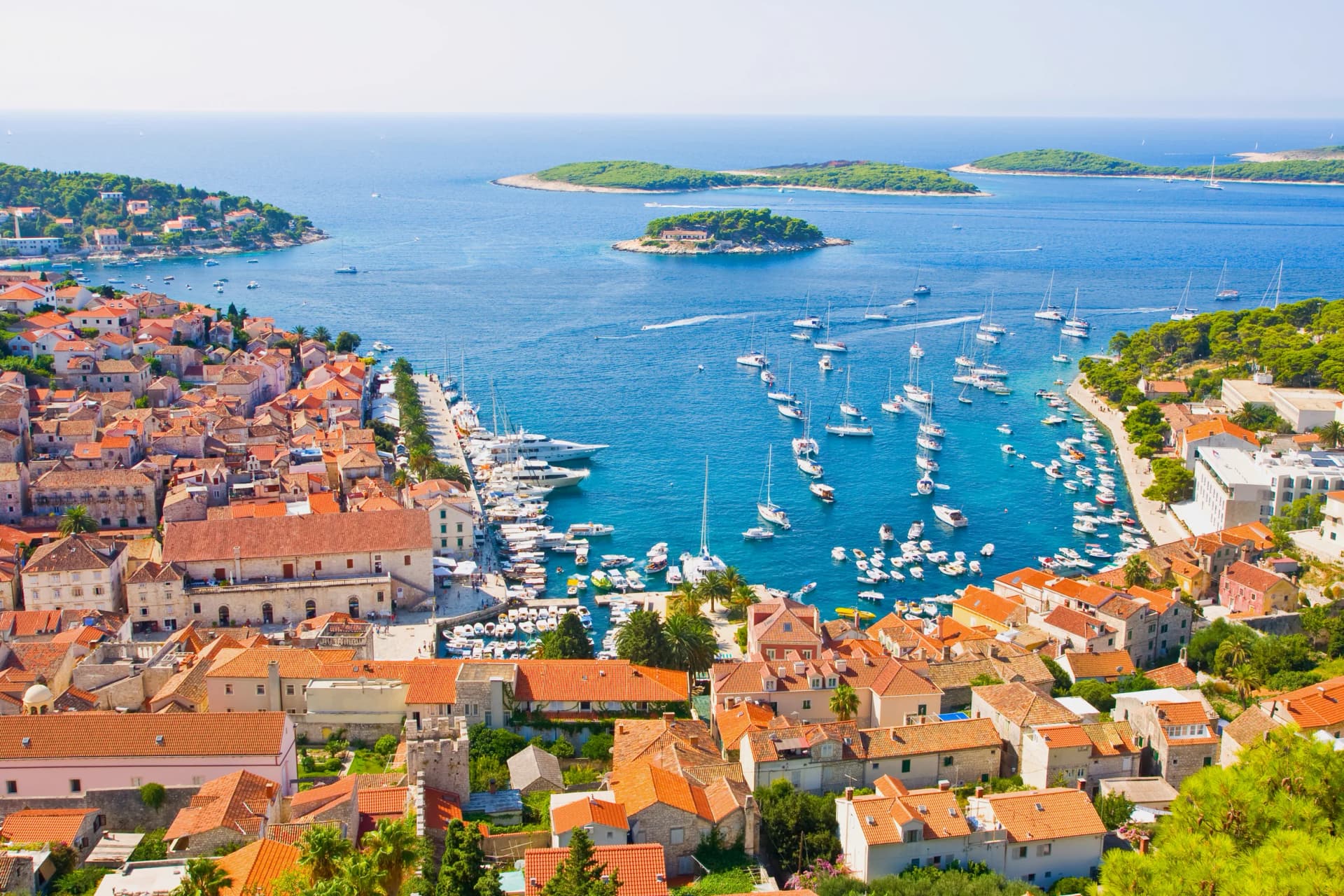
The classic Croatian sailing day. Leave Vis at 09:00, sail north toward Sveti Klement (the largest of the Pakleni islands), pick a quiet bay for a swim — Vinogradišće or Tarsce — and have lunch on the boat. Then either anchor at Palmižana for the night (the smart option in peak season) or moor stern-to in Hvar Town’s town harbour. Hvar Town in season is at capacity by 17:00 and absolutely not the place to arrive late. We cover the Hvar specifics in the Hvar sailing area guide.
Day 5 — Hvar to Stari Grad, Hvar (15 NM)
Loop around to the north side of Hvar island — the longer way, but the sailing is better. Stari Grad bay is the deepest, most sheltered anchorage in central Dalmatia, and the town itself is calmer than Hvar Town. The ACI marina sits at the head of the bay; anchoring on the south side is permitted in 8–12 metres with good holding. Stari Grad has the best konobe on the island — Apolon, Kod Damira, Antika.
Day 6 — Stari Grad to Bol, Brač (12 NM)
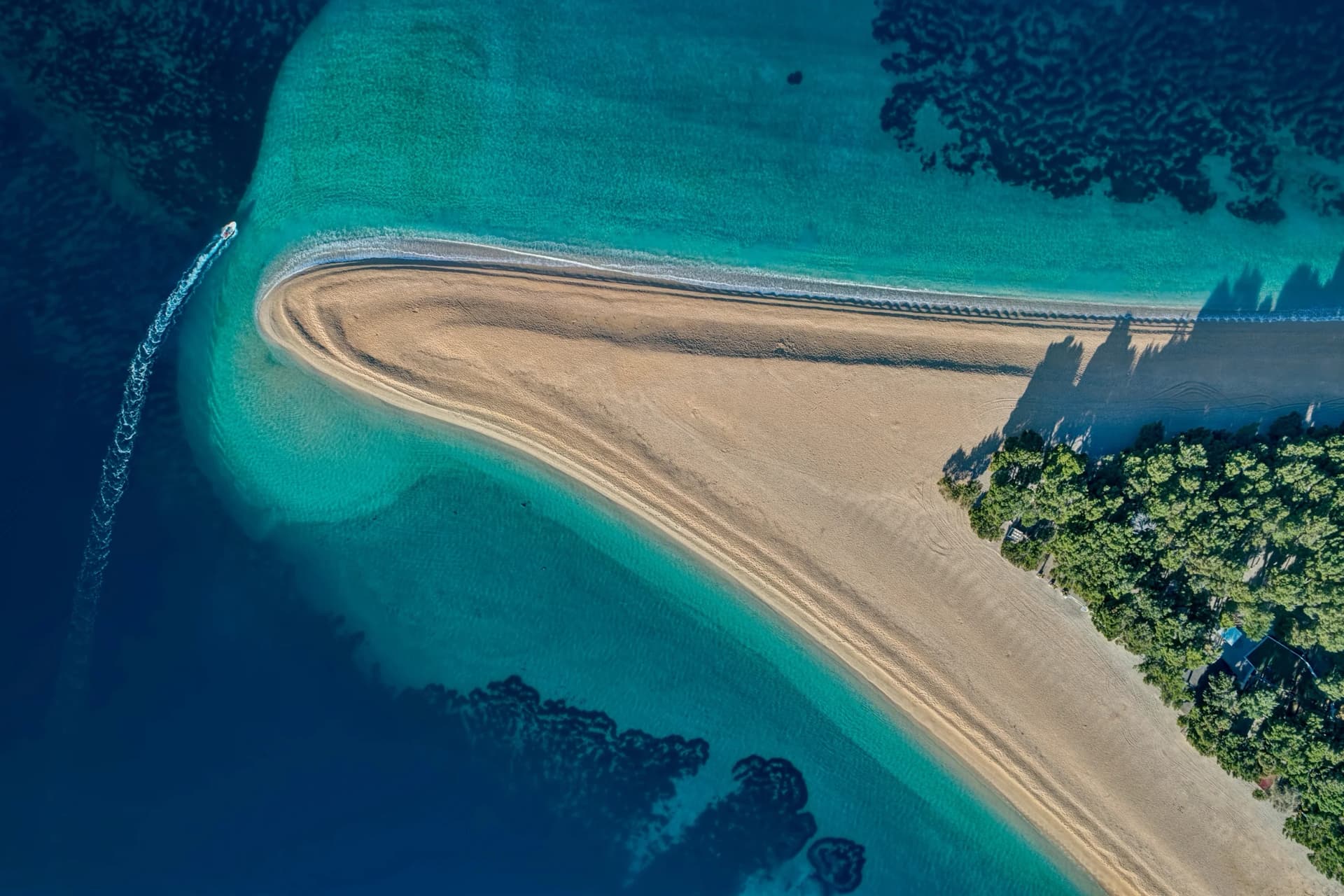
Short crossing to the south coast of Brač and the famous Zlatni Rat beach. Bol harbour is small and tight in season; the anchorage off Zlatni Rat works in calm weather but is exposed to the southerly. Walk into Bol town for dinner, then sleep in the marina or at anchor depending on conditions.
Day 7 — Bol to Split (15 NM)
Direct return up the Brač channel. Drop fuel at Marina Kaštela on the way in (most charters require return with a full tank), reach the base by 14:00 for handover. The boat needs to be cleaned for the next charter, so arriving with two hours’ margin is sensible.
Total distances and timing
Roughly 105 nautical miles of sailing across the week, an average of 15 NM per day, with one longer day (Maslinica to Komiža). Realistic in any conditions short of a serious bora. If the bora forecasts above 25 knots in the Vis channel, swap the Vis leg for an extra day on the Pakleni and Hvar.
Provisioning, fuel and money
Provision in Split before pickup — Tommy hypermarket near the airport is the standard. Fuel is at Marina Kaštela, ACI Split, and the Komiža and Vis fuel docks. ATMs are on Hvar Town, Stari Grad, Vis Town, Bol. Konoba dinners run €30–45 per person; expect lunch on the boat most days.
Frequently asked questions
Is this itinerary realistic for a beginner skipper?
Yes, with one caveat — the Vis leg requires open-water sailing and 25-knot afternoon winds are common. If your group has under 50 hours of sailing experience, swap Vis for two days on Hvar and the Pakleni.
Can I do this route on a catamaran?
Yes, all the marinas and anchorages on the route accept catamarans. Premium-marina nights (ACI Split, ACI Hvar) cost roughly 50% more for a catamaran than a monohull.
What about a one-way Split to Dubrovnik route?
Possible but requires a one-way upcharge from the operator. The week becomes more linear: Split → Vis → Lastovo → Mljet → Korčula → Dubrovnik. We cover the southern half in the Dubrovnik itinerary.
Should I pre-book marina nights?
Yes for ACI Hvar and ACI Vis in July and August. Use the ACI online booking system. Other nights can be played by ear.
What’s the single best stop on this route?
Stiniva on Vis is the single most photogenic anchorage of the week. Pakleni and Hvar Town are the most fun. Stari Grad is the calmest. Pick your priority before you plan.
The single best dinner reservations on this route
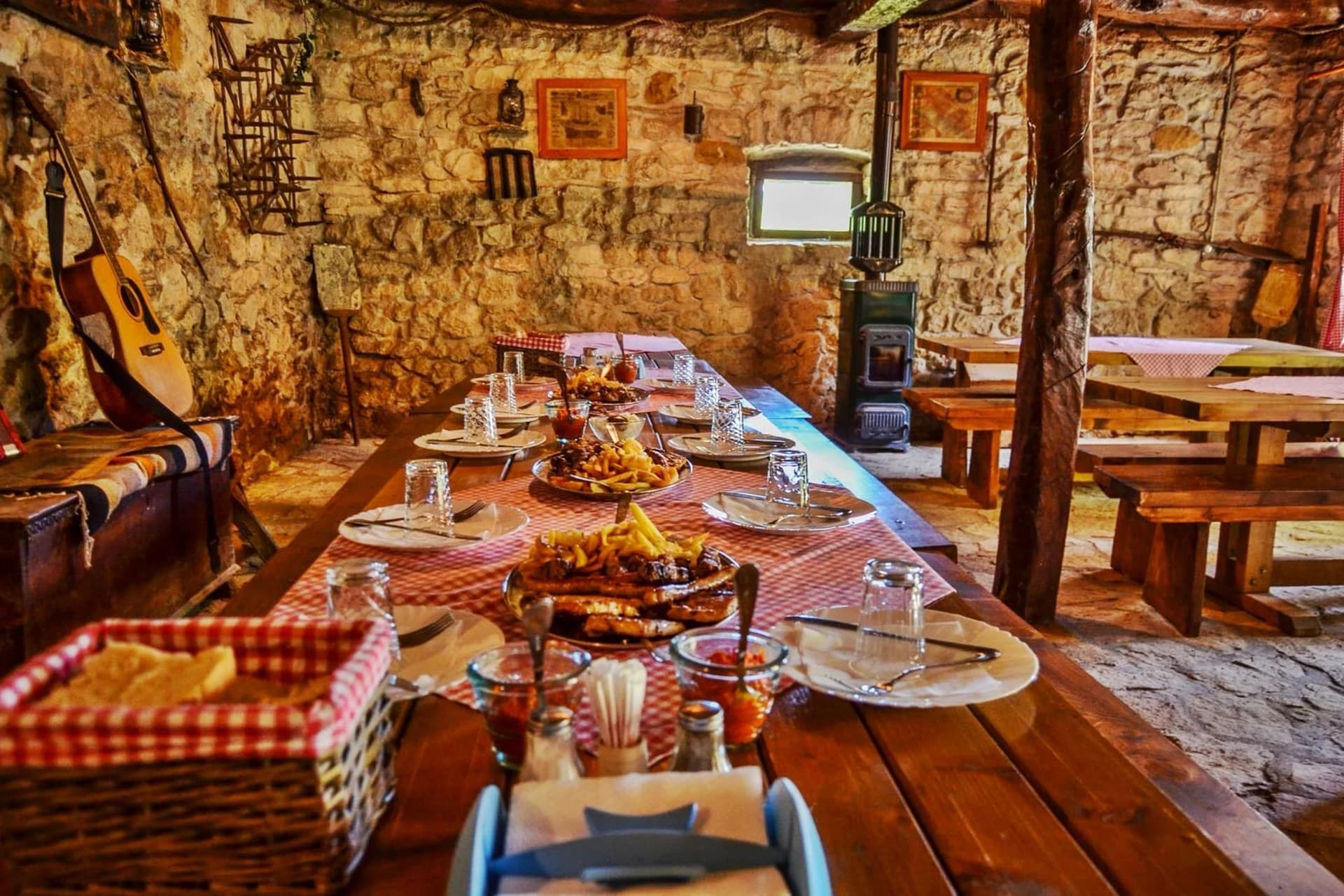
Central Dalmatian konobe vary widely in quality; the standouts justify a planned reservation. On Šolta, Konoba Grih in Maslinica handles charter crews with an outdoor terrace and reliable seafood. On Vis, Konoba Roki’s (interior, in the village of Plisko Polje) is the reservation worth a 20-minute taxi ride; their slow-cooked lamb under the bell (peka) takes 3 hours and must be ordered in advance. In Hvar Town, Junior Bistro and Macondo are the long-standing standards. In Stari Grad, Apolon sits on the harbour and rarely disappoints. On Brač, Konoba Vagonj in Bol is the working-class alternative to the resort restaurants.
What to do if the bora forecasts above 30 knots
The bora is the cold northeast wind that hits the Adriatic in winter and shoulder seasons; in summer it’s rare but possible. A 30+ knot bora forecast on Day 3 or 4 of a Split itinerary is a route-changer. The right move is to skip the Vis leg, stay on the more sheltered side of Hvar (the south coast with the Pakleni archipelago), and add an extra day in Stari Grad or the Pakleni. Don’t try to muscle through; the Vis channel in a serious bora is open-ocean conditions and most charter boats reduce sail aggressively or take refuge at intermediate anchorages.
Trip prep specific to the Adriatic
Adriatic-specific prep: light layers — central Dalmatia evenings on the boat are cool even in July; insect repellent for the Pakleni anchorages where mosquitos work the cockpits at sunset; a reef-safe sunscreen, since several Croatian bays now restrict standard sunscreens; swim shoes for the rocky beaches (Stiniva, Vrboska, Lojena); a portable speaker if you’re catamaran-bound and want a sundowner soundtrack. Charter boats include bedding, towels, basic galley kit, snorkelling masks for adults; bring kid-sized masks if relevant.
The price comparison: Croatia vs Greece for the same week
For a comparable 45-foot bareboat monohull in late June 2026: Split runs €5,500–7,500; Athens-Alimos runs €5,000–7,000; Lefkas (Ionian) runs €4,500–6,500. Croatia carries a 10–15% premium over Greece for boats and a similar premium for marinas. The premium reflects shorter cruising distances, denser charter infrastructure, and (frankly) a stronger demand profile from northern European charterers. The Croatian advantage is the density of stops within a single week — Split’s 100 NM week visits 6 islands, where the equivalent Greek week visits 3.
Ideas for your next sailing vacation
More than 40 countries for boat rental & yacht charter with best prices