Bareboat vs Skippered Charter: Which One Fits Your Trip?
Updated May 2026.
The choice between bareboat and skippered (also called crewed) is rarely about money. It’s about who handles the responsibility — for the boat, the route, the marina lines, the weather forecast, the dinner reservation — and how much of that responsibility your crew wants on holiday. This guide is the honest version: when each format wins, what each actually costs, and the misunderstood middle ground (hostess-only, cook-only, “skipper plus”).
The summary, before the detail
Pick bareboat if your crew has at least one experienced skipper, you want full freedom of route, and you’d rather cook on board than book restaurants every night. Pick skippered if no one in your crew has the qualification or experience to run the boat, or if you specifically want the holiday-not-job version of charter sailing. The format choice often dictates the destination — a bareboat charter in the Cyclades is a different kind of week than a skippered charter in the same waters.
Bareboat: what you need to qualify
Bareboat charter requires the registered skipper to hold a recognised licence — most commonly the ICC (International Certificate of Competence), RYA Day Skipper, US Sailing Bareboat Cruising, or equivalent. Some Mediterranean countries also require a separate VHF radio certificate. Reputable charter companies verify the licence at booking and check it again at handover.
Beyond paperwork, bareboat assumes the skipper has actual sailing experience — provisioning a 45-foot boat, mooring stern-to in a 25-knot crosswind, choosing a safe anchorage, reading the weather. The licence is the legal minimum; the experience is the practical requirement.
Skippered: what’s actually included
A skipper is a hired professional captain. They run the boat — navigation, anchoring, mooring, weather decisions — and usually plan the route on Day 1 with the crew. The skipper sleeps in a separate cabin (sometimes a “skipper cabin,” sometimes the crew’s smallest double). Skipper rates run €180–280 per day in 2026 across most Mediterranean bases. Tip is expected — typically 10–15% of the skipper fee at the end of the week.
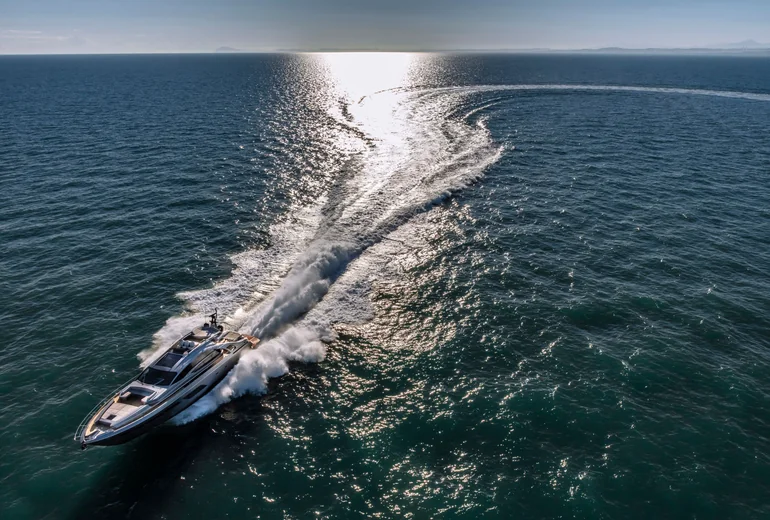
A skipper does NOT cook, clean cabins, or serve drinks. Those are separate roles — hostess and chef.
The hostess: the underrated middle ground
A hostess handles the daily life of the boat — provisioning, cooking, cabin turnover, occasional crew tendering, restaurant bookings ashore. Hostess rates are €150–230 per day in 2026. For a crew that wants the freedom of bareboat (the registered skipper drives the boat) but not the work of provisioning and cooking, the hostess-onboard format is the smart middle.
The chef: when food is the holiday
A dedicated chef on board is mostly a feature of larger charters (50-foot catamarans and up, gulet charters, motor yachts). The chef plans menus with the crew, provisions, and produces 2–3 meals a day. Chef rates run €250–400 per day. Combined with a skipper and a hostess, you have a fully crewed yacht — the “small luxury yacht” experience at a small fraction of full-time-yacht cost.
The honest cost comparison
For a 45-foot catamaran in late June 2026 from Split:
— Bareboat: €13,000 boat + €1,500 fuel/marinas/etc + €600 provisioning + €0 crew = ~€15,100.
— Bareboat + hostess: above + €1,400 hostess + €200 hostess provisions = ~€16,700.
— Skippered: above + €1,750 skipper + skipper sleeps in a cabin (one less crew bed) = ~€16,850.
— Fully crewed (skipper + hostess): ~€18,250.
— Fully crewed + chef: ~€20,500 and the boat now sleeps 8 paying guests in 4 cabins instead of 8 in 4 cabins (chef takes one).
Which format fits which trip
Family with kids, no experienced sailor: skippered or skipper + hostess. The hostess is the difference between a holiday and a chore.
Group of 6–8 adult friends, one experienced skipper: bareboat. Save the money, share the cooking.
Couple, both qualified: bareboat. The most flexible, cheapest format on a per-person basis.
Stag/hen party: skippered. You don’t want a hangover skipper running a Greek-Turkish border crossing.
Corporate retreat or honeymoon: fully crewed (skipper + hostess + chef). The premium tier where you actually relax.

The mistakes most people make
The first is overestimating their crew’s experience. A licence held 10 years ago and not used since is not bareboat-ready. The second is booking a skipper as an afterthought. Skippers are individuals — book one whose style matches your crew. Many operators let you message your skipper before the trip; do it. The third is skipping the hostess to save money. The hostess is the highest-leverage upgrade in charter sailing.
How to book each format
Bareboat is the default — every charter operator handles it. Skippered, hostess, and chef are usually add-ons booked at the time of charter booking. Last-minute crew add-ons (1–2 weeks before) are sometimes possible but choice is limited. For peak-season weeks, book all crew at the same time you book the boat. The credentials and reputation of your charter company matter — pick an operator with a long history at the base, not the cheapest listing.
Frequently asked questions
Can I switch from bareboat to skippered mid-charter?
Sometimes — most operators will hire you a skipper at the next major port if conditions exceed your comfort. Day-rate-plus surcharge applies. Better to book ahead if you suspect you’ll need one.
Do skippers eat with the guests?
Usually yes, at the same table, included in provisioning. A few operators specify ‘separate provisioning’; confirm at booking.
Is a skipper the same person as a captain?
On charter yachts up to ~60 feet, yes. On larger yachts, the captain is more senior and there’s a separate first mate.
Can I bring my own skipper?
Yes, if they hold the qualifications and the operator approves them. Some companies require ISA (International Skipper Association) registration. Confirm before booking.
How much should I tip the skipper and hostess?
10–15% of their week-rate, paid in cash at the end of the week. Tip per role, not split — skipper, hostess, chef each get their own envelope.
The licence question, country by country
The accepted licences vary by charter base and the variations matter. Croatia: ICC + VHF, RYA Day Skipper + VHF, or Croatian-issued Boat Skipper “B.” Greece: ICC, RYA Day Skipper, or US Sailing Bareboat. The Greek base also requires a co-skipper licence; you can’t sail solo. Italy: ICC accepted; RYA Day Skipper sometimes requires extra paperwork. Spain (Balearics): ICC accepted; non-Spanish skippers occasionally questioned by harbour police. Türkiye: ICC, RYA Day Skipper or equivalent. Montenegro: any major sailing certificate. France (Corsica): most lenient — they accept self-declarations on smaller boats. Carry the original certificate, not photocopies, at every charter handover. Some operators verify by phone with the issuing authority.
The “skipper plus” emerging format
A new charter format has emerged in the past 5 years — “skipper plus”, where the hired skipper also handles some hostess-style tasks (basic provisioning, route planning, occasional cooking) on smaller boats where a separate hostess isn’t economic. Skipper-plus rates run €220–320 per day vs €180–280 for a pure skipper. The format works for couples and small groups (up to 4 paying guests) on 40-foot boats. It does NOT work for larger crews — the skipper can’t cook for 8 people while running the boat. For larger crews, the skipper + hostess two-crew format is the right call.
The skipper-booking process — what most charterers miss
The skipper booking process is a separate workflow from the boat booking and most charterers don’t realise it. Operators have preferred skippers (regular pool, vetted) and freelance skippers (booked per-week, less consistent quality). Always request a preferred skipper. Read the skipper’s profile if available — language skills, years in the cruising ground, sailing CV. Some operators let you message the skipper before the trip; do it. Skipper-crew chemistry is the biggest variable in a skippered week, and a 30-minute pre-trip conversation eliminates most surprises.
What goes wrong on bareboat charters — and how to prevent it
The most common bareboat charter failures, in rough order: mooring damage (stern-to in 25-knot crosswind without enough practice), anchor windlass failure (overuse, salt water in the motor), navigation errors (running into shallow water, often near Cabrera, the Pakleni, or the Cyclades shallows), provisioning miscalculations (running out of water mid-week), weather underestimation (sailing into a meltemi or bora when the forecast was clear). Prevention: practice mooring before the trip, conserve water, check forecasts twice a day, and never push through weather you don’t have to.
Explore boats
Boats you can charter in the places this article covers.
Ideas for your next sailing vacation
Boat rental & yacht charter around the world at the best prices