Do I Need a Sailing License to Charter a Yacht? 2026 Guide
Do I Need a Sailing License to Charter a Yacht? 2026 Country Guide
Updated May 2026.
The short answer is yes — for any bareboat charter in the Mediterranean, you almost always need a recognised sailing license. The longer answer is what kind, from where, and what extras (chiefly the VHF Short Range Certificate) varies by country and operator. This guide walks the five license formats you’ll see in Boat4You listings, the country-by-country rules for Croatia, Greece, Italy, Spain and Türkiye as they stand in 2026, the options if you don’t yet hold a license, and the document checklist most charter bases run at handover. Most of the friction at Mediterranean handovers comes from license-document surprises — this piece is designed to remove them.
The five license formats you’ll see on charter listings
Charter operators across the Mediterranean recognise a relatively narrow set of credentials. Understanding them upfront saves a lot of email back-and-forth at booking.
ICC (International Certificate of Competence) — the UN ECE Resolution 40 standard, issued by national authorities in UN ECE member states (most of Europe plus a handful of non-European nations). The ICC is the closest thing to a universal Mediterranean charter license. It’s accepted in Croatia, Greece, Italy, Spain, Türkiye and most of the rest of the EU. The ICC is not issued by countries outside the UN ECE framework, which means most American, Australian and South-East Asian sailors don’t hold one natively — they typically convert from their national qualification.
RYA Day Skipper / Coastal Skipper / Yachtmaster — the UK Royal Yachting Association qualification ladder. The RYA Day Skipper Practical is the entry-level bareboat-eligible certificate; Coastal Skipper sits above; Yachtmaster Offshore and Yachtmaster Ocean are the top tier. The RYA scheme is the most widely-recognised non-ICC license in the Mediterranean — Croatian and Greek operators accept it without question. RYA holders can also apply for the ICC for free as an automatic conversion.
ASA (American Sailing Association) — the US qualification ladder, with ASA 101 (Basic), ASA 103 (Coastal Cruising) and ASA 104 (Bareboat Cruising) as the relevant tier for charter. The catch: ASA is not automatically recognised in the EU. Mediterranean operators sometimes accept ASA 104 + sailing CV; others demand an ICC endorsement on top. Plan ahead — converting ASA to ICC typically takes 4-8 weeks through US Sailing or via a sailing school authorised by a UN ECE state.
National SLC (Skipper License Certificate) qualifications. Each Mediterranean country has its own:
— Croatia: Voditelj brodice B-category — the standard Croatian skipper license for boats up to 12 m / 30 GT in territorial waters.
— Greece: the Hellenic Coast Guard issues a national sailing license to residents. Foreign visitors typically present the ICC or RYA equivalent instead.
— Italy: Patente Nautica, in two tiers — entro 12 miglia (within 12 nautical miles of shore) and oltre 12 miglia (offshore).
— Spain: PER — Patrón de Embarcaciones de Recreo covers boats up to 15 m and 12 nm offshore; higher tiers PY (Patrón de Yate, 20 m / 60 nm) and CY (Capitán de Yate) for larger boats and longer ranges.
— Türkiye: Turkish Amateur Sailor’s License; foreign charterers present passport plus an ICC or RYA equivalent.
VHF SRC (Short Range Certificate) — the separate marine VHF radio license, often paired with the sailing license. The SRC is required by ITU regulations to operate a marine VHF radio set, and most Mediterranean charter operators check for it at handover or expect a clear statement that someone aboard holds the equivalent. Issued by national radio authorities, mutually recognised via the Restricted Operator’s Certificate (ROC) framework. The course typically runs 8 hours classroom plus a multiple-choice exam, approximately €100-200, and the certificate is valid for life.
Country-by-country rules for 2026
The high-level pattern is consistent — bareboat needs a recognised license plus a VHF certificate — but each country has its own enforcement style and second-skipper rules. Confirm with the specific charter operator before booking; rules and 2026 amendments are operator-checkable.
Croatia — HR
Required for bareboat: Croatian Voditelj brodice B-category OR ICC OR a recognised equivalent (RYA Day Skipper Practical and above are the most commonly accepted alternatives).
VHF SRC: required. Croatian operators verify the SRC at handover; the Croatian Harbour Master can request it at any port stop.
Two-skipper rule: since 2017, Croatian charter contracts list both a primary licensed skipper and a named co-skipper. The co-skipper doesn’t need a license, but must be named on the contract and present at handover — the operator interpretation is that someone aboard should be able to take over the boat if the licensed skipper becomes incapacitated. Operators will refuse handover if you arrive with only one named person on the contract.
Charter base verification: originals only, no photocopies or phone photos. Indicative penalty for an unlicensed skipper stopped by the Harbour Master is up to €2,000.
Greece — GR
Required for bareboat: Greek national license OR ICC OR equivalent (RYA Day Skipper Practical and above).
VHF SRC: required for boats over 7 m — which is every commercial charter catamaran in Greek waters.
Two-skipper rule: introduced in 2018 and the one that catches most American and first-time Mediterranean charterers. Greek law requires a named second person on the charter manifest in addition to the licensed skipper. The second doesn’t need their own license, but the operator must list two distinct names on the contract before releasing the boat.
Enforcement: the Hellenic Coast Guard can demand to see licenses at any Greek port. Penalties are indicative and operator-checkable but include suspension of the charter and recovery of the boat to the base.
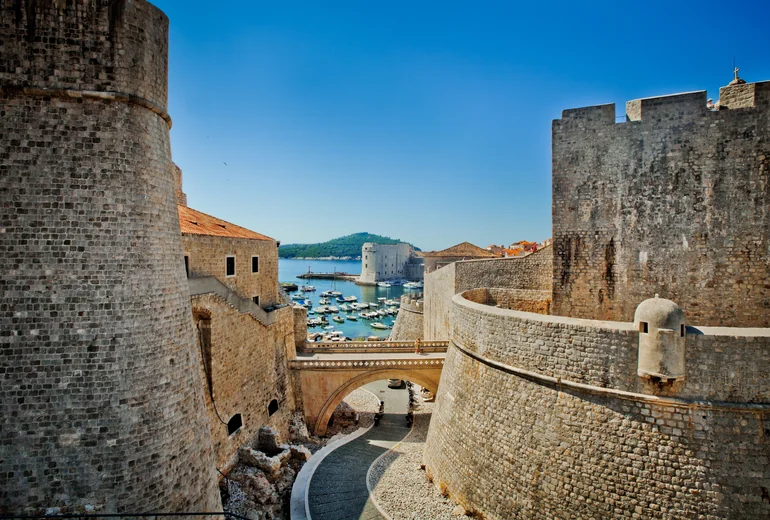
Italy — IT
Required for bareboat: Italian Patente Nautica in the appropriate tier (entro 12 miglia for inshore charters; oltre 12 miglia for offshore work), OR ICC OR EU equivalent. The Italian Coast Guard is meticulous about license credentials and Sardinian operators are particularly strict.
ASA-only is not accepted in Italy. American sailors with ASA 104 must hold an ICC or EU equivalent before booking a bareboat in the Italian waters. Some operators will accept ASA 104 + sailing CV + ICC endorsement; others will not. Confirm in writing before paying the deposit.
VHF SRC: required for any boat with VHF onboard, which is every charter catamaran.
Second-skipper rule: not formally required by law, but most Italian operators recommend a competent second person aboard and will note them on the charter contract.
Spain — ES
Required for bareboat: PER (Patrón de Embarcaciones de Recreo) for boats up to 15 m and 12 nm from shore — which covers the vast majority of Balearic catamaran charters. Higher tiers PY (Patrón de Yate, up to 20 m / 60 nm) and CY (Capitán de Yate, unlimited) cover larger boats.
The ICC is accepted by most Balearic operators but Spanish operators specifically may prefer the PER. Verify with the booking team before signing.
VHF SRC: required. Spain issues its own SRC and accepts mutual-recognition through the ROC.
Türkiye — TR
Required for bareboat: Turkish Amateur Sailor’s License (for residents) OR ICC for foreigners. The ICC is widely accepted at Bodrum, Marmaris, Göcek and Fethiye marinas. Some established Türkiye operators also accept the RYA Day Skipper Practical alone.
VHF SRC: strongly recommended; some operators require it, others don’t — operator-dependent in 2026.
2026 administrative note: Türkiye continues to operate the Blue Card yacht-traffic system. Established charter operators usually handle the Blue Card registration automatically as part of the charter contract. Foreigners present a passport plus ICC plus a brief sailing CV at handover; the operator submits a transit log to the relevant Turkish maritime authority.
What if I don’t have a sailing license?
Three practical workarounds for unlicensed charterers, in order of frequency:
Skippered charter (the most common option). You book the boat plus a professional licensed skipper for the week. Indicative 2026 rates: €170-280 per day for the skipper plus a small meal-share contribution and customary end-of-week tip (typically €100-300). For first-time charterers in Croatia, Greece or the Balearics this is often the smart pick regardless of license status — the operational comfort of a local-knowledge skipper outweighs the additional cost.
Hostess or chef — not a license workaround per se, but a complementary add-on for groups of 6+ where the skipper alone can’t cover meals and cabin service. Indicative 2026 rate: €150-220 per day.
Flotilla holiday — for Croatia and Greece particularly, flotilla operators (you sail under the supervision of a lead boat with a licensed skipper aboard) typically require no individual license from the participating boats. You operate under flotilla skipper supervision; the catch is a fixed itinerary set by the lead boat. Suits charterers who want the sailing experience without the license investment.
The fastest licensed-route option for unlicensed charterers planning an annual Mediterranean week is the RYA Day Skipper Practical: 5 days liveaboard in the UK or another RYA-affiliated school (Croatian, Greek and Italian RYA schools all run the practical), approximately €1,400-1,800 total cost, and the certificate is valid for life and accepted across the Mediterranean.
VHF SRC — the often-forgotten companion license
The VHF Short Range Certificate is the single most-forgotten document at charter handover. Required by ITU regulations to operate marine VHF, the SRC is a separate qualification from the sailing license itself.
The course typically runs 8 hours of classroom instruction plus a multiple-choice exam, with most providers charging approximately €100-200 inclusive. The certificate is valid for life and recognised internationally through the ROC framework.
Country-by-country VHF requirements (current 2026):
— Croatia: required at every charter handover.
— Greece: required for boats over 7 m.
— Italy: required for any boat with VHF onboard.
— Spain: required.
— Türkiye: strongly recommended, operator-dependent.
Practical tip: pair the VHF SRC course with your RYA Day Skipper week if you can — sailing schools commonly bundle the two for a discount, and you walk out with both certificates inside a single 8-day intensive.
Documentation checklist for charter handover
Bring these to the boat on day 1. The handover process is meaningfully faster when you arrive prepared.
— Original sailing license. Not a photocopy, not a phone photo. The charter base will refuse handover without the original.
— Original VHF SRC. Same requirement.
— Passport or government photo ID. Required for every crew member listed on the manifest, not just the skipper.
— Sailing CV (optional but useful). Particularly helpful for American charterers using ASA 104 + ICC endorsement — a short paragraph of recent sea time and previous charters smooths the handover conversation.
— Second skipper’s ID. Required in Croatia and Greece, and the name must already be on the charter contract before you arrive. Adding a second skipper at the marina is possible but adds time and sometimes fees.
— Credit card with sufficient available limit. Most operators hold a security deposit of €2,000-5,000 against the card during the charter; the deposit is released at handover-return.
— Insurance documents. Optional, but useful if you carry separate skipper or charter-week insurance.
Common mistakes charterers make
Five mistakes we see year after year across the Mediterranean charter market:
1. Bringing photocopies instead of originals. Charter base refuses handover. Allow a full day to retrieve the original or rebook with an alternative crew member as primary skipper.
2. Assuming ASA equals ICC in the EU. It doesn’t. Get the ICC endorsement (US Sailing or RYA-affiliated route) at least 8 weeks before charter departure.
3. Forgetting the VHF SRC. The most common single-document gotcha. Plan to obtain it at the same time as the sailing license.
4. Not naming a second skipper on the Croatian or Greek charter contract. The operator will refuse handover until a second crew member is added. Plan the manifest at the contract-signing stage.
5. Booking the charter too late to convert ASA → ICC. The conversion typically takes 4-8 weeks through US Sailing’s ICC partnership or via an RYA-affiliated school. Don’t leave it to the month before departure.
Ready to charter?
Every Boat4You yacht listing shows the licenses the operator requires for that specific boat. Browse the Boat4You yacht charter portal to filter by destination, dates and license requirement — or contact us for a custom recommendation if you’re between license tiers or planning to add a skipper.
Related Boat4You guides
— Croatia Sailing Guide 2026 — bases, itineraries, costs.
— Greece Sailing Guide 2026 — best areas, bases and seasons.
— Italy Sailing Guide 2026 — Amalfi, Sardinia, Sicily.
— Spain & Balearics Sailing Guide 2026.
— Bareboat vs Skippered Charter Guide — for unlicensed charterers weighing the options.
— Yacht Charter Cost 2026 — Full Breakdown.
Frequently asked questions
Do I need a sailing license for a bareboat charter in Croatia?
Yes — Croatian regulations require a recognised sailing license (Croatian Voditelj brodice B-category, ICC, RYA Day Skipper Practical or equivalent) plus a VHF SRC. Since 2017, the charter contract also lists a named second skipper alongside the licensed primary. Without a license, book a skippered charter at indicative €170-280 per day for the skipper fee.
Is the ASA license accepted in the Mediterranean?
Not automatically. American sailors with ASA 101-104 must hold an ICC endorsement (or an RYA equivalent) before booking a bareboat in EU waters. The conversion typically takes 4-8 weeks through US Sailing’s ICC partnership or via an RYA-affiliated sailing school. Some Mediterranean operators will accept ASA 104 + a sailing CV but the safe path is to hold the ICC before booking.
How much does it cost to get an ICC?
For RYA holders, the ICC conversion is free — apply directly through the RYA. For sailors without RYA qualifications, the ICC typically requires a practical exam through an RYA-affiliated school: indicative cost €200-500 for the assessment plus any training top-up. RYA Day Skipper Practical, which automatically qualifies for ICC, runs approximately €1,400-1,800 for the full 5-day course.
Can I charter a catamaran in Greece without a license?
Not for bareboat. Greek regulations require a recognised license (ICC, RYA Day Skipper Practical or equivalent) plus a VHF SRC for boats over 7 m. Without a license, the skippered option is the standard workaround: indicative €170-280 per day for the skipper plus the boat’s weekly rate. Since 2018, Greek charters also require a named second person on the contract regardless of skipper status.
What’s the VHF SRC and do I need one?
The VHF Short Range Certificate is the separate marine-radio operator’s license required by ITU regulations to operate a boat’s VHF radio. Most Mediterranean charter operators check for the SRC at handover (Croatia and Italy are strict; Greece checks for boats over 7 m). The course is approximately 8 hours of classroom instruction plus a multiple-choice exam, costs €100-200, and the certificate is valid for life. Pair it with your sailing license course if you can.
Explore boats
Boats you can charter in the places this article covers.
Sail it yourself — suggested itineraries
View all Split itineraries →
Ideas for your next sailing vacation
Boat rental & yacht charter around the world at the best prices