Greece Sailing Guide 2026: Best Areas, Bases, Seasons & Charter Tips
Updated May 2026.
Greece has more sailing coastline than any other country in the Mediterranean — roughly 16,000 kilometres of it, scattered across more than 200 inhabited islands. That sounds overwhelming on paper. In practice, charterers spend their week inside one of four self-contained cruising grounds, and the choice of which one shapes everything else: how far you sail each day, how much wind you handle, what time you arrive, where you eat dinner. This guide is built around that one decision.
The four Greek sailing areas, ranked by who they suit
The Saronic Gulf, southwest of Athens, is the easiest cruising ground in Greece. Distances between Aegina, Poros, Hydra and Spetses sit under 25 nautical miles, the wind is a manageable 10–15 knots most days, and there is nowhere you need to commit to a long crossing. It is the first-time-charter answer.
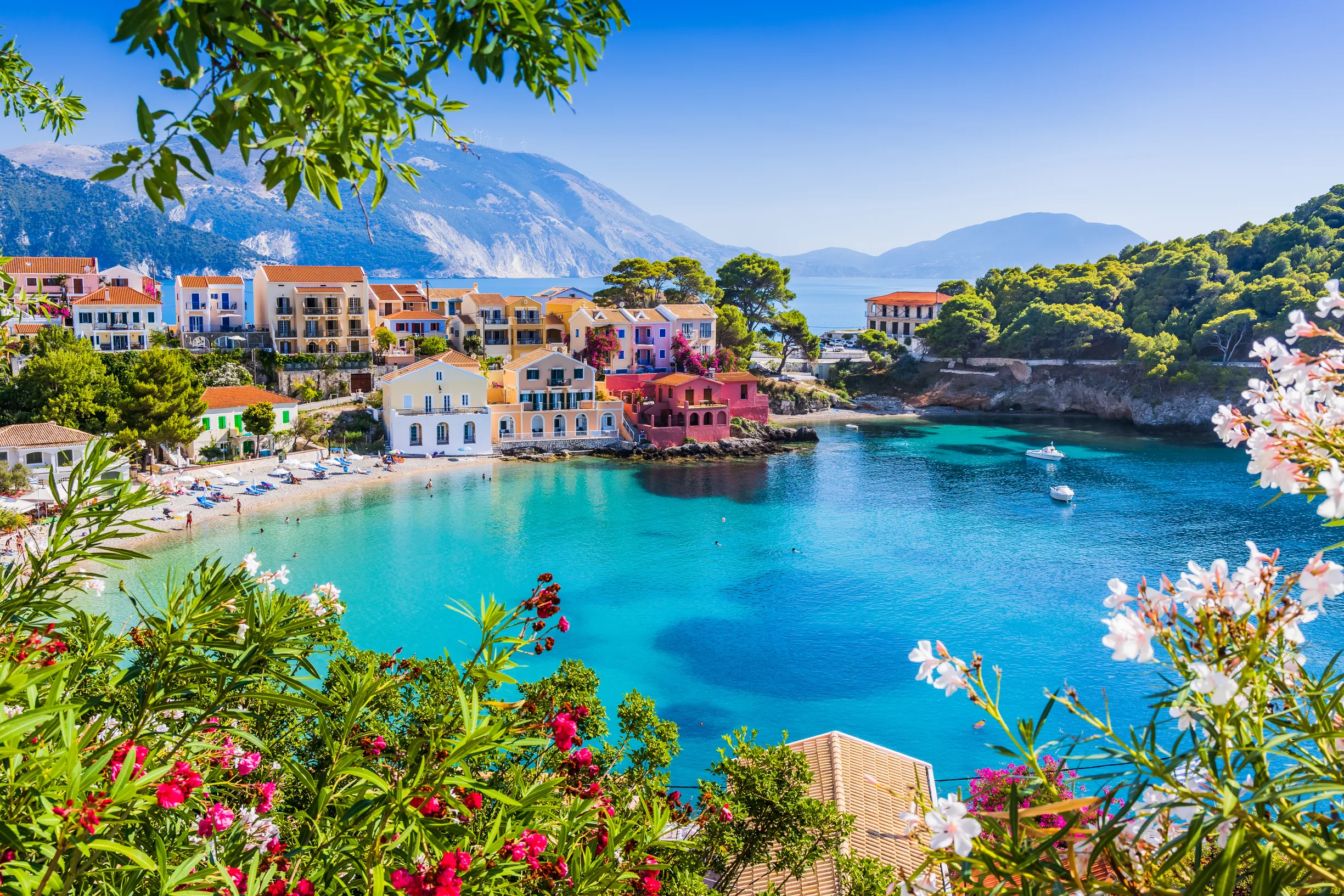
The Ionian Sea, on the west coast around Lefkas, Kefalonia and Ithaca, is the family answer. It has the same forgiving distances as the Saronic but warmer water, more sandy beaches, and predictable afternoon thermals that pick up after lunch and drop at sundown.
The Cyclades — Mykonos, Paros, Naxos, Ios, Santorini — are postcard Greece. They are also the windiest cruising ground in the Aegean. The summer meltemi blows from the north at 25–35 knots for days on end, and crews who underestimate it end up port-bound. This is intermediate territory, not beginner.
The Dodecanese, around Kos and Rhodes, sit in the eastern Aegean. They are quieter than the Cyclades, hotter than the Ionian, and well placed for Greek-Turkish itineraries that hop the border (paperwork-permitting). Good for crews who want islands without the meltemi punishment.
When to go: month-by-month for 2026
May — water is still cold (around 18 °C), prices are at their lowest, anchorages are empty. Wind is variable. Good for sailors who care about the sail more than the swim.
June — the sweet spot. Water reaches 22 °C, the meltemi has not started in earnest, and Hvar-style overcrowding hasn’t begun. Booking windows are still reasonable.
July — peak heat, peak meltemi in the Cyclades. The Ionian and Saronic remain manageable. Charter prices are at their highest. Reservations for marina berths in Mykonos, Hvar (if combining) or Santorini need to be made weeks ahead.
August — same as July plus Greek domestic holidays. The Cyclades go feral. The Ionian and Saronic tolerate it better.
September — the smart choice. Sea temperature is at its summer peak (around 24 °C), the meltemi is fading, and the school-holiday crowd has gone.
October — shoulder season. Daytime is perfect, nights cool, occasional weather systems sweep in. Prices drop a third.
Charter bases: where you should actually fly into
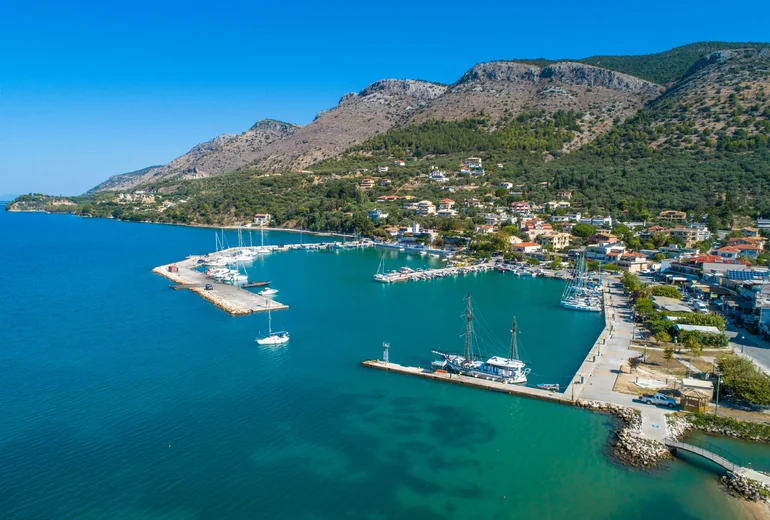
For the Saronic, fly to Athens and pick up at Alimos (the largest charter marina in Greece, 30 minutes from the airport) or Lavrio if you want a head start toward the Cyclades.
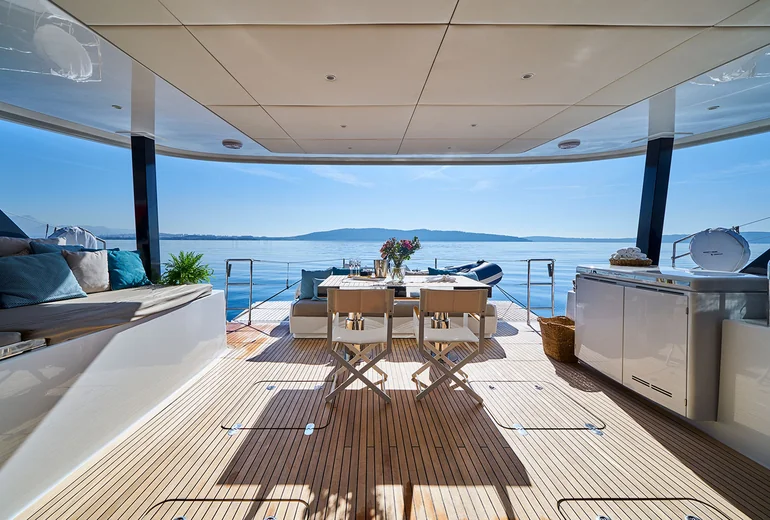
For the Ionian, fly to Preveza for Lefkas, or Kefalonia for boats based at Argostoli. Lefkas Marina is the busiest Ionian base and tends to have the deepest fleet of newer catamarans.
For the Cyclades, the practical bases are Athens-Lavrio, Paros or Mykonos (very limited fleet but useful for one-way charters). Don’t fly into Santorini and try to start there — the caldera is not a working charter base.
For the Dodecanese, fly to Kos. The Kos Marina fleet is well-maintained and the airport is 15 minutes from the dock.
Choosing the boat: catamaran or monohull, in Greece specifically
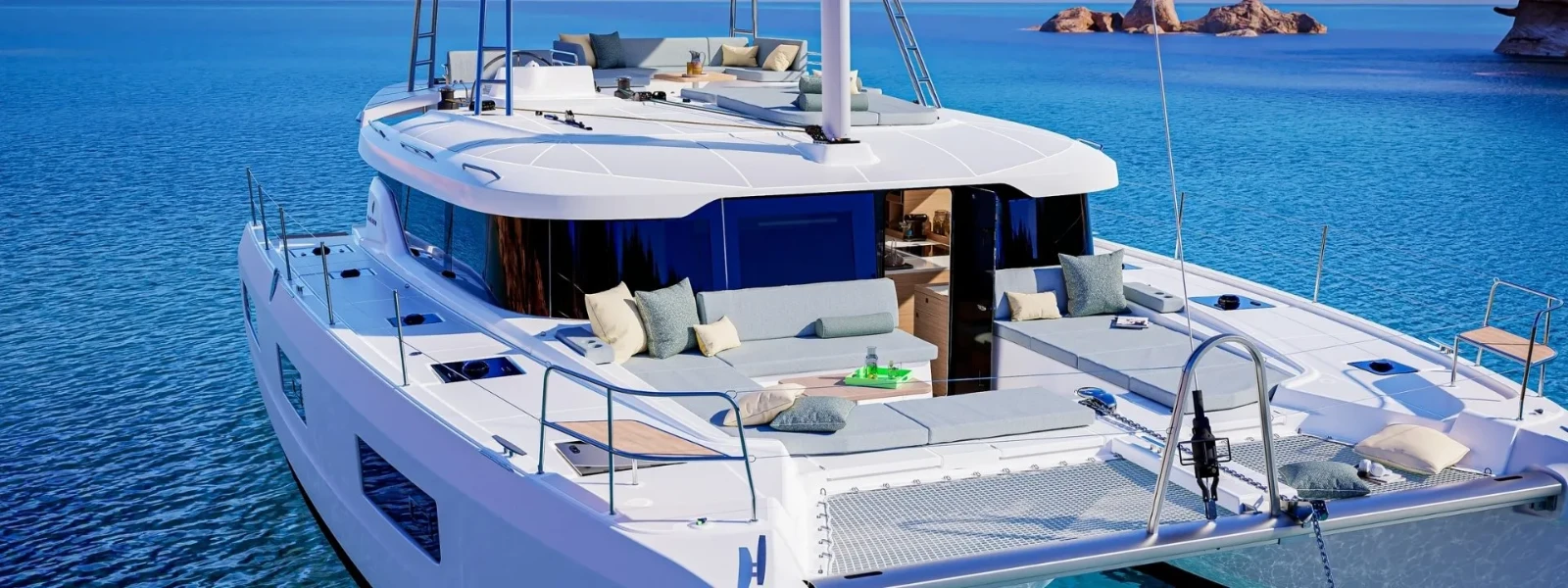
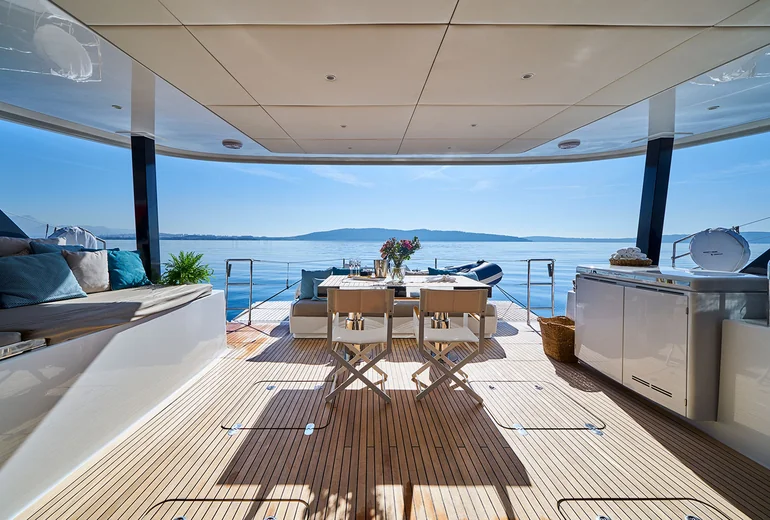
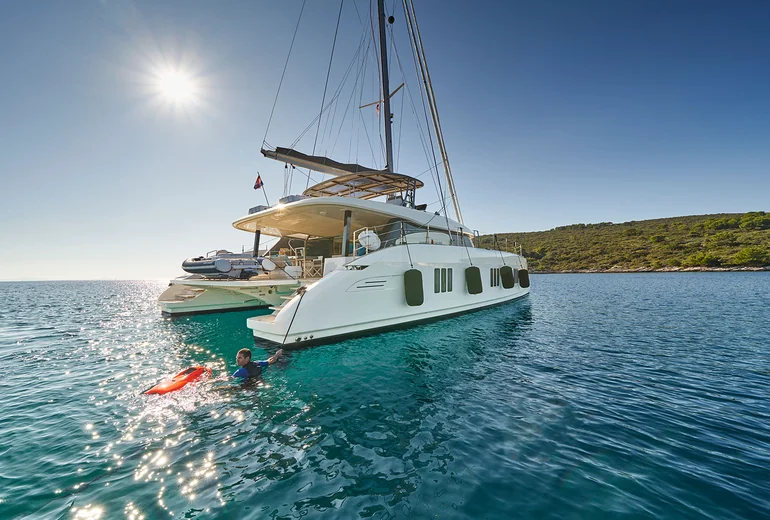
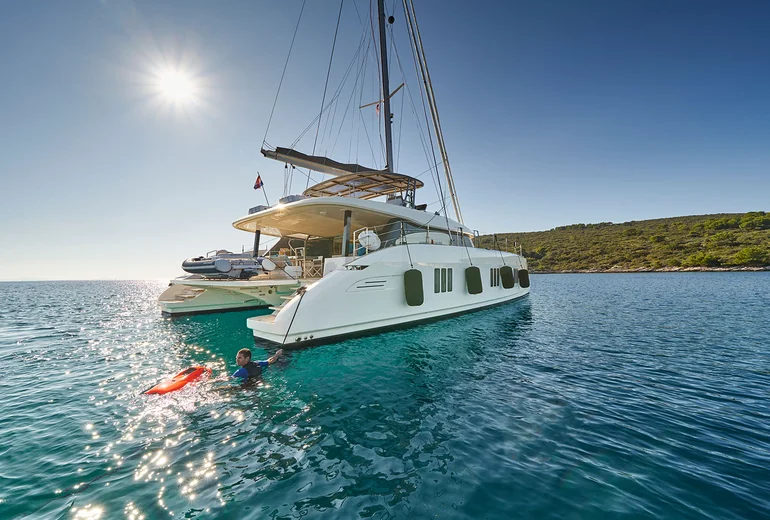
Modern catamarans dominate the family-charter fleet at every Greek base, and the gap is getting wider every season. The reason is simple: the Aegean has clear water, sandy anchorages, and few marina berths — exactly the conditions where a catamaran’s shallow draft, big swim platforms and deck space outperform a monohull. The trade-off is cost. A 45-foot catamaran usually charters at 2.5× to 3× the price of a comparably-sized monohull.
If you are a four-person crew of experienced sailors, take the monohull and save money. If you are eight people who want to swim off the back without taking turns, the catamaran is worth every euro. We cover the trade-off in detail in our catamaran vs monohull guide.
Costs in 2026: a realistic budget
For a 7-day charter in mid-June 2026, a 45-foot bareboat monohull at Lefkas runs €4,500–6,500. The same boat in the Saronic runs €5,000–7,000. A 45-foot catamaran across either base sits at €11,000–16,000. On top of the boat, expect to spend €1,000–1,800 per crew for fuel, marina fees, water, port taxes (TEPAI in Greece is paid per metre per day) and provisioning. Charter security deposits at Greek bases are typically €3,000–5,000 — held on a card, released after the boat is returned undamaged.
Paperwork: licences, insurance, TEPAI
Greece accepts the ICC (International Certificate of Competence) and most major sailing-school certificates for skipper qualification on bareboat charters. Crew with no licence still need to be on board legally — they don’t drive the boat, but they must be listed on the crew list at check-in. TEPAI (the cruising tax) is collected at the first port of call and is the charter company’s responsibility to file — it just shows up on the final invoice.
The honest mistakes first-time Greek charterers make
The first is underestimating the meltemi. If you are planning a Cyclades route in late July and have not sailed in 30 knots of breeze before, change plans now. The second is overplanning. A typical week in Greece is 4–5 sailing days and 2–3 lay days, not seven straight days at sea. The third is booking peak-week without booking marinas. In peak season, popular harbours like Hydra, Mykonos and Santorini fill before lunchtime — arrive by 14:00 or accept that you’ll be at anchor.
Where to go next
If you’ve narrowed it down to an itinerary, our 7-day Athens itinerary covers the Saronic week in detail, the Kos itinerary walks the Dodecanese, and the Cyclades from Mykonos piece is honest about the meltemi. If you’re still choosing between formats, the bareboat vs skippered guide is the next read.
Frequently asked questions
Is Greece a good first sailing destination?
Yes, but only if you stay in the Saronic Gulf or the Ionian. The Cyclades will punish first-timers in summer. See our Saronic Gulf sailing guide for the easiest beginner cruising ground in Greece.
How many days do I need to do Greece justice?
Seven days is the standard charter week and it works for any one cruising area. Two weeks lets you combine — a week in the Saronic plus a week in the Ionian, for example — but you’ll need a one-way charter and an overnight transfer.
Do I need a Greek-flagged boat to sail in Greece?
For a charter, no. The boat is registered through the charter company under the regulations applying at the base. You just need to be on the crew list and, if you’re skippering, hold a recognised licence.
Can I sail to Türkiye from a Greek base?
Technically yes — Kos to Bodrum is 11 nautical miles. In practice, the formalities (Greek exit clearance, Turkish entry clearance, transit log) make it a 5-hour process, and most charter companies don’t allow it without a paid agent. Plan a Greek-only week unless your operator pre-arranges the crossing.
What’s the best month for value in 2026?
Late May or late September. Peak-summer rates are 30–40% higher and the anchorages are 3× busier. The early-September week is the single best date if you can pick one.
Provisioning, fuel and money — the operating manual
Provisioning in Greece is straightforward. The big supermarkets — Sklavenitis, AB Vassilopoulos, Lidl — are within 5 minutes of every major charter base. Stock the boat once at handover and top up at island shops; mid-week provisioning runs are part of the rhythm. Expect to spend €100–140 per crew member per week on groceries plus a similar amount on lunch and dinner ashore. Most konobe still prefer cash for tips and small bills; cards work for the meal itself almost everywhere except remote islands.
Fuel docks are at every charter base and most secondary harbours. Diesel runs €1.40–1.70 per litre in 2026 — about 30% cheaper than Italy. Charter contracts require a full tank at return, so plan a final fuel stop on Day 6 or early Day 7 morning to avoid handover delays. Water is paid by the cubic metre at most marinas; charter boats carry 400–800 litre tanks, enough for 4–5 days of light use.
Weather, VHF and emergency basics
Greek waters are well-served by the HCG (Hellenic Coast Guard) and the Olympic Marine-published forecast bulletin in English on VHF Channel 16 each morning. Most charter boats have AIS receivers; a few have transponders. Download the Windy and Poseidon apps before the trip — Poseidon is the official Greek meteorological service and the most reliable forecaster for the Aegean specifically. The standard mid-summer evening pattern is meltemi onset around 11:00, peak winds at 16:00, easing after sunset.
For first-aid emergencies, every island in this guide has a clinic; serious cases evacuate to Athens, Heraklion, or Rhodes. Keep travel insurance documentation accessible — chartering without proper personal medical and evacuation cover is the single most-ignored mistake in Greek sailing.
Booking lead times and what to commit to first
Greek charter bookings split into three windows. October–February: peak-week bookings for the next summer. Best fleet selection, lowest prices, biggest commitment risk. Most operators take 30% deposit with 50% balance 3 months out and 20% on arrival. March–May: shoulder availability. Fleet thins to mid-tier choices but flexibility on dates is high. June onwards: late-availability hunting. Discounts of 10–25% appear on unsold weeks. The smartest pattern for repeat charterers: book peak weeks 6–9 months ahead, book shoulder weeks 2–4 months ahead, hunt late deals only if you’re flexible on boat and date.
What to do with non-sailing crew members
Most Greek charters carry at least one non-sailing crew member — a partner who came for the swim and the food, kids, retired parents, friends with no nautical background. The Saronic and Ionian work well for them; the Cyclades sometimes punish them with seasickness. Bring sea-sickness medication (Stugeron or scopolamine patches), schedule shorter Day-1 legs to acclimate, and brief everyone on basic safety before leaving the dock. The non-sailors carry their weight ashore — provisioning runs, restaurant reservations, photo duty — and usually have a better trip than the skipper, who’s still working.
Explore boats
Boats you can charter in the places this article covers.
- Greece · 3,123 boats
- Cyclades · 1,251 boats
- Ionian Region · 1,299 boats
- Dodecanese · 248 boats
- Paros · 28 boats
Sail it yourself — suggested itineraries
View all Cyclades itineraries →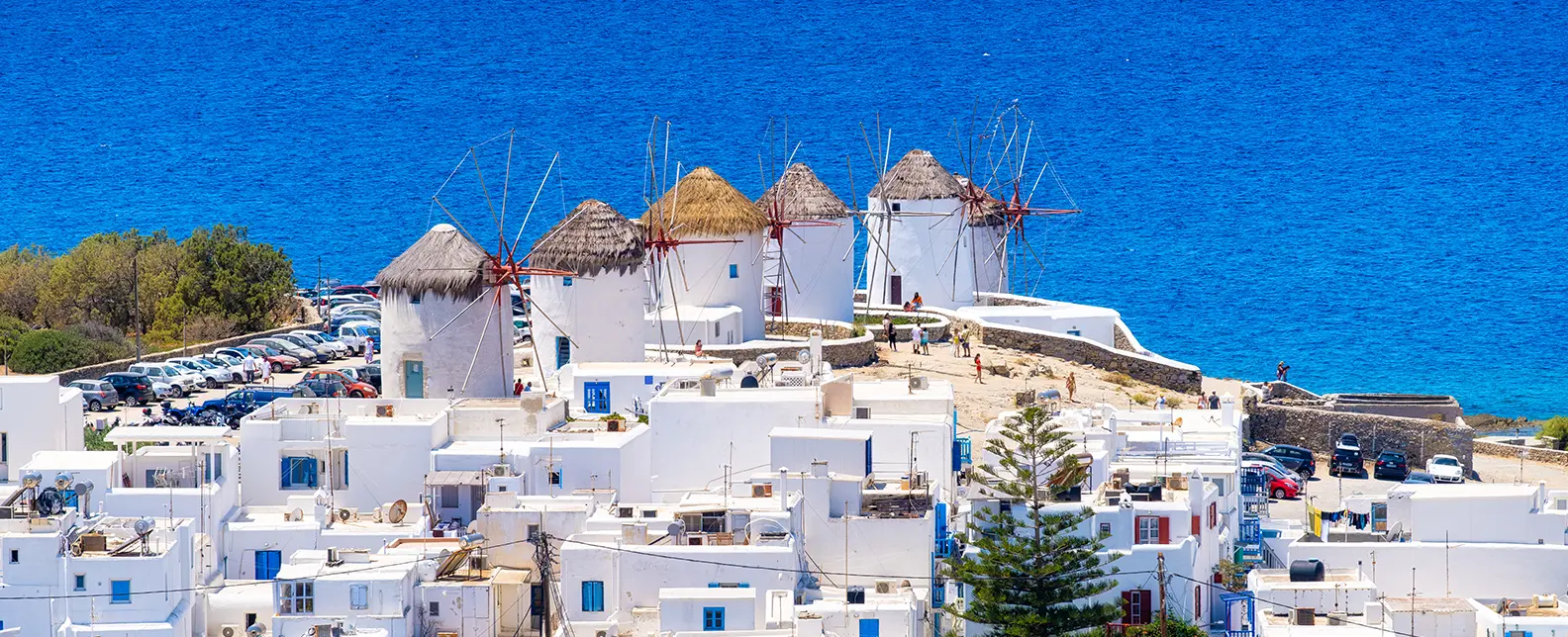
Ideas for your next sailing vacation
Boat rental & yacht charter around the world at the best prices