Best Time to Sail the Mediterranean: A Month-by-Month Guide for 2026
Updated May 2026.
The Mediterranean has more usable charter weeks than any other sailing region in the world — roughly 7 months of viable conditions across most cruising grounds. But the right month depends sharply on where you sail. The Cyclades in July are not the Cyclades in May. The Amalfi Coast in August is not the Amalfi Coast in September. This guide is the month-by-month reference for the major Mediterranean cruising grounds in 2026, including the trade-offs between weather, prices, and crowds.
The big picture — when does the Mediterranean season run?
The viable charter season runs April through October across most of the Mediterranean, with the most reliable weeks between mid-May and mid-October. Within that window, conditions split:
— April-mid-May: cool water (16–19 °C), variable wind, sparse crowds, off-peak prices. Good for sail-first crews.
— Mid-May–June: water warming to 22 °C, anchorages empty, prices off-peak. The smartest window for value-conscious charterers.
— July: peak season begins. Heat builds, anchorages fill, prices peak.
— August: full peak. Italian, German, French domestic vacation overlap. Marina capacity in marquee harbours saturates.
— September: locals’ month. Schoolkids return, water at its summer peak (24-25 °C), prices ease. The single best month if you can pick.
— October: shoulder season. Daytime good, nights cool. Some marinas reduce hours after October 15.
By cruising ground — when each region works best
Croatia: late May, late June, mid-September. Avoid the August Italian-German vacation surge. The Croatia sailing guide covers regional differences.
Greece (Saronic + Ionian): May through October, with September the single best month. The Saronic guide and Ionian deep-dive cover the calmer Greek cruising grounds.
Greece (Cyclades + Dodecanese): late June and September only. July and August have the meltemi at peak strength — 30-knot wind for days at a time. The Greece sailing guide goes deeper.
Italy (Amalfi + Aeolian + Sardinia): late May, mid-September. Avoid the Italian August vacation. The Italy guide covers regional differences.
Türkiye (Gökova + Göcek): mid-June, mid-September. Cooler May, warmer July with reliable wind. The Türkiye guide covers the season pattern.
Spain (Balearics + Costa Brava): late May, mid-September. Avoid the Spanish vacation in late July and August. The Balearics guide goes deeper.
French Riviera: mid-May (avoid Cannes Festival weeks), early September (avoid Cannes Yachting Festival), early October. The Riviera guide covers the event-driven calendar.
Montenegro: late May, late June, September. The Montenegro guide covers Boka Bay specifically.
Month-by-month: the practical 2026 calendar
April
The pre-season month. Sea temperatures sit at 14–17 °C across the western Mediterranean and 17–19 °C in the eastern. Wind is variable; weather fronts can sweep in any week. Charter prices are at their lowest — discounts of 25–40% off summer rates are typical. Marinas have capacity. Anchorages are empty. Right for sail-first crews who don’t mind a cold swim and the occasional weather rebook.
May
Spring kicks in. Water reaches 18–22 °C by late May. Light to moderate wind. Charter availability is good — last-minute deals exist for shoulder-week bookings. The Croatian and Greek seasons start; Italian and Spanish bases warm up later in the month. Cannes Film Festival in mid-May distorts French Riviera bookings.
June
The smart-charter month. Water at 22 °C across most of the Mediterranean by late June. Wind is moderate and predictable. Crowds are 50% below July levels. Charter prices are 15–25% below peak. The single best month for first-time charterers and value-conscious crews.
July
Peak season starts. Heat in the eastern Mediterranean reaches 30+°C in mid-day. Cyclades meltemi peaks. Italian August holiday hasn’t started yet but Spanish school vacation has. Marina availability tightens — book 4–6 months ahead for marquee harbours. Charter prices at peak.
August
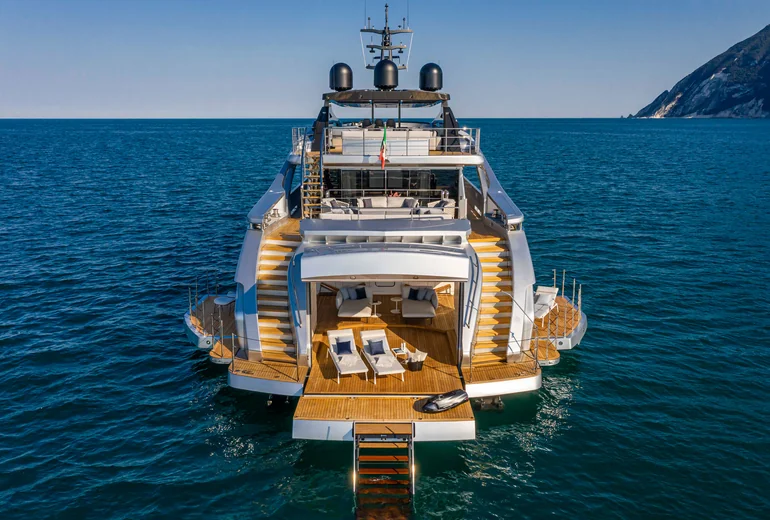
The hottest, busiest, most-expensive month. Italian, German, French, Croatian domestic vacation overlap. Marquee harbours (Hvar, Mykonos, Saint-Tropez, Capri, Formentera) saturate. Last-minute deals don’t exist; cancellations get re-sold within hours. Avoid August unless you have no schedule flexibility.
September
The single smartest charter month. Water at its summer peak (24–25 °C across most of the Mediterranean). Wind is at its most predictable. School vacations end, families return home, marquee harbours empty out. Charter prices fall 15–25% from August. Anchorages have space; restaurants have tables; marinas have berths. If you can pick one month, pick the second or third week of September.
October
Shoulder season returns. Daytime temperatures 22–27 °C; nights 14–18 °C. Water at 22–24 °C — still swimable. Some konobe close after October 15. Some marinas reduce services. Crossings (Sardinia-Corsica, Italy-Greece, Croatia-Italy) become weather-dependent. Right for value-conscious crews who can flex around weather.
Wind systems by region — what to expect
The meltemi (Aegean, July-September): northerly 25–35 knots for days at a time. Plans Cycladic routes around it. The Cyclades itinerary covers the meltemi-survival pattern.
The bora (Adriatic, autumn-winter): cold northeasterly, rare in summer, can hit 35-40 knots in shoulder seasons. Croatian charter rooms.
The maestral (Ionian + Croatian + Italian Riviera summer): northwesterly afternoon thermal, 12–18 knots, predictable, easy to plan around. The most pleasant Mediterranean wind to sail in.
The mistral (French Mediterranean + Sardinia-Corsica strait): cold northwesterly, accelerated through the Rhône valley. 20–30 knots typical; can hit 50 in winter.
The sirocco (Italy, North Africa-southerly system): warm southerly, dust-laden, 20-30 knots typical. Brings rough conditions and clears air for days afterward.

Booking lead times — when to commit
Charter bookings typically open 12–14 months before the start date. The optimal booking window depends on what you want:
— Premium boat, premium week (mid-July to mid-August): book 8–10 months ahead. The newest cats and largest monohulls go first.
— Mid-tier boat, peak week: book 5–7 months ahead. Most fleet still available; pricing is at list.
— Any boat, shoulder week (June or September): book 3–5 months ahead. Last-minute deals appear for unsold inventory.
— Last-minute (1–8 weeks ahead): 10–25% discounts on unsold inventory; choice narrows sharply. Right for flexible crews on shoulder weeks.
The wild cards — events that distort regional booking patterns
Some events change marina availability and prices for 100+ NM around. Plan around them or accept the surge:
— Cannes Film Festival: mid-May. French Riviera marina pricing triples for 2 weeks.
— Monaco Grand Prix: late May. Eastern Riviera saturates; Monaco marina is non-bookable.
— Cannes Yachting Festival: early September. Industry crowds; marinas tight.
— Monaco Yacht Show: late September. Same effect.
— Italian August (Ferragosto): Italian domestic vacation peaks the week of August 15. All Italian harbours saturate.
— Greek Easter: mobile date, late April or May. Greek mainland bases see domestic vacation traffic.

The honest summary
If you have schedule flexibility and want the best Mediterranean charter week of 2026, book the second week of September across any of the cruising grounds in this guide. Water is warm, anchorages are emptier, prices are off-peak, wind is predictable, and the season’s atmosphere is at its most relaxed. If you must charter in July or August, pick a less-crowded cruising ground (Saronic, Ionian, Türkiye, Istria) and accept the higher prices. The full regional choice is in the country guides linked above.
Frequently asked questions
What’s the absolute best week to sail the Mediterranean in 2026?
The second or third week of September. Water at peak summer temperature, school vacation ended, prices off the peak, anchorages comfortable. Across almost every Mediterranean cruising ground, this single window is the best.
Is May a viable charter month?
Yes for sail-first crews. Water at 18–22 °C is brisk; the swim is short. But anchorages are empty, prices are 25–40% off peak, and the sailing wind is good. Right for couples and small groups who don’t prioritise the swim.
Should I avoid August completely?
If you can. August in marquee harbours is the most-crowded, most-expensive, most-stressful charter window. If schedule forces it, pick a less-crowded cruising ground (Türkiye, Istria, Ionian) and accept the heat. Reference the Türkiye guide and Ionian deep-dive.
How do prices vary across the season?
Roughly 50–80% spread between low and peak. April rates are 25–40% under June; June is 15–25% under August; September is 15–25% under August. Late availability adds another 10–25% discount on unsold inventory.
Can I rebook if weather ruins my charter week?
Most operators don’t refund for weather alone unless conditions exceed safety thresholds. Charter insurance can cover weather rebook in some cases. Check the operator’s specific policy at booking; most weather-driven plan changes are absorbed by the crew, not refunded.
Cross-Mediterranean weather patterns to plan around
Beyond the regional wind systems, three Mediterranean-wide weather patterns affect charter weeks. The June high — a stable Azores high that sets up over the western Mediterranean from mid-May to mid-June, producing 10-14 day stretches of light wind and stable weather. The August thermal trough — heating differentials between the Sahara and Europe drive the meltemi at peak strength, plus occasional thunderstorm activity in the Adriatic and Tyrrhenian. The September shift — the Azores high retreats, polar front systems start moving south, and the season’s first Atlantic-driven weather rolls into the Mediterranean by late September. Each pattern affects different cruising grounds differently.
Insurance and weather-rebook policies
Most charter operators don’t refund for weather alone unless conditions exceed safety thresholds (sustained 35+ knot winds, severe thunderstorm activity). Charter cancellation insurance is a separate product, often €100-300 per booking, that covers a broader range of cancellation reasons. For peak-season bookings (€10,000+ per week), the insurance is worth considering. For shoulder-season bookings, the lower booking value usually doesn’t justify the premium. Check each operator’s specific policy at booking — terms vary widely.
Ideas for your next sailing vacation
More than 40 countries for boat rental & yacht charter with best prices