Your search
Croatia
3,659
boats available · live
500 € – 200,000 €
500 €200K €
1 – 42 guests
142
0 – 42 berths
042
14.76 – 56 m(48–184 ft)
14.76 m56 m
2000 – 2027
20002027
0 – 20 toilets
020
5 – 7,296 hp(4–5,436 kW)
5 hp7,296 hp
Prices shown are each boat's cheapest available 7-night week. Choose your dates for exact prices.
The Adriatic coast of Croatia has transformed into the Mediterranean's premier yacht charter destination. With 1,246 islands scattered across sun-soaked waters, a labyrinth of protected bays, and charming waterfront towns that have stood for centuries, Croatia delivers what serious sailors and leisurely cruisers alike seek: access to genuine sailing without the overcrowding of overused ports. The coastline stretches 1,777 kilometers, offering everything from challenging open-water passages between major island groups to protected day-sailing routes suitable for first-time charter clients.
What makes Croatia exceptional is the combination of infrastructure and authenticity. Modern charter bases operate in five primary locations, each opening access to distinct sailing grounds. The local fleet includes thousands of vessels available for weekly charter, ranging from traditional wooden gulets that carry eight guests to performance catamarans designed for bareboat sailing, sleek motor yachts, and dedicated sailing yachts that reward experienced skippers. Unlike Mediterranean hotspots where peak-season crowds concentrate around a handful of ports, Croatia's geography distributes traffic naturally: sailors pursuing pristine anchorages venture north to the Kornati archipelago, wine enthusiasts explore Hvar and Korčula, and those seeking seclusion navigate to Vis—an island that spent decades closed to the outside world and still feels apart from the main tourist circuit.
Croatia's dominance in Mediterranean yacht charters stems from four interconnected advantages that competitors struggle to match. First, the season extends effectively from April through October—longer than the Greek islands and comparable to southern Spain—allowing flexible scheduling and better availability during shoulder months. Second, the fleet density ensures competitive pricing across all vessel types and seasons, with weekly rates significantly lower than equivalent boats in the Caribbean or French Riviera. Third, the geography itself prevents the over-concentration of vessels that plague other European destinations; the 1,246 islands and complex coastline mean that boats can spread across distinct cruising grounds rather than converging on a single concentration point. Fourth, Croatia maintains strict environmental protections that preserve the water quality and natural appeal that distinguish the Adriatic from heavily trafficked Mediterranean routes.
The tourism infrastructure has matured without erasing local character. Marinas accept international clientele while local restaurants, provisioning suppliers, and fuel depots operate at Mediterranean-standard efficiency. If you've chartered in Greece or Turkey, Croatia's systems will feel familiar—but with the advantage of fewer boats competing for the best anchorages.
The waters around Split represent the most versatile cruising ground in Croatia. Protected by the island of Brač to the south and Šolta to the west, this region accommodates sailors of all experience levels. Hvar Island—home to lavender fields, Renaissance fortifications, and a yacht-friendly harbor packed with energy from May through September—sits only 12 nautical miles from Split. The island of Vis, 25 nautical miles further southwest, rewards longer passages with near-empty anchorages and exceptional wine. Korčula, another 20 nautical miles south, echoes Dubrovnik's medieval charm without the tourist saturation. Brač itself offers strong winds, excellent sailing conditions, and the stone village of Supetar as a natural overnight stop. This region suits sailors pursuing varied anchoring options, island-hopping itineraries of 7 to 10 days, and access to world-class provisioning and repair services at Split's charter base.
North of Split, the Zadar charter base opens access to the Kornati National Park—a protected archipelago of 89 islands and islets that comprises one of the world's densest island systems. The Kornati demand serious sailing skills; passages between islands require careful navigation, and anchorages range from crowded (Levrnaka) to largely isolated (Katina). Dugi Otok stretches 45 kilometers along the northern approach and offers protected eastern anchorages, scenic walks, and resorts scaled to modern comfort. Ugljan and Pašman provide easier sailing for crews new to Croatian waters. The advantage of sailing from Zadar is that fewer charter bases operate here compared to Split or Dubrovnik, resulting in lower boat density and more space to anchor without competitors for the best spots. The winds tend stronger and more consistent than central Dalmatia, making this region a favorite for experienced sailors during June and July.
Positioned between Zadar and Split, Šibenik serves as a secondary charter base with access to both the Kornati (from a southern approach) and the unique Krka River, where boats can navigate upstream to Skradin, the gateway to a freshwater park lined with waterfalls—an impossible experience elsewhere in the Mediterranean. The town itself occupies a sheltered bay and preserves medieval architecture centered around a magnificent cathedral. This region suits mixed itineraries combining island sailing with inland exploration. The charter base remains quieter than Split's, offering better availability during peak season. From Šibenik, a week-long itinerary can comfortably reach the Kornati, link with Hvar and the central islands, and return, providing maximum geographic variety in a single charter.
The Dubrovnik charter base operates at the southern anchor of Croatian sailing. Geographically, it reaches the Elafiti Islands (3 small protected islands north of the city), the Mljet National Park (a forested island with salt lakes and 900 years of natural preservation), and Korčula's southern coast. The region suits shorter itineraries—3 to 5 days—focused on maximum comfort and cultural immersion rather than open-water sailing miles. Dubrovnik itself functions as a draw, with its walled old town and port facilities making arrival and departure straightforward. From Dubrovnik, boats rarely venture beyond 40 nautical miles, keeping passages short and suitable for novice sailors. This base attracts older crews, families with children, and charterers prioritizing ease of transit over ambitious sailing objectives.
Rovinj and Pula in Istria represent the northernmost charter destinations. The region features longer passages, stronger winds, rockier coastlines, and a Mediterranean blend with Alpine influence. Islands like Cres, Lošinj, and Rab extend further north, delivering cool blue waters, walking trails, and significantly lower tourist density than central or southern Dalmatia. This area suits sailors who already know the Med, who prefer solitude, and who enjoy challenging winds. The season here runs shorter—effectively May through September—and fewer boats operate in these waters, making availability excellent even during peak weeks.
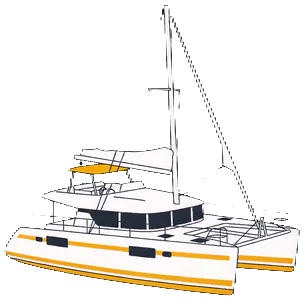
Catamarans dominate the Croatian charter market because they excel in the region's conditions. Dual hulls provide stability in variable Adriatic winds, spacious cabins accommodate families or groups of up to 8 people comfortably, and shallow draft allows access to smaller bays where monohull yachts cannot reach. For bareboat charter—where you captain the boat yourself—catamarans handle forgiving and responsive. They require less sailing experience than traditional sloops, moor easily in tight harbor spaces, and tolerate rough seas better than their monohull equivalents. Catamarans dominate the 30 to 50-foot range in Croatian fleets, and they represent the highest proportion of new vessel additions across the industry.
Traditional sailing yachts (monohulls) suit experienced sailors who prioritize the feel of genuine sailing—heeling under sail, tacking through narrow passages, and managing sails in varying conditions. Croatian waters offer excellent sailing; the summer maestral wind arrives reliably from the northwest each afternoon, creating ideal conditions for point-of-sail changes and multi-hour passages. A 40-foot sailing yacht demands proper seamanship—understanding heel angles, managing lines in a swell, and reading weather patterns—but rewards that skill with efficiency and pure sailing pleasure. This boat type attracts skippers who already hold licenses and who view the sailing itself as the primary objective.
Powerboats excel in Croatia's geography of scattered islands, short inter-island distances, and protected harbors where motoring from anchorage to anchorage requires only 2 to 4 hours. Motor yachts eliminate dependence on wind, allowing clients to follow precise daily schedules and dock at specific ports rather than adapt to sailing conditions. Luxury motor yachts carry crews (captain and chef), operate at 10 to 12 knots comfortably, and enable clients to enjoy destinations rather than focus on boat handling. This type suits clients over 65 years old, those with young children, families lacking sailing experience, and charterers with inflexible itineraries.
Gulets—traditional wooden vessels originating in Turkey but now built throughout the Mediterranean—represent a uniquely atmospheric charter option. Typically 70 to 120 feet, they carry 8 to 16 guests, feature an open aft deck ideal for evening dinners, and operate under either sail or motor. A gulet charter typically includes a captain and crew (sometimes a chef), removing navigation responsibility from clients and allowing pure vacation immersion. The wooden construction, traditional lines, and cultural authenticity appeal to clients seeking an experience unavailable on modern fiberglass vessels. Gulet charters cost more than equivalent bareboat catamarans, but the included crew and all-inclusive meals justify the premium.
Motor sailers combine a sailing yacht's rig with a powerful engine, offering the dual advantage of efficient motoring when winds disappear and legitimate sailing capability when conditions favor it. This compromise appeals to clients who want genuine sailing experience but lack the expertise or physical capability to handle a pure monohull in challenging seas. Motor sailers accommodate 6 to 10 guests, deliver comparable comfort to catamarans, and operate in the mid-range price structure between sailing yachts and luxury motor yachts.
The primary charter base in the Mediterranean by fleet size, Split offers the widest boat selection, most frequent arrival/departure scheduling, and easiest connections from international airports. The city itself—built around the Roman Palace of Diocletian—provides compelling first-night or final-night accommodation. From Split, a week's itinerary accesses Hvar, Vis, Korčula, and central Dalmatia without requiring extreme passages. The harbor accommodates 100+ charter vessels, providing multiple provisioning suppliers, excellent repair yards, and restaurants spanning price ranges from €12 mains to €35+. Peak-season availability can tighten (book 8-12 weeks ahead for June through August), but shoulder months (May, September, October) offer abundant boat selection and 20-30% lower weekly rates.
The southern base suits clients prioritizing cultural immersion, older crews, and short-haul sailing. The Elafiti Islands and Mljet National Park occupy most charter itineraries from Dubrovnik, with longer passages to Korčula possible but not typical. The city functions as a significant tourist draw, with the old town generating substantial foot traffic and restaurant premium pricing (mains €18-40). Repair services exist but lag slightly behind Split's infrastructure. Dubrovnik works best as a 7-day or shorter charter base; itineraries exceeding 10 days typically return to Split for better boat availability and daily rate competition.
The Kornati specialist base, Zadar offers fewer boats than Split but superior access to the Kornati archipelago and northern Dalmatia. The town itself remains less touristified than Split or Dubrovnik, with restaurants and provisioning reflecting local prices rather than charter-market inflation. For sailors seeking challenging navigation, island solitude, and serious wind conditions, Zadar's charter base delivers on all counts. The reduced boat density translates directly into better anchorages and fewer evening crowding issues.
A secondary option strategically positioned to reach both the Kornati and the Krka River, Šibenik operates a modest fleet (under 100 boats). The base suits itineraries combining Dalmatian island sailing with inland freshwater exploration. The town's medieval character and lower tourist saturation make Šibenik attractive as a starting point for clients seeking authenticity over resort convenience.
Positioned 30 kilometers west of Split, Trogir functions primarily as an alternative departure point for clients unable to secure boats from Split's base during peak season. The town itself is architecturally stunning—a medieval grid preserved on a small island—and offers quieter accommodation than Split. The sailing grounds remain identical to Split's (Hvar, Vis, Korčula, central Dalmatia), but the 30-kilometer travel time from Trogir to open water adds 4-5 hours to first-day itineraries.
The northernmost base in Istria, Pula serves clients targeting Istrian coast and Kvarner islands (Cres, Lošinj, Rab). The town's Roman amphitheater and Habsburg architecture provide cultural interest, but Pula remains primarily a specialist base for experienced sailors seeking strong wind conditions and solitude. Book here only if your sailing plan specifically targets the northern Adriatic.
Croatia's charter season runs April through October, with each period offering distinct advantages. May delivers warm sunshine (average 26°C), light winds suitable for first-time charterers, and sea temperatures around 19°C. June brings consistent maestral winds (15-20 knots afternoon/evening), excellent sailing conditions, and peak-season pricing (€3,200-4,800 weekly for mid-range catamarans). July and August offer reliable sunshine but the strongest winds, largest crowds, and highest rates (€4,000-6,000+ weekly). Early August can deliver gusty conditions exceeding 25 knots—exciting for experienced sailors, challenging for novices.
September represents the optimal charter month for most clients: summer heat moderates (23-25°C), wind patterns stabilize at 12-18 knots, tourist crowds thin perceptibly by mid-September, and weekly rates drop 15-25% versus peak season. October remains viable (18-21°C, lighter winds, 25-35% rate reductions), though storm frequency increases and some restaurants reduce hours. April and early May offer exceptional value (rates 40% below peak), light winds perfect for families, but water temperatures remain cool at 16-18°C, limiting comfortable swimming. The shoulder seasons suit first-time charterers, families with young children, and budget-conscious clients.
Weekly rates vary by boat type, size, and season. A bareboat catamaran (40 feet, 8 guests) costs €850-1,200 weekly in April-May, €1,400-2,000 in June, €1,800-2,400 in July, €1,600-2,100 in August-September, and €950-1,300 in October. Sailing yachts (40 feet) run 20-30% higher than catamarans (€1,100-1,500 April-May; €1,800-2,600 June; €2,200-3,200 July). Motor yachts (40 feet) begin around €2,500 weekly in shoulder season and reach €4,500-6,000+ in peak summer. Gulet charters including crew and meals cost €4,000-8,000+ weekly depending on vessel size, onboard amenities, and season.
These rates typically exclude fuel (€300-600 weekly for catamarans, €600-1,200 for motor yachts), provisioning (€250-400 weekly for simple self-catering or €800-1,500 for prepared meals), and harbor fees/national park entrance (€200-400 weekly). A comprehensive weekly budget for a bareboat catamaran supporting 6-8 people runs €2,000-3,500 total (boat plus living costs) in June, or €1,500-2,400 in shoulder season. Skippered charters add €300-500 daily for captain fees, placing skippered options at €3,100-4,600 weekly for mid-range boats in peak season.
Bareboat charter means you captain the boat yourself. You require either a sailing license (IYC or national equivalent), prior bareboat experience demonstrated through references or logbook entries, or enrollment in a hands-on sailing school preceding your charter. Bareboat suits clients who prioritize autonomy, who enjoy handling the vessel, and who already hold certifications. The economics favor bareboat when your group includes at least 4-6 people; costs per person decline sharply, and the experience becomes deeply personal rather than service-based.
Skippered charter places a professional captain aboard, handling navigation, sail management, and boat operation. You participate in sailing decisions, learn as much or as little as interest dictates, and avoid the mental load of navigation in unfamiliar waters. Skippered suits families with young children, clients without sailing licenses, groups prioritizing relaxation over sailing involvement, and charterers with complex itineraries demanding local knowledge. The captain reads wind patterns, selects optimal anchorages, communicates with harbor authorities, and troubleshoots mechanical issues—services worth the €400-600 daily premium in high-value scenarios.
This itinerary suits a bareboat catamaran (40 feet) departing early Monday from Split charter base, targeting a mix of sailing challenge, cultural exploration, and village living. Day One: Provision in Split, brief orientation sail to Brač (12 nautical miles, 2.5 hours), anchor at Supetar overnight. Supetar offers fish restaurants, a working fishing harbor, and the energy of a functioning Adriatic town rather than tourist resort.
Day Two: Early departure from Brač, 18 nautical miles southwest to Hvar town. This passage tests basic sailing skills in summer maestral conditions (typically 15-20 knots by afternoon). Hvar's harbor accommodates 40+ charter boats; arrive early for harbor space, explore the Renaissance fortress and lavender fields by late afternoon, dine at a waterfront konoba (expect €12-18 main courses). Evening entertainment includes live music from multiple bars on the harbor promenade.
Day Three: Short sail from Hvar to Pakleni Islands (4 nautical miles east), small uninhabited islands with exceptional anchorages and clear water. This day prioritizes swimming, snorkeling, and rest—no passage sailing, minimal navigation demand. Late afternoon, return to Hvar harbor for dinner ashore.
Day Four: Full-day passage from Hvar to Vis (25 nautical miles southwest). This is the week's longest crossing, requiring 5-6 hours under sail. Vis compensates with isolation; the island spent decades closed to outsiders, and the pace remains governed by fishermen and wine producers rather than tourism. Anchor at Vis town harbor. Walk the narrow alleys, visit a fishing museum, and book a table at a family-owned konoba serving pašticada (slow-braised beef in prune sauce, the island's signature dish). Vugava wine—produced from vines planted on centuries-old stone terraces—accompanies dinner for €18-25 per bottle.
Day Five: Day sail from Vis toward Korčula (20 nautical miles east), a passage of 4-5 hours. Korčula town, founded by Venetian traders, parallels Dubrovnik architecturally (walls, fortress, cathedral) without the overwhelming tourist saturation. Anchor in the town harbor or at nearby Lombarda village. Explore the winding streets, visit Marco Polo's birthplace (disputed by historians, embraced by tourism), dine on fresh seafood at waterfront restaurants (€13-22 mains).
Day Six: Flexible day. Sailing up to 15 nautical miles to explore smaller Korčula islands (Vrnik, Sveti Andrija), or simply remain in Korčula town with swimming and village exploration. The local wine Plavac Mali—a bold red from south Dalmatian islands—pairs with grilled fish at waterfront taverns. Some clients choose to sail east toward Pelješac Peninsula and the Ston oyster beds, though this extends the itinerary geographically.
Day Seven: Return passage to Split (35-40 nautical miles northwest), typically 7-8 hours. Depart early morning to arrive Split by late afternoon, facilitating boat cleaning, provisioning inventory, and evening accommodation in the city. This day's passage tests the week's skills in open water and typically delivers strong winds and good sailing conditions.
Croatian coastal cuisine reflects centuries of Venetian influence, Ottoman trade, and Mediterranean agriculture. Fresh fish (branzino, sea bass, squid) dominates restaurant menus, typically grilled whole or prepared simply in white wine and garlic. Peka—a slow-cooked dish of meat or vegetables under a bell-shaped iron cover buried in coals—emerges from konoba (family-run taverns) as the regional specialty. Gregada, a mixed-fish stew from Dalmatia, combines available daily catch with tomato, garlic, and parsley. Crni rižot (black risotto) made with squid ink offers an elegant preparation found in higher-end restaurants and capable konobas. Pašticada, the braised beef with prune reduction mentioned above, appears across island restaurants with variations reflecting family tradition rather than standardization.
Island wines deserve equal attention. The Adriatic produces regional whites and reds rarely exported beyond Croatia. Pošip from Korčula—a crisp white with acidity and mineral notes—complements grilled fish and costs €12-16 per bottle in restaurants. Plavac Mali, a deep red from southern islands, pairs with red-meat stews and sophisticated preparation of squid. Vugava from Vis stands apart in isolation; the vineyard terraces climb steep hillsides, and small production (under 50,000 bottles annually) ensures rarity beyond the island itself. Charter visitors discovering Vugava in a waterfront tavern experience genuine local agriculture rather than mass-market wine tourism.
The culture of konoba eating defines island living. Arrive at 8pm or later (restaurants rarely fill before 8:30pm), order simply (ask the server what fish arrived fresh today), and plan to remain 2-3 hours. This is not efficient dining; it is Mediterranean living compressed into an evening. Most konobas serve mains at €10-20, house wine at €3-4 per glass, and grappa or rakija (local brandy) complimentary to departing clients. Reservations matter during peak season, though walk-ins find seating at quieter locations away from harbor fronts.
Yes. Croatian maritime law requires that bareboat charterers hold either an International Yacht Certificate (IYC), a national sailing license recognized by the International Sailing Federation (IYC-equivalent status), or documentation of prior bareboat experience approved by your charter company. First-time sailors should arrange a one-week sailing school before departure, combining certification with practical skill-building. Most charter bases offer detailed guidance on licensing requirements and acceptable qualifications, ensuring smooth check-in process.
Bring your passport (valid for at least 6 months beyond travel dates), national driving license, sailing license or IYC, and travel insurance documentation. EU citizens require no visa; non-EU citizens should verify Croatian visa requirements via their embassy. Your charter company will provide specific documentation checklists well before your arrival, typically specifying any additional paperwork (proof of payment, booking confirmation, liability waivers). Some charter bases request a photocopy of your sailing certificate during pre-charter briefing.
Yes. Croatian maritime regulations mandate that charter yachts carry life jackets for all aboard, safety harnesses, flares, first aid kits, fire extinguishers, and life rafts proportionate to passenger capacity. Your charter briefing will familiarize you with equipment location and operation. Safety equipment standards are uniform across European charter bases, and crew aboard skippered charters will demonstrate proper jacket fitting and man-overboard procedures before your departure.
September offers the optimal balance of weather stability, moderate wind conditions, minimal crowds, and 15-25% rate reductions versus peak season. May and June suit first-time charterers and families (lighter winds, warmer but not excessive temperatures). July and August guarantee sunshine but deliver peak-season crowds and rates. October remains viable (calm seas, further rate reductions) but with increasing storm risk and reduced restaurant hours ashore. Avoid November through March; charter operations scale significantly, and Mediterranean storm season presents navigation challenges.
Budget €2,000-3,500 total per week for a bareboat catamaran supporting 6-8 people in summer (boat plus fuel, provisioning, harbor fees, and national park entrance). Shoulder-season costs run €1,500-2,400 weekly. Skippered charters add €400-600 daily. Comprehensive pricing guides break down expenses across boat types and seasons, helping you estimate total costs before commitment. Gulet charters (including crew and meals) begin around €4,000-5,000 weekly and extend beyond €8,000 for luxury vessels in peak season.
Yes. Book a skippered charter (captain included) or enroll in a one-week sailing school preceding your charter. Alternatively, some charter companies offer crewed gulet charters where professional crew manage navigation and sailing entirely. First-time sailors should not attempt bareboat charters; the Adriatic's navigation complexity, channel restrictions, and busy summertime traffic demand competence. If you're committed to learning bareboat sailing, arrange structured training before arrival. Guides for first-time renters outline all viable paths, from skippered options to structured sailing schools.
Croatia's charter season fills progressively through spring, with peak summer weeks (late June through August) booked 10-12 weeks in advance. If you're planning next summer, check availability early; if you're flexible on dates, shoulder seasons (May, September, early October) deliver superior boat selection, better anchorage access, and 20-35% rate reductions compared to peak weeks.
Start your search on Boat4You's Croatia charter listings, where you'll filter by base location, boat type, weekly rate, and departure date. First-time clients should review how the charter process works and explore frequently asked questions answering common concerns. If you have complex requirements—families mixing sailing experience levels, clients needing guidance on packing for Mediterranean sailing, or preferences for specific islands or boat types—contact Boat4You's team directly.
The Adriatic has drawn sailors for 2,000 years. The geography, climate, and sailing conditions haven't changed materially since Venetian traders navigated these passages by the same winds and stars you'll encounter. What has changed is access: a week's bareboat charter now costs less than a comparable land-based Mediterranean vacation, and the charter industry's maturity means that first-time clients arrive safely, quickly, and without the operational uncertainty that plagued early recreational yacht chartering. Whether you seek challenging offshore passages, island-hopping with swimming and cultural exploration, or pure relaxation aboard a luxury gulet, Boat4You connects you with the right vessel, the right departure location, and the support structure ensuring your Croatia sailing experience becomes a genuine vacation rather than an operational burden.
Start by browsing available boats on the search page, or check the FAQ for common questions. New to chartering? See how the booking works.