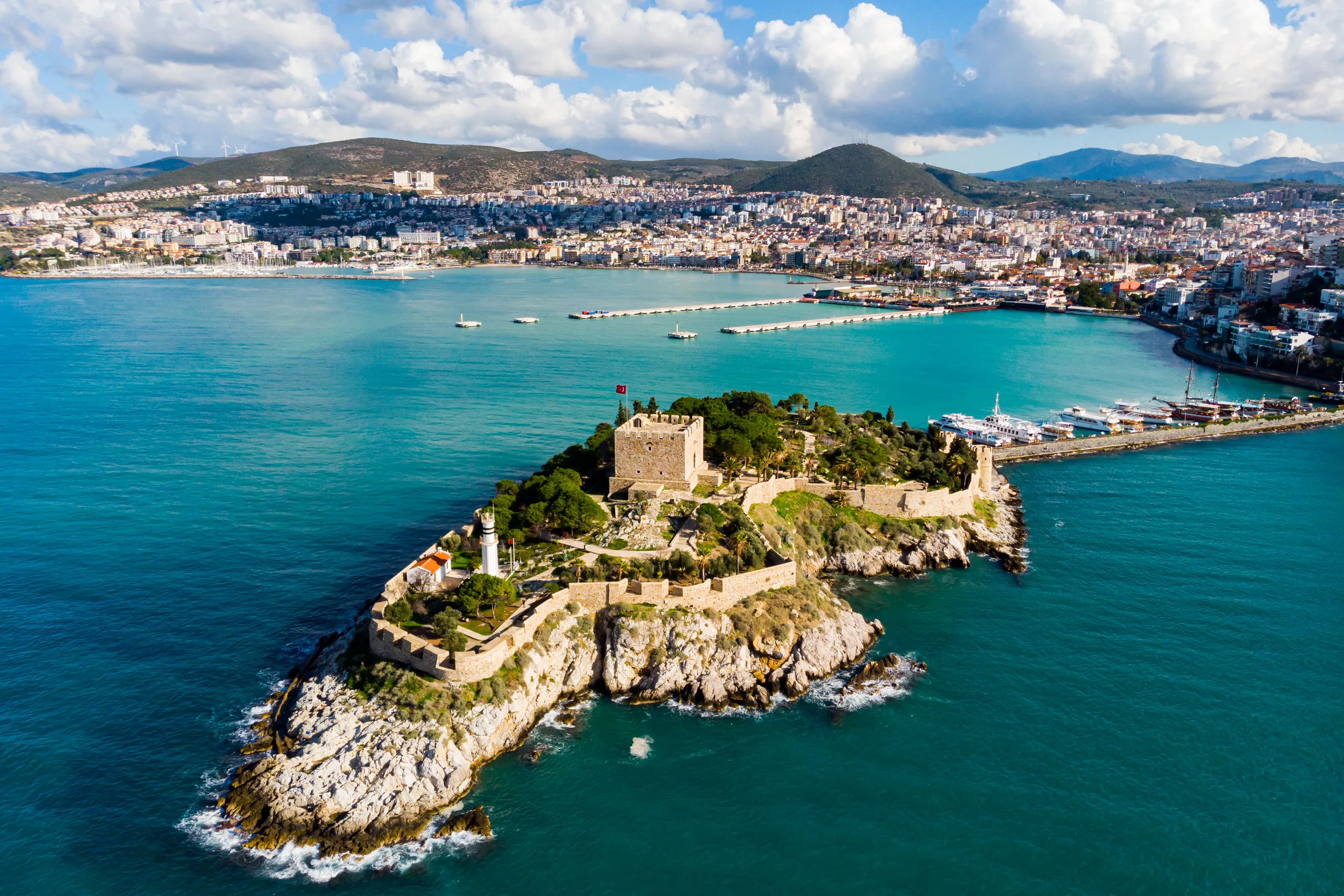
Yacht Charter from Australia: Where to Sail by Month, Budget and Crew
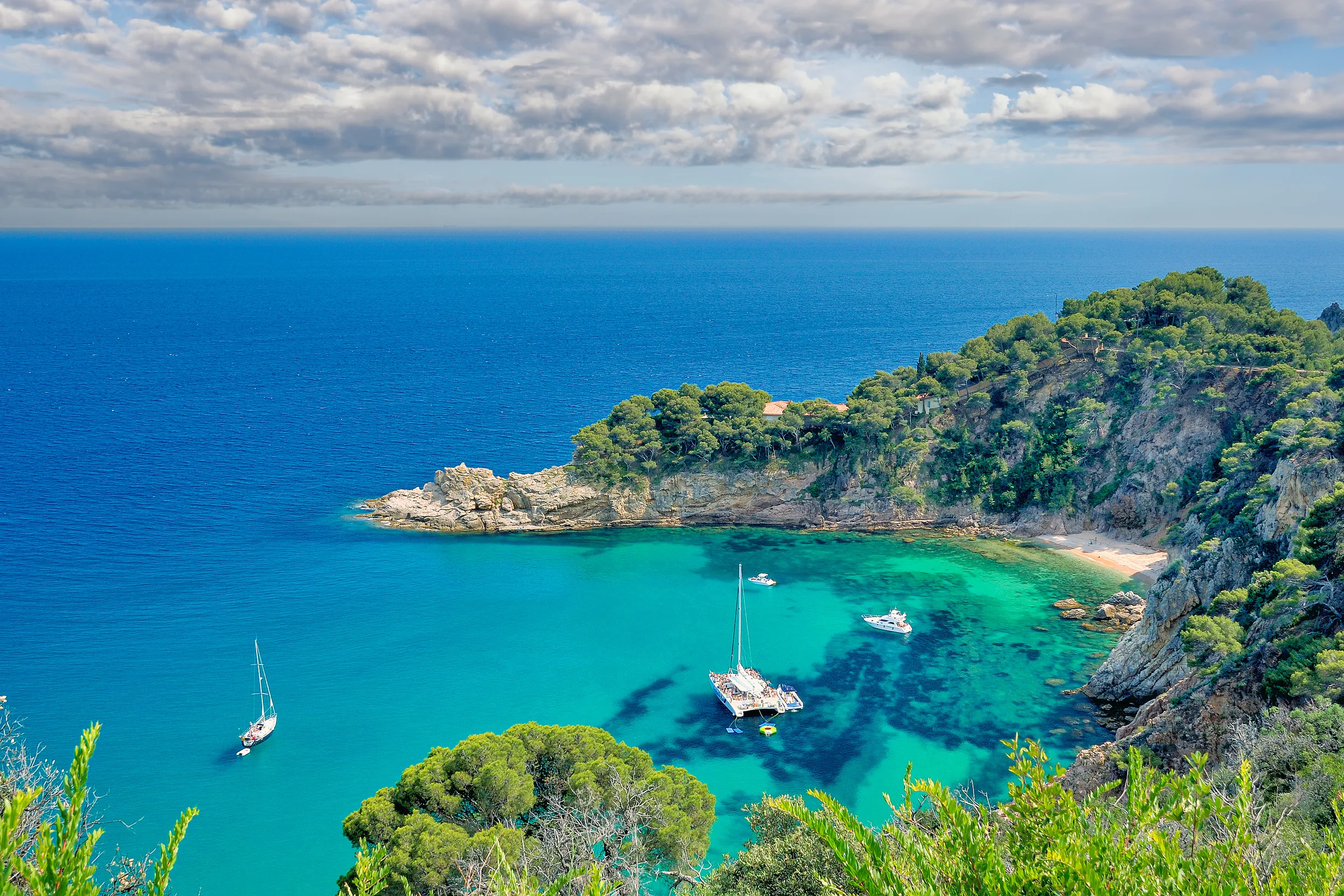
Planning a yacht charter from Australia starts with a question Europeans rarely ask: where is it worth flying a full day to sail, and in which month? From Sydney, Melbourne or Perth every charter region on our list sits at least one connection away, so the destination has to fit your leave, your budget and the people on board before it fits the brochure.
This guide sorts the twelve countries we arrange charters in by the things that decide the trip for Australian guests: the month you can travel, how long the flights take, what a week costs in Australian dollars, when a skipper makes sense, and what your passport and boat licence get you at the other end.
Start with the calendar, not the map
The single biggest filter is when you can get away. The northern and southern sailing seasons barely overlap, so the month you book leave largely picks the region for you.
- December to April: the Caribbean is in its dry season. The British Virgin Islands, the Bahamas, Grenada and Martinique sail on steady trade winds of 15 to 20 knots, with Christmas and New Year the dearest weeks. The Seychelles are in the northwest monsoon, warm and humid with lighter breezes and passing showers.
- April and May: the Seychelles hit their calm transition, often the clearest water of the year. The Caribbean season winds down after Easter, and the Mediterranean opens with cool water around 18 to 20°C.
- June to September: Mediterranean summer. Croatia, Montenegro, Greece, Italy, Spain, France and Türkiye all run full programmes. July lines up with the Australian winter school holidays, which is why those weeks go first. The Aegean meltemi can blow 25 to 35 knots in July and August, so families often lean towards the Ionian or the Adriatic in peak weeks. The Caribbean is in hurricane season from June to November and most crews avoid it.
- October and November: the Med stays warm into October, especially in Türkiye and southern Greece, while the Seychelles enter their second calm window. Late November is when Caribbean fleets come back into service.
Our month-by-month guide to sailing the Mediterranean goes deeper on sea temperatures and winds for each country if summer is your window.
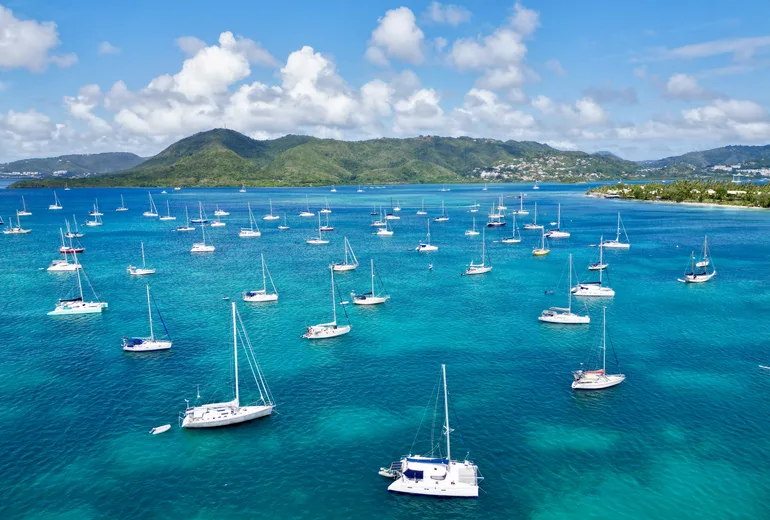
Flight time from Sydney, Melbourne and Perth
None of the twelve countries has a non-stop flight from Australia, so the useful comparison is total travel time with one or two connections. These are typical door-to-door figures, not best cases.
- Seychelles: one stop via Dubai, Doha or Abu Dhabi to Mahé. Around 17 to 22 hours, with Perth the quickest start. This is the closest sailing region to Australia by a clear margin.
- Greece and Türkiye: one stop through a Gulf hub, Singapore or Istanbul. Athens is roughly 21 to 27 hours from the east coast; Dalaman and Bodrum add a short domestic hop through Istanbul.
- Croatia, Montenegro, Italy, Spain and France: usually 24 to 30 hours to Split, Dubrovnik, Tivat, Rome, Palma or Nice, sometimes with a second short leg inside Europe.
- Caribbean: the long way. Most routings go across the Pacific to Los Angeles or Dallas, then on to Miami and a final island hop, which adds up to 30 to 36 hours for the BVI, Grenada or Martinique. Nassau in the Bahamas is a little easier at about 28 to 32 hours. Any US connection needs an approved ESTA, even if you stay airside the whole time.
Jet lag follows the same pattern. In the northern summer Croatia and Italy run eight hours behind Sydney, Greece and Türkiye seven. The Seychelles are six or seven hours behind depending on daylight saving at home, while the Caribbean sits 14 to 16 hours behind, close enough to a full day flip that the first two nights aboard can feel strange.
How many weeks makes the flight worth it?
Most Australian guests we talk to settle on a simple rule: if the flight is over 24 hours, one week on the water is the minimum and two is better. A single Saturday-to-Saturday week in the Med is fine when it sits inside a three or four-week European trip. As a stand-alone holiday, the arithmetic looks thin: two days in the air each way for six full sailing days.
Some practical patterns that work:
- Mediterranean: one week aboard plus a week on land either side, or two back-to-back charter weeks in different regions, for example Split one week and the Ionian the next.
- Caribbean: 10 to 14 days on the boat. Caribbean bases are often more flexible on start days than the Med, which helps when flights are long and fares jump around.
- Seychelles: seven to ten days suits the distances between Mahé, Praslin and La Digue, and the shorter flight makes a one-week stand-alone trip more reasonable than anywhere else.
Mediterranean charters run Saturday to Saturday at most bases, with check-in around 17:00 and check-out around 09:00. Arriving a day early and sleeping in a hotel near the marina costs one night and buys you a rested first sailing day.
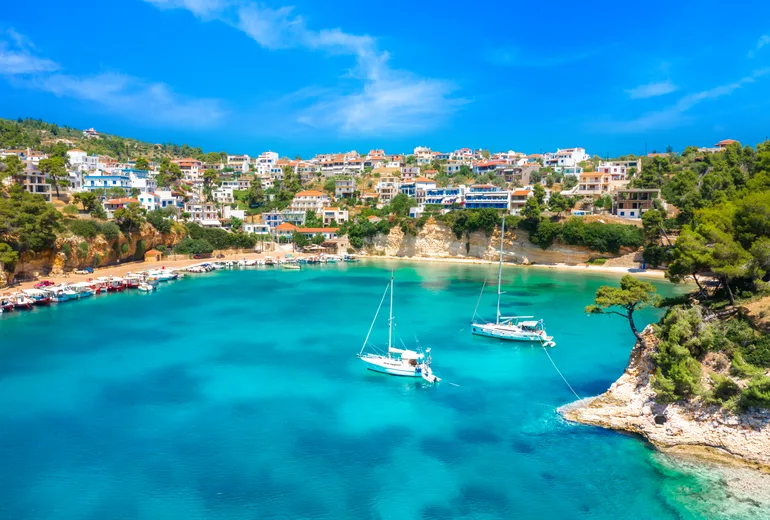
Yacht charter from Australia: budget bands in AUD
Boat4You shows prices in euro by default, with a currency selector if you want to browse in another one. The bands below are indicative for a 40 to 45-foot bareboat catamaran per week, from shoulder season to peak, converted at roughly A$1.60 to the euro. The exchange rate will move; the base price in euro will not.
- Croatia and Montenegro: about €3,500 to €12,000, so A$5,600 to A$19,200.
- Greece: about €3,500 to €11,000, so A$5,600 to A$17,600.
- Türkiye: about €3,000 to €12,000, so A$4,800 to A$19,200, with food and berths ashore usually cheaper than in Croatia.
- Italy, Spain and France: about €4,500 to €14,000, so A$7,200 to A$22,400.
- British Virgin Islands and the Bahamas: about €6,500 to €10,000, so A$10,400 to A$16,000, with festive weeks at the top.
- Grenada and Martinique: about €4,500 to €8,500, so A$7,200 to A$13,600.
- Seychelles: about €6,000 to €12,000, so A$9,600 to A$19,200.
On top of the rental, budget for fuel, berths, provisioning and local taxes, which typically add 15 to 25 percent for a crew of six to eight. A skipper runs roughly €160 to €220 a day in the Med, about A$260 to A$350, plus their meals. Flights are the other big line: for a family of four, the gap between a Seychelles fare and a Caribbean fare can be bigger than the gap between two boats. Our full breakdown of yacht charter costs splits these extras out line by line.
Bareboat, skipper or full crew: what each region suits
How you sail matters as much as where. A bareboat means you skipper the boat yourself; a skippered charter adds a local professional who handles navigation and mooring; a crewed charter adds a cook or hostess and turns the week into a floating holiday.
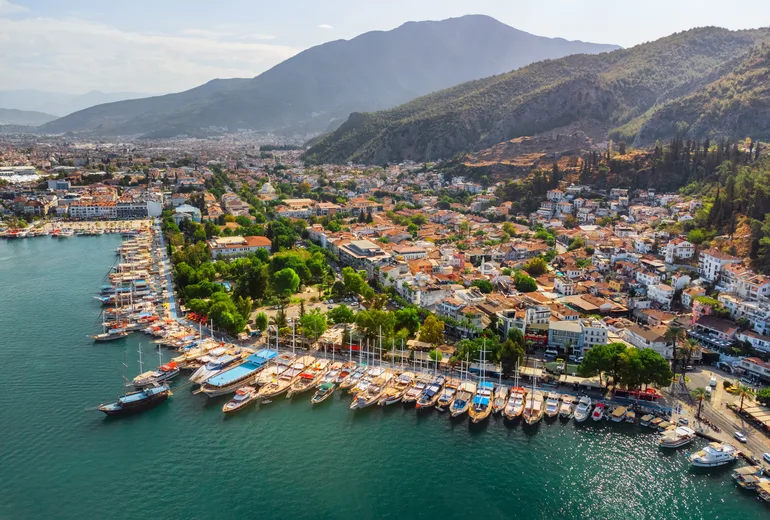
Croatia, Greece’s Ionian and the BVI are the classic bareboat grounds: short hops, plenty of shelter and good charts. Grenada and the Grenadines, the Balearics and the Turkish coast around Göcek are also comfortable for a competent crew. The Cyclades in meltemi season and the Seychelles reefs are where a skipper earns their fee, and where a first-time crew from Australia usually takes one.
Gulets are traditional wooden yachts that come with their own crew, captain and cook as standard, and they are at their best along the Turkish coast. For a multi-generation group that wants to swim, eat well and leave the sailing to someone else, a crewed gulet out of Bodrum or Fethiye is hard to beat on value. Our guide to bareboat versus skippered charters lays out the trade-offs in more depth.
Licences: what your Australian ticket is worth abroad
This is where Croatia stands apart. Croatia officially recognises five Australian state licences for bareboat yachts up to 30 gross tonnes: the NSW General Boat Driving Licence, the Queensland Marine Licence Verification Certificate, the South Australian Boat Operator’s Licence, the WA Recreational Skipper’s Ticket and the Victorian Marine Licence (not the restricted version). You also need a separate VHF radio operator certificate, and the charter base will ask for a sailing CV. Our sister site’s Australian guide to sailing a catamaran in Croatia covers that recognition in detail.
Elsewhere the picture is less tidy:
- Greece, Italy, Spain, France, Montenegro and Türkiye: plan on an International Certificate of Competence or an RYA Day Skipper, plus a VHF certificate. Australian state licences are not reliably accepted, so confirm with the charter base in writing before you pay, or book a skipper.
- British Virgin Islands, Bahamas and Grenada: bases generally work from a sailing CV showing experience on a similar-sized boat rather than a formal licence. Martinique, as French territory, can ask for a recognised certificate, so check.
- Seychelles: bareboat is possible with a solid CV, but reef pilotage is unforgiving and most operators recommend a skipper, at least for the first days. Verify the requirement for your specific boat.
For a country-by-country version, see do I need a sailing licence to charter a yacht.
Entry rules and the 90-day Schengen clock
Australian passport holders visit the Schengen area visa-free for up to 90 days in any 180. Croatia, Greece, Italy, Spain and France all share that one clock, so a month in Italy before a Croatian week counts against the same 90 days. Montenegro and Türkiye sit outside Schengen, which makes them handy for a longer European trip: days spent there do not use up your Schengen allowance. The EU’s ETIAS pre-travel authorisation was still not in force as of November 2026, so check the official EU pages before you fly.
Türkiye lifted its visa requirement for ordinary Australian passports in April 2026, allowing visits of up to 90 days in 180. Older guides still mention an e-Visa, so confirm the current rule on Smartraveller before departure.
The Seychelles do not require a visa from Australians. A free visitor’s permit is issued on arrival, but air travellers must first get an electronic travel authorisation through the official Seychelles government portal, with a small processing fee; apply only on the government site, not through an agent. For the Caribbean the main paperwork is the US ESTA for your connection. If your Europe routing runs through London, check the UK’s electronic travel authorisation rules for Australians as well.
Which region to pick for your crew
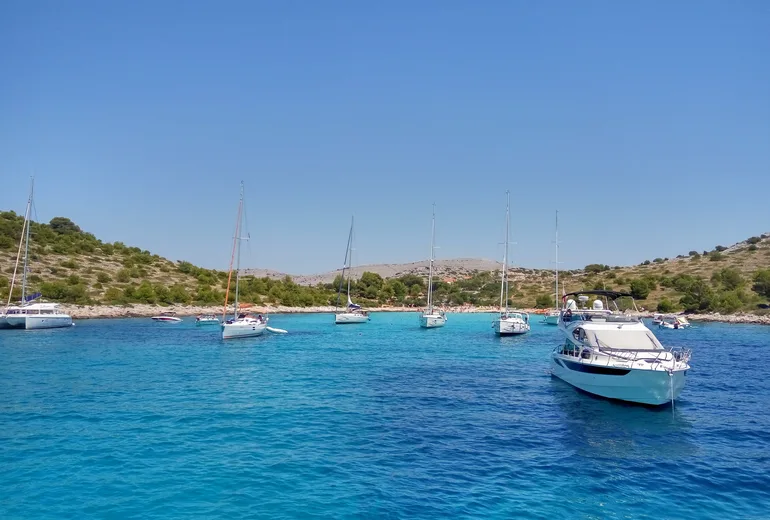
Families with teenagers. If the trip has to fit the July school holidays, Croatia or the Ionian are the safest bets: short legs, swimmable anchorages and towns like Hvar, Korčula, Lefkada and Fiskardo for evenings ashore. In the December break, the BVI give teenagers snorkelling at The Baths and The Indians and passages of two or three hours. Our family yacht charter guide has more on cabins and ages.
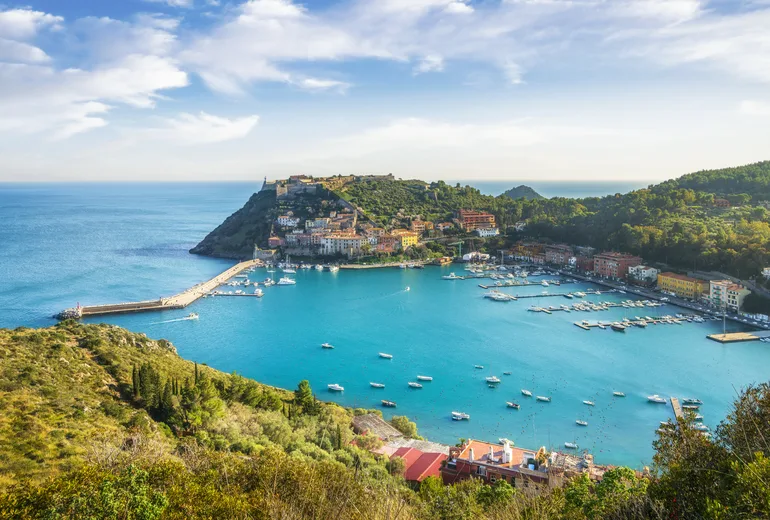
Couples. Take the shoulder months. June or September in the Amalfi Coast, Sardinia or the Saronic Gulf gives warm water and quieter harbours, and the Seychelles in April, May, October or November are the shortest long-haul trip on this list, with Anse Lazio on Praslin and the granite boulders of La Digue as the reward.
Groups of friends. A big catamaran in the Balearics, the Cyclades or the Exumas suits a crew that wants beach bars and long swims, and splitting the hire across eight or ten people brings the per-head cost down sharply. Just be honest about who can handle the boat in 25 knots.
Multi-generation groups. Choose comfort and crew over sailing ambition. A crewed gulet in the Gulf of Gökova or a skippered catamaran in Croatia lets grandparents rest and children swim, with a cook taking care of the meals.
Frequently Asked Questions
What is the closest place to Australia to charter a yacht?
Of the countries we cover, the Seychelles are the closest, with one stop via Dubai, Doha or Abu Dhabi and roughly 17 to 22 hours of travel. The Mediterranean is usually 21 to 30 hours away and the Caribbean 30 to 36 hours.
When should Australians book a Mediterranean charter for July?
Nine to twelve months ahead is sensible for July and August, because Australian school holidays overlap with the European peak. For June or September, six to nine months usually still leaves a good choice of boats.
Can I use my Australian boat licence overseas?
In Croatia, five Australian state licences are officially recognised for bareboat yachts up to 30 GT, together with a separate VHF certificate. In most other countries you will need an ICC or RYA qualification, or a skipper; confirm the requirement in writing before booking.
Is the Caribbean worth the flight from Australia?
It can be, if you give it 10 to 14 days and travel in the December to April dry season. With 30 hours or more each way and a US ESTA required for the connection, a single week is a hard sell for most crews.
How much should an Australian crew budget for a week on a catamaran?
For a 40 to 45-foot catamaran, roughly A$5,000 to A$22,000 for the boat depending on region and month, at about A$1.60 to the euro, plus 15 to 25 percent for fuel, berths and food. Flights for the whole crew are usually the second-largest cost.
Do Australians need a visa for Türkiye or the Seychelles?
Türkiye removed its visa requirement for Australian passport holders in April 2026 for stays of up to 90 days. The Seychelles issue a free visitor’s permit on arrival, but you need an electronic travel authorisation from the government portal before you fly.
Once you have a month and a crew in mind, search available yachts across all twelve charter countries and send us your dates; we will check what is still open and come back with honest options.
Explore boats
Boats you can charter in the places this article covers.
Ideas for your next sailing vacation
Boat rental & yacht charter around the world at the best prices