7-Day Sailing Itinerary from Corfu: The Northern Ionian, Paxos & Lefkas
Updated May 2026.
The Ionian Sea on the western Greek coast is the most family-friendly cruising ground in Greece. Distances between islands are short, anchorages are sheltered, and the meltemi — the wind that punishes Cyclades crews — barely reaches this far west. Corfu sits at the northern end of the Ionian and serves as the gateway base for routes south to Paxos, Lefkas, Kefalonia, and Ithaca. This itinerary covers the practical week from Corfu to Lefkas and back, the classic northern-Ionian charter.
Day 1 — Gouvia or Corfu Town to Lakka, Paxos (35 NM)
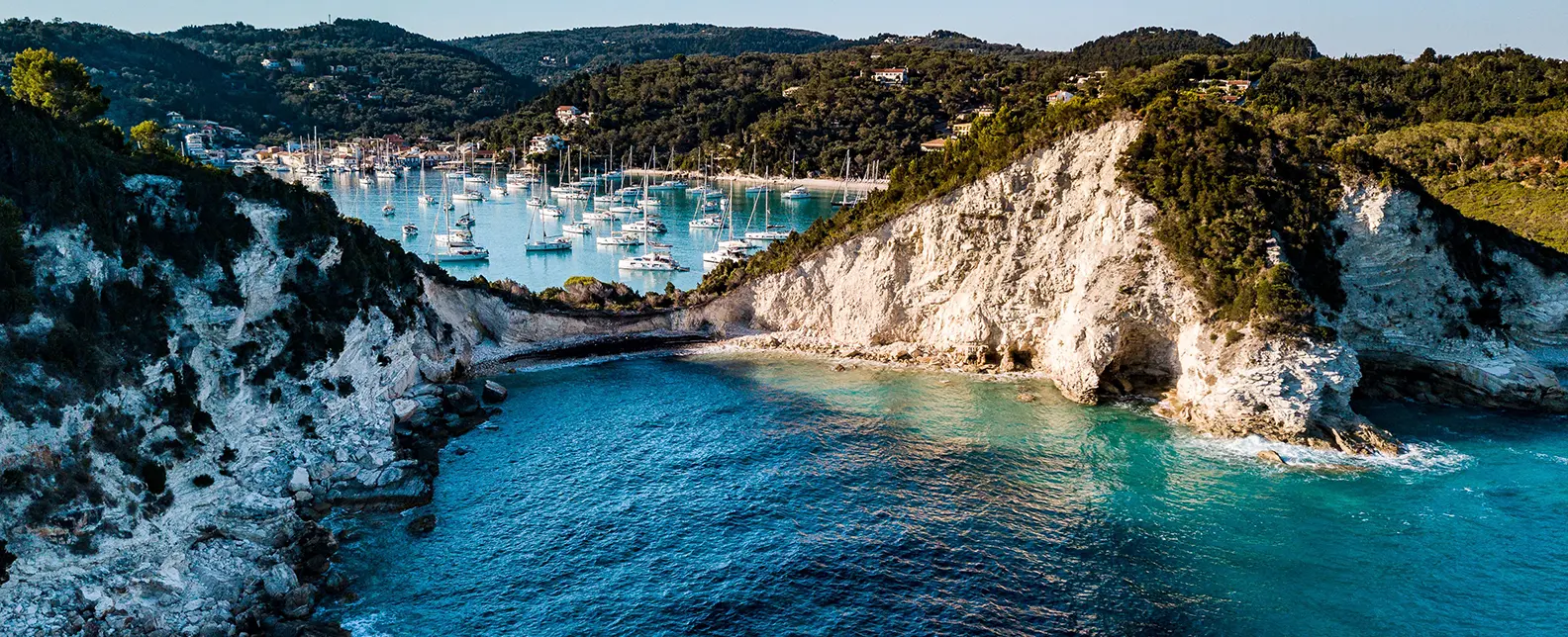
Pickup at Marina Gouvia (the largest charter base on Corfu) or Corfu Town’s commercial harbour. Provision at the AB Vassilopoulos near Gouvia. Day 1 is the longer commitment of the week — 35 NM south to Paxos. Lakka, on Paxos’s northern tip, is the standard first overnight: a perfect circular bay, 8–10 metres of sand-bottom anchoring, three good konobe on the waterfront. Arrive by 17:00 in season; the bay fills fast in July and August. The Ionian Islands deep-dive covers Paxos in more detail.
Day 2 — Lakka to Antipaxos (5 NM)
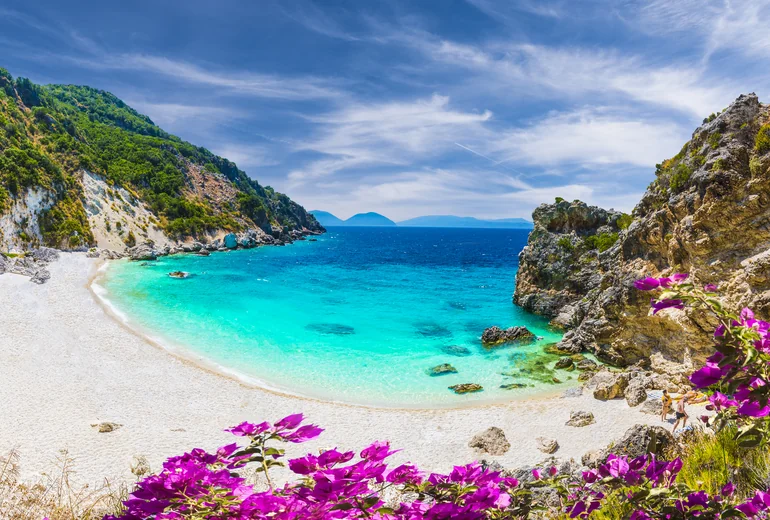
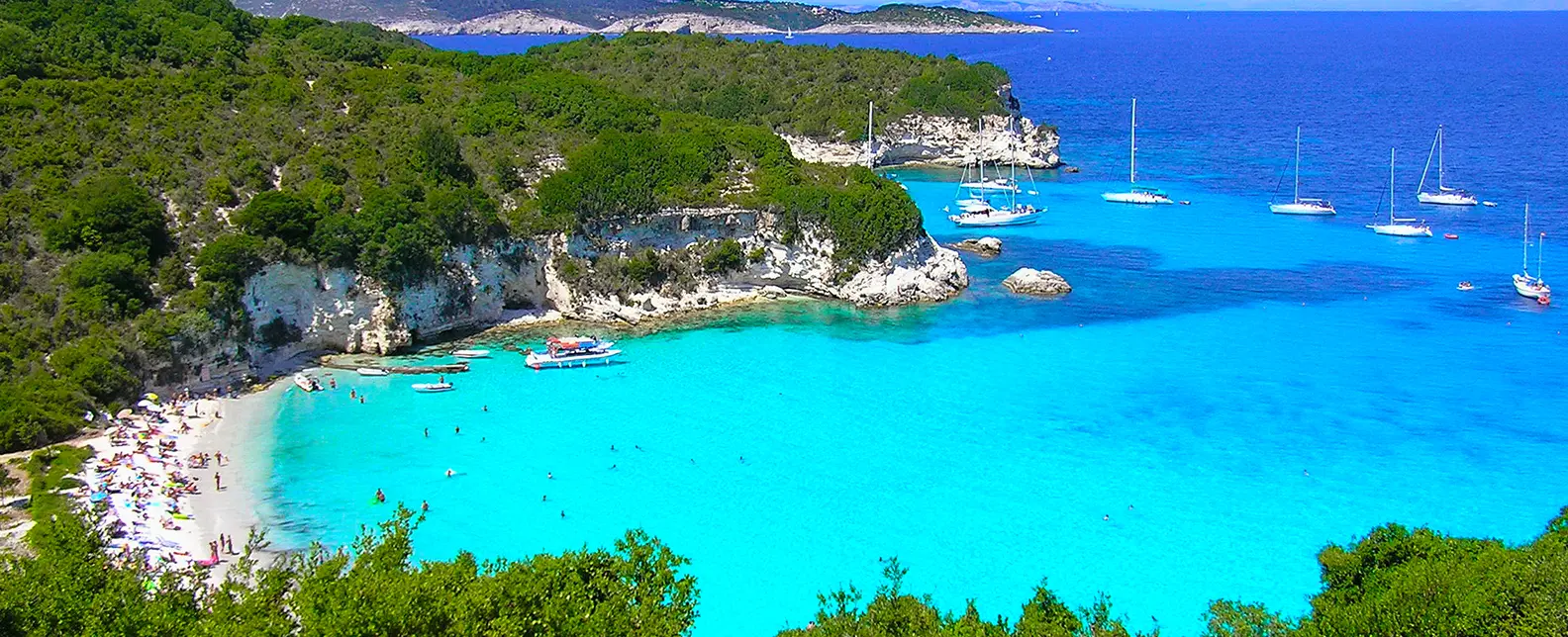
Short hop south to Antipaxos — Paxos’s smaller neighbour, three small bays (Voutoumi, Vrika, Mesovrika), the clearest water in the northern Ionian. Anchor in turquoise water for lunch and an afternoon swim, then continue 8 NM east to Mongonisi or Gaios at the southern tip of Paxos for the night. Mongonisi is anchorage-only; Gaios is a working harbour with provisioning.
Day 3 — Paxos to Sivota Mainland (15 NM)
Cross to the Greek mainland coast. Sivota (also spelled Syvota) is a sheltered bay on the western Greek mainland with a small harbour and several mooring options. The bay handles charter boats well — water and electricity at the town quay, provisioning ashore, and a busy konoba scene. Sivota is the marquee mainland stop on a Corfu-Lefkas route. The walks above the town reveal panoramic views over the bay and across to Paxos.
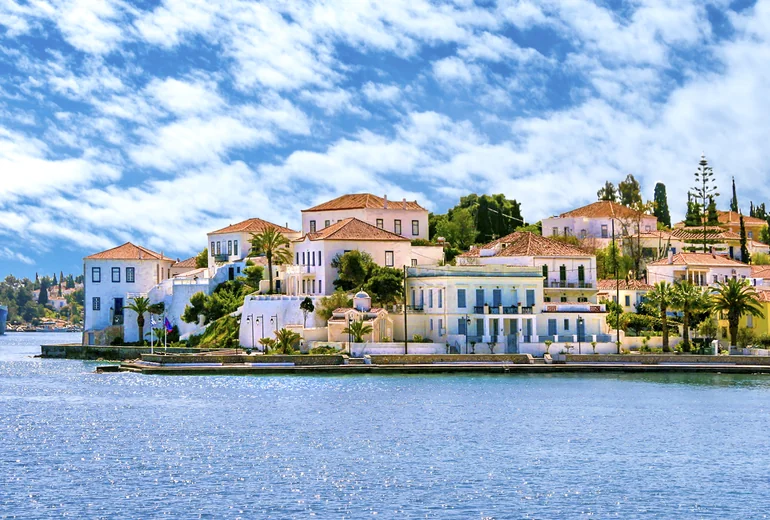
Day 4 — Sivota to Vasiliki, Lefkas (28 NM)
Southeast to Vasiliki, on the southern coast of Lefkas island. Vasiliki is famous in the Mediterranean wind-window — afternoon thermal winds reliably exceed 18–22 knots from the west, attracting wind-surfers and small-boat sailors for decades. Charter boats come for the same wind, the wide-open bay, and the easy-hold anchorage. Konoba Aphrodite at the western end of the bay is the dinner reservation. Vasiliki sits at the southern turning point of a Corfu round-trip.
Day 5 — Vasiliki to Spartochori, Meganisi (12 NM)
Round Lefkas’s southern tip and head east into the Inland Sea — the protected stretch of water between Lefkas, Meganisi, Kalamos, and the mainland. Spartochori on Meganisi is a tiny harbour with a hilltop village and excellent quayside konobe. Mooring is stern-to on the town quay (limited spots, arrive by 16:00) or anchored in the bay just east. Meganisi is small and walkable; the village above the harbour is reachable by a 15-minute uphill walk.
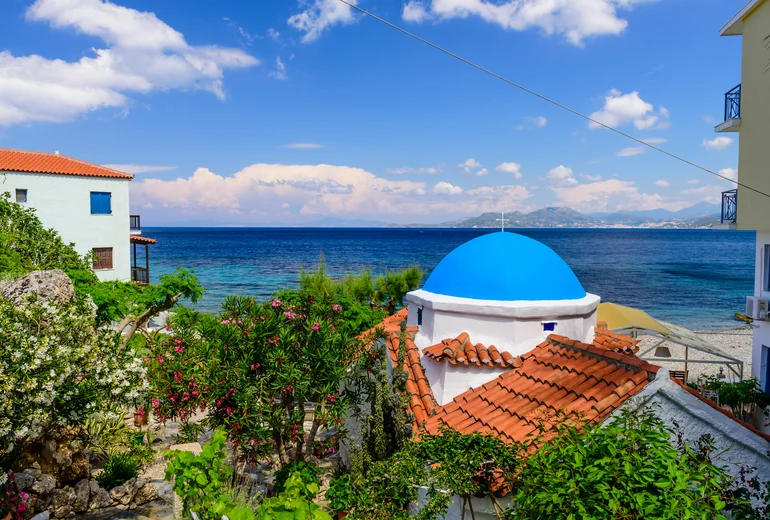
Day 6 — Spartochori to Mongonisi, Paxos (35 NM)
Long northbound leg back toward Paxos. Mostly a beam-reach in the typical northwesterly. Most crews split this leg by stopping for lunch at one of the smaller mainland bays (Sarakiniko on Lefkas’s east coast is one option). Arrive at Mongonisi or Lakka on Paxos by 17:00. The two-night Paxos visit (Day 1 and Day 6) is the standard pattern.
Day 7 — Paxos to Gouvia, Corfu (35 NM)
Direct return north. Aim for Gouvia by 14:00 for the 16:00 handover. Fuel up at the marina fuel dock before final berthing. Most charter operators want the boat full and clean.
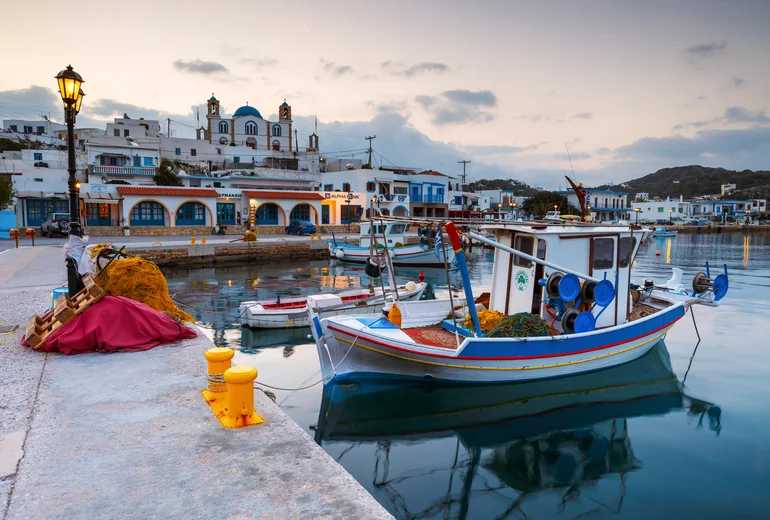
Total distances and difficulty
Approximately 165 NM across the week, with Day 1 and Day 7 each at 35 NM. The Ionian doesn’t get the meltemi the Cyclades do, but the longer legs (especially Day 6 and Day 7) are real commitments. Recommended for crews comfortable with 35-NM days; first-time Greek charterers without experience often pick the Saronic instead — see the Saronic Gulf guide for the easier alternative.
One-way Corfu → Lefkas alternative
If your operator offers it, a one-way Corfu → Lefkas charter (or vice versa) eliminates the Day 6 and Day 7 long returns and replaces them with a 35-NM relaxed afternoon leg. The full week becomes more leisurely: Day 1 Gouvia to Lakka. Day 2 Lakka to Sivota. Day 3 Sivota to Vasiliki. Day 4 Vasiliki to Spartochori. Day 5 Spartochori to Fiskardo, Kefalonia. Day 6 Fiskardo to Vathy or Frikes on Ithaca. Day 7 Ithaca to Lefkas Marina handover. Operator upcharges run 25–40% for one-ways. Worth it for the relaxed week.
The Ionian aesthetic vs the Cycladic
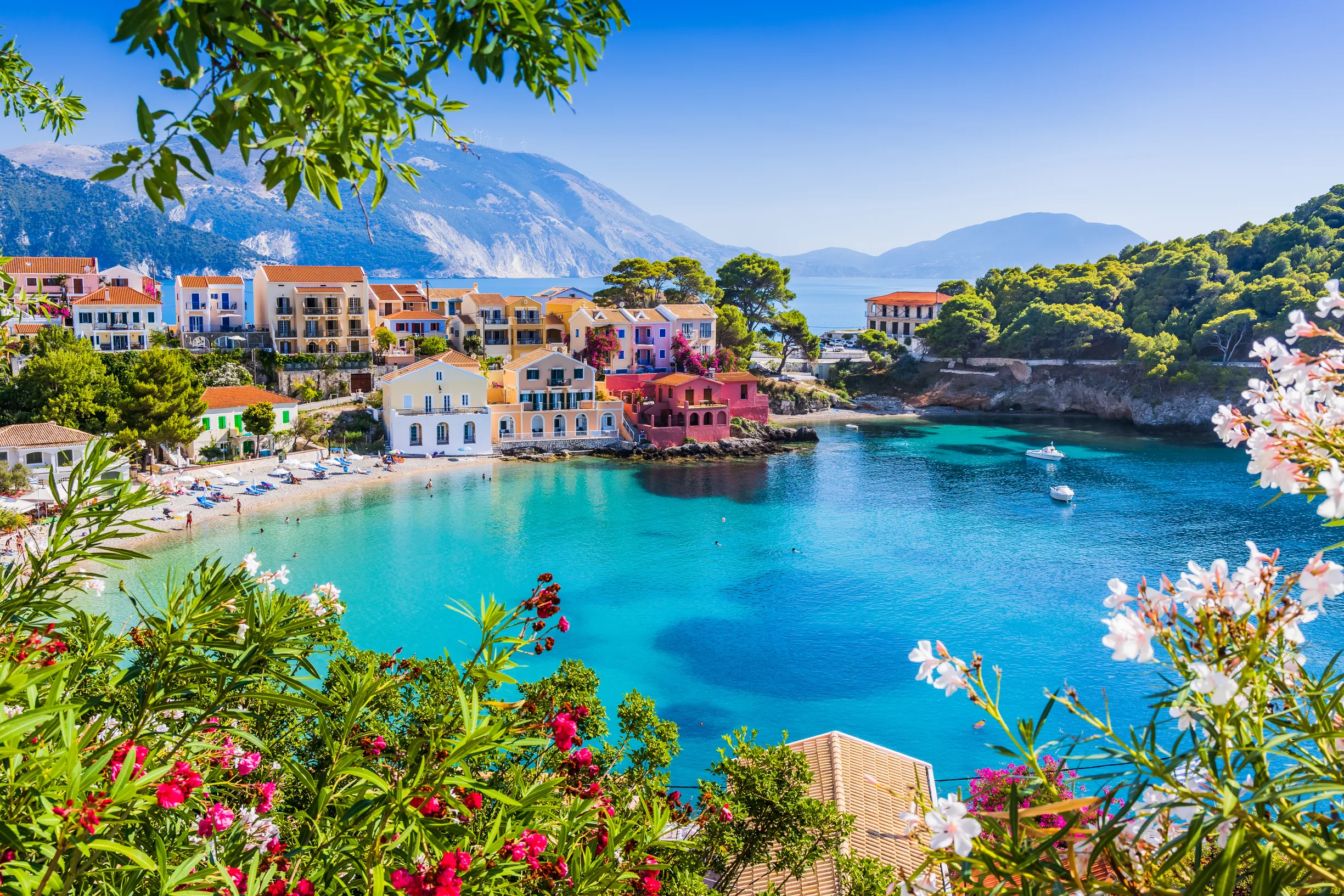
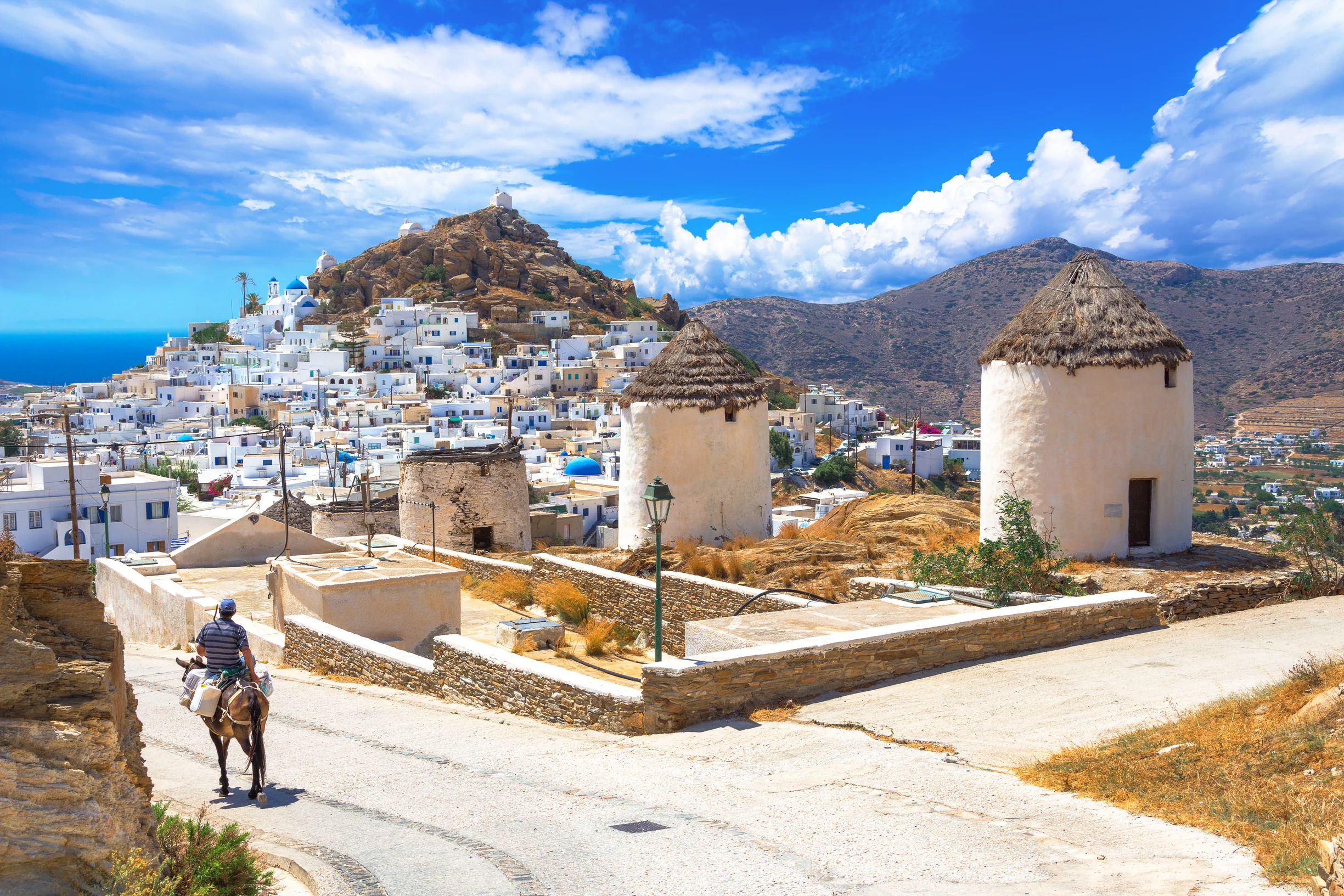
The Ionian feels more lush, greener, and more like the western Mediterranean than the eastern. Olive groves, cypresses, sandy beaches — closer to Italian Riviera or Croatian coastlines than to the bare Cycladic islands. Architecturally, Venetian influence dominates (Corfu was Venetian for 400 years), so towns have campaniles and stone-shuttered windows rather than the whitewashed Cycladic blue-and-white. Crews who’ve sailed the Cyclades before often find the Ionian less photogenic but more livable. The Greece sailing guide covers the broader regional choice.
Provisioning, fuel and Ionian-specific logistics
Provisioning at Gouvia is excellent — AB Vassilopoulos and Sklavenitis within 10 minutes. Lakka, Gaios, Sivota, Vasiliki all have small but adequate supermarkets; Spartochori (Meganisi) has only village shops. Provision substantially in Corfu before pickup, then top up at island stops. Diesel runs €1.55–1.80 per litre in 2026. Marinas are €30–80 in working harbours; Marina Gouvia handover is €100–150 for the final/first night. Most konobe accept cards; cash for tips. ATMs work everywhere except Antipaxos and Meganisi’s smaller villages.
Booking lead times and Ionian-specific patterns
Ionian charters sit between Saronic and Cyclades on demand intensity. Peak weeks (mid-July to mid-August) book 5–8 months ahead at Marina Gouvia (Corfu) and Lefkas Marina. Shoulder weeks book 2–4 months ahead. Late-availability discounts exist but are less aggressive than in the Cyclades or Croatia. The Ionian is the family-charter favourite — many operators report 50–60% of bookings are 6+ person family groups, often returning year-on-year.
Frequently asked questions
Is the Ionian harder or easier than the Saronic?
Slightly harder. The Saronic has shorter distances and even less wind. The Ionian has reliable thermal afternoon winds (the maestral-equivalent) and 30-NM legs in this route specifically. The Saronic guide is the easier alternative.
Can I sail this route on a catamaran?
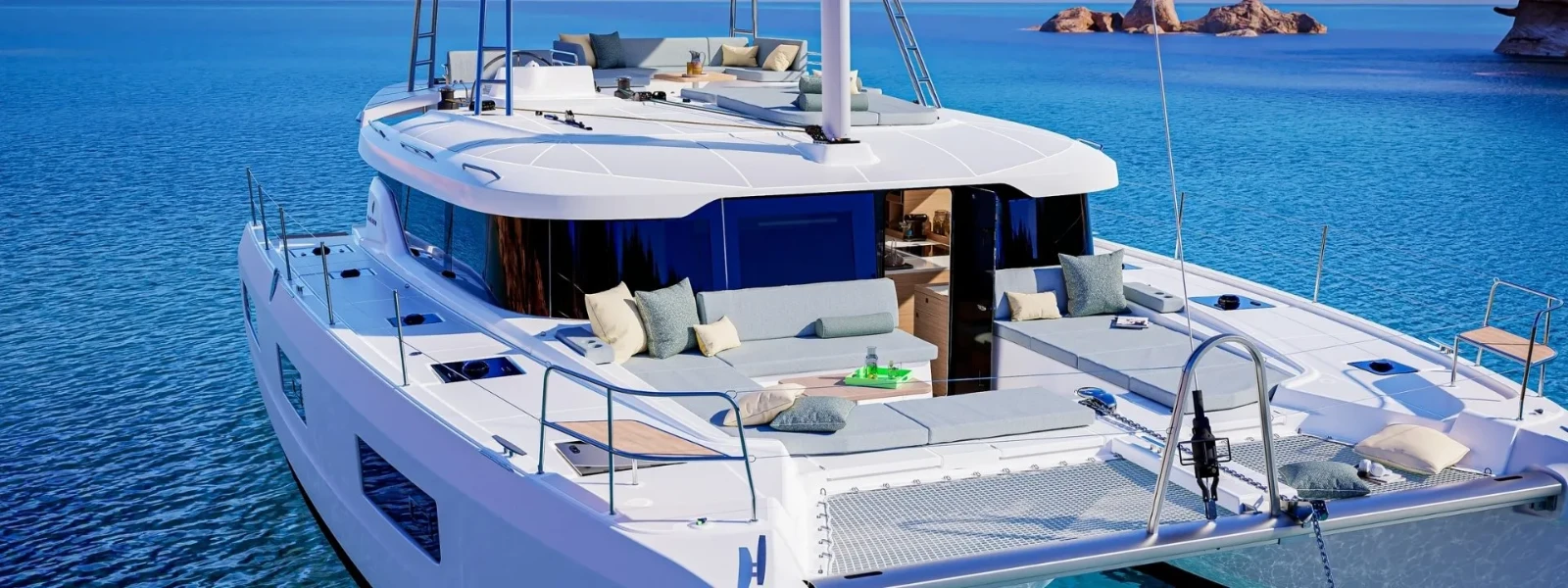
Yes. The Ionian is one of the more catamaran-friendly Greek cruising grounds — sandy anchorages, sheltered bays, and good catamaran availability at Gouvia and Lefkas. See the cat vs monohull guide.
How crowded does Lakka get in August?
Very. The Lakka bay fills by 16:00 in peak season. The smart pattern is to arrive by 15:00 or accept that you’ll anchor on the outer edge or move to Gaios for the night.
Is the Ionian a meltemi-free zone?
Not entirely, but close. Severe meltemi rarely reaches the Ionian; the typical western thermal is the maestral-style northwesterly that builds in the afternoon and drops at sunset. Day-to-day weather is more predictable than the Aegean.
What’s the realistic 2026 budget?
For a 7-day mid-June 2026 charter on a 45-foot monohull from Gouvia with crew of 6: €5,200 boat + €1,400 expenses (fuel, marinas, port taxes, dinners, provisioning) = ~€6,600 total, ~€1,100 per person.
The Corfu-Albania border crossing
Corfu sits 2 NM off the Albanian coast — the shortest international border crossing of any Greek charter base. Cross-border charters to Albania (Saranda is the standard port of entry) are technically possible but operationally heavy. Most operators don’t permit them on bareboat charters. Walk-up clearance at Saranda takes 90-120 minutes; return clearance to Greece is similar. Worth it only for crews specifically planning to spend 2+ days in Albania.
The Ionian’s hidden anchorages
Beyond the marquee stops, the Ionian has dozens of underused anchorages worth a calm-weather visit. Ano Vasiliki on Lefkas’s south coast — quieter than Vasiliki proper, sheltered from the wind. Sivota Lefkadas (different from mainland Sivota) — a small bay on Lefkas’s east coast with restaurant moorings. Kioni on Ithaca — picture-perfect village harbour, much quieter than Vathy. Atokos — uninhabited island with a single cove, the lunch-stop on most Lefkas-Meganisi crossings. None of these are essential but they round out a Corfu-based week.
Corfu’s unique architectural character
Corfu was Venetian for 400 years (1386-1797), then briefly French and Russian, then British (1815-1864) before joining Greece. The architectural mix is unlike any other Greek island. Corfu Town’s old quarter has narrow Venetian-style streets, French neoclassical palaces, and British colonial public buildings. The Liston (a French-built arcaded street modelled on the Rue de Rivoli in Paris) is the marquee evening promenade. The Achilleion Palace, a 19th-century Habsburg summer residence, sits 10 km south of Corfu Town. Charter weeks that include a half-day in Corfu Town gain a unique cultural texture.
Sivota’s two faces — mainland village and yacht harbour
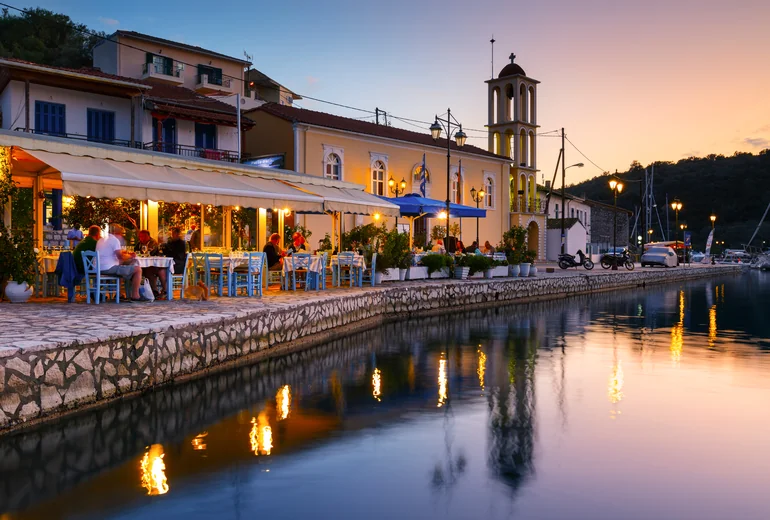
Sivota on the mainland has split personality between a working fishing village (population 200, evening konobe culture, slow-paced) and a busy charter-yacht harbour (5-15 charter boats per night in season, faster service, English-language menus). The town’s evening rhythm shifts around 19:00 — earlier dinners are calmer and more local; later dinners are charter-boat-dominated. Most Corfu-route charters arrive at Sivota by 17:00, walk the village hill before sunset, and dine at one of the harbour-front konobe by 20:00.
Explore boats
Boats you can charter in the places this article covers.
Sail it yourself — suggested itineraries
View all Ionian itineraries →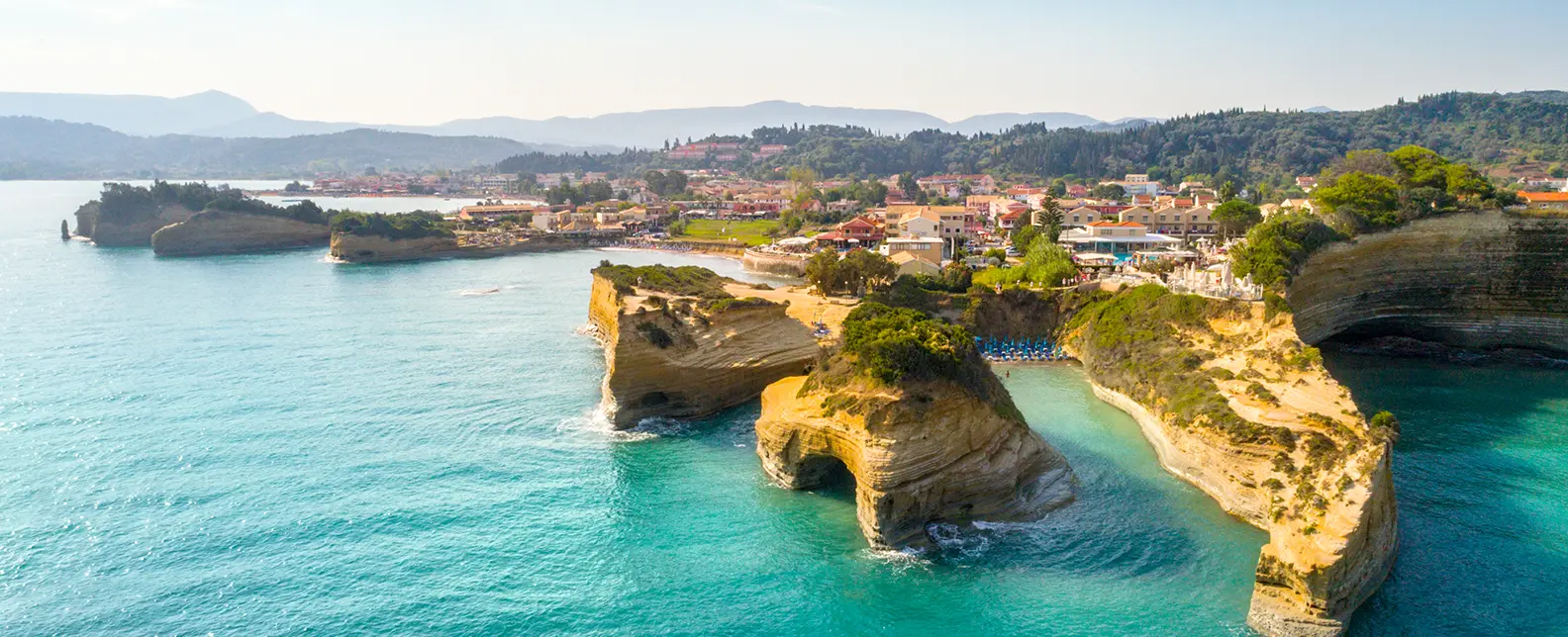
Ideas for your next sailing vacation
Boat rental & yacht charter around the world at the best prices