Your search
Greece
3,133
boats available · live
500 € – 200,000 €
500 €200K €
1 – 42 guests
142
0 – 42 berths
042
14.76 – 56 m(48–184 ft)
14.76 m56 m
2000 – 2027
20002027
0 – 20 toilets
020
5 – 7,296 hp(4–5,436 kW)
5 hp7,296 hp
Prices shown are each boat's cheapest available 7-night week. Choose your dates for exact prices.
Greece holds a position that few charter destinations can match. Over 6,000 islands and islets scatter across the Aegean and Ionian seas, yet only around 230 of them carry permanent residents. The rest sit empty — stone, scrub, a chapel on the hill, and water so clear you read your anchor chain from the cockpit. A Greece yacht charter lets you move between these islands at your own rhythm, choosing each morning whether to chase a famous harbor or slip into a cove that rarely made the guidebook.
Charter fleets operate from Athens, Lefkada, Corfu, Kos, Rhodes, and Lavrion, covering every major cruising ground. Browse the full Greece yacht charter fleet on Boat4You to compare layouts, build years, and weekly rates before you narrow your search.
The geography does most of the heavy lifting. Islands sit close together across nearly every cruising ground, which keeps daily passages short and gives you multiple plan-B options when the Meltemi decides to blow harder than forecast. Most anchorages offer natural protection from at least one wind direction, and the combination of deep blue water, dry summer heat, and whitewashed villages creates a visual rhythm that doesn't get old after a week.
Infrastructure helps too. Greek marinas have improved substantially over the past decade. Provisioning in main towns is easy and affordable. Tavernas with mooring lines dot the coastlines of even smaller islands, which means lunch rarely requires advance planning — you simply pull in, tie up, and order whatever the kitchen pulled from the sea that morning.
The Saronic Gulf sits right outside Athens, which makes it the most accessible cruising ground in Greece. Fly into Athens International, transfer to Alimos or Lavrion marina, and you can be anchored off Aegina by the same evening. The gulf shelters you from the worst of the Meltemi, passages stay under 20 nautical miles, and the islands pack a surprising amount of variety into a compact area. Aegina brings its pistachio groves and the Temple of Aphaia. Poros offers a narrow strait lined with waterfront cafés. Hydra bans motor vehicles entirely — donkeys still carry goods up the stone paths. For first-time Greek charters and shorter trips, the Saronic rarely disappoints.
The Ionian coast runs along western Greece, sheltered from the Meltemi winds that dominate the Aegean side. This makes it the calmest major sailing ground in the country and a natural choice for families, less experienced crews, and anyone who values a gentle pace over wind-driven sailing. Lefkada, Ithaca, Kefalonia, and Zakynthos form the core cruising loop. Nidri on Lefkada serves as the most popular charter base, with multiple marinas and a short transfer from Preveza airport.
The landscape here leans greener than the Cyclades — cypress trees, olive groves, and steep wooded hillsides dropping into turquoise bays. Fiskardo on Kefalonia stands out as one of the prettiest harbor towns in all of Greece, its Venetian-colored houses still intact because the 1953 earthquake somehow spared this single village.
Santorini, Mykonos, Paros, Naxos, Milos — the Cyclades carry the most famous names in Greek island tourism, and for good reason. White cubic architecture stacked on volcanic ridges, sunsets that draw crowds to caldera walls, and a nightlife scene that runs until sunrise in Mykonos town. A Cyclades yacht charter places you at the center of this energy while giving you the option to escape it entirely. Sail 30 minutes from Mykonos and you anchor alone off the tiny island of Rineia.
The trade-off is wind. The Meltemi blows hard through the Cyclades from mid-June through September, regularly hitting 25 to 35 knots in the afternoon. This is rewarding sailing for experienced crews but demands real respect. Route planning matters more here than anywhere else in Greece — you read the forecast, adjust your daily target, and keep flexible. For this reason, many first-timers choose a skippered charter through the Cyclades rather than bareboat.
The Dodecanese chain stretches along the Turkish coast in the southeastern Aegean. Rhodes and Kos serve as the main charter bases. The sailing here blends Greek island culture with visible Ottoman and Italian architectural layers — the medieval Old Town of Rhodes is a UNESCO site you can walk to from the marina. Symi island, a short sail from Rhodes, stacks pastel neoclassical houses around a deep harbor in a scene that looks almost too perfect to be real. The Dodecanese catches less charter traffic than the Cyclades or Ionian, which means emptier anchorages and more space on the quay during peak weeks.
Skiathos, Skopelos, and Alonissos form a tight cluster off the Pelion peninsula. The Sporades are the greenest Greek islands — dense pine forests run from ridge tops all the way down to the waterline. Skopelos gained international fame as the filming location for Mamma Mia, and the church of Agios Ioannis still draws visitors to its clifftop perch. Alonissos anchors the National Marine Park, home to the endangered Mediterranean monk seal. Sailing here feels quieter and less commercial than the Cyclades, with a pace that suits couples and small groups looking for nature over nightlife.
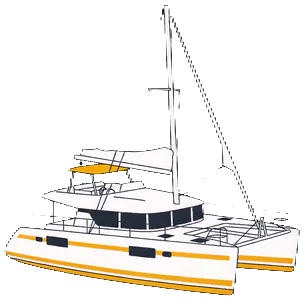
Catamarans lead Greek charter bookings for groups of six or more. The wide beam creates a stable platform that handles the Meltemi chop without excessive heeling, and four-cabin layouts give couples genuine privacy. Shallow draft opens up anchorage options closer to shore, particularly useful in the Ionian where many bays taper to sandy shallows near the beach. The main trade-off is marina cost — catamarans pay higher berthing fees based on beam width, which adds up across a week with multiple port stops.
If a catamaran fits your group, explore the Greece catamaran charter listings for current availability and pricing.
A monohull sailing yacht remains the most popular choice for smaller crews and experienced sailors who want the feel of real wind-powered sailing. Weekly charter rates typically sit below equivalent-length catamarans, and marina fees stay lower thanks to the narrower beam. In the Meltemi, a well-trimmed monohull delivers exhilarating upwind performance that a catamaran rarely matches. The Bavaria, Jeanneau, and Beneteau ranges dominate the Greek bareboat fleet, with sizes from 32 to 52 feet covering most group configurations.
Motor yachts suit guests who prioritize comfort, speed, and onboard luxury over sailing mechanics. A motor yacht lets you cover more ground per day — useful in the spread-out Cyclades — and offers air-conditioned interiors, flybridge lounging, and hydraulic swim platforms. Fuel costs run significantly higher than a sailing charter, but for groups who want a floating hotel with fast island transfers, the math often works out when split across six to eight guests.
Traditional wooden gulets bring a different character to a Greek charter. These vessels typically operate as crewed charters with a captain, cook, and sometimes additional crew. You wake up to a prepared breakfast, swim off the stern, and return to a lunch table set on the aft deck. Gulets suit groups who want to remove every logistics decision from their holiday and simply enjoy the route. They work particularly well for multi-generational family trips and celebration voyages.
Athens concentrates the largest share of Greek charter fleet. Alimos Marina (also known as Kalamaki) sits just south of the city center and serves as the primary base for Saronic Gulf and Cyclades departures. Lavrion marina, on the southeastern tip of Attica, places you closer to the Cyclades with a shorter first-day passage to Kea or Kythnos. Both bases connect easily to Athens International Airport — transfers run 30 to 50 minutes depending on traffic.
Lefkada is the main gateway to the Ionian. The island connects to the mainland by a short bridge, which means you can drive directly from Preveza airport to the marina without a ferry crossing. Nidri and the newer Lefkada Marina both stock substantial charter fleets. From here you point south toward Ithaca, Kefalonia, and Zakynthos, or north toward Paxos and Corfu.
Corfu Marina and Gouvia Marina serve the northern Ionian. Direct European flights into Corfu airport make this a convenient start for crews who want to skip Athens entirely. A Corfu departure opens up routes toward Paxos, Antipaxos, and the mainland coast around Parga and Preveza — some of the clearest water in the entire Mediterranean.
Both islands serve the Dodecanese charter fleet. Kos Marina places you within easy reach of Kalymnos, Leros, Patmos, and the Turkish coast. Rhodes sits further south and suits routes toward Symi, Tilos, Nisyros, and the quieter southeastern islands. Direct flights from major European cities serve both airports during summer months.
Late May through June often delivers the best balance of warmth, manageable wind, and uncrowded anchorages. Water temperatures climb through the low twenties, the Meltemi hasn't yet reached full summer strength, and charter rates sit below peak levels. This window suits Cyclades trips particularly well — you get the iconic scenery without fighting for quay space in Mykonos or Santorini.
High summer brings the strongest demand, the highest prices, and the most reliable sunshine. The Meltemi peaks during these months, especially in the central Aegean. Ionian routes remain calmer and work well for families during school holidays. Book popular catamarans and premium boats months in advance for July and August — the best layouts in the best bases often sell out before spring. For broader pricing context, our yacht charter cost guide explains what a charter week costs and how rates shift through the season.
September may be the most underrated month for Greek sailing. The sea reaches its warmest temperatures after absorbing heat all summer, the Meltemi eases to more moderate levels, and charter rates drop meaningfully from August peaks. Tavernas and harbors stay open but feel less pressured. Experienced crews often target this window deliberately.
A 40-foot sailing yacht in Greece typically charters from around 1,500 to 3,000 euros per week during shoulder season, rising to 2,500 to 4,500 euros in July and August. A comparable-length catamaran runs roughly 30 to 50 percent higher. Newer builds, premium brands like Lagoon or Fountaine Pajot, and larger 45 to 52-foot layouts push into higher territory. Motor yachts and crewed gulets occupy a separate pricing band that varies widely based on crew, size, and service level.
Budget for end-of-charter cleaning, transit log fees, fuel (sailing yachts use far less than motor yachts), marina overnight fees if you choose ports over anchorages, provisioning, and optional skipper or hostess. A skipper typically adds 150 to 200 euros per day plus food. Tourist taxes in Greece remain relatively low compared to Croatia or Italy.
Fill the boat. A four-cabin catamaran split across eight guests delivers far stronger per-person value than a half-empty premium yacht. Anchor more, berth less — Greek anchorages are excellent and free. Choose shoulder season dates. Pick a base that matches your route to avoid wasted first-day and last-day passages. Our guide to chartering on a budget covers more ways to save.
Greece requires the skipper to hold a recognized sailing license (ICC, RYA Day Skipper or above, or equivalent national certificate) plus a VHF radio operator certificate. Some charter companies apply stricter requirements for larger yachts or Cyclades routes, often asking for a documented sailing CV showing recent experience on similar-sized boats. Bring original physical documents — digital copies on your phone do not satisfy port police inspections. Our sailing licence guide covers the requirements country by country.
A skipper removes the navigation burden and opens up local knowledge you simply cannot get from a chart plotter. In the Meltemi-driven Cyclades, a skipper who knows the wind patterns, the protected approaches, and the unmarked shallow spots transforms a potentially stressful passage into a comfortable one. Skippers also tend to know which taverna in which bay serves the best grilled octopus — and that alone can justify the daily fee for some crews.
Share your dates, group size, preferred yacht type, budget range, target sailing area, and whether you want bareboat or skippered service. For bareboat requests, include your license details, yacht sizes you have recently skippered, and waters you know. Our FAQ lists the documents bases typically ask for before check-in.
Day 1 (Saturday): Embark at Alimos Marina, Athens. Afternoon sail to Aegina — 18 nautical miles. Pick up pistachios at the harbor market, dinner ashore at a waterfront taverna in Aegina town.
Day 2: Morning visit to the Temple of Aphaia, then a short hop to the small island of Moni for a swim stop. Continue to Poros in the afternoon — anchor or take a quay spot along the narrow strait separating Poros from the Peloponnese mainland. The lemon groves behind the town scent the evening air.
Day 3: Sail south to Hydra — 15 nautical miles. No cars, no motorbikes, just donkeys and foot traffic. Tie up on the main quay if space allows, or anchor in Mandraki bay on the northeast side. Explore the stone lanes and take a late swim off the rocks below the cannons.
Day 4: Cross to Dokos island for a quiet morning swim in one of its empty bays, then continue to Spetses. The old harbor of Baltiza offers good shelter. Rent a scooter (Spetses allows them, unlike Hydra) and ride to Agioi Anargyroi beach on the far side.
Day 5: Head northwest into the Argolic Gulf. Anchor off Vivari for a swim, then motor into the deep inlet of Nafplio — one of the most beautiful mainland towns in Greece. The Venetian fortress of Palamidi towers above the harbor. Eat at one of the tavernas under the fortress walls.
Day 6: Sail back toward the Saronic, stopping at Perdika on the south coast of Aegina. This fishing village serves some of the best fresh fish in the gulf, particularly at the waterfront tables looking across to Moni island. A calm final evening before the return.
Day 7 (Friday): Short morning sail back to Alimos Marina. Refuel, clean up, and complete check-out by midday. Transfer to the airport or spend an extra night in Athens.
Greek island food operates on a simple principle: take what the land and sea provide, prepare it without overcomplication, and eat it outdoors. A waterfront taverna on a small island will typically serve grilled fish caught that morning, a village salad with thick-sliced tomatoes and local feta, a plate of fried courgette balls, bread with olive oil, and a carafe of house wine — and that combination, repeated across different islands with slight local variations, rarely loses its appeal.
Each region adds its own accents. The Ionian shows Venetian influence — sofrito (veal in garlic sauce) in Corfu, meat pies in Lefkada. The Cyclades lean toward sharper flavors — capers, sun-dried tomatoes, local cheeses like kopanisti. The Dodecanese carry Ottoman traces in their spice use. Wherever you sail, ask for local wine rather than commercial labels. Island wines from Santorini (Assyrtiko), Paros (Monemvasia), or Kefalonia (Robola) taste better in context than they ever will at home.
For July and August in popular bases like Athens or Lefkada, book six to nine months ahead — premium catamarans in peak season often sell out by early spring. Shoulder season dates in May, June, or September allow shorter lead times, though the best boats still move early.
The Ionian and the Saronic Gulf both suit less experienced crews. Short passages, predictable conditions, and well-protected anchorages reduce the skill threshold significantly compared to the open-water Cyclades routes.
It depends on group size, budget, and sailing style. Catamarans suit groups of six or more who value space and stability. Sailing yachts suit smaller crews who want classic sailing feel and lower weekly rates. Both work well across Greek waters. Compare options on the Boat4You Greece fleet page.
Yes. You need a recognized sailing certificate (ICC, RYA, or national equivalent) plus a VHF radio license. Some bases add experience requirements for larger yachts or challenging routes like the Cyclades. If your group lacks a licensed skipper, professional skippers can be arranged through most charter bases.
The Meltemi is a strong northerly wind that blows across the Aegean from June through September, peaking in July and August. It can reach 30+ knots in exposed channels between Cycladic islands. It creates excellent sailing conditions for experienced crews but requires careful route planning. The Ionian coast stays largely sheltered from Meltemi influence.
Cross-border charters between Greece and Turkey involve additional paperwork, port clearance fees, and insurance considerations. Some charter companies permit it, others restrict their fleet to Greek waters only. Discuss this early in the booking process if a cross-border route interests your group.
The fastest way to a clean shortlist: share your dates, group size, preferred area, yacht type, and budget. With those five inputs, the search narrows quickly from hundreds of listings to a handful of boats that actually fit your trip. Start by browsing available yachts in Greece, or read more about how Boat4You works and the team behind the platform.