BVI vs Grenadines vs Antigua: Three Winter Route Shortlists & the Cost Per Person
The BVI vs Grenadines vs Antigua sailing question comes down to three things: how protected you want the water, how lively you want the evenings, and how much you are willing to spend per person. All three are world-class. They are also genuinely different trips, and the cost gap between them is bigger than most people expect.
Here is the marketplace view the single-island sites do not give you: a per-person-per-day cost comparison, a one-week route sketch for each, and a clear sense of who each archipelago actually suits. Rough budgets below are for a bareboat catamaran split among a typical crew, all-in with boat, fuel, food, fees and the odd night out.
BVI vs Grenadines vs Antigua sailing: cost per person
The quickest way to compare is per person, per day, on a six-to-eight-berth catamaran shared by a full crew. As a working benchmark for winter 2027: the BVI lands around $435 per person per day, the Grenadines around $575, and Antigua-based trips around $970. Those are ballpark figures, not quotes, but the ranking holds season after season.
Why the spread? The BVI has the deepest charter fleet in the Caribbean, which keeps boat prices competitive, and the sailing is so short-hop that fuel barely registers. The Grenadines cost more because the fleet is smaller and provisioning is pricier on remote islands. Antigua sits highest partly because many trips there lean crewed rather than bareboat, partly because it is a more upscale market, and partly because onward legs to neighbouring islands add distance and fuel.
Where the money actually goes
Across all three, the boat is the biggest line, followed by food and then mooring or anchoring fees. The BVI charges nightly mooring-ball fees in popular spots, which adds up but stays modest. The Grenadines keep costs down with free anchoring in places like the Tobago Cays marine park, though the park itself has a daily fee. Antigua’s marinas and the pull of dining ashore in English Harbour push the variable spend higher. For the full anatomy of a Caribbean charter bill, the sibling 7-day BVI catamaran itinerary covering Tortola, Virgin Gorda and Anegada breaks down a real week leg by leg.
BVI: the easy, sociable shortlist
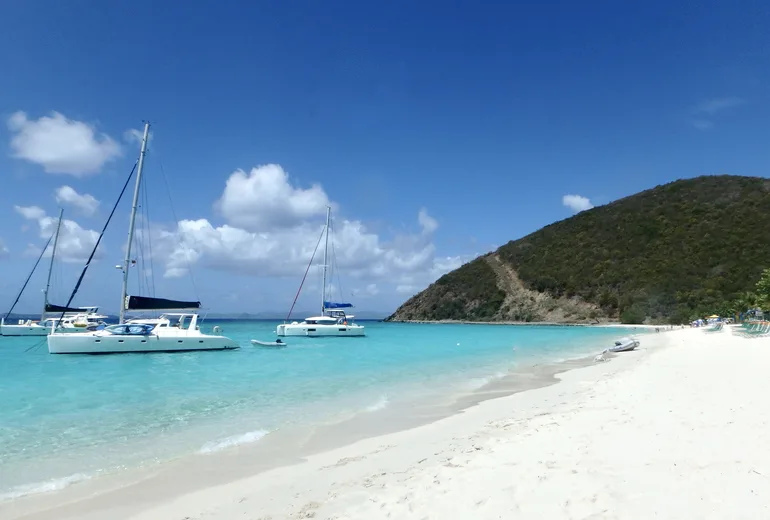
The British Virgin Islands are the most beginner-friendly cruising ground in the Caribbean, full stop. Line-of-sight navigation, short hops rarely over 10 nautical miles, reliable trade winds of 15-20 knots, and a mooring ball waiting in nearly every bay. It is sociable too, with famous beach bars at every turn.
A one-week BVI route
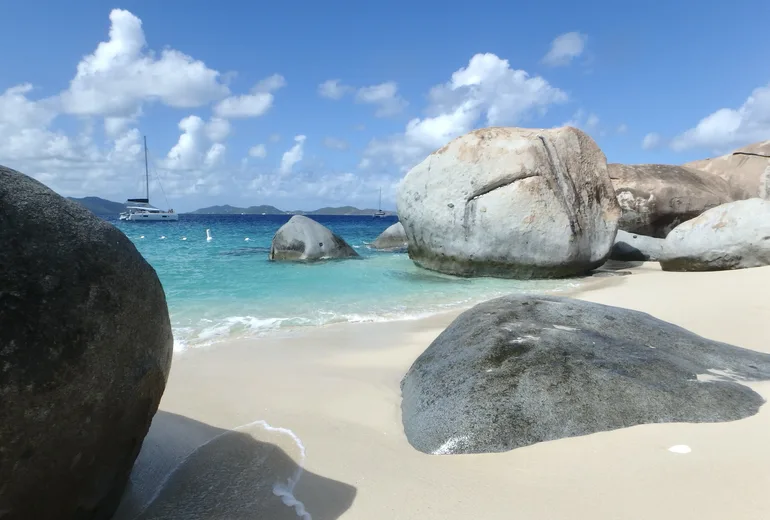
From a Tortola base: day one to Norman Island for the Bight and the caves snorkel; day two to Cooper Island or Salt Island; day three to The Baths on Virgin Gorda, those giant granite boulders forming sea pools and grottoes you swim through; day four to Anegada, the flat coral atoll famous for its lobster shacks and the only island in the chain you cannot see from the others; day five to Jost Van Dyke for White Bay and the original Soggy Dollar beach-bar scene; day six back via Sandy Spit or Diamond Cay; day seven return to base. Total mileage is gentle, well under 100 NM, with most days under two hours of actual sailing.
What makes the BVI so easy is the geography: a sheltered channel, the Sir Francis Drake, runs down the middle with the islands on either side, so you are rarely in open water and almost always within sight of your next stop. Provisioning is straightforward too, with full supermarkets in Road Town and on Virgin Gorda, and mooring balls mean you almost never have to anchor in the dark. It is the closest thing to a turnkey Caribbean week.
If sailing without your own license is a worry, the BVI makes it easy to add a skipper or qualify, which we cover in our look at sailing the Caribbean without a license. And if you are still torn between a catamaran and a monohull for the trades, our catamaran versus monohull comparison explains why nearly every Caribbean crew picks the cat.
Grenadines: the wild, uncrowded shortlist
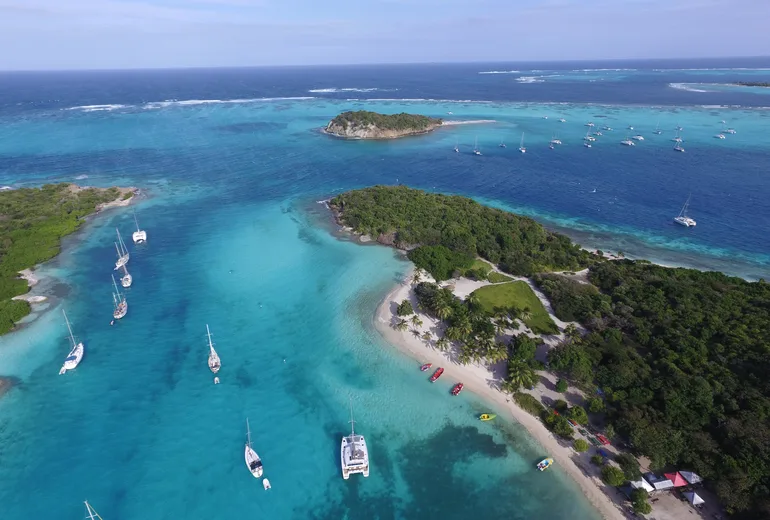
The Grenadines are the choice for crews who want fewer beach bars and more empty anchorages. The water is some of the clearest in the region, the islands are smaller and rawer, and the centrepiece is the Tobago Cays, a cluster of uninhabited islets behind a horseshoe reef where you anchor among sea turtles. Sailing here is a step up: legs are longer, 15-25 NM is common, and the open passages between islands carry real swell, so it suits crews with a bit of experience.
A one-week Grenadines route
From a base on Saint Vincent or Grenada: head to Bequia, the salty, characterful capital of the chain with its model-boat workshops and good provisioning; on to Mustique for a day among the discreet villas; then Canouan; the showpiece night at the Tobago Cays anchored behind Horseshoe Reef, where boat vendors paddle over with fresh lobster to grill on the beach; Mayreau for Salt Whistle Bay, that palm-spit isthmus with the Caribbean on one side and the Atlantic on the other; Union Island and Palm Island; then back. Expect more genuine sailing and more nights swinging on the hook than in the BVI, with fewer crowds the whole way.
The Grenadines reward self-sufficiency. Supermarkets are smaller and more spread out, so most crews provision heavily at the start in Bequia or on the home island and top up with fresh fish and produce from the boat vendors as they go. Anchoring skill matters more here than in the mooring-ball BVI, and a few legs are exposed enough that you will want to time them for the morning calm. The payoff is real solitude: anchorages where yours might be one of three boats rather than thirty.
Antigua: the upscale, big-water shortlist
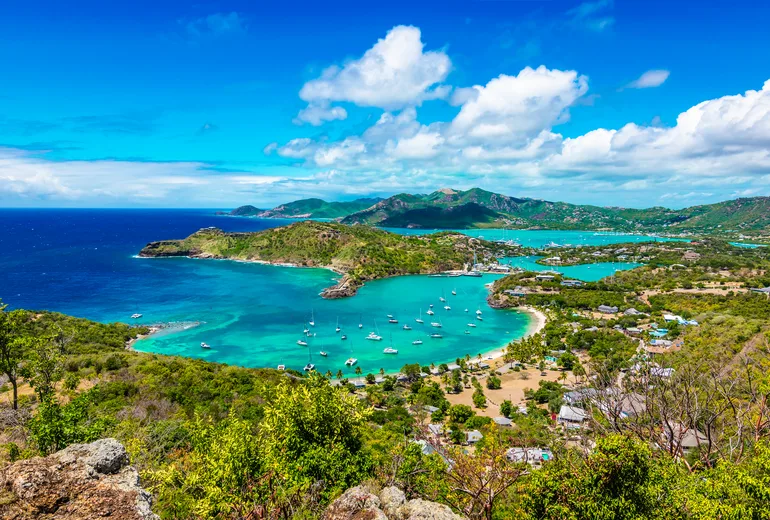
Antigua is the most polished of the three, with 365 beaches, a proud sailing heritage centred on historic English Harbour and Nelson’s Dockyard, and a more refined dining-and-marina scene. The sailing is bigger and more exposed than the BVI, with longer legs and stronger conditions on the windward side, which makes it a better fit for confident crews. It also works as a launch point for ambitious trips toward Barbuda or Guadeloupe.
A one-week Antigua route
From Jolly Harbour or English Harbour: explore the south coast anchorages around Falmouth and English Harbour with their Georgian-era forts and the restored Nelson’s Dockyard, a UNESCO World Heritage site where you can berth right under the old sail lofts; sail to Green Island and Nonsuch Bay on the protected east side, fringed by reef; consider an overnight to Barbuda for its frigate-bird lagoon and eleven miles of pink-tinged sand; then loop back along the west coast to Deep Bay and the calmer leeward anchorages. The mileage is higher than the BVI, and the open-water legs reward a crew that enjoys proper sailing.
Antigua’s draw is partly the sailing heritage. The island has hosted classic regattas for decades, and English Harbour fills each spring with superyachts and traditional rigs, so there is a maritime buzz you do not get elsewhere. Provisioning and dining lean upmarket, with proper restaurants in Falmouth and a few standout spots near the dockyard, which is part of why the per-person spend runs higher. If your crew wants the trip to feel like an occasion rather than a backpacking-by-boat adventure, Antigua delivers.
Weather, season and what to pack into the budget
All three islands share the same broad winter pattern: steady northeast trade winds of 15-20 knots, water temperatures in the high 20s Celsius, and the reliable dry season running roughly December to April. December through February brings the strongest trades, the so-called Christmas winds, which can gust into the mid-20s and make the longer Grenadines and Antigua legs livelier. By March and April the wind softens and the sailing gets gentler everywhere, which is part of why late-season weeks can be both calmer and slightly cheaper outside the holiday spike.
When you build a budget, remember the fixed extras that sit on top of the boat: a security deposit or damage waiver, often a few hundred dollars; mooring or marine-park fees; fuel, which is minimal in the BVI but adds up on the longer Antigua passages; and the cost of provisioning, which runs higher on the remote Grenadines than in the well-stocked BVI. A skipper, if you want one, typically adds a daily fee plus their food, and is the single biggest swing between a bareboat and a crewed total. Factor a hostess or cook in too if you would rather not cook aboard.
So which winter route is yours?
Match the archipelago to your crew and your budget:
- Choose the BVI if you want the easiest, most sociable, best-value week, especially for first-time bareboaters and families. Around $435 per person per day.
- Choose the Grenadines if you want wild, uncrowded sailing, clear water and the Tobago Cays, and you have some experience. Around $575 per person per day.
- Choose Antigua if you want bigger sailing, an upscale base and historic harbours, and you do not mind paying for it. Around $970 per person per day, often crewed.
If your travel falls over the festive period, read our note on Christmas and New Year charter premiums and availability first, because those weeks book a year out and carry a steep surcharge across all three islands.
Frequently Asked Questions
Which is cheaper, the BVI, Grenadines or Antigua?
The BVI is the cheapest of the three, at roughly $435 per person per day on a shared bareboat catamaran, thanks to its large fleet and short sailing legs. The Grenadines run around $575, and Antigua is highest at about $970, partly because trips there often go crewed. These are ballpark winter benchmarks, not firm quotes.
Which Caribbean sailing area is best for beginners?
The BVI, by a clear margin. Navigation is line-of-sight, hops are short, the trade winds are steady, and mooring balls are everywhere. The Grenadines and Antigua both involve longer, more exposed passages that suit crews with some experience or a skipper aboard.
Do I need experience to sail the Grenadines?
Some experience helps. The legs are longer, 15-25 nautical miles is common, and open passages between islands carry real swell. Confident bareboat crews manage it well; first-timers are usually happier in the BVI or hiring a skipper for the Grenadines.
What makes Antigua more expensive?
Several things: a more upscale market, marina and dining costs in English Harbour, longer fuel-burning legs, and a tendency for trips to be crewed rather than bareboat. The payoff is bigger sailing, historic harbours and access to Barbuda and beyond.
Ready to price your winter week across all three? Compare live Caribbean catamarans, dates and rates on the Boat4You charter search and pick the route that fits your crew and budget.
Explore boats
Boats you can charter in the places this article covers.
Sail it yourself — suggested itineraries
View all British Virgin Islands itineraries →
Ideas for your next sailing vacation
Boat rental & yacht charter around the world at the best prices