Your search
Galicia
18
boats available · live
500 € – 200,000 €
500 €200K €
1 – 42 guests
142
0 – 42 berths
042
14.76 – 56 m(48–184 ft)
14.76 m56 m
2000 – 2028
20002028
0 – 20 toilets
020
5 – 7,296 hp(4–5,436 kW)
5 hp7,296 hp
Prices shown are each boat's cheapest available 7-night week. Choose your dates for exact prices.
Galicia is not the Mediterranean. The moment you point a boat north from Portugal toward the Bay of Biscay, you leave behind the postcard-perfect clarity and reliable 15-knot thermals of the Spanish Med. What you gain instead is something wilder: a coastline sculpted by Atlantic swells, green hills that tumble into the sea, and sailing that demands a bit more respect but rewards it generously. The Galician coast is a landscape of drowned river valleys called rías—think Norwegian fjords compressed into Atlantic Iberia—where you're sheltered one moment and feeling genuine ocean swell the next.
For charter sailors, Galicia represents the road less traveled. There are no mega-marinas with thousands of identical white hulls, no nightclub anchorages, no package tourism infrastructure. Instead you get authentic Galician villages, some of Europe's best seafood, and the kind of sailing where you're genuinely part of the landscape rather than consuming it. The water is colder (16-20°C even in summer), the winds more Atlantic in character, and the weather more variable—but the sailing itself is technically engaging and the aesthetic rewards are substantial.
Galicia's coastline is dominated by two major ría systems: the Rías Baixas (Lower Rías) in the south and the Rías Altas (Upper Rías) in the north. Think of rías as fjord-like inlets created by glacial periods when sea levels rose and flooded river valleys—except these aren't true fjords, they're gentler, more Mediterranean in feel once you're inside. The Rías Baixas include some of the most protected and beautiful cruising grounds in Spain: Ría de Vigo, Ría de Arousa, and Ría de Pontevedra, each with distinct character and sheltered anchorages.
Between the ría systems and to the north lies Cape Finisterre (Cabo Fisterra), the westernmost point of continental Europe. This headland is where Atlantic weather transforms from distant threat to present reality. Strong currents, exposure, and a genuine fetch mean that conditions can change rapidly around the cape. The Rías Altas, less visited than their southern cousins, offer more rugged terrain, better shelter, and significantly fewer cruising yachts. The north coast around A Coruña and Ferrol is exposed to Atlantic swell and winter gales, but summer sailing here is viable and less crowded.
What makes Galician geography unique is the interplay between protection and exposure. The rías themselves have calm inner waters, but their entrances face open Atlantic. You'll see this in the infrastructure: mussel rafts (bateas) cluster in the sheltered inner reaches, while the outer waters show you swell that's traveled 4,000 miles from North America. It's not dangerous sailing, but it demands awareness.
The southernmost and arguably most famous of the Rías Baixas, the Ría de Vigo is where most charter boats begin their Galician journey. The city of Vigo itself is a real working port, not a tourist theme park—fishing boats, ferries, and commercial traffic share the water with charter yachts. The ría is wide, with reliable shelter, and home to several good marina bases. Islas Cíes, arguably the most spectacular anchorage on the Galician coast, sits at the mouth of Vigo. The ría has mooring fields, several working fishing villages (notably O Vao), and enough depth and shelter for any size of charter yacht.
The Cíes Islands—three granite peaks rising from deep water at the entrance to Ría de Vigo—are often called the "Caribbean of Galicia," a description that's only slightly hyperbolic. The islands form a national park, and Rodas Beach, sheltered between the two main islands, is genuinely striking: white sand, turquoise water, and a sense of isolation that belies your proximity to Vigo. Access is restricted (you need a permit to anchor, issued through park authorities), and day-visitor numbers are capped, but the islands are unmissable for any Galicia charter. Plan to arrive early, secure a mooring, and spend the afternoon ashore.
The largest of the Rías Baixas, Arousa is a working estuary where you'll see mussel farming operations (bateas) at close range. These aren't obstacles—they're landmarks—and local fishermen navigate around them constantly. The ría's size means more options for different wind conditions, and Cambados, on the east shore, is the capital of Albariño wine. Worth stopping for the wine, the seafood restaurants, and the sense of being in a real working Galician port. Sanxenxo, on the southern shore, is more developed but still maintains character.
Smaller and slightly less visited than Arousa or Vigo, Pontevedra offers excellent shelter, good anchorages, and a more intimate cruising experience. The town of Pontevedra itself is architecturally beautiful—granite buildings, charming plaza—and the nearby village of Combarro is a unique Galician feature: hórreos (traditional stone granaries) sit right on the waterfront, a glimpse into local culture that's disappearing fast. The ría has several good mooring spots and fewer charter yachts than its neighbors.
The largest city in Galicia and the gateway to the Rías Altas, A Coruña is a proper maritime city with centuries of history. The Tower of Hercules (Faro de Hércules), one of Europe's oldest working lighthouses, sits on a peninsula visible from the approaches. A Coruña is more exposed than the southern rías, and it's less of a destination and more of a transit point or provisioning stop. The approach is straightforward, facilities are excellent, and the seafood market is outstanding.
Sitting at the southern edge of Galicia near the Portuguese border, Baiona is sheltered by the Monte Real castle, a visible landmark from well offshore. This small fishing village and resort town has evolved into one of Galicia's more developed marina bases (Marina de Baiona), but retains character. The approach is straightforward, depths are good, and the town has excellent restaurants. It's an obvious overnight stop if you're transiting south toward Portugal or exploring the Ría de Vigo.
A village rather than a full destination, Combarro is worth the detour into Ría de Pontevedra specifically to see the hórreos and experience genuine Galician waterfront life. No major marina, but good holding in the anchorage, and a chance to tie to a quay and explore on foot. Restaurants here are authentic and focused on local seafood. If you're cruising the Rías Baixas and want a moment of stepping outside the charter circuit entirely, Combarro delivers that.
Galicia is not the place for shoal-draft multihulls or ultralight sloops designed for Mediterranean Club Med sailing. Atlantic conditions, swell, and variable weather favor boats with some weather capability. A solid monohull with a proper keel (full keel or at least long fin) performs better in these conditions than a beamy catamaran. Charter yachts in the 35-50 foot range are ideal: large enough to handle Atlantic swell without constant motion, small enough to be maneuverable in the rías, and typically equipped with good navigation electronics and engine power for the frequent flat-calm mornings.
Sailing yachts genuinely thrive here. The summer Nortada (steady N-NW wind, typically 15-25 knots) is reliable for sailing, and the rías themselves offer protected waters where you can sail hard without worrying about consequences. If you're a serious sailor, Galicia rewards technique: tactical tacking in the inner reaches, understanding how wind funnels through the ría valleys, reading the chop patterns to find the smoothest water. Powerboats work fine, but they miss the point—this is sailing country.
Shallow-draft boats have limitations. The rías have good depths in most anchorages, but entrance channels can be narrower and shallower than you'd expect, and there are rocks and current in places. Local knowledge (or a good pilot book) helps, but a boat that draws 4 feet will have options a boat that draws 2 feet doesn't. Dinghy supply and engine reliability matter more here than in the Med—you'll motor through flat conditions and sometimes use the engine to motor against Atlantic swell on approaches.
Real Club Náutico de Vigo is the largest and most developed marina base for charter boats in Galicia. Located in the city itself, it offers full facilities, repair services, provisioning (including a good supermarket within walking distance), and fuel. The city provides all services a charter crew might need. Vigo is the obvious starting point if you're renting a boat, though the city itself is less charming than smaller villages.
Marina de Baiona, at the southern edge of Galicia, is smaller and more intimate. Based at Baiona rather than Vigo, you start closer to the Portuguese border and the southern Rías Baixas. Facilities are good, the town is pleasant, and you avoid the larger-city infrastructure. This base works well if you want a more relaxed pace or plan to cruise south toward Portugal.
Puerto Deportivo de Sanxenxo sits in Ría de Arousa and is a good option if you want to be based directly on the water rather than in a city. Sanxenxo has grown significantly but maintains a resort-town character rather than a working-port feel. It's more developed than you might want, but practical for charter operations. From here, you're already on the water and ready to explore Arousa and the neighboring rías without transit time from a city.
Provisioning in Galicia is straightforward. Every town with a marina or anchorage has a basic supermarket (Carrefour, Mercadona, or local shops), and the larger cities (Vigo, A Coruña) have full shopping. Fresh fish markets operate in the mornings at working ports—Vigo and Baiona are best—and produce and wine are high-quality and inexpensive. Many boats do their main provisioning at the start base and then rely on small shops in villages for supplements.
Galicia's sailing season is broader than the Mediterranean but less forgiving. Summer (June through September) is the prime season: water temperatures reach 18-20°C, the summer Nortada provides steady sailing wind, and weather systems are further north. The Nortada is reliable and strong—typically 15-25 knots from the north-northwest—which makes for excellent sailing but demands respect. Days that are flat calm in the protected rías can reveal swell at the exposed exits, and the wind can gust harder than forecasts suggest when it funnels through ría valleys.
Water temperature deserves mention because it matters for crew comfort and safety. Even in peak summer, the Atlantic here is cold—20°C at best, often less. Wetsuits are advisable for swimming; a man overboard situation is serious. This isn't the Med, where you can leave winter foul-weather gear ashore and sail in summer shorts.
Spring (April-May) and autumn (September-October) are viable but less stable. You'll have fewer yachts on the water, more solitude, and variable conditions. Atlantic gales occasionally spin up in autumn, and winter is reserved for experienced sailors and locals. Fog is an underestimated hazard—summer fog banks roll in from the Atlantic, reducing visibility and demanding careful navigation even in well-charted areas.
Portuguese trade winds influence the pattern. When the Azores high-pressure system sits to the northwest, northerly wind flows down the coast—that's the Nortada. When the system weakens or shifts, winds become variable, lighter, and less reliable. Check forecasts carefully; five-day outlooks on the Galician coast are approximate at best.
A typical charter week starting from Vigo demonstrates the cruising potential. Day 1: Sail (or motor) from Vigo to Islas Cíes, securing a mooring or anchor and spending the afternoon on Rodas Beach. Day 2: Explore the island passages and return to Vigo for reprovisioning and dinner in the city. Day 3: Transit to Ría de Arousa, visiting Cambados for lunch and wine, anchoring in the northern reaches for a quiet evening. Day 4: Explore Arousa thoroughly—mussel farms, the town of Meaño, various small anchorages—and perhaps visit Sanxenxo for a night in more developed surroundings.
Day 5: Motor or sail south to Ría de Pontevedra, making Combarro a priority for the hórreos and seafood. Day 6: Explore Pontevedra ría, anchor near the town of Pontevedra itself, or transit to nearby Ría de Vigo for more options. Day 7: Leisurely return to the Vigo base, leaving morning or early afternoon depending on provisioning needs and how crews want to spend the final afternoon. This route covers approximately 80 nautical miles, stays within protected or semi-protected waters most of the time, and includes at least one night at Islas Cíes (the highlight for most crews).
More adventurous crews can extend north: add Ría de Muros (exposed but beautiful), Cape Finisterre (genuinely impressive as a landfall), or the Rías Altas near Ferrol. These extensions add rougher water and longer passages, but also fewer crowds and some of the most dramatic sailing on the Galician coast. A two-week charter allows exploration of the full coast from Baiona to A Coruña with time to explore each major ría thoroughly.
Galician seafood is, by most serious food arguments, the best in Europe. Every port you anchor in will have at least one restaurant offering pulpo á feira (octopus drizzled with paprika and olive oil, served on bread), and it will be excellent. Percebes—goose barnacles harvested from exposed rocks by brave men with ropes and leashes—are a Galician delicacy and absurdly expensive, but if you see them in a market, try them. They taste like the sea, in the best way.
Albariño wine from the Ría de Arousa denomination is the signature white wine of the region: crisp, mineral, often with a slight spritz of natural carbonation, and criminally underpriced. Local restaurants serve it cold with seafood; buy bottles at source in Cambados at a third of what you'd pay in Madrid. Mejillones (mussels) are farmed in the bateas and appear on every menu. Empanada gallega (Galician meat pie, though fish versions exist) is the staple of bakeries and humble restaurants.
Mariscada—a stew of mixed shellfish in broth—is a specialty of Galicia and appears in fancier restaurants. Raxo (a type of local fish) is common. Percebes, scallops, langostinos (Norway lobsters), and barnacles mean that any restaurant worth entering will provide excellent protein. Most crews provision fresh seafood from daily markets and cook aboard—the cost is low, the quality exceptional, and the experience entirely different from restaurant meals.
Culturally, Galicia is distinct from the rest of Spain. The language is Galician (a blend of Spanish and Portuguese), the architecture is Atlantic granite, and the temperament is cooler and less effusive than southern Spain. The green hills and mist feel closer to Portugal or Ireland than to Andalucia. This is a genuine cultural boundary, and part of what makes Galicia a sailing destination rather than just another coast.
Yes. The islands are a national park with restricted access. You can anchor or moor, but you need a reservation through the park authority (Parque Nacional das Illas Atlánticas de Galicia). These are available online or through your charter company, and space is limited in summer. Day-visitor numbers are capped at around 2,000 per day, so arriving early in the day improves odds of a spot. The islands are worth the bureaucracy.
July and August offer the most stable weather and warmest water (still only 20°C), but also the most other boats. June and September provide better sailing conditions (stronger winds) and fewer crowds, with slightly cooler water. If you have a choice, target early July or early September. Avoid October through April unless you're an experienced offshore sailor—Atlantic weather systems are larger and more unpredictable in these months.
It depends on conditions. On a flat day with light wind, the ría entrances are straightforward. On a day with Atlantic swell and 20-knot Nortada, entering Ría de Vigo or Arousa can feel genuinely rough for 20-30 minutes before you're sheltered inside. The approach to Islas Cíes, which sits outside the rías entirely, can have real swell. This isn't dangerous if you're expecting it, but it's a genuine transition from protected to exposed water. Check the swell forecast and wind strength before planning movements.
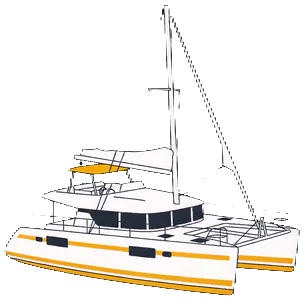
Yes, though monohulls are more common and better-suited to the conditions. Catamarans offer more space and stability in calm conditions, but they don't handle Atlantic swell as well as monohulls, and their wider beam can be a disadvantage in some ría anchorages. If you prefer a catamaran, confirm with your charter company that they have suitable boats and understand the tradeoffs. Boat4You can help match you with appropriate options.
Spanish is helpful but not essential. English is spoken in marinas and larger towns, and less so in small villages and fishing ports. Learning a few phrases in Spanish (or Galician) is respectful and practical. A translation app on your phone covers gaps. The language barrier is lower than you might expect, and Galician hospitality is genuine even when communication is imperfect.
Galician charter demands more engagement: wind is stronger and more variable, water is colder, weather is less predictable, and infrastructure is sparser. You're less likely to be moored in a crowded marina next to identical charter boats, and more likely to be anchored in a working fishing village or isolated inlet. The sailing itself is more rewarding—real wind, real conditions, real navigation. If you like the Mediterranean's comfort and infrastructure, Galicia will feel wilder. If you're tired of the charter circuit, it's liberating.
Galician sailing is not for everyone. If you want reliable sun, 15-knot thermals, and shallow-water anchorages filled with other charter boats, the Med awaits. But if you want genuine sailing, an authentic coast, world-class seafood, and a sense of discovery that's harder to find in developed sailing regions, Galicia delivers. The rías are protected and beautiful, the Nortada is reliable, and the experience is something you won't get anywhere else in Spain.
Galicia yacht charter works best with crews who enjoy sailing as much as they enjoy destinations—sailors who treat conditions as part of the adventure rather than obstacles. The water is cold, the fog can be thick, and the Atlantic will remind you that you're not in a protected lagoon. But the islands are stunning, the villages are authentic, and the sailing is alive in a way that the Mediterranean isn't anymore.
If this sounds like your kind of sailing, start with a charter in the Rías Baixas during summer or early autumn. Most crews find one week leaves them wanting more, and many return year after year to explore different rías or push north toward Cape Finisterre and the Rías Altas. The Atlantic coast isn't easier than the Med—but it's realer, and for serious sailors, that matters.
Learn more about yacht charter options on the Galician coast at Boat4You's Galicia charter search, or explore Spain-wide options to compare regions. If you have questions about boat types, seasons, or logistics, Boat4You's FAQ section covers common charter questions, and their how-we-work guide explains the charter process clearly. For context on Boat4You's approach to charter brokerage, see about us.
Updated October 12, 2026
Most expensive month: July 2027.
| Month | Typical week | Middle half of weeks |
|---|---|---|
| Nov 2026 | 1,829 € | 1,531 € – 2,299 € |
| Dec 2026 | 1,818 € | 1,571 € – 2,274 € |
| Jan 2027 | 1,857 € | 1,670 € – 2,274 € |
| Feb 2027 | 1,857 € | 1,670 € – 2,274 € |
| Mar 2027 | 1,857 € | 1,670 € – 2,274 € |
| Apr 2027 | 1,895 € | 1,670 € – 2,274 € |
| May 2027 | 2,085 € | 1,851 € – 3,226 € |
| Jun 2027 | 3,226 € | 2,099 € – 6,318 € |
| Jul 2027 | 3,599 € | 2,585 € – 4,315 € |
| Aug 2027 | 3,430 € | 2,814 € – 4,837 € |
| Sep 2027 | 2,631 € | 1,977 € – 3,444 € |
| Oct 2027 | 1,829 € | 1,591 € – 2,370 € |
Computed every night from the 7-night charter offers of the next 12 months for the boats based here. Prices are for the boat per charter week; skipper, extras and deposit are separate, and figures based on fewer than 5 boats or offers are left out. Amounts in euros (EUR).