Your search
Valencia
17
boats available · live
500 € – 200,000 €
500 €200K €
1 – 42 guests
142
0 – 42 berths
042
14.76 – 56 m(48–184 ft)
14.76 m56 m
2000 – 2028
20002028
0 – 20 toilets
020
5 – 7,296 hp(4–5,436 kW)
5 hp7,296 hp
Prices shown are each boat's cheapest available 7-night week. Choose your dates for exact prices.
Valencia is one of Europe's most underrated sailing destinations. While the Costa Blanca's western coast draws crowds, the waters around Valencia offer something rarer: reliable wind, dramatic geology, protected marine reserves, and authentic coastal towns that haven't been entirely consumed by tourism. This is a place where you can sail past the volcanic Columbretes Islands in the morning, anchor in a small fishing village by afternoon, and eat paella made by the family who invented it for dinner. The sailing itself ranges from straightforward—flat, predictable thermal winds in summer—to genuinely challenging, with the notorious Levante funneling down from the northwest in autumn and spring, creating conditions that demand respect and reward skill.
Valencia's maritime heritage runs deep. The Valencia yacht charter industry was transformed by the 2007 America's Cup, which left behind Marina Real Juan Carlos I, now one of the Mediterranean's finest superyacht and charter bases. But the real wealth here is the sailing itself. The region spans from Gandia in the north to the limestone cliffs of Calpe in the south, with Alicante's port sitting roughly in the middle. Columbretes Islands—a restricted marine reserve 30 nautical miles offshore—offer world-class diving and the kind of isolation you won't find on busier coasts. Closer to shore, Isla de Tabarca, the only inhabited island in the region, sits just 11 nautical miles from Alicante and combines history, underwater archaeological sites, and manageable anchorages. This is sailing with substance.
The Valencia sailing region stretches roughly 100 nautical miles along Spain's Mediterranean coast, bounded by Gandia to the north and Calpe to the south, with a dramatic excursion east to the Columbretes Islands. The main coast divides naturally into two character zones: the Costa Blanca (from Alicante south to Calpe), which is developed, warm-watered, and reliably sunny, and the less-heralded coastline north of Alicante toward Valencia city and Gandia, which feels slightly wilder and hosts several protected areas.
The Columbretes Islands—a volcanic archipelago rising from deep water—sit approximately 30 nautical miles northeast of Valencia city and 20 nautical miles northeast of Castellón. These five islands are largely off-limits to development: the entire group is a protected marine reserve with restricted access. Only the largest, Isla Grossa, permits day visits to its lighthouse, but the islands themselves are worth the passage for the underwater geology, the abundance of marine life, and the knowledge that you're visiting somewhere genuinely wild. The waters around them can be chaotic in a stiff Levante, but in summer and early autumn, they offer some of the clearest diving the Mediterranean can produce.
Isla de Tabarca—a fortified island town 11 nautical miles from Alicante—serves as the gateway to underwater archaeology and the region's most distinctive small-boat destination. Originally settled in the 14th century, it was fortified against Barbary pirates and today hosts a permanent population of around 50 year-round residents. The island is surrounded by documented underwater sites, including a 16th-century galley wreck, making it essential for anyone chartering with snorkeling or diving plans. The southern anchorage off Tabarca town provides good holding and the easiest landing.
Valencia city itself is not primarily a sailing destination—it's a sprawling urban center with industrial port facilities and dense traffic. The real anchor is Marina Real Juan Carlos I, built to host the America's Cup and situated about 4 kilometers north of the city center in the Turia gardens district. This is a superyacht and charter base of genuine world-class standard: it offers full refueling, provisioning, crew rest, and maintenance facilities. The surrounding waterfront has been developed into a high-end marina park with restaurants, shops, and hotels. If you're based here, the city's museums, beaches, and paella restaurants are accessible by taxi or foot. Most serious chart-the-coast sailing begins north or south from here rather than within Valencia city proper.
Dénia, 60 nautical miles north of Alicante, is the gateway to Iberia and one of the Mediterranean's most important ferry ports (regular services to Ibiza and Formentera). The town is a working fishing port with a thriving old town, castle ruins, and—critically—UNESCO designation as a Creative City of Gastronomy. The seafood restaurants here are serious business, with restaurants like Casa Pepa serving fish landed that morning. Marina de Dénia is modern and well-managed, with good holding ground in the bay and moderate afternoon thermals. Dénia also serves as the traditional starting point for passages east to the Balearic Islands; many charterers use it as a turnaround point on a longer route.
Jávea sits in a natural amphitheater of cliffs roughly 20 nautical miles south of Dénia, and offers one of the coast's most dramatic anchorages. The town wraps around a deep cove, with dramatic red and white limestone cliffs rising hundreds of meters behind. The holding is excellent—sand and weed—and the anchorage is well-protected except from northeasterlies. The old town, perched on a peninsula, has restaurants and shops accessible by dinghy. Jávea represents the transition point between the less-developed north coast and the increasingly built-up Costa Blanca to the south.
Calpe's defining feature is Peñón de Ifach, a massive limestone rock 332 meters high that rises directly from the sea and is visible for 30+ nautical miles in clear conditions. The town sits at the foot of the rock, with a modern port, sandy beaches, and a largely developed waterfront. If you're sailing south from Jávea, Peñón de Ifach marks the moment you've entered full Costa Blanca resort territory. The anchorage off Calpe town is reasonable in summer but can be rolly in winter. The rock itself is a national park (Parque Natural Peñón de Ifach) and worth a dinghy approach for photography and the sheer visual drama. Several restaurants sit right on the waterfront with dinghy landing steps.
Tabarca is best approached as a day destination from Alicante (11 nautical miles southwest) or as part of a longer coastal route. The island's main settlement sits on the north side with a sheltered anchorage good for 5–8 knots of wind. A restaurant and small museum operate year-round. The real value is snorkeling and diving: the waters are remarkably clear, archaeological sites are marked, and the marine reserve protects the fish stocks. In calm conditions, Tabarca feels timeless. In rougher weather—particularly from northeast swells—departure becomes urgent, so check the weather window before committing to an overnight.
The Columbretes require genuine planning. Passage to Isla Grossa (the only island with permitted landings) is 30+ nautical miles from Valencia or 20 nautical miles from Castellón, a full morning's sail. Conditions can be chaotic if the Levante is running: these islands sit at the junction of several wind and current systems, and the water can turn steep quickly. That said, in settled summer weather, the volcanic geology, exceptional diving, and remoteness make the effort worthwhile. Isla Grossa has a working lighthouse (not accessible) and a small beach suitable for dinghy landing. The anchorage to the south provides reasonable holding in sand and weed, though swells can wrap around the island from multiple directions. A visit here is an expedition, not a casual diversion.
Gandia, at the northern end of the sailing region, is a beach resort town with a functioning fishing port and decent marina facilities. The holding ground (sand and mud) is good, and the town offers beaches, restaurants, and basic services. Gandia is less dramatic than Jávea or Calpe, but it serves as a practical waypoint on a north-bound route toward the Ebro Delta or as a base for exploring the protected Albufera lagoon to the west, where traditional eel fishing still occurs. Fideuà—a pasta version of paella cooked in fish stock—was invented in Gandia in the early 1900s and remains a local specialty.
Alicante, roughly in the middle of the sailing region, is the region's largest city and most significant port. Puerto de Alicante serves commercial traffic, ferries, and a growing charter and superyacht fleet. The old town sits on a hillside with a castle (Castillo de Santa Bárbara) offering panoramic views. The waterfront has been partially redeveloped with restaurants and shops. Alicante is most useful as a turnaround or resupply point for a Valencia yacht charter rather than a primary destination. Its value is logistical: ferries to the Balearics and North Africa, good provisioning, and nearby access to Tabarca Island. The holding ground is mud and sand, adequate in most conditions.
Valencia waters suit a range of hulls, depending on your timeframe and risk tolerance. Sailing yachts from 35 to 50 feet handle the common conditions well: they accelerate quickly in the thermal winds common in summer, and their draft is manageable for approaching the smaller anchorages and islands. A well-balanced monohull in the 40–45 foot range offers sufficient stability for the occasional rough passage to the Columbretes and enough space for a week-long coastal cruise.
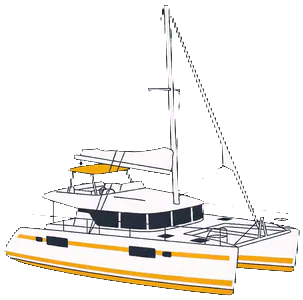
Catamarans, increasingly popular for Valencia yacht charter, offer space and stability, which is valuable if you're chartering with crew who get seasick. The shallow draft is an advantage for exploring smaller anchorages and approaching the Columbretes in conditions where a deeper-keeled monohull would struggle. The trade-off: catamarans are less fun to sail in true wind, and they're less maneuverable in tight harbor approaches.
Motorboats and small displacement cruisers appeal to charterers more interested in speed and comfort than sailing conditions. If you have limited time and want to visit multiple destinations—say, three days from Valencia to Tabarca to Alicante to Calpe—a 35–45 foot motoryacht gives you scheduling reliability that sailing doesn't guarantee, particularly during calm spells in summer when thermals peter out.
Day charter options abound in Alicante, Dénia, and Calpe, ranging from small sailboats for experienced crews to group sailing experiences and motorboat tours to Tabarca. These make sense if you're land-based and want a single afternoon or morning on the water.
Real Club Náutico de Valencia is the traditional yacht club and offers mooring facilities within the city, but it's oriented primarily toward club members and long-term boats. For visiting charter crews, Marina Real Juan Carlos I is the serious option: America's Cup legacy infrastructure, full services, restaurants, shops, and secure parking. From Marina Real, you can begin sailing south within 30 minutes or north toward Gandia within an hour.
Marina de Dénia, in the north, works well if you want to begin your cruise with exposure to Balearic passages or prefer a smaller-town atmosphere. The marina is well-maintained, the town is livable for a week, and the seafood is serious. Nord, south to Calpe, is about 50 nautical miles, easily a two-day delivery with stops at Jávea and anchorages in between.
Puerto de Alicante, sitting roughly in the middle of the region, is becoming increasingly popular as a charter base. The port is commercial but developing charter infrastructure, and it places you within 10 nautical miles of Tabarca Island and 30 nautical miles of either Dénia (north) or Calpe (south).
For smaller boats and motorboats, marinas in Calpe and Gandia offer good facilities and beach-town atmospheres, though they're at the periphery of the larger sailing region rather than centrally positioned.
Valencia's sailing season runs effectively year-round, but conditions vary dramatically. The high season—May through September—offers warm water (reaching 26–28°C by August), reliable sunshine, and thermal wind patterns that build steadily through the afternoon. Mornings are often glassy or light until around 11 a.m., when sea breeze begins to generate from the south to southeast. By mid-afternoon, thermals commonly reach 12–18 knots. These are straightforward sailing conditions for most crews. Night sailing requires caution: thermals collapse after sunset, leaving either flat water or occasional katabatic flows off the surrounding hills.
Autumn and spring introduce the Levante—an easterly wind that can run hard and sustained for days. The Levante is a genuine weather system, not a caprice: it brings cooler temperatures, reduced visibility (sometimes dust from North Africa), and chaotic sea states, particularly around the Columbretes Islands and along the northern coast. The Levante is most common in September–October and March–April, and it's the primary reason to check detailed forecasts during shoulder seasons. However, the Levante also brings the best wave conditions for kitesurfing and windsurfing, and it clears the skies of summer haze, offering extraordinary visibility once the swell settles.
Winter sailing is possible but less common: water temperatures drop to 12–14°C, storms are occasional but can be significant, and charter availability decreases. That said, winter offers solitude, fewer tourists, and the chance to experience the coast's authentic character rather than its summer version.
Day 1: Marina Real Juan Carlos I to Gandia (35 nautical miles). Depart north with morning land breeze. Expect flat to moderate conditions. Gandia's anchorage offers good holding and allows an afternoon exploration of the town and a dinner featuring fideuà, the locally invented pasta dish.
Day 2: Gandia to Jávea (35 nautical miles). A full day's sail south with afternoon thermals. Jávea's dramatic cove anchorage is worth the passage. Explore the old town on foot and plan for an early dinner given the Levante's autumn tendency to kick up evening swell.
Day 3: Jávea to Calpe (20 nautical miles). A short morning sail ending by midday, leaving the afternoon to visit Peñón de Ifach by dinghy and explore Calpe's waterfront. Strong restaurant scene and good provisioning for the next leg.
Day 4: Calpe to Tabarca Island via Alicante (30 nautical miles). Sail south to Alicante, enter the port for provisioning if needed, then head southwest 11 nautical miles to Tabarca. The anchorage is settled by late afternoon. Snorkel or dive the underwater archaeological sites. If conditions are calm, overnight here. If swell picks up from the northeast, departure becomes time-sensitive.
Day 5: Return south or north as conditions allow. If you have time, a passage toward the Columbretes (30 nautical miles northeast from Alicante) is possible in settled conditions. Otherwise, return toward Alicante or work back up the coast toward Dénia. A five-day route is best shaped by weather rather than locked to a rigid itinerary.
Valencia is the birthplace of paella, but this requires clarification. True paella Valenciana—the original and, for most Valencian locals, the only authentic version—contains rabbit and chicken, rarely seafood. The version tourists encounter almost everywhere else (paella de marisco) is a later invention, delicious but inaccurate to tradition. If you want the real thing, seek restaurants in the Albufera region west of the city or small family operations in coastal towns. Many serve it as a Thursday and Sunday special rather than a daily menu item.
Fideuà, as mentioned, originated in Gandia. It uses short pasta (typically 2–3 centimeters long) cooked directly in fish stock in a paella pan, then typically finished with an egg and seafood topping. The texture is richer and less delicate than paella, and it's a signature dish in Gandia and surrounding areas.
All-i-pebre is a traditional Valencian eel dish from the Albufera lagoon, slow-cooked with saffron, paprika, and garlic. It's autumn and winter eating, most common from October through March, and worth seeking out if you're there during season. The flavor is earthy and complex, light years removed from tourist-menu seafood.
Horchata de chufa—a drink made from tiger nuts and sugar—is a Valencian invention often served as an afternoon snack with fantoches (small, delicate pastries) or socarrats (the crispy, caramelized bottom of a paella pan). It's sweet and grainy, refreshing in summer heat.
Alicante's Fondillón is a nearly-extinct fortified wine that's being quietly revived by a handful of producers. It was historically aged for decades in solera systems and tastes like dried fruit, caramel, and oxidized complexity. Modern bottlings are rarer and pricier, but if you find a bottle in Alicante, it's worth trying as a digestif. The region also produces lighter whites and some respectable reds from inland vineyards.
Dénia's fish restaurants are as good as the Mediterranean offers: sea urchin, langoustine, wild sea bass, and local rockfish prepared simply with olive oil and salt. Expect to spend money and to eat things caught earlier that day.
May through September offers the most reliable conditions: warm water, thermal winds, and clear weather. However, the high season brings crowds and higher charter costs. April and October are excellent if you're willing to accept occasional Levante wind and somewhat cooler water. Winter is possible but less popular, with reduced charter availability and occasional bad weather. Spring (March–April) and early autumn (September) are sweet spots for experienced crews seeking better conditions than midsummer while avoiding winter risks.
If you have the time and the weather is settled, yes. The islands are genuinely remote, the diving is exceptional, and the geological drama of a volcanic archipelago is visually memorable. If you're time-limited or weather-anxious, skip them and invest in Tabarca Island instead, which offers archaeology, protected marine reserve status, and remarkable clarity without the passage distance or exposure. Both are worth visiting, but Tabarca is more accessible to less experienced crews.
Snorkeling in clear water around Tabarca Island and other coastal areas requires no certification and offers excellent visibility and marine life in the shallows. Diving to deeper archaeological sites and around the Columbretes requires appropriate certification and ideally an experienced divemaster. Several dive operations in Alicante and Dénia offer guided dives and certification courses if you want to commit to training.
Valencia city has supermarkets and fresh markets. Dénia, Alicante, and Calpe all have excellent provisioning, with daily fish markets in Dénia and Alicante. Fresh bread, cheese, and wine are reliably available everywhere. For longer passages to the Columbretes, stock extra water and fuel. Local markets in smaller towns offer the best produce and are worth timing your anchoring to coincide with morning market hours.
Summer sailing in coastal waters (Dénia to Calpe route) is accessible to crews with basic skills and good seamanship habits. The thermal winds are predictable, holding ground is generally good, and multiple anchorages offer bailout options. Passages to the Columbretes or sailing during shoulder seasons (when Levante is possible) require more experience. Many charterers hire a skipper for the first day or two to build confidence and understand local conditions. Boat4You can match you with appropriate vessels and help you assess your readiness.
Valencia is not as well-known as the Greek islands or the French Riviera, but that's exactly its appeal. You'll find world-class marinas, exceptional sailing conditions, genuine food culture, and thousands of square nautical miles with fewer boats than you'd encounter in the Balearics or Croatia. Whether you're chartering a 40-foot sailing yacht to explore Columbretes Islands, a catamaran for family week along the Costa Blanca, or a motorboat for day trips to Tabarca from Alicante, the region rewards curiosity and rewards it immediately. The paella comes from here. The wine is distinctive. The sailing is substantive. Start planning your Valencia yacht charter now—Boat4You specializes in matching crews with appropriate vessels across Spain's Mediterranean coast, and the team has real local knowledge. Check out their Spain charter options or dive straight into Valencia-specific availability. If you want to understand how Boat4You works, their process is transparent and straightforward. For more detail on charter logistics, review their FAQ, and if you want to understand the company's approach, their about page is worth reading. The Mediterranean is waiting.
Updated October 6, 2026
| Month | Typical week | Middle half of weeks |
|---|---|---|
| Nov 2026 | 4,854 € | 3,714 € – 11,394 € |
| Dec 2026 | 4,854 € | 3,714 € – 11,394 € |
Computed every night from the 7-night charter offers of the next 12 months for the boats based here. Prices are for the boat per charter week; skipper, extras and deposit are separate, and figures based on fewer than 5 boats or offers are left out. Amounts in euros (EUR).