Sardinia Costa Smeralda Sailing Guide: La Maddalena, Olbia & Bonifacio
Updated May 2026.
The Costa Smeralda is the most expensive cruising ground in the western Mediterranean and the prettiest. La Maddalena Archipelago, the National Park north of the Smeralda coast, has the clearest charter water in Italy — granite islets, Caribbean-blue lagoons, and a permit-buoy system that protects the seabed. Bonifacio in Corsica sits 7 NM across the Strait of Bonifacio, often added as a one-day side trip. This guide covers all three.
The three sub-areas of a Sardinian charter
Costa Smeralda — the developed coast around Porto Cervo and Cala di Volpe. Premium marinas, premium prices, the highest concentration of superyachts in the Mediterranean. The bays north of Porto Cervo (Cala Razza di Juncu, Romazzino, Liscia di Vacca) are anchoring options if you’d rather skip the marina rates.
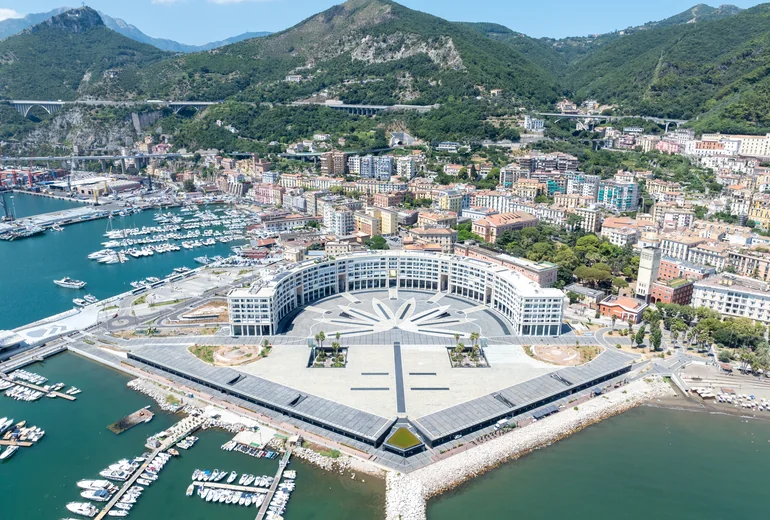
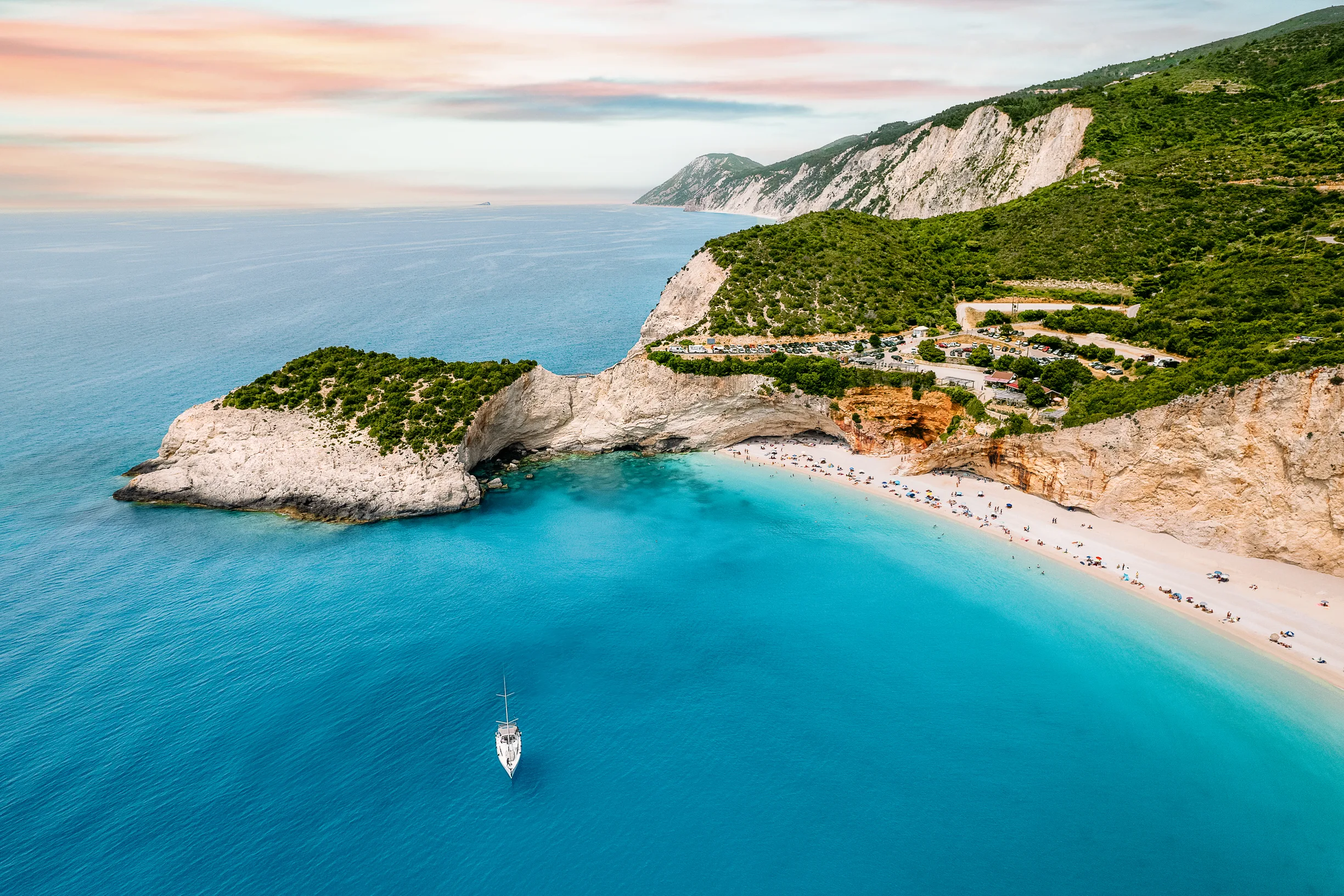
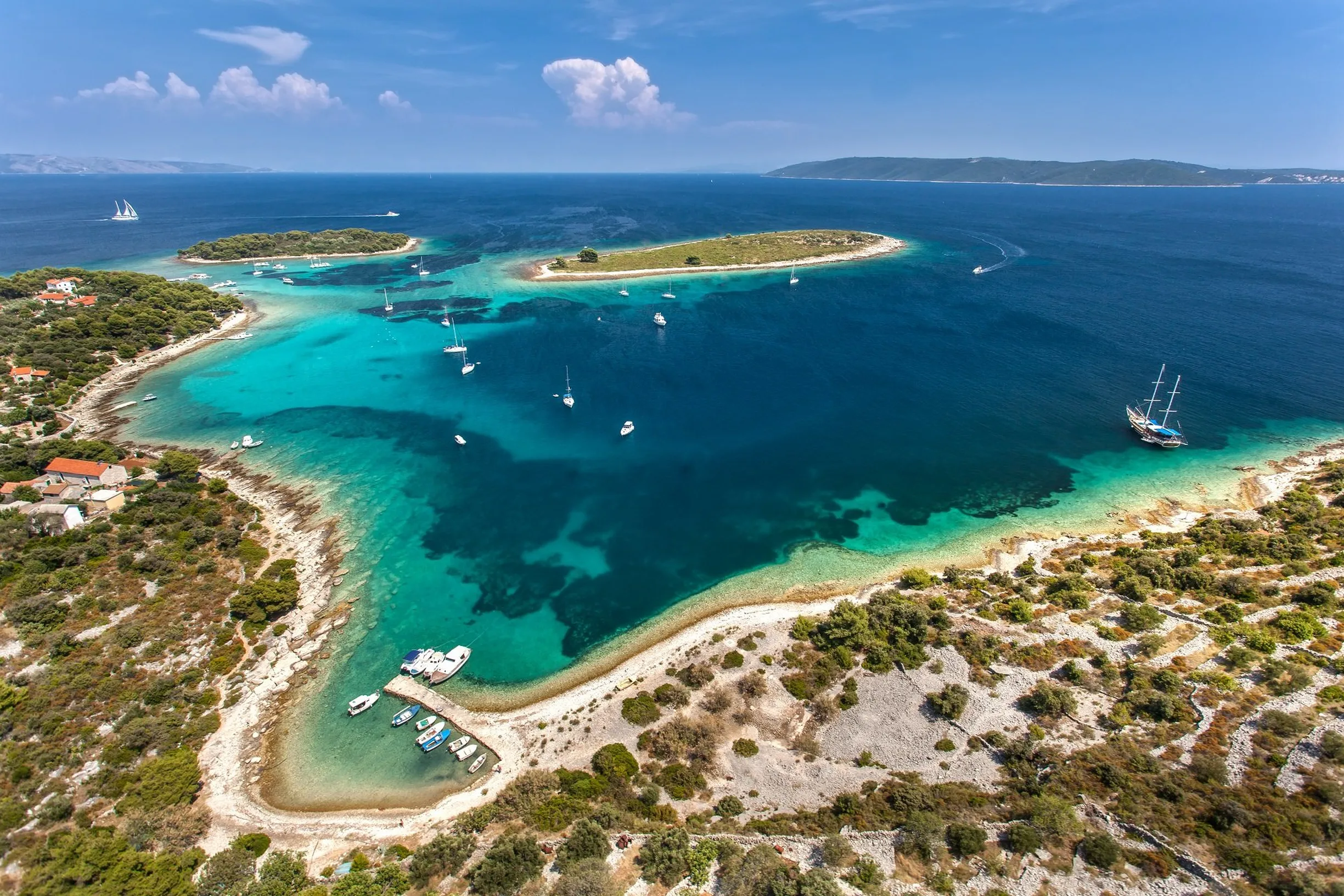
La Maddalena Archipelago — the national park north of Costa Smeralda. The seven main islands (Maddalena, Caprera, Spargi, Budelli, Razzoli, Santa Maria, Santo Stefano) are mostly buoy-only. The Spiaggia Rosa on Budelli and the Cala Coticcio on Caprera are the most-photographed anchorages.
Bonifacio (Corsica) — the stunning fjord-harbour cut into Corsica’s southern cliff coast. France, not Italy — passport on board, no border check in practice. The harbour itself is one of the most dramatic in the Mediterranean.
Best months for Sardinia
May–June — the smart choice. Water is warming, anchorages are empty, prices are 30% below peak.
July — high season. Italians and superyachts fill the Costa Smeralda; La Maddalena buoys book days ahead.
August — Italian holidays. Costa Smeralda hits maximum saturation. La Maddalena moorings need to be booked weeks ahead.
September — locals’ month. The single best window — sea at 24 °C, half the boats, prices dropping.
Charter bases and access
Olbia is the working charter capital. Marina di Olbia and Olbia airport are 15 minutes apart. Most Sardinian charter pickups happen here. The Marina di Cannigione (north of Olbia, closer to La Maddalena) is the alternative pickup if you want a head-start on the park.
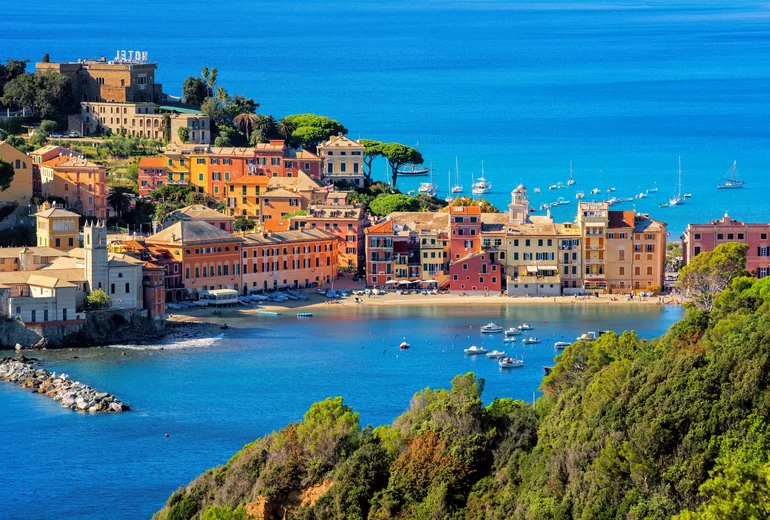
Portisco is the smaller premium base — newer fleet, fewer charter weeks per boat, higher prices.
Palau and Cannigione are inside the Smeralda area, closer to the action but smaller fleets.
The buoy permit system in La Maddalena
La Maddalena is a strict national park. Anchoring is forbidden in most marked zones; mooring is on paid buoys booked through the official park website. Buoys go on sale 30 days ahead and the popular bays (Spargi, Budelli) sell out within hours. Buoy fees in 2026 run €40–120 per night depending on bay and boat size. Park entrance fees apply additionally — €5–15 per person per day.
The 4-day La Maddalena loop
Day 1 — Olbia to Cala di Volpe (12 NM). Cast off, sail north along the Smeralda coast, anchor or moor at Cala di Volpe. Marina prices in the cala are eye-watering — most charters anchor offshore in the same bay.
Day 2 — Cala di Volpe to Spargi (15 NM). Enter the park at the south end. Spargi has the calmest, most photogenic single anchorage in the archipelago — Cala Soraya — buoy-only.
Day 3 — Spargi to Budelli to Caprera (15 NM). Spiaggia Rosa on Budelli (the Pink Beach, no longer accessible to swim, but visible from the boat). Continue to Cala Coticcio on Caprera for the night.
Day 4 — Caprera to Olbia (22 NM). Direct return south through the Bouches de Bonifacio. Optional Bonifacio-Corsica detour adds a full day each way.
Bonifacio: the optional Corsican side trip
Bonifacio in Corsica is 7 NM across the strait from La Maddalena’s western edge. The harbour is a fjord cut into the limestone cliffs, with the medieval Citadel above. Marina prices in Bonifacio in season are €150–250 per night for a 45-footer — bookable in advance, often full from June 25. Most charterers do Bonifacio as a long-day return: arrive by 11:00, leave by 17:00, sleep back in Sardinia.
What kind of boat fits Sardinia
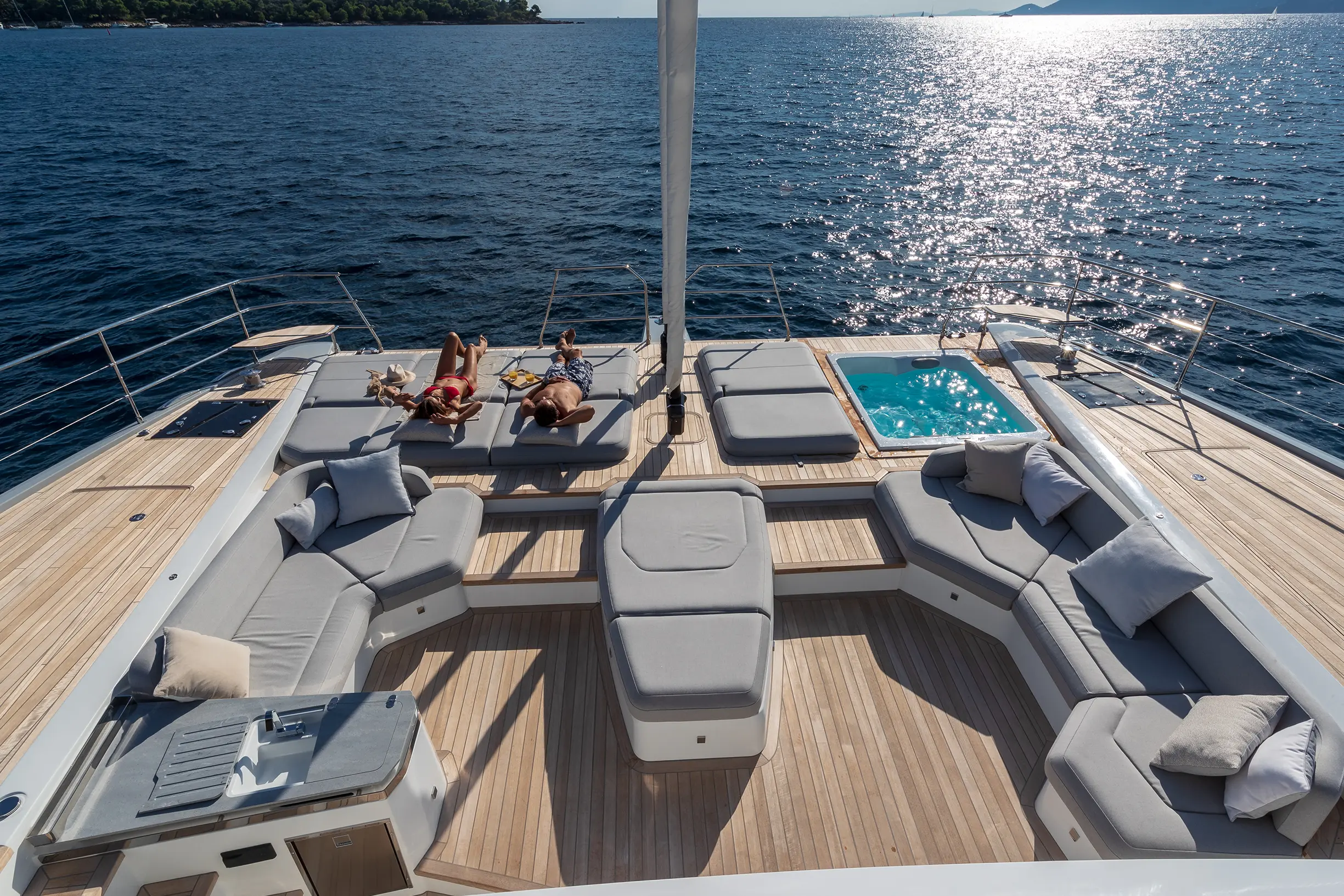
Both work. Catamarans are increasingly popular in La Maddalena because the granite-bottom anchorages favour shallow draft and the buoy system fits cats fine. Monohulls remain better value for sailing-focused crews. The Costa Smeralda’s premium marinas have catamaran upcharges in the 50–80% range — material on a Sardinian budget.
Costs in 2026
A 45-foot bareboat monohull from Olbia in late June 2026 runs €6,500–8,500 (the Sardinian premium adds 15–20% over Greek or Croatian equivalents). A 45-foot catamaran sits at €15,000–20,000. Marina overnights in Costa Smeralda are €150–400 in season. La Maddalena buoys €40–120. Add €1,500–2,500 per crew for fuel, marina nights, buoys, park fees and provisioning.
Frequently asked questions
Is Sardinia worth the premium over Croatia or Greece?
If you want the clearest water, the most dramatic granite anchorages, and a single-week showcase, yes. If you’re cost-sensitive, no — Croatia delivers 80% of the experience at 60% of the price.
Do La Maddalena buoys really sell out?
Yes. Spargi and Budelli buoys for peak weeks sell out within hours of release. Set a calendar reminder for 30 days before your trip date and book at the moment the system opens.
Is Bonifacio a must-do?
Aesthetically yes; logistically optional. The fjord harbour is unique. The day each way costs you two anchorages back in Sardinia. Worth it on a 7-day route, less essential on a 5-day.
Can I do this route in early June?
Yes — water is still around 18 °C but anchorages are empty and prices have not peaked. The Costa Smeralda becomes a different place in early June.
How does Sardinia compare with Sicily and the Aeolian Islands?
Sardinia is more polished and more expensive. Sicily and the Aeolians are wilder, with active volcanoes (Stromboli) and a distinctly southern-Italian feel. We cover the trade-off in the Italy guide.
The single best dinner reservations on this route
Sardinia’s restaurant scene is the most varied on this guide’s coast. On the Costa Smeralda, Phi Beach (Forte Cappellini) is the see-and-be-seen anchor restaurant — book a buoy outside, tender in. Spinnaker at Porto Cervo handles charter crews. On La Maddalena, La Locanda del Mirto (on Caprera) is the family-run dinner worth the walk from Cala Coticcio. In Bonifacio, Stella d’Oro on the citadel quay is the long-standing reservation; reservations weeks ahead in season. On Sardinia’s east coast, Su Gologone (interior, near Oliena) is the inland gastronomy detour worth a half-day taxi ride for crews staying multiple nights at Olbia.
Bonifacio crossing logistics
The Bonifacio crossing from La Maddalena (or Sardinia’s north coast) is 7 NM but operationally significant — you cross from Italy to France, into a strict-permit harbour with seasonal restrictions on anchoring. The smart pattern is a day trip: arrive Bonifacio by 11:00, lunch in the citadel, walk the medieval streets, depart by 17:00, sleep back in Sardinia. Marina overnight in Bonifacio in season runs €150–250 for a 45-footer. Anchoring inside the fjord-harbour is forbidden; mooring is at the marina pontoons (book ahead) or at the few authorised buoys outside the harbour entrance. Carry passports — there’s no border check in practice but the boat’s papers are inspected randomly.
The Costa Smeralda marina pricing reality
Costa Smeralda marinas are the most expensive in the western Mediterranean. Porto Cervo for a 45-foot monohull in mid-July 2026 runs €350–500 per night; Cala di Volpe €280–450; Porto Rotondo €200–350. Most charterers minimise marina nights and take buoys or anchor in adjacent bays — Cala di Volpe’s anchorage 200 metres from the marina is free; Porto Rafael’s bay anchors well in 8–10 metres on sand. The pattern is one or two marina nights for shore visits and provisioning, with 4–5 nights at anchor or buoy.
Weather windows for the Bonifacio crossing
The Strait of Bonifacio between Sardinia and Corsica is one of the windiest stretches of the western Mediterranean. The mistral (the cold northwesterly) accelerates through the strait at 25–35 knots in the wrong forecast. The right crossing window: stable highs over the Tyrrhenian, winds under 18 knots in the strait, no mistral within 24 hours. May, June, and September are the most reliable months. Crossings under 15 knots take 90 minutes; in 25-knot mistral conditions they take 4 hours and feel longer. Always check the Météo France forecast (the French side has better strait-specific data than the Italian).
Ideas for your next sailing vacation
More than 40 countries for boat rental & yacht charter with best prices