Kornati Sailing Area Guide: National Park Routes, Anchorages & Restaurant Bays
Updated May 2026.
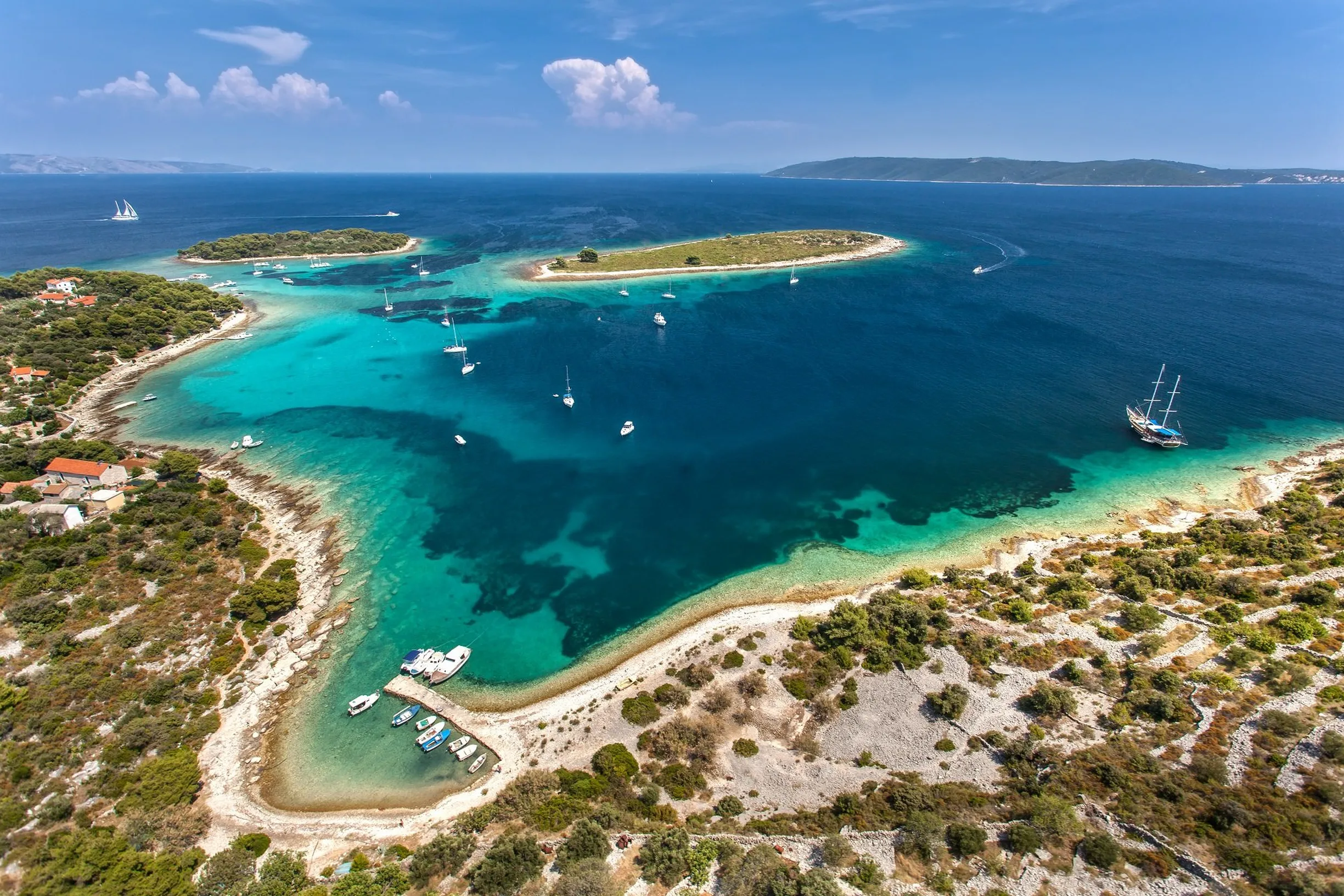
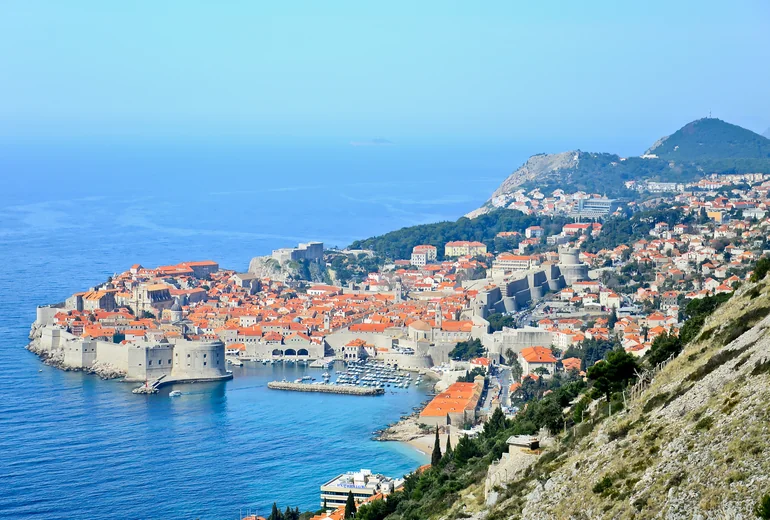
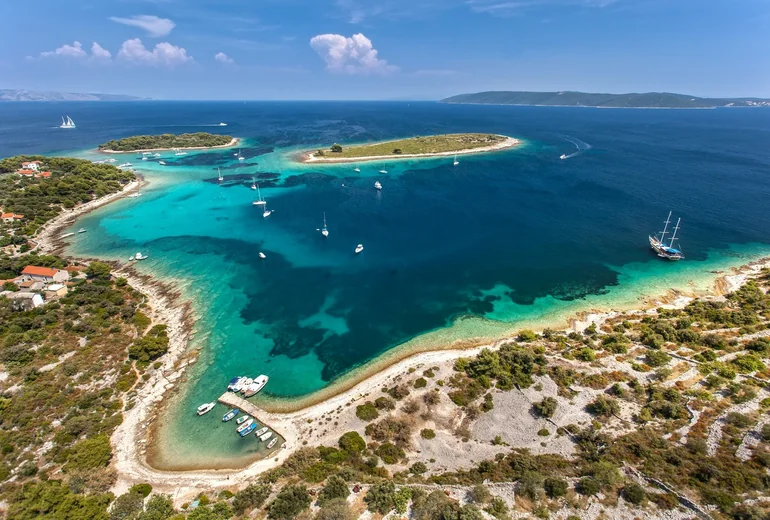
The Kornati archipelago is 89 named islands in a tight Adriatic constellation 14 NM offshore from Murter — low-lying, almost treeless, scattered with sheep, and dominated by the Kornati National Park that covers most of the central archipelago. There are no inhabited villages on the protected islands, no shore-side roads, no provisioning. What there is: dozens of restaurant bays, a handful of agricultural cottages converted into konobe, and water that turns translucent on calm days.
How the Kornati fit into a Croatian charter week
Kornati is rarely a full-week destination. Most charterers do 2–3 days inside the park as a leg of a longer Adriatic week, typically from Murter, Šibenik, Zadar, or Rogoznica. A pure Kornati week is possible from Murter for crews who specifically want maximum-quiet sailing and don’t need a town stop — but most operators sell Kornati combined with the Šibenik archipelago and Krka.
The Kornati National Park: rules
The park covers most of the central archipelago and requires a daily ticket per boat. Tickets are sold by park rangers who circulate in inflatables, by tourist agencies in Murter and Šibenik, and online (the park website). 2026 prices are roughly €30–60 per day depending on season and boat size; multi-day passes get cheaper per day. Anchoring inside the park is restricted to specific bays; mooring at restaurant pontoons is the standard format.
The restaurant-bay model
Inside the Kornati park, the dominant mooring format is the restaurant pontoon: tie to the pontoon, eat dinner ashore, mooring is free. The system works because the islands have no other accommodation — restaurants are the de facto marinas. Notable bays:
— Levrnaka: the largest restaurant bay, with a long pontoon and a sand-bottom approach. Konoba Levrnaka is the local institution.
— Lojena Bay (Levrnaka south): the prettiest beach in the park, no facilities, 30-minute walk from Levrnaka village.
— Žut: the marina at ACI Žut sits just outside the park boundary; an alternative if you want full marina services.
— Piškera: the main park marina, full-service, in season only.
— Kornat island: multiple restaurant bays — Stiniva, Strižnja, Vrulje, each with one or two konobe.
A 3-day Kornati route from Murter
Day 1 — Murter to Žut (10 NM). Pickup at Marina Hramina or Marina Murter. Provision in Murter; nothing inside the park sells food or fuel. Sail north into the archipelago via the Murter-Žut channel. Overnight at ACI Žut or one of the restaurant bays on Žut.
Day 2 — Žut to Levrnaka (8 NM). Cross into the park properly. Visit Lojena Beach in the afternoon, dinner at Konoba Levrnaka.
Day 3 — Levrnaka to Murter via Telašćica (15 NM). Telašćica is the long fjord-like bay on Dugi Otok, just north of the Kornati. Saltwater Lake Mir sits inside the bay; the cliffs on the seaward side are 100+ metres tall. Anchor in the inner bay, walk up to the cliffs. Return to Murter for the next day’s onward charter.
The Telašćica detour
Telašćica Nature Park sits just north of Kornati and is often visited together. Lake Mir is a saline inland lake separated from the sea by a 50-metre limestone wall. The Stiniva-style cliffs on the open-sea side are dramatic. Telašćica has its own park fee (separate from Kornati) and its own restaurant moorings.
What you can’t get inside the park
No fuel — fuel up at Murter, Žut (just outside the park) or Šibenik before entering. No supermarkets — provisioning is restaurant-only inside the park. Limited cellular signal — Telekom Croatia is the most reliable carrier. No ATMs — bring cash for restaurant tips and park tickets if cards fail.
What kind of boat fits Kornati
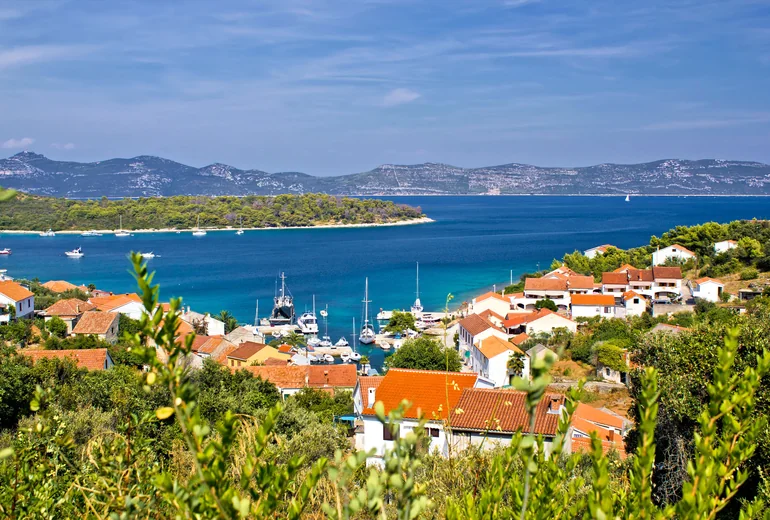
The Kornati’s restaurant-pontoon mooring format favours monohulls — pontoons are sized for them and the catamaran upcharge can double the per-night cost. Catamarans work fine but you’ll spend more nights at anchor than at pontoon.
The honest mistakes
The first is arriving without provisioning — there’s no shop in the park. The second is not booking restaurant moorings in Levrnaka and Piškera in peak season. The third is treating Kornati as a town stop — it isn’t. The fourth is missing Telašćica when you’re already this close.
Frequently asked questions
How much does the Kornati National Park ticket cost in 2026?
Roughly €30–60 per day per boat depending on season. Multi-day passes (3 or 7 days) work out cheaper per day. Tickets via the park website, by ranger inspection, or via tourist agencies in Murter.
Is Kornati a full-week destination?
Rarely. Most charters do 2–3 days inside the park as part of a longer Croatian week. A pure-Kornati week works for crews who want zero town stops and maximum nature.
Can I anchor anywhere in the park?
No — anchoring is restricted to specific designated bays. Most charterers use restaurant pontoons or paid buoys in marked anchoring zones.
Is there cellular reception in Kornati?
Patchy. Telekom Croatia is the most reliable. Some bays have no signal at all. Plan for offline navigation and bring a paper chart as backup.
How does Kornati compare with the Pakleni archipelago?
Pakleni is denser (smaller area, more boats), more restaurant-driven, closer to a town. Kornati is wilder, quieter, and feels more like nature than infrastructure. Plan to visit both on a Croatian charter — see the Split itinerary for the route.
The crew-of-the-charter-boat reality on Kornati
Kornati specifically rewards crews who care about quiet. The archipelago has no nightlife, no shore-side roads, no fast tenders to a town. The week is built around restaurant moorings and walks across the islands at sunset. Crews who arrive expecting a polished resort experience leave disappointed; crews who arrive prepared for the wild end of Croatian sailing leave talking about it for months. The right Kornati week has 5–6 nights inside the park, with 1–2 nights at the gateway anchorages (Žut, Telašćica, Murter) bracketing the trip.
The Kornati park ranger and ticket inspection
Park rangers patrol the Kornati in inflatables, especially in July and August. Tickets must be visible to the ranger on request; if you don’t have one, the ranger sells you one on the spot at a higher rate. The smart move is to buy the ticket online before you enter the park at kornati.hr, print or save the QR code, and have it ready. Multi-day passes (3-day, 7-day) cost less per day than single-day. The park boundary is well-marked on every modern chartplotter; if in doubt, the ranger will tell you.
The Kornati restaurant scene — what to expect
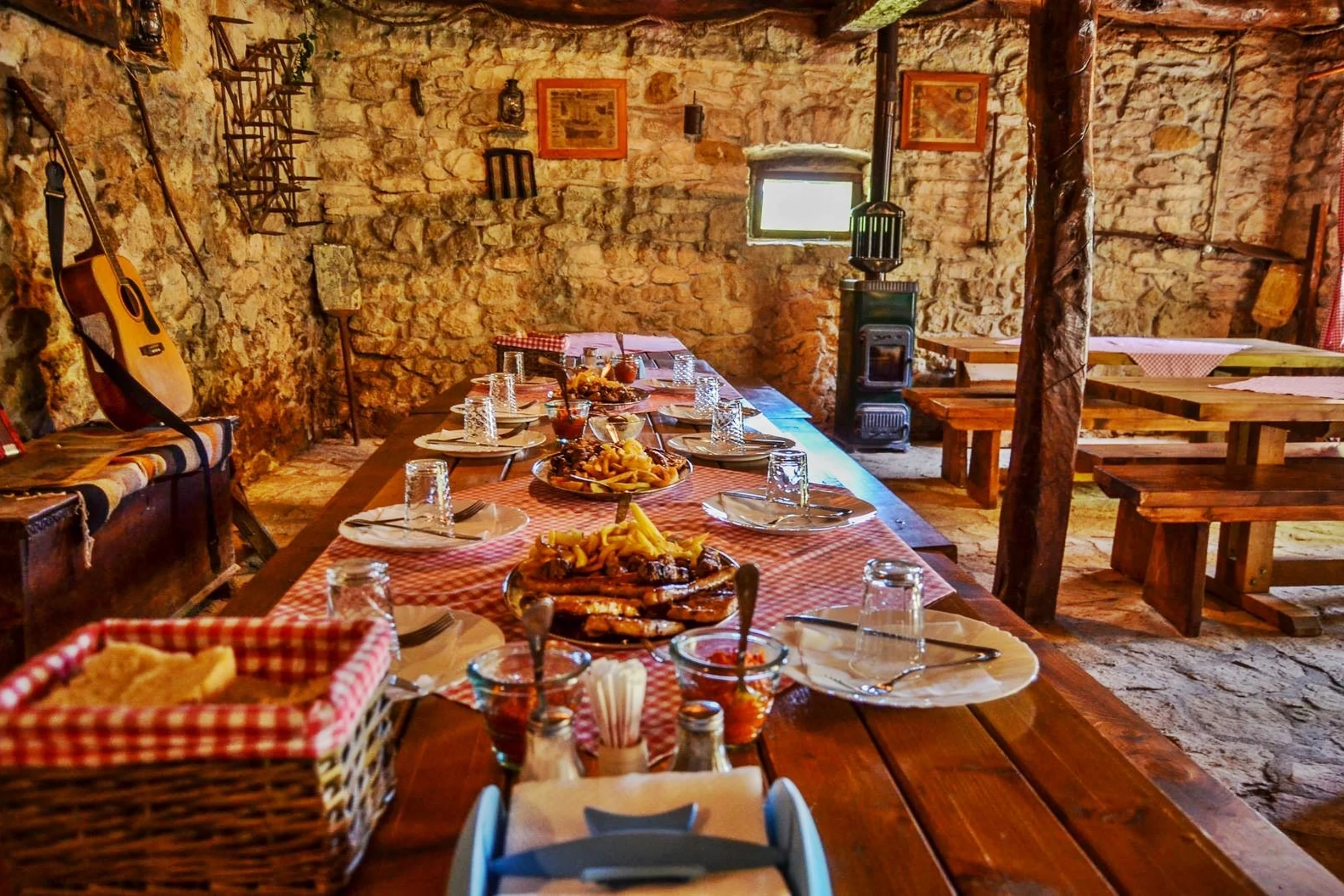
The Kornati restaurant pontoons run a consistent format: tie up to the pontoon, eat dinner ashore, mooring is free. Menus are predictable — fresh fish (typically caught that day), grilled lamb or veal, salads from the family garden, local wine. Dinners run €35–55 per person. The standout pontoons: Konoba Levrnaka (large, family-run for two generations), Konoba Strunac (smaller, more intimate, lamb under the bell), Konoba Otok (on Žut, just outside the park boundary). Bookings via VHF (Channel 72) or phone the morning of are sufficient in shoulder season; in July and August, call 24 hours ahead.
Telašćica vs Kornati — when to add the detour
Telašćica is a separate nature park immediately north of Kornati, with its own ticket system. The standout features are Lake Mir (a saline inland lake separated from the sea by a 50-metre limestone wall) and the Stiniva-style cliffs on the seaward side. Adding Telašćica to a Kornati week costs one extra day; for crews on a 5-day Kornati extension, it’s worth skipping. For crews on a 7-day route from Murter, Telašćica is worth the day every time. Anchoring inside Telašćica is permitted in designated bays; restaurant pontoons exist but are smaller and quieter than Kornati’s.
Ideas for your next sailing vacation
More than 40 countries for boat rental & yacht charter with best prices