Your search
Croatia
23
boats available · live
500 € – 200,000 €
500 €200K €
1 – 42 guests
142
0 – 42 berths
042
14.76 – 56 m(48–184 ft)
14.76 m56 m
2000 – 2028
20002028
0 – 20 toilets
020
5 – 7,296 hp(4–5,436 kW)
5 hp7,296 hp
Your privacy
You can read more about how we protect your personal data and use cookies in our Privacy Policy.
With your consent, we and Google use cookies and similar technologies to store and access information on your device and to process personal data such as your visit to this website, your IP address and cookie identifiers. You can withdraw your consent at any time through “Cookies Settings” at the bottom of every page.
We and Google process data for:
Website analytics and visit statistics, recordings of visits to improve the website, ad measurement and remarketing, storing and accessing information on your device
Prices shown are each boat's cheapest available 7-night week. Choose your dates for exact prices.
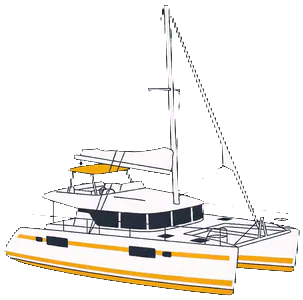
Power catamarans represent a distinctive convergence of two marine worlds: the stability and spaciousness of a catamaran hull combined with the cruising speed and fuel efficiency of a dedicated motor yacht. In Croatian waters, where distances between islands are manageable but weather conditions demand comfort, power catamarans deliver a compelling proposition. You get the catamaran's immunity to heeling—no seasickness on family holidays—paired with the ability to cover 80-120 nautical miles in a single day without the noise and vibration of a monohull motor yacht. Whether you're chartering with us or exploring independently, a power catamaran transforms how you experience the Croatian coast.
The Adriatic's charm lies partly in its geography: narrow channels, shallow anchorages, island-studded bays, and a network of ports compact enough to explore intensively yet diverse enough to occupy weeks. Power catamarans excel in this environment for four distinct reasons.
No Heeling, No Compromise. Traditional sailing yachts heel dramatically when on the wind; even modern cruising motors often rock in beam seas. A power catamaran's twin hull design keeps the boat virtually upright in most conditions. For families—especially children, elderly relatives, or guests prone to seasickness—this stability transforms comfort. You can cook, sleep, and relax without bracing yourself. Charter clients increasingly cite this as the reason they upgrade from monohull charters to power cats.
Shallow Draft Access. Most power catamarans draw 1.2 to 1.5 meters fully loaded. This permits access to bays and anchorages closed to deeper-drafted monohulls and motor yachts. Shallow spots off Mljet, the anchorage near Zirona in the Dalmatian islands, and numerous hidden coves become practical destinations rather than charts marked "avoid." You anchor in clear, protected water that monohull charterers cannot reach.
Speed Without Excess. A 45-50 foot power catamaran cruises comfortably at 15-18 knots and reaches 20+ knots at full throttle. This is twice the average sailing catamaran's speed under power and competitive with much larger motor yachts. In practical terms, you can depart Split after breakfast, explore the Pakleni Islands near Hvar, enjoy an afternoon dive, and still reach Vis by evening—all without rushing. The ability to cover distance means you fit more geography into your charter week.
Space and Comfort. The wide beam and stable platform of a power catamaran create open, naturally lit interiors. Flybridge models—increasingly common among recentadditions—offer 360-degree views, outdoor dining, and sunbathing without sacrificing the sheltered spaces below. Twin hulls mean more interior volume per overall length compared to monohulls of equivalent waterline.
The power catamaran's blend of speed and draft unlocks several charter itineraries that are merely adequate in sailing yachts and impossible in larger motor vessels.
The Central Dalmatian Loop: Split–Hvar–Vis–Bol. Depart Split heading south-southwest toward the Pakleni Islands off Hvar (18 nm). Explore the protected eastern shore of Hvar—shallow anchorages where you'll see local fishermen and have the bay largely to yourself. Next morning, a 15 nm sprint to Vis, arriving by mid-morning. Spend two days on this remote island, visiting the Blue Grotto and the sheltered port of Komiža. From Vis, an easy 12 nm run to Bol, where the shingle beach stretches for kilometers and winds are predictable. Power catamarans complete this circuit in five days without dawn starts or forced itineraries; you choose your pace.
Hvar to Dubrovnik via the Elaphiti Islands. An increasingly popularroute for guests seeking the Adriatic's southern character. Depart Hvar (32 nm to Dubrovnik's approaches), stopping at Pelješac to break the journey and explore Ston's oyster farms. The power catamaran's speed allows a relaxed departure that still lands you in Dubrovnik for sunset cocktails. The return journey can detour through the Elaphiti Islands—Lopud, Šipan, and Koločep—where shallow, clear waters and traditional fishing villages remain largely untouched by cruise-ship tourism.
The Shallow-Water Specialists' Route: Mljet, Lopud, and the Neretva Delta. Here, the power catamaran's shallow draft becomes essential. Mljet's inland salt lakes and pinewood forests are accessible only by boat, and shallow anchorages on the island's eastern shore allow you to base yourself there for a full day. The nearby Elaphiti Islands benefit from the cat's ability to sit upright in 1.3-meter water while you kayak to caves and archaeological sites. A venture into the Neretva Delta's protected channels rewards you with birdwatching, remote fishing villages, and zero interaction with bigger vessels.
Power catamarans are not sailing catamarans with an afterthought motor. Recent designs from builders like Leopard, Fountaine Pajot MY, and Lagoon—whose SIXTY 5 power version is gaining presence in Croatian fleets—treat the twin-hull form as integral to motorized cruising.
Stability and Seakeeping. Twin hulls reduce pitching in head seas and eliminate rolling in beam conditions. A monohull motor yacht of equal displacement will oscillate more; power catamarans keep a flatter sheer line and more level horizon. This translates to higher actual cruising speeds in real conditions, since you maintain comfortable velocity even in 0.5 to 1 meter seas where a monohull might drop 2-3 knots.
Fuel Efficiency. This surprises many charter guests accustomed to the appetite of monohull motor yachts. Twin hulls present less wetted surface than a single hull of equivalent displacement; hydrodynamic drag is lower. A 50-foot power catamaran consumes roughly 25-35 liters per hour at 14-knot cruise, compared to 40-50 liters for a 50-foot monohull motor yacht at equivalent speed. Over a week-long charter, fuel savings reach 30-40 percent. For charter clients chartering on a defined budget, this efficiency matters.
Wide Beam and Interior Layout. A power catamaran's beam often reaches 8.5 to 9.5 meters—wider than comparably priced monohulls. The cabin sole is broader, walkways are more spacious, and berths are orthogonal rather than angled. Saloons feel light and airy. Galley arrangements, typically a pressure point on smaller vessels, are genuinely functional. Two heads—common on power cats—reduce morning queues.
Flybridge Models: The Game-Changer. Modern power catamarans increasingly feature raised helm stations and flybridge lounges. You navigate and dine in 360-degree open air, dropping below only for meals, navigation in fog, or shelter in heavy weather. This addresses one chronic complaint of coastal cruisers: spending all day in an enclosed wheelhouse while beautiful scenery passes by. The flybridge transforms the boat from a functional transport into a floating resort where the journey is part of the experience.
Extended Range. Fuel efficiency and twin-engine redundancy (most power cats run twin diesels, one per hull) permit safer, longer passages. You can cruise 150+ nautical miles on a full tank without reserve anxiety. In practical terms, you reach Dubrovnik from Trogir in a long day; you explore the remote Adriatic islands with confidence.
Power catamarans occupy a distinctive price position in the Croatian charter market. They are newer to the rental fleet than sailing catamarans or motor yachts, so availability is limited and pricing reflects demand.
A 45-50 foot power catamaran typically rents for €4,000 to €10,000 per week, depending on season, exact model, and inclusions. This positions the category above entry-level sailing catamarans (€2,500–€4,500) but below luxury motor yachts (€8,000–€20,000+). Our partners' growing power catamaran fleet spans this range, accommodating both families seeking comfort without excessive expense and experienced charterers willing to invest for unique onboard experience.
The value proposition is compelling if your priorities align: you pay more than a bareboat sailing catamaran but less than an equivalent motor yacht, and you receive superior stability, speed, and efficiency. Guests upgrading from sailing charters consistently report the value justified given the comfort gain and expanded routing options.
Off-season (November through March) and shoulder periods (April, October) offer significant discounts—sometimes 20-30 percent below peak summer rates. Early booking is essential; the power catamaran fleet in Croatian waters remains smaller than monohull alternatives, and popular models are reserved 4-6 months ahead during summer.
Seasonal Considerations. May through September is the established season, with July and August commanding peak pricing and advanced bookings. June and September offer milder weather, fewer crowds, and better pricing—excellent compromise periods. April and October are possible if you accept occasional rain and lower water temperatures; winds are often favorable for speed-focused itineraries.
Winter Charter (November–March). Possible but uncommon in Croatia. Winds are stronger and less predictable; some itineraries become uncomfortable even on a stable platform. Boat4You occasionally positions power cats for winter enthusiasts seeking solitude, but this requires flexibility.
Primary Bases. Three hubs dominate Croatian charter logistics. Split offers the most departures, direct flights from northern Europe, and access to the central Dalmatian islands. Trogir, 30 km west of Split, is quieter but equally equipped. Dubrovnik serves as the southern hub and is essential if your itinerary emphasizes the Elaphiti Islands or Pelješac. Most power catamarans base in Split or Trogir during season; a few rotate through Dubrovnik for week-long south-bound charters.
Positioning Cruises. Some charterers book positioning passages between bases. A three-day cruise from Split to Dubrovnik, stopping at intermediate islands, can substitute for a standard charter and introduces guests to a broader stretch of coast.
Day 1: Split to Brač. Depart mid-afternoon after boat handover and briefing. Run to Bol on Brač (18 nm), arriving by early evening. Anchor or moor in the protected bay. Dinner ashore or onboard.
Day 2: Brač to Hvar. Leisurely morning exploring Bol. Depart late morning (14 nm), arriving Hvar by early afternoon. Explore the old town, visit a local winery, and anchor in one of the eastern coves.
Day 3: Hvar – Pakleni Islands Day Excursion. Spend the day diving, snorkeling, and exploring the Pakleni Islands' shallow bays. The power catamaran's draft allows entry to small coves inaccessible to deeper vessels. Return to Hvar for evening.
Day 4: Hvar to Vis. Early departure (15 nm, two-hour crossing). Full afternoon and evening on Vis. Explore the Blue Grotto, visit Komiža's fishing harbor, and enjoy fresh seafood.
Day 5: Vis to Biševo and Auxiliary Itinerary. Day dedicated to the smaller islands nearby. Return to Vis or anchor near Biševo in protected waters. Flexibility is the advantage; if weather turns, you have multiple shelter options.
Day 6: Vis to Hvar. Return to Hvar (15 nm) or detour through Sveta Nedjelja (14 nm), a quieter settlement favored by return visitors. Relaxed pace given the final day approaching.
Day 7: Hvar to Split. Morning departure (32 nm) or overnight passage. Arrive Split by early afternoon, allowing time for boat checklist and handover before evening flight.
This itinerary showcases the power catamaran's strengths: daily distances manageable without fatigue, speed sufficient to spend full afternoons and mornings at destination rather than transit, and stable platform enabling comfortable sailing even in moderate conditions.
Power catamarans represent the fastest-growing segment in Croatian yacht charter. If you've chartered before and felt limitations—heeling in sailing cats, fuel consumption in motor yachts, or speed constraints in traditional designs—a power catamaran closes those gaps. The combination of stability, speed, shallow-draft access, and contemporary comfort creates a charter experience that feels modern yet authentic to Croatian waters.
Our partner network maintains an expanding power catamaran fleet in Split, Trogir, and seasonal Dubrovnik bases. Fleet variety ranges from 45-foot models suited to couples and small families through 55-foot flybridge vessels accommodating larger groups. All are crewed-optional, fully equipped, and available for flexible one-week, two-week, or custom charter periods.
To explore available power catamarans in Croatia, search Boat4You's Croatia power catamaran inventory or view all Croatia charter options. Early booking—particularly for summer departures—is essential given the emerging size of the power catamaran fleet.
New to or uncertain about your charter needs? Read our how we work guide or explore our company background. Additional questions? Our FAQ section addresses common charter logistics and vessel-specific concerns.
The Adriatic's islands and hidden anchorages await. A power catamaran lets you reach them in comfort, stability, and style—exploring more, moving faster, and enjoying the journey without compromise.
For peak season (July and August), reservations 4–6 months ahead secure the best fleet selection and pricing. Shoulder months (May, June, September) typically allow booking 6–8 weeks out.
Base pricing usually covers the vessel, insurance, and marina fees at the home base. Fuel, provisioning, skipper service, end-cleaning, and tourist tax are generally added separately. Check the specific listing on Boat4You for a full breakdown.
For bareboat charter, a valid skipper licence plus a VHF certificate are typically required, and rules vary by country. If you don't hold one, hiring a professional skipper is straightforward — skipper fees are shown on each boat's page.
Updated November 11, 2026
Cheapest month: April 2027. Most expensive month: August 2027.
| Month | Typical week | Middle half of weeks |
|---|---|---|
| Mar 2027 | 11,272 € | 4,469 € – 18,098 € |
| Apr 2027 | 8,035 € | 4,370 € – 16,288 € |
| May 2027 | 11,272 € | 6,715 € – 19,523 € |
| Jun 2027 | 13,956 € | 8,000 € – 22,040 € |
| Jul 2027 | 14,745 € | 9,030 € – 22,040 € |
| Aug 2027 | 15,105 € | 9,111 € – 22,040 € |
| Sep 2027 | 13,956 € | 7,676 € – 21,547 € |
| Oct 2027 | 11,240 € | 5,259 € – 16,955 € |
| Nov 2027 | 14,440 € | 8,000 € – 17,623 € |
Yacht charter prices in Croatia, month by month →
Computed every night from the 7-night charter offers of the next 12 months for the boats based here. Prices are for the boat per charter week; skipper, extras and deposit are separate, and figures based on fewer than 5 boats or offers are left out. Amounts in euros (EUR).