Your search
Türkiye
758
boats available · live
500 € – 200,000 €
500 €200K €
1 – 42 guests
142
0 – 42 berths
042
14.76 – 56 m(48–184 ft)
14.76 m56 m
2000 – 2028
20002028
0 – 20 toilets
020
5 – 7,296 hp(4–5,436 kW)
5 hp7,296 hp
Prices shown are each boat's cheapest available 7-night week. Choose your dates for exact prices.
Türkiye's sparkling Aegean and Mediterranean coasts stretch over 1,600 kilometers, dotted with hidden anchorages, sunken cities, and islands that feel untouched by time. A yacht charter along the Turkish Riviera transforms days into memories: you'll swim above submerged Lycian settlements, explore pine-forested coves accessible only by water, and experience the legendary Blue Voyage tradition that has drawn sailors to these shores for generations. Whether you're seeking a crewed gulet adventure with gourmet meals and afternoon swims, or the freedom of bareboat sailing at your own pace, Türkiye delivers an experience that rivals any Mediterranean destination—often at half the cost.
Boat4You connects charter guests worldwide with trusted Turkish operators who know every reef, every village market, and every quiet anchorage along the Turquoise Coast. Our partners' fleet spans traditional wooden gulets with crew and historic charm, modern catamarans built for comfort and performance, and sailing yachts designed for hands-on exploration. From the bustling marinas of Göcek to the bohemian waterfront of Fethiye, from the ancient harbor of Bodrum to the pristine waters surrounding Kekova's underwater ruins, Türkiye's sailing grounds offer unmatched variety in a single, compact region.
When comparing yacht charters across the Mediterranean, Türkiye stands apart for three compelling reasons: exceptional value, protected sailing waters, and an infrastructure built specifically for the long-distance cruiser. The Aegean's northern and central coasts provide some of the world's gentlest sailing conditions, with moderate winds, calm summer seas, and predictable weather patterns from May through September. Unlike the open Atlantic coasts of Spain or Portugal, Türkiye's sailing grounds are sheltered by geography—the Greek islands to the west create a natural windbreak, and countless bays and anchorages offer safe harbor on every route.
Turkish operators have refined the charter experience over decades. Modern marinas at Göcek, Bodrum, and Fethiye rival any European facility in amenities and service, while costs remain 20 to 40 percent lower than equivalent charters in Croatia, Greece, or the French Riviera. A crewed gulet on Türkiye's Turquoise Coast, complete with professional crew, cabin service, and three daily meals, often costs less than a bareboat catamaran charter in the Balearic Islands. This exceptional value-to-experience ratio has made Türkiye one of Europe's fastest-growing charter destinations, attracting seasoned sailors and first-time charterers alike.
The word "gulet" may be unfamiliar to sailors raised on fiberglass hulls and modern technology, yet it represents one of the world's most romantic sailing traditions. These wooden motor-sailers, ranging from 60 to 120 feet, originated in the sponge-diving and fishing communities of Bodrum and Marmaris. Each gulet is hand-built by master craftsmen using local hardwoods—teak, mahogany, and pine—and fitted with twin diesel engines powerful enough to push the vessel reliably across open water, while auxiliary sails provide additional propulsion and that unmistakable silhouette. A gulet's high freeboard and substantial cabins make them seaworthy platforms for serious voyages, yet their shallow drafts and narrow hulls allow access to remote coves and anchorages where deep-keeled yachts cannot venture.
The Blue Voyage itself—known locally as "Mavi Yolculuk"—is more than a route; it's a philosophy of leisurely exploration. Rather than racing from port to port, gulet cruisers anchor in quiet bays, dive into phosphorescent waters at dusk, and spend afternoons reading in the shade of the companionway. The vessel's crew handles all navigation, deck work, and meal preparation, freeing guests to simply exist in one of the world's most beautiful environments. Professional captains on Turkish gulets average 20 to 30 years at sea, navigating by intimate knowledge of every current, anchorage depth, and seasonal weather pattern. This depth of expertise means you'll arrive at hidden coves your skipper discovered decades ago, meet local fishermen by name, and learn which restaurants in Göcek are worth the dinghy ride ashore.
The coastline stretching from Marmaris south to Antalya—often called the Turquoise Coast or Mediterranean Coast—offers the most dramatic scenery in Türkiye. The water here lives up to its name: so transparent that you'll spot ancient anchors resting on white sand thirty feet below the surface. Marmaris serves as the western gateway, a deep natural harbor ringed by mountains and home to one of Türkiye's largest marinas, with over 800 berths and facilities to rival any European port. Fethiye, roughly 100 kilometers south, is the soul of the Turquoise Coast—a bohemian mix of ancient harbor, working fishing village, and low-key tourist scene. The turquoise water at Ölüdeniz beach (reachable only by boat) is so vivid it seems artificial, surrounded by the 1,969-meter cliff face of Babadag Mountain.
Göcek, nestled between Fethiye and Dalaman, has emerged as Türkiye's premier charter base. This once-sleepy fishing village now hosts a state-of-the-art D-Marin facility, yet retains the charm of a genuine working harbor. Twelve islands dot the waters immediately offshore—the Twelve Islands (Onikiadalar)—providing a full week of anchoring without repeating a location. The waters here average 10 to 15 meters in depth, protected by the landmass, with steady afternoon winds perfect for sail training. From Göcek, a week's sailing reaches Kekova's submerged city, the butterfly sanctuary at Ölüdeniz, and white-water beaches at Kabak.
Bodrum, the ancient Halicarnassus, sits at the meeting point of two seas—the Aegean to the north and the Mediterranean to the south. This geographic advantage means sailing options in every direction, from the pine-forested island of Symi (Greek waters) to the Turkish mainland's protected coves. Bodrum town itself clusters around a reconstructed Crusader castle, now housing the world's oldest known shipwreck artifacts in its museum. The harbor bustles with charter yachts, fishing boats, and colorful gulets preparing for week-long voyages. Unlike the quieter Fethiye, Bodrum's waterfront pulses with restaurants, bars, and nightlife—ideal for charterers who want both wilderness and civilization within reach.
The waters north of Bodrum toward Izmir—the Northern Aegean—offer different sailing characteristics: cooler temperatures, stronger afternoon winds, and fewer tourists. The islands of Lesbos (Greek) and Chios sit just across the border, providing natural waypoints for longer voyages. This region suits sailors with some experience, as wind patterns can be more unpredictable, but rewards knowledge with exceptional anchorages, fewer crowds, and exceptional local food scenes in small Turkish villages.
The Lycian Coast—roughly the section between Fethiye and Antalya—is Türkiye's most archaeologically rich sailing area. Kekova Island features a submerged city that sank after a second-century earthquake. Your gulet will anchor in Kekova Sound while crew and guests swim and snorkel directly above carved stone doorways, sarcophagi, and building foundations visible through the crystalline water. The experience is surreal: Lycian ruins shimmer and shift in the wavering light, ancient stone structures intact yet suspended in a drowning landscape. Nearby Kalekoy village, perched on a peninsula, offers fresh seafood restaurants and harbor-side hospitality that hasn't changed in decades.
Kaş, further east, sits in a horseshoe bay surrounded by limestone cliffs and pine forests. This small town has become a haven for independent travelers and adventure-seeking sailors, with a waterfront lined with family-run restaurants offering grilled sea bass and meze plates. The waters around Kaş reach depths exceeding 200 meters within kilometers of shore, making it ideal for diving enthusiasts and open-water exploration. From Kaş, a day's sail reaches Butterfly Valley (Kelebekler Vadisi), where thousands of Oleander Hawk moths gather each June and July in a hidden canyon accessible only by boat or by hiking down a treacherous cliff trail.
Enclosed by the Datça Peninsula to the north and Marmaris to the west, the Gulf of Gökova forms a natural basin of startling clarity and calm conditions. The area was designated as a Specially Protected Area by the Turkish government, restricting industrial development and preserving it for sailing and marine conservation. Aquamarine waters lap against beaches of white sand and pebbles, while the surrounding countryside remains sparsely populated—mostly fishing villages and goat herds. Sedir Island's famous "Cleopatra Beach," with sand allegedly imported from Egypt for the Egyptian queen herself, provides a legendary lunch stop. The gulf's northern shore hosts the islands of Ölüdeniz and Sünbül Reef, both excellent for diving and snorkeling.
A gulet is the quintessential Türkiye charter experience. These traditionally-built wooden vessels range from 60 to 120 feet and typically accommodate 8 to 30 guests in comfortable cabins with en-suite facilities. Gulet charters are typically crewed—a captain, chef, and deck hands are included in your booking. The crew handles all sailing, navigation, and maintenance while you relax on deck. Meals prepared by the chef are highlights of the day: fresh fish grilled with herbs, wood-fired pide bread, meze plates featuring local cheese and olives, and Turkish red wine flowing freely through sunset dinners. A week aboard a mid-size gulet (80 to 100 feet) typically costs between €1,500 and €3,500 per person, depending on season, with peak summer rates higher than spring and autumn.
Gulets excel for guests seeking a fully curated experience without the responsibility of vessel operation. The crew's knowledge of local anchoring spots, hidden restaurants, and optimal routes rewards guests with experiences far beyond typical tourism. If you've rarely chartered before, a gulet eliminates the learning curve entirely; if you're experienced, the crew's professionalism and local expertise enhance your voyage. The wooden hull and spacious deck create an ambiance that fiberglass cannot replicate—something about teak and mahogany, the smell of salt and diesel fuel, and the gentle creak of timber in a swell connects you to centuries of Mediterranean sailing tradition.
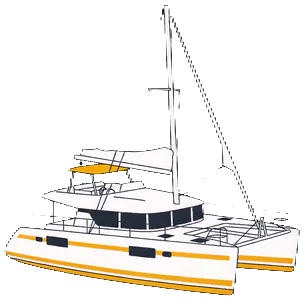
Modern catamarans offer advantages gulets don't: greater space, faster passages, and stability in rougher conditions. Twin hulls provide enormous deck space and reduce heeling, which some guests prefer. Catamarans accommodate 6 to 12 guests typically, with spacious cabins and larger saloons. Bareboat catamaran rentals—where you navigate and operate the boat yourself—dominate the catamaran market in Türkiye, though crewed options exist. Bareboat weekly rates typically range from €800 to €2,500 depending on boat size and season, making them the most economical option if you have relevant sailing experience and certification. Catamaran sailing here is straightforward; the Aegean rarely produces the harsh conditions that demand expert seamanship, making them excellent for intermediate sailors building experience.
Monohull sailing yachts between 35 and 55 feet satisfy sailors who prioritize performance and sailing authenticity. These vessels are typically chartered bareboat, with 30-foot yachts starting around €600 to €1,200 weekly and larger vessels reaching €2,000 to €3,500 weekly. Monohulls provide the responsive helm and close contact with water that many sailors crave. The trade-off is reduced interior space compared to catamarans and occasional heel angles in stronger wind conditions. Sailing yachts suit experienced sailors who relish the technical aspects of navigation, sail trim, and passage planning.
Diesel-powered motor yachts, typically 45 to 80 feet, offer the ultimate in convenience and onboard amenities. Air conditioning, electric winches, autopilot, and plush interiors come as standard. Motor yachts can escape light wind conditions that strand sailors, and they cover ground efficiently when time is limited. Crewed motor yacht charters cost €2,500 to €6,000 per person weekly, catering to luxury-focused clientele. Bareboat motor yacht options are limited but available, usually featuring advanced electronics and autopilot systems that reduce fatigue on longer transits.
Göcek has solidified its position as Türkiye's flagship charter destination. The D-Marin Göcek facility accommodates over 600 vessels, with modern dockage, 24-hour security, fuel, water, and provisioning. The town itself remains charming—traditional Mediterranean architecture, waterfront restaurants serving fresh fish, and a genuine working harbor atmosphere despite the influx of charter yachts. Göcek's strategic location allows week-long itineraries reaching Kekova to the east and Marmaris to the west, making it ideal for first-time visitors who want maximum geographic variety in seven days. Most Boat4You charters in Türkiye depart from or pass through Göcek.
Bodrum's fame rests partly on history—the Castle of Saint Peter, built by Crusaders on the ruins of the Mausoleum of Halicarnassus, dominates the harbor. Modern facilities at the Bodrum Marina provide a professional charter base while the town's energy and nightlife differentiate it from quieter Göcek. Bodrum is ideal for multi-week charters exploring both Aegean and Mediterranean waters, and for guests combining sailing with cultural exploration.
Fethiye appeals to travelers prioritizing atmosphere over infrastructure. The old harbor lacks the mega-marina facilities of Göcek or Bodrum, but this preserves its character. Fethiye's waterfront remains largely Turkish—casual seafood restaurants, local fishing boats, and fewer charter yachts create an authentic Mediterranean village feeling. The town's bohemian vibe and proximity to Ölüdeniz, Blue Lagoon, and inland attractions like paragliding from Babadag Mountain make Fethiye ideal for guests seeking a more immersive Turkish experience beyond maritime pursuits.
Marmaris, closest to Rhodes and the Greek islands, serves as the western anchor of Turkish charter territory. The deep natural harbor and large modern marina make Marmaris practical for multi-week charters. The town pulses with tourism, especially in summer, but this energy appeals to some guests. Marmaris is ideal for combining Turkish sailing with forays into Greek waters, or for longer itineraries spanning both countries.
Türkiye's sailing season officially runs May through October, but this hides important distinctions. May and early June offer warming water temperatures (18 to 20°C), lighter tourist crowds, and the first flush of spring wildflowers blooming on hillsides above anchorages. Afternoon winds are typically 8 to 12 knots, ideal for learning sailors. July and August bring warmest temperatures (27 to 30°C) and predictable afternoon winds of 12 to 18 knots, but also peak tourist densities and highest prices. September remains warm with gradually decreasing crowds and continued reliable weather. October offers exceptional conditions—warm days, cool nights, fewer boats, and consistently strong but manageable winds—making it a favorite among experienced sailors.
April and November sit at the seasonal margins. Water temperatures drop to 15 to 18°C, requiring wetsuits for swimming. Weather becomes less predictable, and some charter companies reduce fleet availability. However, adventurous sailors willing to accept cooler water and slightly rougher conditions find deep discounts (30 to 50 percent off peak prices) and virtually empty anchorages. Winter sailing (December through March) is possible but risky—Mediterranean storms can develop rapidly, many facilities close seasonally, and few charter companies operate.
Türkiye offers exceptional value compared to other Mediterranean destinations. A week aboard a crewed gulet (8 to 10 guests, 80-foot vessel) averages €1,800 to €2,500 per person all-inclusive—fuel, crew, meals, and harbor fees covered. The same experience in Croatia would cost €2,500 to €3,500 per person; in France or Spain, €3,500 to €5,000 per person. Bareboat catamaran rentals run €900 to €1,800 weekly for a 36-foot two-cabin vessel, compared to €1,400 to €2,500 in Greece and €1,800 to €3,000 in Croatia. These price advantages persist across all boat types and seasons—Türkiye's lower operating costs and competitive market dynamics create genuine savings without compromising quality.
Budget planning should include: base rental or per-person fee, fuel surcharges (typically €150 to €400 for a week), provisioning and meals (€100 to €300 per person weekly on bareboat charters; included on crewed gulets), and anchorage fees (€10 to €30 per night in designated harbors). Few official anchorages charge fees in Türkiye, distinguishing it favorably from Croatia and Greece. Seasonal rates fluctuate significantly—expect 20 to 40 percent discounts during shoulder seasons (May, early June, September, October) compared to peak July-August pricing. Last-minute bookings sometimes yield additional discounts, especially for bareboat charters filling inventory.
The choice between crewed and bareboat fundamentally shapes your charter experience. Crewed gulets eliminate all operational responsibility—a professional captain and crew navigate, maintain the vessel, and prepare meals while you relax, explore, and swim. This suits guests prioritizing relaxation, those new to sailing, and anyone who prefers paying once and enjoying everything included. Gulet crews typically number 3 to 5 people on larger vessels, enabling personalized service and attention to guest preferences. The social atmosphere of a crewed charter—meeting fellow guests at dinner, sharing daily discoveries and swimming spots—appeals to many travelers.
Bareboat charters demand knowledge and confidence. You'll need a boating licence recognised in Türkiye—the ICC or a national licence is commonly accepted—and ideally recent offshore experience. Bareboat sailing in Türkiye's protected Aegean is genuinely manageable for confident intermediate sailors; the challenge lies not in extreme conditions but in responsibility—navigation, safety, maintenance, and decision-making rest entirely with you. Bareboat appeals to sailors who enjoy the hands-on experience, want independence from group dynamics, and value cost savings. A couple or small group can charter a bareboat catamaran for less than half what they'd pay per person on a crewed gulet.
A hybrid option exists: chartered bareboat with optional crew. Some operators allow you to hire a skipper and/or chef à la carte—bringing crew expertise without the full crewed charter cost. This flexibility suits groups with mixed sailing ability or those wanting operational support without sacrificing independence.
This classic week-long route showcases Türkiye's sailing at its finest, covering roughly 75 nautical miles through the Turquoise Coast's most celebrated waters. Day 1 departs Göcek marina in the morning, anchoring at Tersane Island (two hours sailing) for swimming and snorkeling above submerged ruins. Afternoon winds allow pleasant sailing with time for lunch ashore at a waterfront restaurant. Day 2 ventures further east toward the Twelve Islands cluster, with the afternoon spent at Ekincik, a shallow anchorage overlooking the Dalyan river delta where loggerhead sea turtles nest each summer.
Day 3 crosses open water to Kekova Sound, where you'll anchor in protected waters surrounded by sunken city ruins. Morning snorkeling reveals carved stone architecture scattered on the seabed; afternoons explore the quiet harbor of Kalekoy, where guesthouses perch on a narrow peninsula and restaurants serve fresh sea bass and Turkish meze. Day 4 allows flexibility—either continue east toward Kaş (a full sailing day) or linger in the Kekova area, exploring Tersane Bay and nearby anchorages. Most groups opt to leisurely sail toward Kaş, arriving mid-afternoon for a vibrant harbor evening with local restaurants and waterfront bars.
Day 5 provides recovery time—a partial sailing day toward Butterfly Valley with afternoon anchoring in crystalline water. Guests may dive, read, or hike into the hidden canyon where endangered Oleander Hawk moths congregate each summer. Day 6 completes the return journey toward Fethiye, with a stop at Blue Lagoon (Ölüdeniz) for a final swim and sunset dinner aboard. The waters here glow turquoise against white-sand beaches backed by the soaring cliffs of Babadag. Day 7 returns to Göcek by mid-morning, allowing afternoon departure or optional extension. Most guests report this week as transformative—the combination of sailing, swimming, cultural immersion, and gourmet cuisine fundamentally alters how they experience travel.
No sailing description captures Türkiye largely without acknowledging its culinary culture. Charter meals in Türkiye differ fundamentally from other Mediterranean destinations. Gulet captains and crews often include trained chefs who source ingredients from daily harbor visits—fresh fish caught by local boats that morning, vegetables from village markets, and cheeses from inland farms. A typical dinner aboard a gulet features wood-fired bread (pide or gözleme), wood-grilled sea bass or dorade, meze platters overflowing with hummus, baba ghanoush, stuffed grape leaves, and local cheeses, followed by fresh fruit and strong Turkish tea with pomegranate or mint.
Turkish meze—small plates of appetizers—are the soul of coastal dining. Expect mezze featuring salty white cheese from nearby Tethys, marinated octopus, grilled mussels, and roasted eggplant preparations. Balık ekmek (fish sandwich) from waterside vendors represents street food at its finest: freshly grilled small fish tucked into crusty bread with lettuce, tomato, and a squeeze of lemon. Evening drinks reflect tradition as much as taste—rakı, the clear anise-flavored spirit, is typically diluted with water (the mixture turns cloudy, hence rakı's nickname "lion's milk") and served with appetizers before dinner. Turkish tea, served in small tulip-shaped glasses, flows constantly from morning through evening. Coffee arrives as strong, ground Turkish coffee served in tiny cups, often sipped slowly while watching harbor life unfold.
Wine culture has resurged in Türkiye over the past decade. The Anatolian interior produces excellent wines from Cappadocia, while coastal regions near Göcek and Bodrum grow grapes for quality reds and whites. Charter crews often source local wines for significantly less than imported European equivalents, making wine-with-dinner an affordable daily ritual rather than an occasional splurge. Lokum (Turkish delight)—the familiar confection of gelatin, nuts, and powdered sugar—appears as an afternoon treat and evening dessert, offered with tea or coffee and often paired with regional varieties flavored with rosewater, pistachios, or pomegranate.
For crewed charters (gulets, crewed catamarans, crewed motor yachts), no certification is required—the professional crew handles all navigation and operation. For bareboat sailboats and catamarans, you need a boating licence recognised in Türkiye—the ICC or a national licence is commonly accepted, but confirm with the operator before booking—usually with a VHF radio certificate. Your charter operator will confirm specific requirements during booking. Boat4You's detailed guide on boat licensing and certifications covers Türkiye's specific rules in depth.
Essential documentation includes a valid passport (required for all international travelers), your sailing certification if chartering bareboat, and a copy of your travel insurance. Some operators request a credit card for security deposit purposes (typically refunded upon safe vessel return). Non-Turkish European Union citizens may sail for up to 90 days without visas; other nationalities should verify Turkish visa requirements before booking. Turkish maritime authorities occasionally conduct safety inspections of charter yachts, but this happens rarely and rarely during normal guest operations. For comprehensive information on yacht chartering documentation, consult Boat4You's guide on chartering requirements.
Sun protection is critical—hat, high-SPF sunscreen, and lightweight long-sleeved clothing prevent sun damage during long days on deck or snorkeling. A light wetsuit or rash guard (2mm thickness) enables comfortable water time in spring and autumn when temperatures drop below 20°C; summer requires only swimwear. Casual clothing suffices for evenings; Turkish harbor restaurants welcome simple attire, and boat life demands minimal formality. Bring medications and basic first aid supplies (seasickness medication, pain relievers, blister treatment), medications if required, and snorkeling equipment if you prefer your own gear (though most charters provide snorkels, masks, and fins). Waterproof phone case or dry bag protects electronics. Boat4You's comprehensive packing guide details everything needed for Mediterranean sailing, with Türkiye-specific suggestions.
Gulets are traditionally-built wooden motor-sailers unique to Türkiye and Mediterranean regions, featuring hand-crafted wooden hulls, spacious decks, and typically-included crew. Other boats include fiberglass catamarans (faster, more stable, often bareboat) and monohull sailing yachts (responsive handling, traditional sailing feel, typically bareboat). Motor yachts prioritize speed and comfort via engine power. Gulets excel for leisurely cruising, cultural immersion, and all-inclusive experiences; catamarans suit efficiency and bareboat autonomy; sailing yachts reward technical sailing skill. The choice depends on your priorities: relax and observe versus navigate and explore versus balance both.
Peak season (July, August) books 2 to 3 months ahead; early summer and early fall (May, June, September) books 4 to 8 weeks ahead. Shoulder season (April, October, November) sometimes accommodates last-minute bookings with 1 to 4 weeks' notice. Booking earlier secures preferred vessel types, bases, and dates, but also locks in peak-season pricing. Last-minute bookings occasionally reveal significant discounts—some operators discount unsold inventory 1 to 3 weeks before departure. Flexible travel dates enable substantial savings. Boat4You's booking platform displays real-time availability and pricing across all operators.
Yes—in fact, many itineraries include days in Greek waters. From Bodrum, you can easily visit Symi, Kos, and Rhodes (all Greek islands). From Marmaris, Greek islands are immediate neighbors. From Göcek or Fethiye, Greek island visits require full sailing days but remain feasible. Your captain or crew will manage all documentation and customs procedures (EU regulations require minimal formality, though vessel check-in procedures exist). Most guests find combining Turkish sailing with Greek island anchoring creates a balanced voyage—different cultures, similar sailing conditions, and variety enhancing the overall experience.
For peak season (July and August), reservations 4–6 months ahead secure the best fleet selection and pricing. Shoulder months (May, June, September) typically allow booking 6–8 weeks out.
Base pricing usually covers the vessel, insurance, and marina fees at the home base. Fuel, provisioning, skipper service, end-cleaning, and tourist tax are generally added separately. Check the specific listing on Boat4You for a full breakdown.
For bareboat charter, a valid skipper licence plus a VHF certificate are typically required, and rules vary by country. If you don't hold one, hiring a professional skipper is straightforward — skipper fees are shown on each boat's page.
The waters of Türkiye await—turquoise depths where ancient ruins shimmer below your hull, quiet anchorages where pine forests slope to white sand, and a sailing tradition refined over centuries into an experience that transforms how you understand travel. Whether you're seeking a crewed gulet voyage with gourmet meals and zero responsibility, a bareboat catamaran offering independence and flexibility, or a monohull yacht rewarding your sailing skills with responsive performance, Türkiye delivers unmatched value and unforgettable memories.
Boat4You specializes in connecting charter guests with Türkiye's finest operators, from established gulet companies operating fleets of traditional wooden vessels to modern bareboat providers with meticulously maintained catamarans. Our team understands the region intimately, vetting every operator, vessel, and captain to ensure your voyage exceeds expectations. Browse available boats and dates for Türkiye, review detailed descriptions and guest photos, and book with confidence knowing you're working with trusted professionals who have spent years perfecting the Turkish charter experience.
Visit our how we work page to understand the booking process, or read our yacht charter cost guide to see how Türkiye's prices compare with other Mediterranean destinations. Questions remain? Check our full FAQ or contact Boat4You's expert team—we're here to ensure your Türkiye sailing adventure becomes your most cherished travel memory.
Start by browsing available boats on the search page, or check the FAQ for common questions. New to chartering? See how the booking works.
Updated October 13, 2026
Cheapest month: February 2027. Most expensive month: September 2027.
| Month | Typical week | Middle half of weeks |
|---|---|---|
| Nov 2026 | 3,031 € | 2,070 € – 4,916 € |
| Dec 2026 | 2,864 € | 1,974 € – 4,598 € |
| Jan 2027 | 2,907 € | 2,098 € – 4,441 € |
| Feb 2027 | 2,850 € | 2,052 € – 4,038 € |
| Mar 2027 | 2,907 € | 2,090 € – 4,178 € |
| Apr 2027 | 3,420 € | 2,360 € – 4,905 € |
| May 2027 | 4,096 € | 2,800 € – 6,170 € |
| Jun 2027 | 4,611 € | 2,988 € – 7,268 € |
| Jul 2027 | 4,503 € | 2,850 € – 7,601 € |
| Aug 2027 | 4,574 € | 2,948 € – 7,268 € |
| Sep 2027 | 4,859 € | 3,249 € – 7,652 € |
| Oct 2027 | 4,286 € | 2,933 € – 6,379 € |
Computed every night from the 7-night charter offers of the next 12 months for the boats based here. Prices are for the boat per charter week; skipper, extras and deposit are separate, and figures based on fewer than 5 boats or offers are left out. Amounts in euros (EUR).