Your search
Marmaris / Fethiye / Gocek
497
boats available · live
500 € – 200,000 €
500 €200K €
1 – 42 guests
142
0 – 42 berths
042
14.76 – 56 m(48–184 ft)
14.76 m56 m
2000 – 2028
20002028
0 – 20 toilets
020
5 – 7,296 hp(4–5,436 kW)
5 hp7,296 hp
Prices shown are each boat's cheapest available 7-night week. Choose your dates for exact prices.
The coast stretching from Marmaris through Fethiye to Göcek is unquestionably Türkiye's premier charter destination. This is where modern blue-water cruising was born—where legendary writer Cevat Şakir Kabaağaçlı, the "Fisherman of Halicarnassus," first articulated the romance of coastal sailing that would eventually define an entire region. Today, this 100-kilometer stretch of the Turquoise Coast remains the gold standard for Mediterranean yacht chartering, combining wild natural beauty, protected anchorages, and a depth of Turkish maritime culture found nowhere else.
Whether you're planning your first sailing holiday or you're a seasoned charter veteran, the waters between Marmaris and Göcek offer something that transcends typical Mediterranean sailing. You'll anchor in pristine bays framed by pine forests, discover Byzantine ruins on island cliffs, and share meals with fellow sailors in villages accessible only by water. The combination of legendary weather patterns, world-class marinas, and the region's unmatched concentration of traditional gulets—the wooden motor-sailing vessels that have become the visual symbol of Turkish cruising—makes this coastline unmissable.
The sailing area spans the ancient Lycian coast, a region steeped in history and marked by dramatic geography. Marmaris anchors the eastern boundary, sitting at the mouth of the Gulf of Hisarönü, a vast protected bay studded with islands. The gulf's northern shores are mountainous and forested, while its centerpiece—the cluster of 12 islands including Tersane, Yassıca, and others—creates a natural playground for multi-day cruising. Moving west from the gulf, you'll encounter Göcek, a quiet, upscale anchorage surrounded by these same islands and nearly untouched by commercial development. Beyond Göcek lies the open bay approaching Fethiye, where ancient Telmessos sits beneath towering Lycian rock tombs carved into the cliff face. Continuing south and west, the coast becomes increasingly wild: Ölüdeniz with its famous Blue Lagoon, Dalyan's river approach to Kaunos ruins, and the remote pine-sheltered anchorages of Sarsala Bay and Gemiler Island round out the classic circuit.
The busiest hub on the coast, Marmaris is where most charters begin or end. The town sprawls along a deep, protected harbor surrounded by pine-forested hills, and offers excellent provisioning, full marina facilities, and a lively waterfront scene. Many crews use Marmaris as a jumping-off point for day trips to Greek Rhodes, just 45 kilometers south. The harbor itself can feel crowded in peak season, but it's an undeniably convenient base for stocking supplies and swapping crew.
Göcek is the antithesis of Marmaris—a quiet, upscale anchorage where high-rise hotels were zoned out of existence, leaving only low-key waterfront restaurants and a marina that caters to serious sailors. The surrounding 12 islands are the main attraction: Tersane, Yassıca, Sovalye (with its underwater wreck), and several others create perfect day-sailing routes and multiple anchorages within a few nautical miles. Many charter itineraries center on a week-long loop around these islands, returning to Göcek each evening.
The Blue Lagoon is perhaps the most photographed anchorage on the Turkish coast—a shallow lagoon enclosed by a natural sand spit, with water so clear and blue it barely seems real. It's stunning from the deck of your boat, though be prepared for crowds during June through August. The lagoon itself can be roller-prone in swell; many experienced crews prefer to anchor in the open bay beyond the sand spit and tender ashore to explore.
Built over the ruins of ancient Telmessos, Fethiye combines modern seaside charm with archaeological drama. The most striking feature is the cliff face rising directly above the town, where dozens of Lycian rock tombs—carved into the stone 2,500 years ago—stand as silent monuments to the region's deep past. Ece Marina offers excellent modern facilities, and the town itself has a more relaxed, less commercialized feel than Marmaris.
A unique sailing experience, Dalyan requires navigating the mouth of a river and working upriver to anchor near the ancient Kaunos settlement. The ruins climb the cliff face opposite your anchorage, and the river itself is home to loggerhead turtles—this is an active nesting site, and swimmers must be respectful of protected zones. The journey upstream feels like stepping back in time.
Often overlooked, Ekincik sits at the gateway to the Dalyan river and offers good anchoraging with a more relaxed atmosphere than the main charter hubs. Local boatyards and small fishing villages give the area an authentic character.
This pristine, pine-forested anchorage is accessible only by boat, which means it remains largely undiscovered. The water is deep and clear, the holding is excellent, and there's a sense of genuine remoteness that keeps many sailors coming back.
Known colloquially as Saint Nicholas Island, Gemiler features Byzantine church ruins scattered across the islet and offers one of the most peaceful overnight anchorages on the coast. The island is uninhabited and protected; visitors can explore the ruins and swim in the surrounding water, but there are no facilities ashore.
Gulets are the iconic choice here—traditional wooden motor-sailing vessels ranging from 12 to 30+ meters, designed for comfort and slow cruising. This is gulet heartland; the design originated in these waters, and you'll see more wooden gulets anchored around Göcek and Marmaris than anywhere else on Earth. They offer generous deck space, often include a crew, and move slowly enough that you won't miss the coastline.
Sailing yachts from 35 to 50 feet perform brilliantly here. The Meltemi winds that blow from the north during summer months provide consistent sailing, and the protected Gulf of Hisarönü and surrounding bays offer plenty of light-wind alternatives when the thermal breezes take over in mornings and evenings.
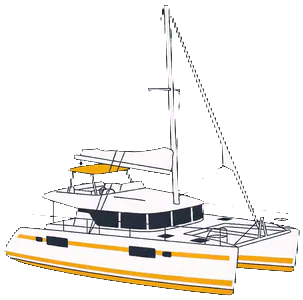
Catamarans are popular for larger groups and crews seeking extra stability and interior space. They handle the occasional swell well and offer shallow draft for exploring some of the more remote anchorages.
Motor yachts suit sailors who want to cover more ground or rely less on wind. The coastline's calm protected waters and short distances between anchorages make motoring entirely practical.
Netsel Marina Marmaris is the largest and most full-service facility on the coast. Accommodating over 800 boats, it offers every conceivable service—fuel, water, provisioning, repairs, and crew changes. Most crewed charters and bareboat fleets operate from here.
D-Marin Göcek sits directly on the waterfront in Göcek and caters exclusively to upscale clientele. Smaller and more intimate than Netsel, it's the preferred base for those seeking a quieter starting point.
Ece Marina Fethiye offers modern facilities and a central location on the western coast, making it ideal for charters that want to emphasize exploration of the quieter, less-developed western bays.
Club Marina Göcek is a boutique facility favored by experienced sailors who know and love the quiet island-studded waters immediately offshore.
The sailing season runs May through October, with peak activity June through September. The Meltemi influence—a northerly pressure system that builds over mainland Turkey during summer—brings consistent winds from the north and northeast, typically Force 3 to Force 5 during afternoons. These winds are reliable, cool, and perfect for sailing, dying away in early mornings when thermal breezes take over, often blowing from the south or southwest.
Water temperature ranges from roughly 17°C in May to 27°C by August, and the region enjoys more than 300 days of sunshine annually. However, be aware of katabatic winds—sudden, cold gusts that accelerate down the mountainsides at night, particularly in spring and fall. These can catch anchored boats unprepared; typically ensure good holding ground and keep a weather eye toward the cliffs after sunset.
May and October offer the most comfortable temperatures and lighter winds, making them ideal for first-time sailors. June through August guarantee warm weather and strong Meltemi winds, ideal for serious sailors who love sailing. September is a sweet spot—still warm, winds beginning to moderate, and crowds starting to thin.
Day 1: Depart Marmaris marina, sail to Phosphorescent Bay or one of the northern Hisarönü anchorages (6–8 nm). Settle in, swim, and enjoy your first Turkish sunset.
Day 2: Explore the 12 Islands loop—anchor at Tersane Island, spend time at Yassıca, and consider the underwater Sovalye wreck if you have a diver aboard. Evening anchorage at Göcek or one of the island bays (8–12 nm).
Day 3: Short sail to Ekincik or Dalyan, exploring the river approach and Kaunos ruins. Return to a bay near Dalyan for the night (6–8 nm).
Day 4: Open-water sail west toward Ölüdeniz. Anchor in the bay beyond the Blue Lagoon or in one of the nearby protected anchorages (10–14 nm).
Day 5: Explore Ölüdeniz in the morning, then continue west along the coast. Anchor at Gemiler Island or in the open bay nearby (4–6 nm). Sunset swim among Byzantine ruins.
Day 6: Leisurely sail to Sarsala Bay, one of the most pristine and remote anchorages. A full day of rest, hiking, and solitude (8–10 nm). Many crews consider this the spiritual heart of the blue cruise.
Day 7: Return journey—sail east and north back toward Fethiye or the starting point, with a stop in a quiet bay for a final swim. Consider an overnight in Fethiye to explore the town and rock tombs (12–16 nm).
This itinerary covers roughly 60–70 nautical miles over a week and deliberately emphasizes anchoring, exploring, and slow cruising over distance-making. Experienced sailors can extend the route, adding more time in remote bays or even making the occasional dash across to Greek islands.
Eating well is non-negotiable on a Turkish charter. If you're on a crewed vessel, your cook will prepare gözleme (savory hand-rolled pastries stuffed with cheese, spinach, or minced meat), warm pide (Turkish flatbread), and grilled fish caught that morning. Turkish breakfasts are legendary—white cheese, olives, fresh bread, honey, tomatoes, cucumbers, and strong çay (tea) laid out at dawn.
Every evening anchorage brings the ritual of the sundowner—a glass of rakı (anise-flavored spirit, traditionally diluted with water and called a "lion's milk"), local wine, or cold beer shared with fellow sailors as the sun paints the water gold. In small waterfront villages, fishermen still mend nets by hand, and restaurant owners pride themselves on their catch-of-the-day. The Lycian coast has been a crossroads of civilizations for millennia, and that history lives in the food, the place names, and the ruins scattered across the hillsides.
Don't miss exploring the Lycian rock tombs near Fethiye and elsewhere—carved facades with intricate designs, some more than 2,400 years old. The underwater archaeology is equally rich; Mediterranean trade routes ran through these waters, and ancient wrecks occasionally surface in local conversation. Turkish hospitality is genuine and warm; accepting an invitation to tea ashore or joining a group dinner in a village taverna is how you truly understand this coast.
Not essential, but highly recommended for first-time visitors. The waters are well-charted and generally forgiving, but katabatic winds, occasional swell, and local navigation quirks benefit from experience. Many of Boat4You's bareboat charters come with optional skippered days, allowing you to learn while benefiting from expert guidance.
Gulets are traditional wooden motor-sailors, typically crewed, designed for comfort and slow exploration. They offer more deck space and often include provisioning and meal service. Sailing yachts are lighter, faster, and usually bareboat—you operate them yourself. Choose gulets for relaxation and culture; choose sailing yachts for more active, hands-on sailing.
Yes, but be aware that the lagoon itself is shallow and can become crowded during summer. Most experienced sailors anchor in the bay beyond the sand spit and tender ashore to the lagoon beach. The surrounding bay water is calm and perfect for swimming regardless.
Peak summer (July–August) can bring 20–40 boats to popular spots like Göcek and Ölüdeniz. May, June, September, and October are quieter. Remote anchorages like Sarsala Bay and Gemiler Island often have just 2–5 boats even in peak season. Timing your visit for shoulder season dramatically improves the solitude factor.
The Gulf of Hisarönü and the protected bays near Göcek remain workable in strong winds. If you encounter sustained Force 6 or higher, the northern shores near Marmaris and the island lee sides offer shelter. True storm anchorages are limited; most experienced crews either time their charters to avoid peak Meltemi or accept that occasional strong-wind days are part of the sailing experience.
The Marmaris-Fethiye-Göcek coast isn't just a sailing destination—it's where the entire concept of the blue cruise was born, and it remains the standard by which all Mediterranean coastal sailing is measured. Whether you want to sail, relax aboard a traditional gulet, explore Lycian ruins, or simply anchor in a pine-forested bay and watch the sun set over the Aegean, this coast delivers. Water temperatures are warm, winds are favorable, marinas are excellent, and the combination of natural beauty, culture, and maritime tradition is unmatched.
At Boat4You, we've curated yacht charters across Türkiye, with deep expertise in the Marmaris and Fethiye regions. Our partners' Marmaris charter fleet ranges from bareboat sailing yachts to crewed gulets, and we can help you plan the exact itinerary—whether that's a week-long slow cruise around the 12 Islands or a shorter 3-day dash to experience the Blue Lagoon and Gemiler Island. Visit our FAQ for answers to common charter questions, explore how we work with clients, or learn more about Boat4You's approach to yacht chartering. The blue waters are waiting.
Updated October 11, 2026
Cheapest month: February 2027. Most expensive month: September 2027.
| Month | Typical week | Middle half of weeks |
|---|---|---|
| Nov 2026 | 2,755 € | 2,071 € – 4,036 € |
| Dec 2026 | 2,755 € | 2,005 € – 3,905 € |
| Jan 2027 | 2,762 € | 2,043 € – 3,942 € |
| Feb 2027 | 2,728 € | 2,043 € – 3,848 € |
| Mar 2027 | 2,762 € | 2,044 € – 3,813 € |
| Apr 2027 | 3,040 € | 2,280 € – 4,441 € |
| May 2027 | 3,745 € | 2,576 € – 5,249 € |
| Jun 2027 | 3,924 € | 2,709 € – 5,700 € |
| Jul 2027 | 3,933 € | 2,727 € – 5,976 € |
| Aug 2027 | 4,095 € | 2,779 € – 6,188 € |
| Sep 2027 | 4,361 € | 2,993 € – 6,308 € |
| Oct 2027 | 4,020 € | 2,836 € – 5,805 € |
Computed every night from the 7-night charter offers of the next 12 months for the boats based here. Prices are for the boat per charter week; skipper, extras and deposit are separate, and figures based on fewer than 5 boats or offers are left out. Amounts in euros (EUR).