Your search
Port of Split / West Harbour
25
boats available · live
500 € – 200,000 €
500 €200K €
1 – 42 guests
142
0 – 42 berths
042
14.76 – 56 m(48–184 ft)
14.76 m56 m
2000 – 2028
20002028
0 – 20 toilets
020
5 – 7,296 hp(4–5,436 kW)
5 hp7,296 hp
Prices shown are each boat's cheapest available 7-night week. Choose your dates for exact prices.
Boat4You positions catamarans at Port of Split's West Harbour—the busiest, most accessible basin in Split's maritime hub. This working commercial harbor sits mere steps from Diocletian's Palace, the Riva promenade, and Split's city center, making it the ideal launchpad for island-hopping cruises across the Adriatic.
Port of Split's West Harbour handles commercial ferries, fishing boats, and tour operators alongside charter vessels. The harbor's western position means shorter walks to Split's museums, restaurants, and provisioning markets. Unlike quieter marinas further out, West Harbour delivers ferry-terminal energy: packed mornings, working docks, authentic Adriatic hustle.
When you search for catamaran charters from Split, our partners' West Harbour fleet offers direct access to Brač, Hvar, Vis, and the Drvenik islands within 15–40 nautical miles. No shuttle needed—your catamaran lies steps from your hotel.
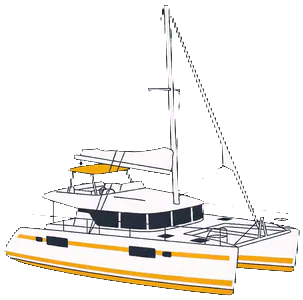
Catamarans excel in the Adriatic's varied wind regimes. The twin-hull design resists pitching in beam seas, crucial when crossing the open Dalmatian channels toward Vis or dodging the sharp Bura gusts that funnel down from the Dinaric Alps. Broad side decks suit larger groups, and shallow drafts (often under 4 feet) mean access to hidden anchorages around Šolta and Brač's south coast.
Boat4You stocks West Harbour with catamaran sizes from 32 to 48 feet, accommodating two to eight passengers. The city-center departure means you skip pre-charter drives; arrive at the Riva an hour before departure, conduct your welcome briefing at the dock, and motor out toward Brač as the morning breeze fills your sails.
Brač (15 nm, 2–3 hours sail) is the closest major island. Bol's Zlatni Rat beach—a distinctive, shifting sandspit—offers stunning anchorages and a thriving village. The island's limestone hills, fish restaurants, and shallow harbor suit catamaran drafts perfectly.
Hvar (30 nm southwest, 4–5 hours) combines lavender fields, nightlife, and Venetian fortifications. The town's spacious harbor and waterfront restaurants make it a social hub for charter fleets. Evening arrivals often feature live music and crowds; quieter spots exist on the island's quieter northwest coast.
Vis (40 nm, 6–7 hours) ranks among the Adriatic's most dramatic destinations. The island's green lagoon anchorage, mountain views, and isolation draw seasoned sailors. Komiža on the west coast offers working-harbor authenticity and fish soup that rivals Hvar's glamour. The passage across open water tests seamanship but delivers unrivaled rewards.
Šolta and the Drvenik islands (5–12 nm, 1–2 hours) cater to day-trippers or those seeking quiet anchorages. Pine-backed beaches, minimal development, and clear waters define these smaller islands—ideal for snorkeling and swimming without crowds.
West Harbour operates 24/7 as a working port. Fuel docks, water, and shore power are available at designated berths. Reception staff assist with paperwork, local regulations, and route advice. Parking near the harbor is limited but exists; many charterers arrive by taxi from Split Airport (Kaštela, 20 km west) or central hotels.
The Open Market (Peškarija) and supermarkets lie within 300 meters—perfect for stocking fresh fish, local vegetables, and cheese before departure. The Riva's restaurant density means provisioning dinners before you cast off, or grabbing lunch if delayed by wind shifts. Boat4You's local coordinators brief you on mooring etiquette, overnight spots, and current weather patterns affecting the day's passage.
The Adriatic's prevailing winds vary by season. Spring (April–May) brings the Maestral—a steady 8–14 knot westerly from morning to early evening—ideal for beating south toward Hvar or Vis. Afternoons often see thermal up-channel flows intensify. Water temperature sits around 17–19°C.
Summer (June–August) offers lighter winds and longer daylight, but July–August congestion and heat make early-season charters attractive. Autumn (September–October) repeats spring's pattern: fresh Maestral winds, warm water (22–23°C), and fewer boats. The occasional Bura (northeasterly gust) can exceed 20 knots; West Harbour's commercial infrastructure handles it, but strong-wind experience helps.
Split's food traditions reflect its Dalmatian hinterland and Adriatic shores. Pašticada (slow-braised beef in prune sauce), soparnik (chard and potato pie), and fresh buđola (local fish) fill restaurant menus. Stocking your catamaran means visiting the Green Market or Peškarija; haggle good-naturedly with vendors and expect fresh catch from pre-dawn boat arrivals.
Wine provisioning is simple: local Plavac Mali (deep red, structured, age-worthy) and Kaštelanski white from nearby Kaštela vineyards cost 15–30 EUR per bottle at Split shops. Rakija (fruit brandy) appears at every mooring; islanders often gift small bottles as evening dockside greetings. Day-sail lunches mean provisioning fresh bread, olive oil, local prosciutto, and cheese on the Riva.
West Harbour's central position and commercial activity mean competitive pricing compared to quieter, outlying marinas. Weekly catamaran charter rates (32–40 feet) range from €2,600 to €4,800 in shoulder seasons (April, May, September, October), rising to €4,200–€6,800 in high summer. Fuel surcharges, mooring fees, and provisioning typically add 10–15% to the base rate.
Boat4You offers transparent pricing with no surprise costs. Fleet support, damage waiver insurance, and 24/7 emergency assistance are included. Early booking (8+ weeks) sometimes unlocks 5–10% discounts on availability-dependent rates.
Yes, West Harbour's working-port environment suits experienced sailors. If you lack certifications, a professional skipper can be booked, and the fee is shown on each boat's page.
An International Certificate of Competence (ICC) or national coastal-sailing qualification is standard. For bareboat, Croatia also requires a VHF (SRC) radio certificate held by someone aboard; the charter operator checks both documents at check-in, as explained in how we work. Skippers require a commercial license; crew can join without certification if the skipper is licensed.
Seven days allows a relaxed loop: Split → Brač → Hvar → Vis → return, with 2–3 nights at each island. Alternatively, explore the Drvenik islands and Šolta for a gentler week. Actual distance depends on wind, crew experience, and how many hours you sail daily (most charters average 4–5 hours under sail).
West Harbour provides safe shelter. If 20+ knot Bura gusts arrive mid-charter, you can shelter at the dock, explore Split's museums and restaurants, or relocate to a protected harbor (Hvar Town or Komiža). Bura episodes typically last 12–48 hours. Weather routing is part of Boat4You's support.
Yes—catamarans pitch less than monohulls in beam seas common on passages between islands. The wide beam and buoyant hulls resist roll, crucial for passengers with motion-sensitivity. This stability advantage, combined with shallow drafts, makes catamarans ideal for Adriatic conditions.
Search our partners' available catamarans using the Split region filter. Compare vessel specifications, layouts, and availability. Most charters depart Sunday or Saturday; mid-week bookings sometimes carry discounts. Secure your charter with a 30–50% deposit; final payment is due 8 weeks prior to departure.
Arrive in Split 2–4 hours before your checkout time. Boat4You's coordinator meets you at the boat, covers safety briefing, navigation systems, and local regulations. She'll share current weather intel and suggest anchorages based on wind forecasts and your crew's experience level.
Need help planning your route? Visit our team page or our FAQ. Questions about the charter process? How we work covers insurance, fuel policy, and damage waiver details. Boat4You is here to make your Split catamaran adventure seamless and unforgettable.
Cast off from the Riva. The Adriatic awaits.
Booking a yacht charter should be transparent from the first enquiry. Boat4You publishes the full price — vessel, mandatory extras, tourist tax, cleaning, transit log — before you commit. You see the boat's inventory, the operator's certifications, and the exact contract terms. No hidden surcharges. No pre-authorisations you discover only at the dock.
Our specialists speak multiple languages and know the local fleets personally. If weather changes your plans, if an item on the inventory is missing, if a port closes unexpectedly — we resolve it quickly, using real relationships built over years of cooperation with verified operators.
Most operators request 30–50% at contract signing with the balance due 4–6 weeks before departure. Exact terms appear on your quotation before you commit.
Yes — typically €2,000–€5,000 blocked on your card at check-in, released after a clean handover. A damage-waiver upgrade reduces or eliminates the hold; ask your consultant for the options on your chosen boat.
Updated October 22, 2026
Cheapest month: March 2027. Most expensive month: August 2027.
| Month | Typical week | Middle half of weeks |
|---|---|---|
| Nov 2026 | 16,069 € | 6,341 € – 17,699 € |
| Mar 2027 | 4,061 € | 3,249 € – 13,538 € |
| Apr 2027 | 7,040 € | 3,249 € – 14,621 € |
| May 2027 | 13,899 € | 5,438 € – 17,870 € |
| Jun 2027 | 18,186 € | 8,664 € – 25,812 € |
| Jul 2027 | 21,570 € | 12,455 € – 32,558 € |
| Aug 2027 | 23,748 € | 10,108 € – 29,741 € |
| Sep 2027 | 14,930 € | 7,168 € – 22,952 € |
| Oct 2027 | 7,627 € | 3,858 € – 18,682 € |
Computed every night from the 7-night charter offers of the next 12 months for the boats based here. Prices are for the boat per charter week; skipper, extras and deposit are separate, and figures based on fewer than 5 boats or offers are left out. Amounts in euros (EUR).