Escaping the August Crowds: The Med’s Quietest Charter Waters, Data-Backed
If you want to charter in August without sharing every anchorage, the honest answer is to skip the famous bases and aim for the edges of the cruising map. The quietest waters in the high-season Med are not secrets — they are simply the areas the bareboat crowd drives past on the way to Hvar, Mykonos and the Amalfi Coast.
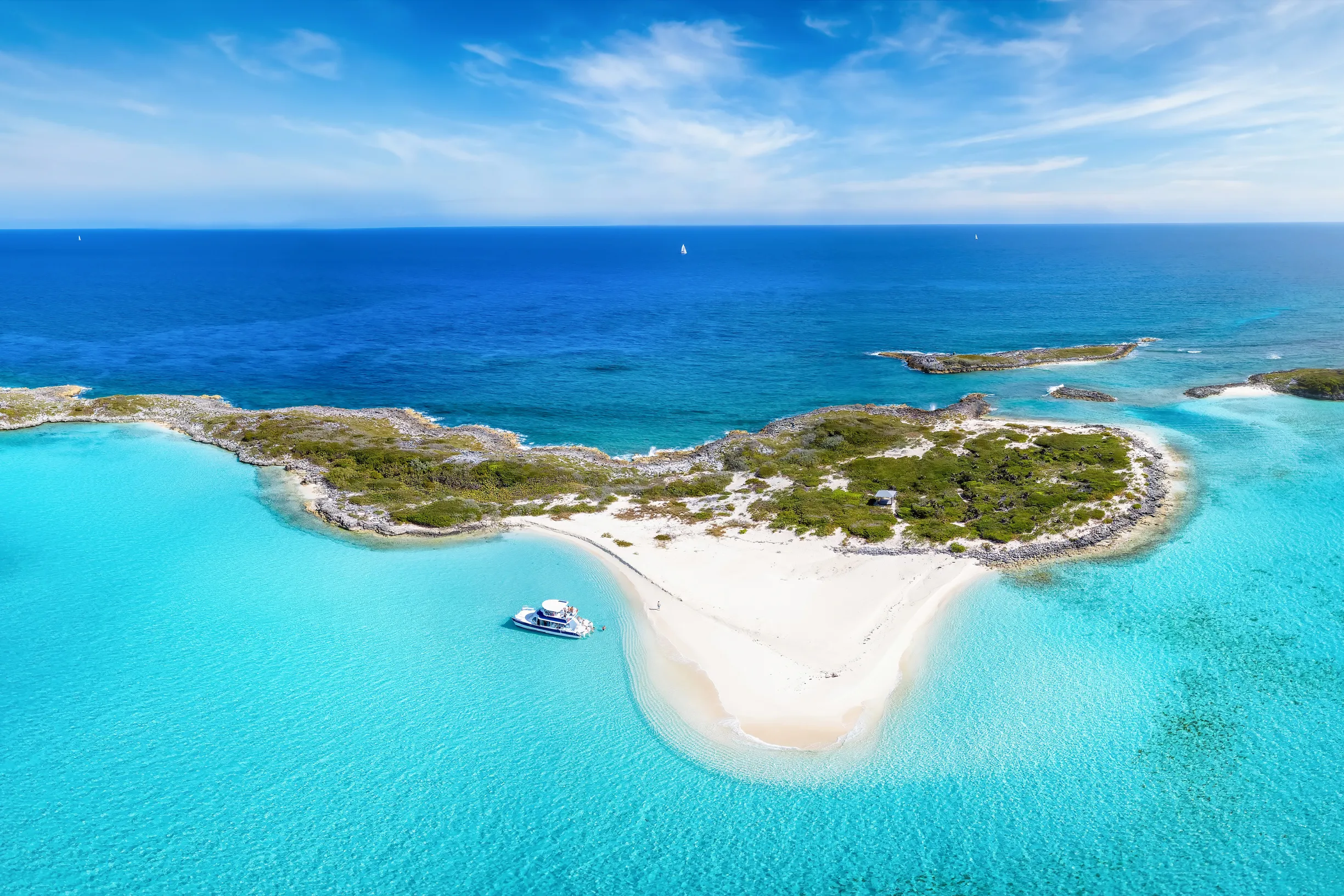
We pulled fleet-density and availability patterns across our partner bases to rank where you can still find an empty bay in the second week of August. For genuine Mediterranean sailing that avoids the crowds in August, four areas come out ahead: Istria and Kvarner in northern Croatia, western Sicily and the Egadi Islands, the Sporades in Greece, and the southern Dodecanese. Here is why, and what each one actually sails like.
Mediterranean sailing to avoid August crowds: how we ranked “quiet”
Quiet is relative in August; nowhere in the Med is empty. So we looked at three things together: charter boats per nautical mile of usable coastline, the share of anchorages with restaurant moorings (a proxy for how developed and busy a bay gets), and how late in the season boats were still available to book from each base. An area scores well when the fleet is small relative to the cruising ground and the marquee anchorages are not the only show in town.
That filters out the obvious hotspots fast. Split, the Cyclades core, the Amalfi Coast and the Costa Smeralda all carry the highest densities precisely because they are easy to reach and heavily marketed. The four areas below carry a fraction of the boats over a similar amount of coast.
Istria and Kvarner: northern Croatia’s overlooked top
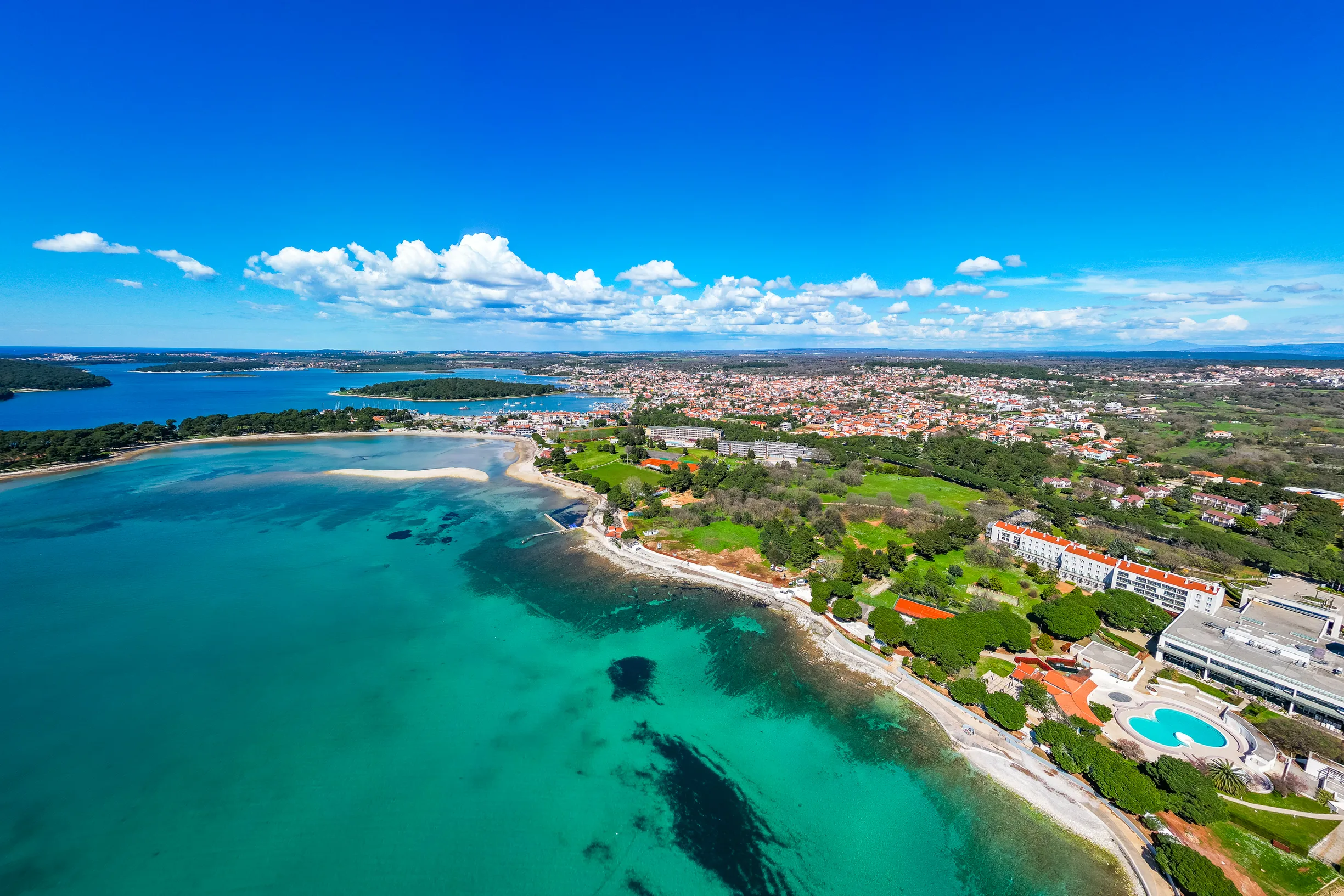
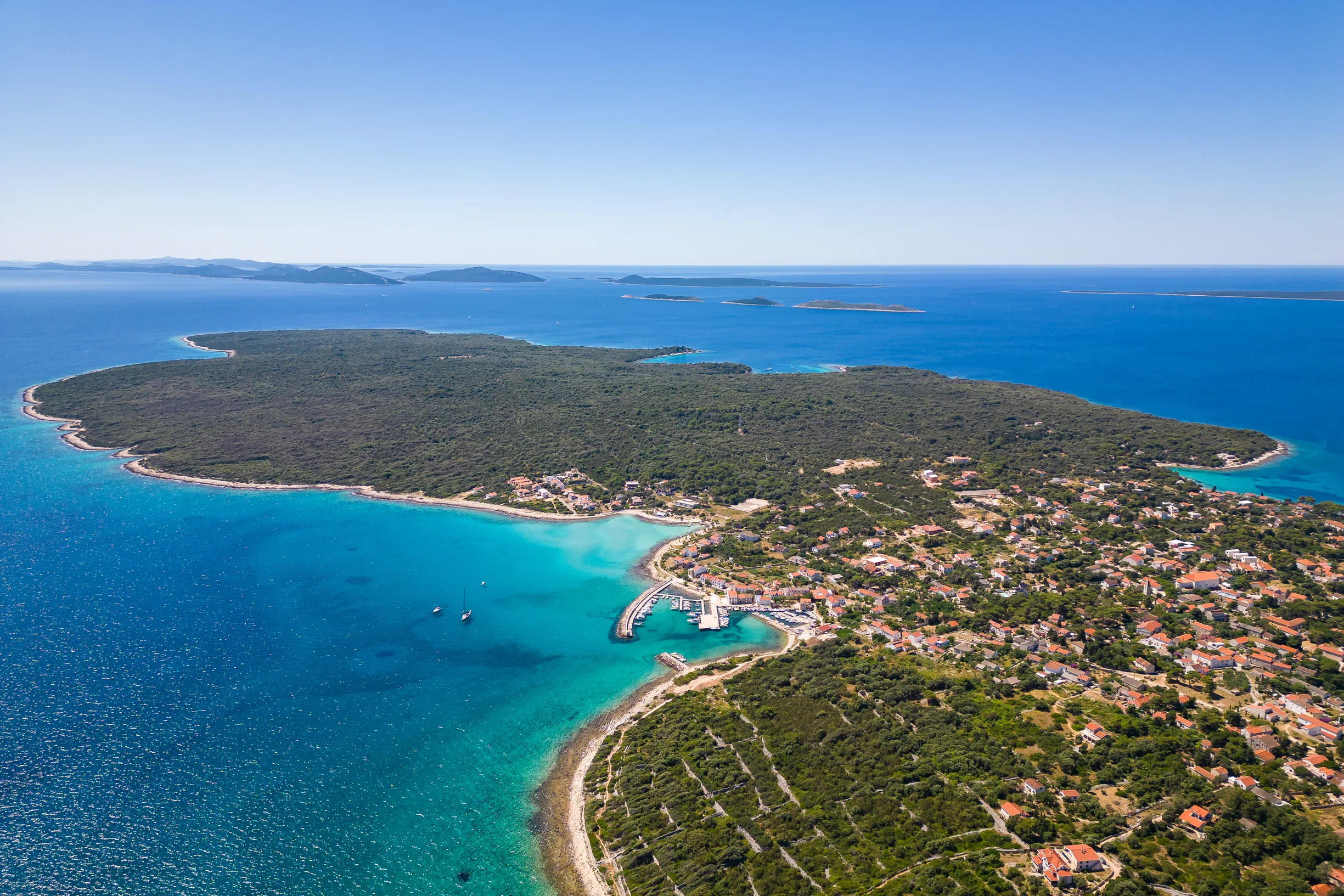
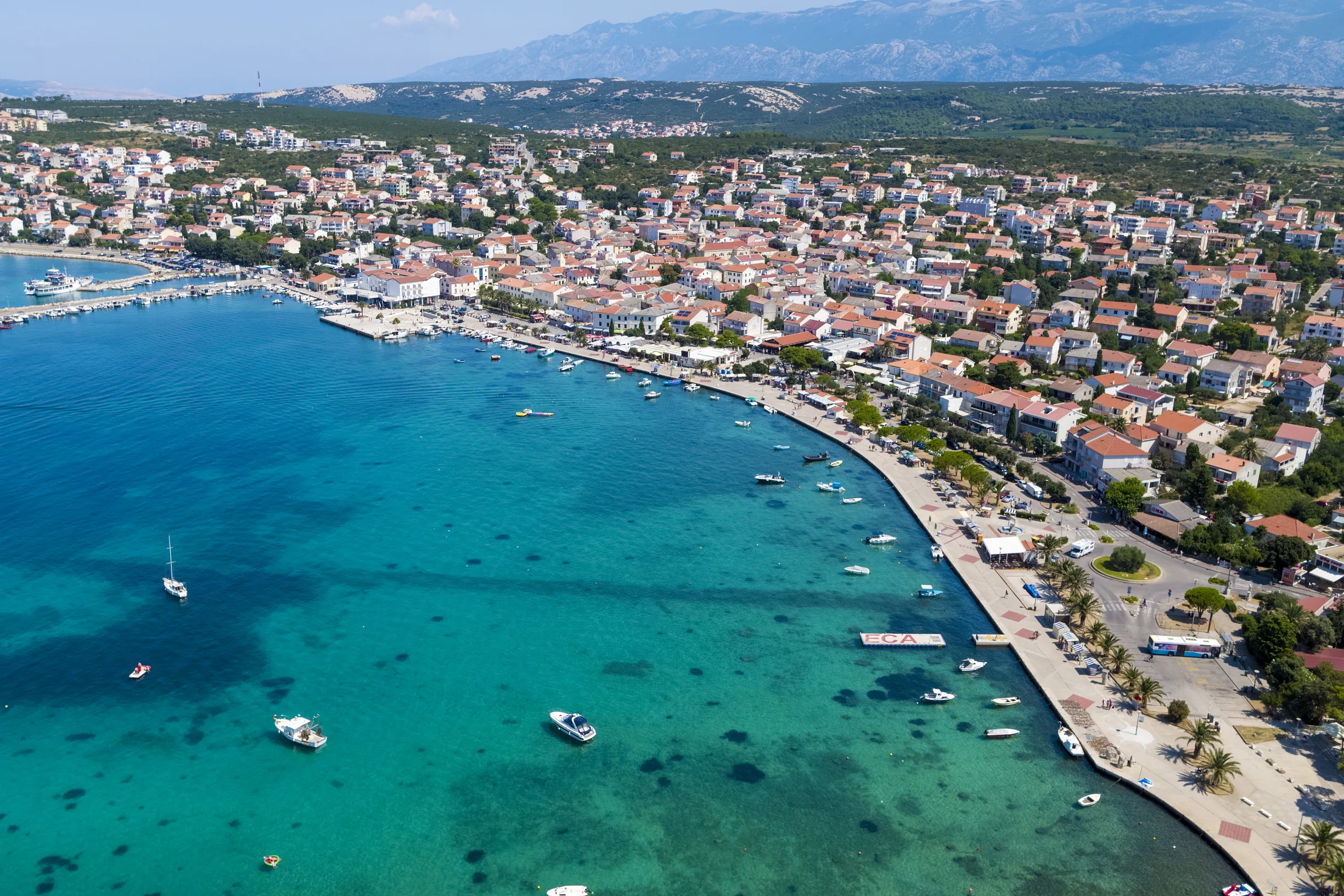
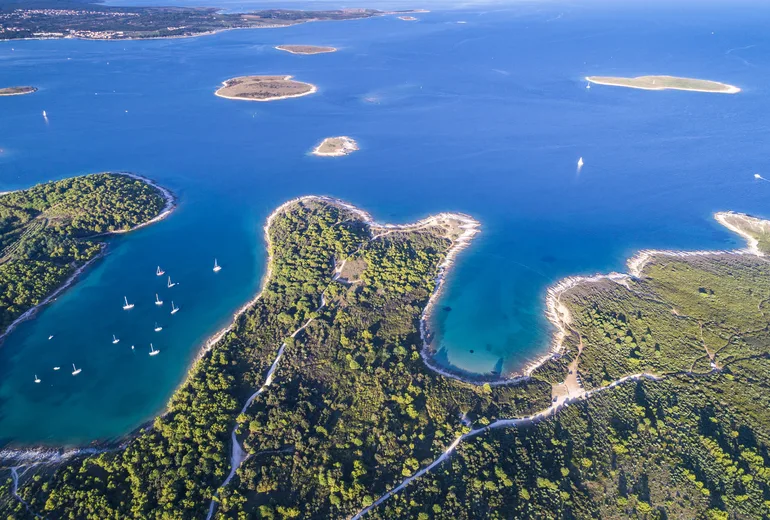
Most Croatia charters launch from Split or Trogir and head south. That leaves the entire northern Adriatic — Istria and the Kvarner gulf — comparatively thin on charter traffic in August. Base out of Pula or Pomer and you sail a coast of Roman towns and pine-covered islands without the Pakleni-style raft-ups.
The cruising is gentle: short hops, reliable afternoon thermals, and islands that stay green where the Dalmatian ones go bare. Anchor off Cape Kamenjak at the southern tip of Istria, work up to Rovinj for a blue-hour walk through the old town, then cross to the Kvarner islands — Cres, Lošinj, Unije. Veli Lošinj and the cove at Susak see a handful of boats where Hvar sees hundreds.
Expect roughly €2,800–4,500 a week for a mid-size monohull in August here, often a touch below the Split fleet because demand is lower. Provision in Pula before you leave; the island shops are small. For the detail on the bays and konobas, our 7-day itinerary from Pula through Istria and the Kvarner maps a realistic week.
Western Sicily and the Egadi Islands
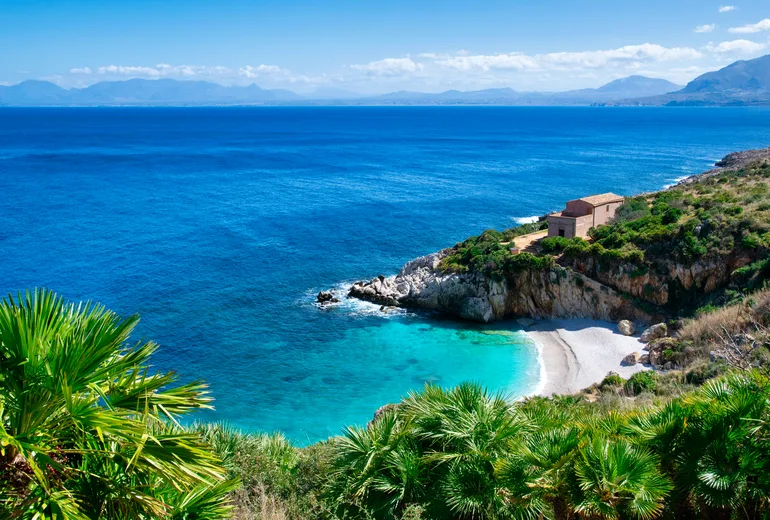
Italy’s August crowds concentrate on the Amalfi Coast and the Costa Smeralda. Almost nobody bareboats the far west of Sicily, which means Trapani, Marsala and the Egadi Islands — Favignana, Levanzo, Marettimo — stay quiet even in mid-month. The water around Levanzo and inside Cala Rossa on Favignana is as clear as anything in the Med, and the seafood is the real thing: tuna at Favignana, busiate pasta with pesto trapanese, Marsala wine straight from the source.
This is a slightly more committing cruising ground — passages between islands are longer and the Strait of Sicily kicks up wind in the afternoons — so it rewards a crew with a bit of experience. Add the Zingaro Nature Reserve coast near San Vito Lo Capo and you have a week of genuinely uncrowded coves. Charter prices run around €3,000–4,800 for a monohull, with fewer boats competing for the same dates.
The Sporades: green Greece without the Cyclades crush
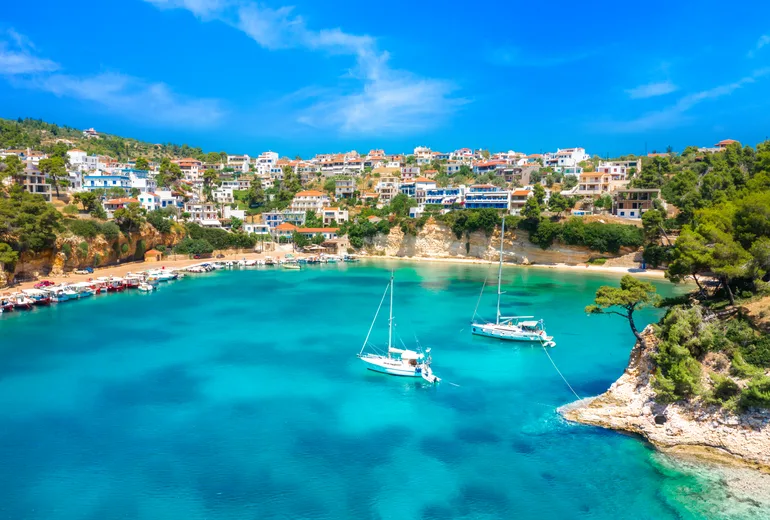
The Cyclades in August mean meltemi, Mykonos prices and a scramble for mooring space. The Sporades — Skiathos, Skopelos, Alonissos — sit in the western Aegean where the wind is milder and the islands are forested rather than bare. The National Marine Park around Alonissos limits development, so anchorages like Steni Vala and the coves under Agios Ioannis on Skopelos stay calm and sparsely populated.
It is a family-friendly area: short legs, sheltered water, easy tavernas. Base from Skiathos or sail up from Volos on the mainland. The meltemi reaches here, but blunted, so August is far more relaxed than the central Aegean. Reckon on €2,600–4,200 a week for a monohull. The contrast with the high-traffic islands further south is exactly the kind of seasonal trade-off we lay out in the guide to where to sail as the season shifts toward autumn.
The southern Dodecanese: the far-east option
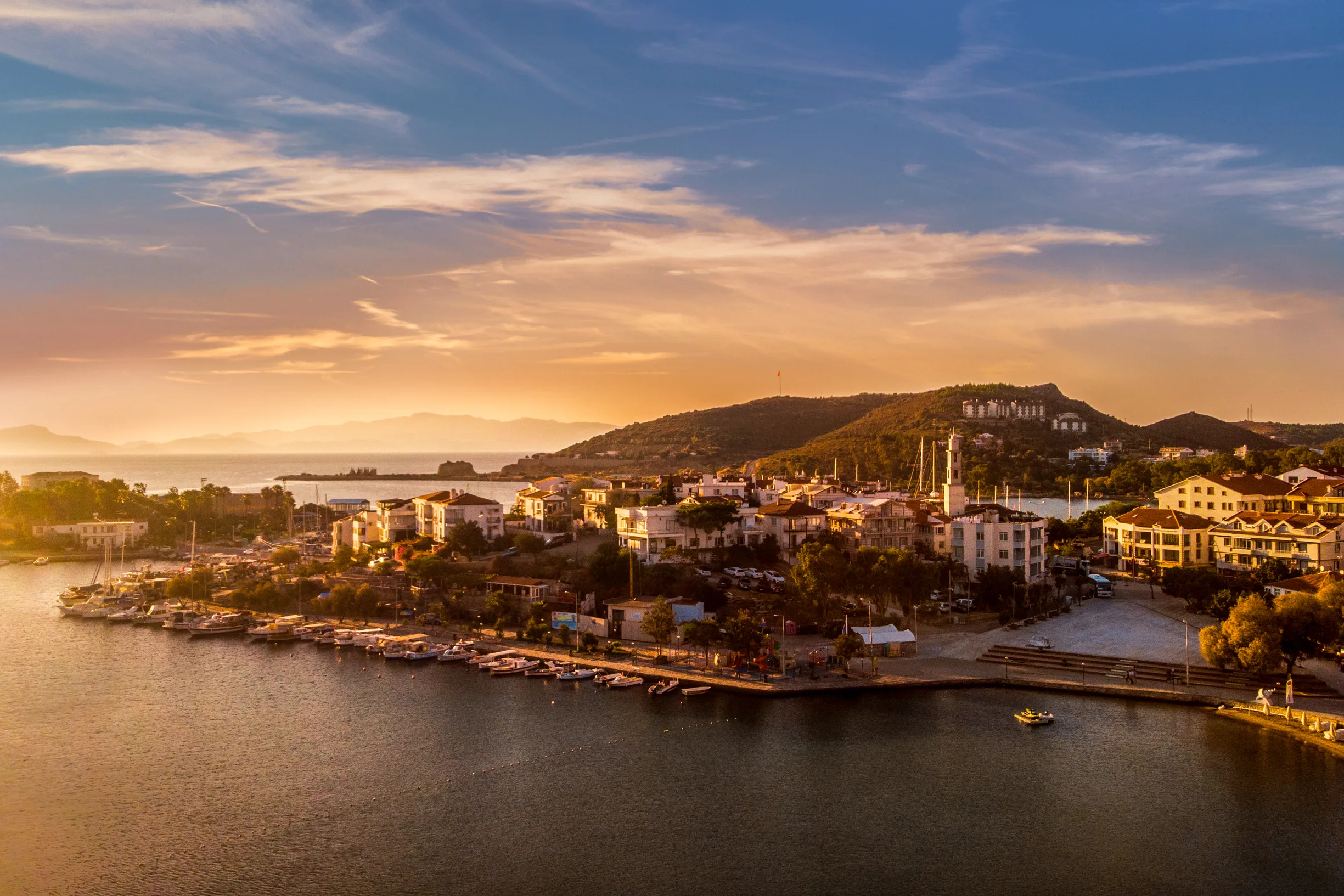
Down in the far southeast Aegean, the southern Dodecanese — Symi, Tilos, Nisyros, Halki — sees a fraction of the Cyclades fleet because it is harder to reach and less marketed. The reward is harbour-front dinners in Symi’s neoclassical horseshoe, volcanic Nisyros, and anchorages where you are often the only charter boat in the bay. The meltemi blows hard some days, which keeps casual crews away and the water busy with sailors who want wind.
Base from Kos or Rhodes. This is the Greece of fishing villages rather than beach clubs, and August prices stay reasonable — €2,500–4,000 for a monohull — because the demand curve never spikes the way it does around Mykonos and Paros. Build in a day for the volcano caldera at Nisyros and a long lunch in Tilos, and you will spend the week wondering where everyone else went.
The Sardinian wildcard: Tavolara and the south coast
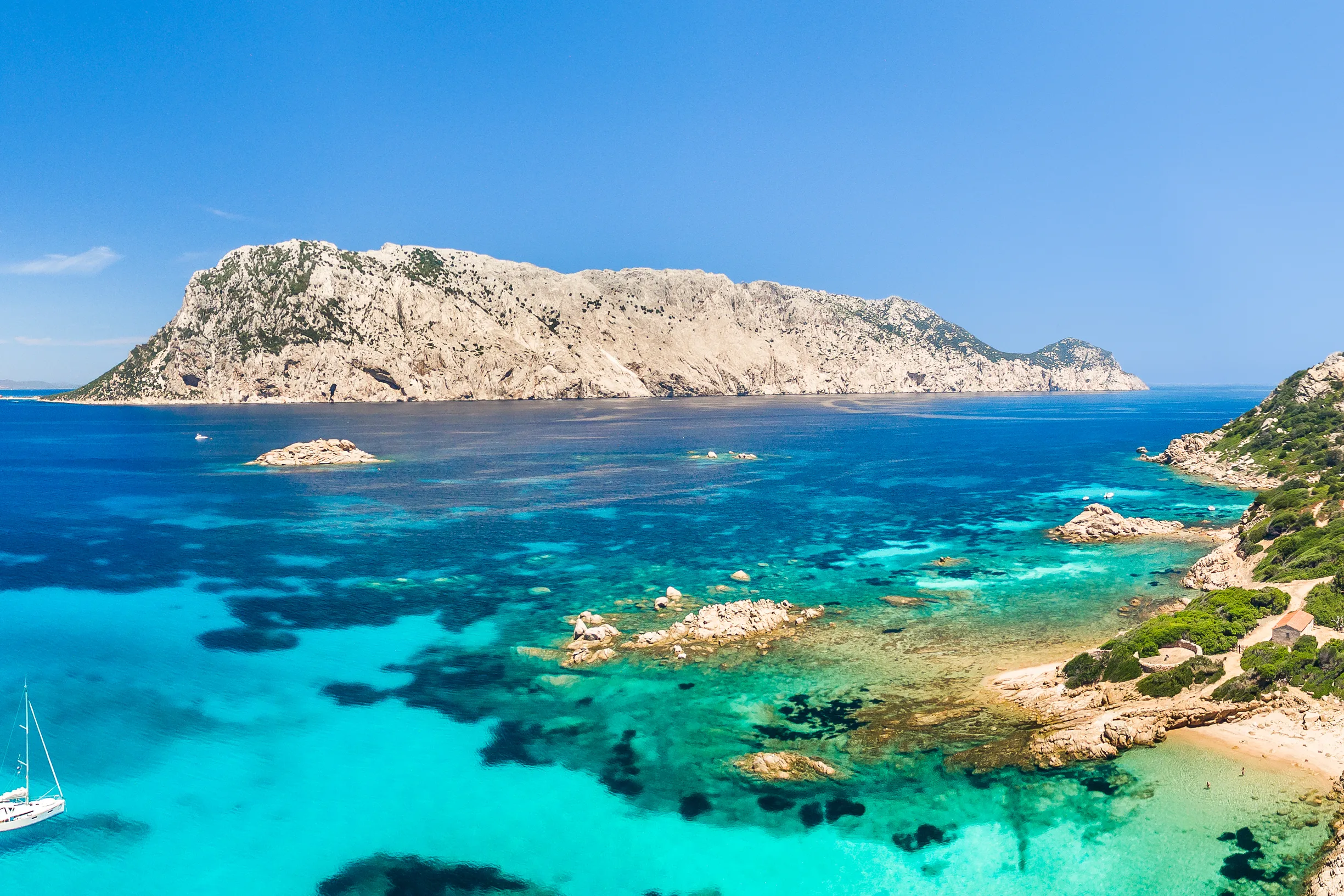
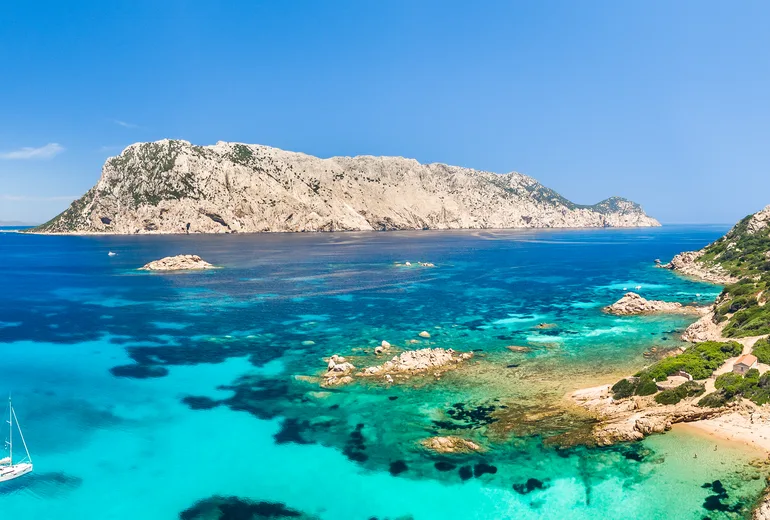
One more area earns a mention because it confounds the usual logic. The Costa Smeralda in the north of Sardinia is among the most crowded and expensive corners of the Med in August — but sail south of Olbia toward Tavolara, Molara and the bays around Capo Coda Cavallo, and the density drops sharply. The same granite-and-turquoise scenery, a fraction of the boats, because the charter fleet fixates on the Maddalena archipelago further north.
It takes a little planning — fewer charter bases sit on this stretch, so you may sail down from Olbia — but the payoff is real. Anchor under the limestone wall of Tavolara, swim in water that rivals anything in the Maddalena, and pay closer to mainland-Sardinia prices (€3,200–4,800 a monohull) than Porto Cervo’s eye-watering rates. It is the clearest proof of the underlying rule: in August, the quiet water is usually a short hop from the famous water.
Reading the data before you book
A ranking is a starting point, not a guarantee — densities shift week to week with regattas, weather and where the flotillas happen to be. The reliable move is to check live availability for your exact dates rather than trusting a reputation. An area that “feels busy” in the brochures can have plenty of open boats in the third week of August, and a supposedly quiet base can be picked clean if a flotilla chose it. Cross-referencing a few areas at once is the cross-destination advantage of booking through a broker that holds fleets across all of them, instead of a single-country base that can only sell you its own water.
There is also a practical seamanship point in choosing a quieter ground. Empty anchorages mean you are not circling at 17:00 hunting for swinging room, not rafting six-deep on a single overworked mooring, and not paying premium marina fees because the buoy fields filled by lunchtime. A calmer cruising area is usually a safer one too, simply because there is space to anchor properly and ride out an afternoon blow without a neighbour’s boat a metre off your beam.
Timing the August crowds in the Med’s busiest waters
None of this means you must write off the headline destinations. It means timing them. If your heart is set on Hvar, the Kornati or the Cyclades in August, sail the marquee anchorages early — be moored by 13:00 — and spend the busy late afternoon in the quieter bays nearby. Even within a famous area there are pockets the flotillas skip. Our Kornati sailing area guide and the Mljet and Lastovo guide both pick out the anchorages that stay calm when the main bays fill, which is the next best thing to leaving the crowds behind entirely.
If you would rather start from the calendar than the map, the month-by-month guide to the best time to sail the Mediterranean shows how a one- or two-week shift in dates changes everything about how busy a given area feels.
Frequently Asked Questions
Where can I charter in the Mediterranean in August without the crowds?
The genuinely quieter options are Istria and Kvarner in northern Croatia, western Sicily and the Egadi Islands, the Sporades in Greece, and the southern Dodecanese. All four carry far fewer charter boats per mile of coast than Split, the Cyclades core or the Amalfi Coast, while still offering full weeks of sailing.
Are quieter areas cheaper to charter in August?
Often slightly, because demand is lower. Istria, the Sporades and the southern Dodecanese typically run a few hundred euros under the marquee bases for a comparable boat. The bigger saving is usually in availability — you can still find good boats on popular dates rather than scrambling for leftovers.
Is northern Croatia really quieter than Dalmatia in August?
Yes. Most charters launch from Split or Trogir and head south through Hvar and the Kornati, leaving Istria and the Kvarner gulf comparatively thin on traffic. You get Roman towns, green islands and gentle sailing without the Pakleni-style raft-ups further down the coast.
Do I need more experience for the quieter areas?
Some, yes. Western Sicily and the southern Dodecanese involve longer passages and stronger afternoon winds, so they suit crews with a bit of sea time. Istria and the Sporades, by contrast, are gentle, short-hop cruising that work well for less experienced or family crews.
What about wind — is August calmer in these areas?
It varies. The Sporades sit at the edge of the meltemi and feel far calmer than the central Aegean. The southern Dodecanese can blow hard. Istria has reliable, gentle afternoon thermals, while western Sicily sees fresh afternoon breezes in the Strait. Check a forecast pattern for your week before you commit.
Want to see which quiet-water boats are still open for your August dates? Search live charter availability across the Mediterranean and filter by area to find the empty-bay week that suits your crew.
Ideen für Ihren nächsten Segelurlaub
Mehr als 40 Länder für Bootsverleih & Yachtcharter zu den besten Preisen