Acciaroli Banner
Route · 14 days · round-tripYacht charter route · Sicily

Portorosa via Cefalù & Filicudi Porto.

Two weeks from Portorosa around all seven Aeolian Islands, from Vulcano's mud baths to Stromboli's lava, then back via Cefalù and Palermo.

The route

Day-by-day route

Click any pin on the map or any day in the route summary below to see that day's stop, story and photos.

Vulcano Porto
Day 1

PortorosaVulcano Porto

Slip the lines at Portorosa and point north for the sulphur-scented crater island where the Aeolians properly begin.

Distance

30 NM

Sailing

~6h at 5 kn

At a glance

Route at a glance

Best season

April – mid-October (peak May – Sep)

Duration

14 days

Departure

Portorosa

Sailing area

Sicily

Route summary

Click any day to jump back to the map and see its photos, narrative and mooring tip.

The full story

Day-by-day journey

Named anchorages, mooring notes and things to do for every leg of the week — the map follows along as you scroll.

Day 1 / 14
Vulcano Porto
1
Day 1

PortorosaVulcano Porto

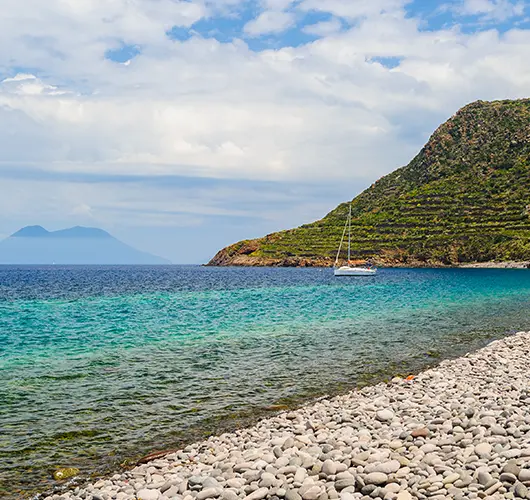
The first leg is a warm-up, roughly fifteen miles of open water once you clear the shoals off Portorosa. We usually leave by nine, before the afternoon breeze fills in from the northwest and kicks up a short chop across the channel. Vulcano announces itself long before you see it clearly; the smell of rotten eggs drifts downwind from the fumaroles. Drop the hook in Porto di Ponente on the west side, where the sand holds well in five to ten metres and the sunsets are worth the sulphur. Ashore, the mud baths near Porto di Levante are a rite of passage, though your swimwear may never recover. If your legs still have anything left, the Gran Cratere climb takes about an hour and the rim view over the whole archipelago sets up the fortnight ahead.

Things to do

Soak in the Porto di Levante mud baths

Climb the Gran Cratere rim (about an hour)

Watch sunset from Porto di Ponente's black sand

Swim over the warm underwater fumaroles

Mooring tip

Porto di Ponente is the calm choice in easterlies; anchor in 5 to 10 metres on sand and give the cliffs a wide berth for submerged rocks. Levante has buoys, but the sulphur haze works its way into everything, so most crews prefer to sleep on the Ponente side.
Lipari
2
Day 2

Vulcano PortoLipari

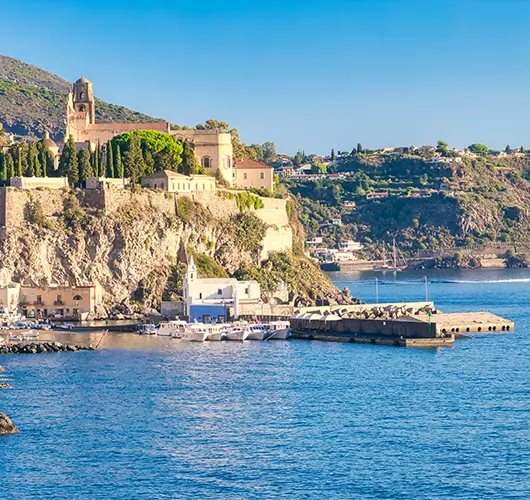
Barely an hour under sail separates Vulcano from Lipari, so there is no rush. Slide up the east coast and the old town rises ahead, the castle walls of the citadel catching the morning light above Marina Corta. Tie up or grab a buoy, then wander into the lanes behind the quay where the archaeological museum lays out four thousand years of island history in plain terms. Lipari earns a full day. Hire a scooter and run north past Canneto to the old pumice quarries at Porticello, where the white spoil still turns the shallows a milky turquoise. Come evening, Via Garibaldi fills with the smell of grilled fish and the local Malvasia gets poured freely. We often stay two nights here when the schedule allows; the island earns them.

Things to do

Tour the citadel's archaeological museum

Scooter to Porticello's white pumice shallows

Aperitivo along Via Garibaldi at dusk

Swim below the Canneto pumice cliffs

Mooring tip

Marina Corta is postcard-pretty but tight and often full by late afternoon; Marina Lunga (Pignataro) to the north has more room and better shelter from the northwest. Book a berth ahead in July and August, or anchor south of Marina Corta in about 12 metres on sand.

Salina
3
Day 3

LipariSalina

Salina sits a couple of hours northwest, twin volcanic cones green with vines where the other islands run to bare rock. Santa Marina makes an easy landfall, a proper little marina with water and fuel and a walkable seafront. The island rewards a car more than most. Drive up to Malfa and out to Pollara, the half-collapsed crater bay where the fishermen still pull their boats up the shingle. Salina takes its food seriously. Capers grow wild on the terraces, the Malvasia delle Lipari is honeyed and worth a case in the bilge, and every bar claims the definitive granita. We rate the ones in Santa Marina for breakfast, brioche and all. Sunset from Pollara, with Filicudi floating on the horizon, is the sort of thing crews talk about for years.

Things to do

Taste Malvasia at a Malfa winery

Swim in the Pollara crater bay

Order caper-laden pasta in Santa Marina

Try the granita and brioche at breakfast

Mooring tip

Santa Marina's marina is the practical base with full services; call ahead in high season. If the northwest is blowing hard, Rinella on the south coast offers a quieter buoy field and a black-sand beach, though it fills fast with day boats.

Filicudi Porto
4
Day 4

SalinaFilicudi Porto

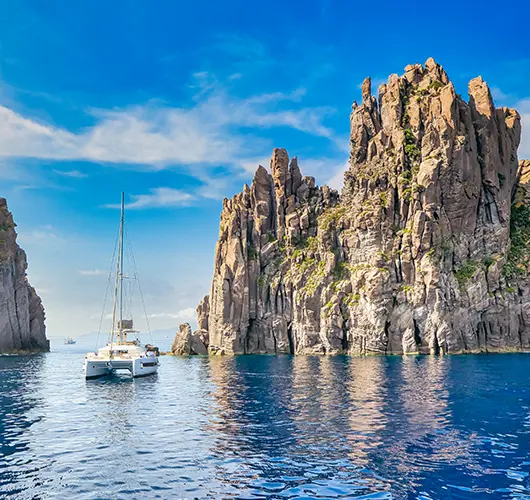
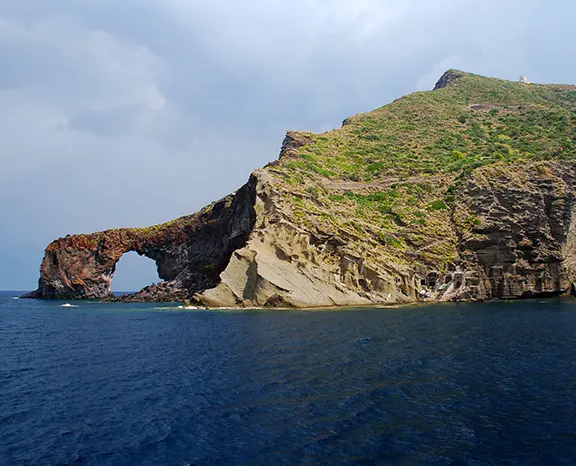
Filicudi is the quiet one, a longer reach west across open water where the swell has room to build, so pick a settled forecast. Round the south of the island and the Grotta del Bue Marino opens in the cliff, a sea cave you can nose a tender into when it is calm. Off the western tip stands La Canna, a needle of rock climbing seventy metres straight out of the sea. Anchor off Filicudi Porto or drop into the bay below Pecorini a Mare. Ashore, the terrace at La Sirena in Pecorini is the reason many people sail this far, the chef cooking whatever the fishermen landed that morning a few steps away. There is almost nothing to do here beyond swim, eat and watch the light change. That is rather the point.

Things to do

Tender into the Grotta del Bue Marino

Circle La Canna's seventy-metre rock spire

Lunch on the terrace at La Sirena

Snorkel the clear water off Capo Graziano

Mooring tip

Filicudi Porto has a small pier with a handful of buoys and limited depth, so arrive early. The bay off Pecorini a Mare gives good holding on sand but opens to the south; if any southerly is forecast, move round to the more sheltered eastern side for the night.

Salina
5
Day 5

Filicudi PortoSalina

The return to Salina is the same water in reverse, but a different day. With the wind usually behind you on an easterly heading, it is often the easiest sail of the trip, so there is no need to leave at dawn. Take the long way if the sea is kind and pass close under Filicudi's north face, where the terraced walls climb impossibly steep above the water. Halfway across, heave to for a swim where the seabed drops away deep and blue beneath the keel. Back on Salina you can pick a different anchorage from Day 3; if you tied up at Santa Marina before, try the buoy field at Rinella this time for the black sand and the sunset over Filicudi you just left behind. A short shore walk brings you to a couple of honest trattorias.

Things to do

Swim stop in deep water mid-channel

Photograph Filicudi's terraced north face

Anchor off Rinella's black-sand beach

Dinner at a Rinella trattoria

Mooring tip

Rinella's small buoy field on Salina's south coast is calm in prevailing northwesterlies and handy for the beach, but exposed to any southerly swell. If the forecast looks unsettled, carry on to Santa Marina where the marina gives proper all-round shelter.

Panarea
6
Day 6

SalinaPanarea

Panarea lies a few hours east, the tiniest of the seven and by some distance the most polished. Whitewashed houses, bougainvillea over the lanes, no cars to speak of, and a summer crowd that arrives by yacht. Pick up a buoy off the main village of San Pietro; the waters around the island are a protected marine reserve, so anchoring is restricted and the buoy fields are the sensible choice. The reward for the fees is Cala Junco, a near-perfect horseshoe cove on the southern shore with the Bronze Age village of Capo Milazzese on the headland above. Walk up in the late afternoon once the tour boats have gone. Come nightfall, the terrace at Hotel Raya has been the island's social anchor for decades, though the drinks cost roughly what the view is worth.

Things to do

Snorkel the horseshoe cove at Cala Junco

Walk to Capo Milazzese's Bronze Age village

Sundowner on the Hotel Raya terrace

Tender out to the Basiluzzo islet

Mooring tip

Panarea sits inside a marine protected area, so use the official buoy fields off San Pietro rather than dropping anchor. They fill by early afternoon in season, so aim to arrive before lunch, and expect the swell to wrap in when the wind goes east.

Stromboli
7
Day 7

PanareaStromboli

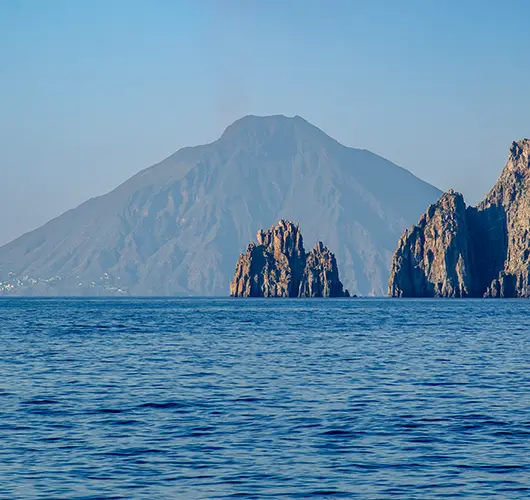
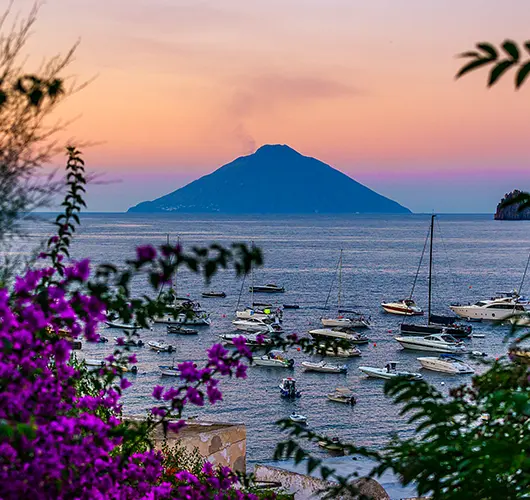
This is the day the whole route builds toward. Stromboli stands maybe twelve miles northeast of Panarea, a black cone that smokes without pause and has done for thousands of years. Sail up the east side to the roadstead off Scari, below the village of San Vincenzo, and go ashore for granita and a walk along the black-sand beach. The real event comes at dusk. Work the boat round to the northwest flank where the Sciara del Fuoco, the Stream of Fire, drops straight from the summit into the sea. Hold position a few hundred metres off and wait for the light to fade. Every twenty minutes or so the crater throws up glowing rock that tumbles down the scree, brighter as the sky darkens. Charter crews rarely forget their first night watching it.

Things to do

Watch the Sciara del Fuoco erupt at dusk

Walk San Vincenzo's black-sand beach

Granita stop in Stromboli village

Circle the Strombolicchio sea stack

Mooring tip

The Scari roadstead is deep and open, fine for a lunch stop but rolly and unprotected for the night. Many crews view the Sciara after dark then run back to a buoy at Panarea to sleep; if you do stay off Stromboli, set plenty of scope and keep an anchor watch.

Panarea
8
Day 8

StromboliPanarea

After the drama of Stromboli, this is a gentler day. The hop back to Panarea takes only a couple of hours, so there is room to linger over breakfast and let the morning calm settle before the sea breeze builds. If you skipped it before, this is the day for the string of tiny islets scattered off Panarea's east coast, Lisca Bianca and Bottaro among them, where a shallow reef of volcanic gas bubbles up through the water and warms it in patches. Anchor the tender, mask on, and swim over the fizzing seabed. Back on the buoy at San Pietro, the evening runs slower than the crowds suggest. Grab an outside table in one of the lanes, order the caponata and a chilled Sicilian white, and watch the last tenders ferry people ashore.

Things to do

Snorkel the gas bubbles off Bottaro

Swim the shallows around Lisca Bianca

Browse San Pietro's boutique-lined lanes

Order caponata at a village trattoria

Mooring tip

Use the San Pietro buoy fields again rather than anchoring inside the reserve. The eastern islets have day buoys for snorkelling stops; pick one up for a swim but do not rely on it overnight, as they sit open to the wind.

Lipari
9
Day 9

PanareaLipari

The passage back to Lipari runs a comfortable ten miles or so southwest, an easy morning under sail with Salina off to starboard. Lipari deserves a second look, and coming back gives you the chance to do what the first stop was too short for. Take the boat round the west coast this time to the sea stacks at Pietra del Bagno, or push north to swim below the pumice cliffs where the white stone still slides into water so pale it looks lit from beneath. In town, the upper streets above the citadel stay quiet even in August. Find a spot on the ramparts at golden hour with a scoop of mulberry granita and watch the ferries come and go across to Vulcano. Provisioning is easy here too, so top up the boat before the run back to Sicily.

Things to do

Swim the sea stacks at Pietra del Bagno

Walk the quiet streets above the citadel

Sunset granita on the ramparts

Reprovision at the Lipari town shops

Mooring tip

Come back into Marina Lunga for the better shelter and easier provisioning, or take a town buoy off Marina Corta if you want to be in the heart of things. In a strong northwesterly, Marina Corta gets uncomfortable, so the Pignataro side is the safer overnight bet.

Vulcano Porto
10
Day 10

LipariVulcano Porto

You can almost pick out Vulcano from the Lipari waterfront, and the crossing runs an hour at most, so this ranks as the most relaxed sail of the fortnight. There is no reason to hurry off the buoy. Motor across the narrow strait, past the Faraglione stack that guards the entrance, and settle back into Porto di Ponente for a second night. Round two at the mud baths is optional; some crews swear by it, others cannot face the smell again. Better, perhaps, to take the tender round to the base of the fumarole fields and snorkel where warm gas bubbles rise through the shallows and heat the water around your legs. Save the evening for the Ponente beach. This is the last night among the volcanoes before the long haul west to the Sicilian mainland, so it is worth a proper sunset and a decent bottle to mark the turn.

Things to do

Snorkel the warm fumarole shallows

Second soak in the Levante mud baths

Photograph the Faraglione entrance stack

Last volcano sunset from Porto di Ponente

Mooring tip

Ponente does the job for one more night, tucked out of any easterly with the hook biting well into sand. Set the hook well and check it, because you want a settled night before an early start on the long Cefalù passage tomorrow.

Cefalù
11
Day 11

Vulcano PortoCefalù

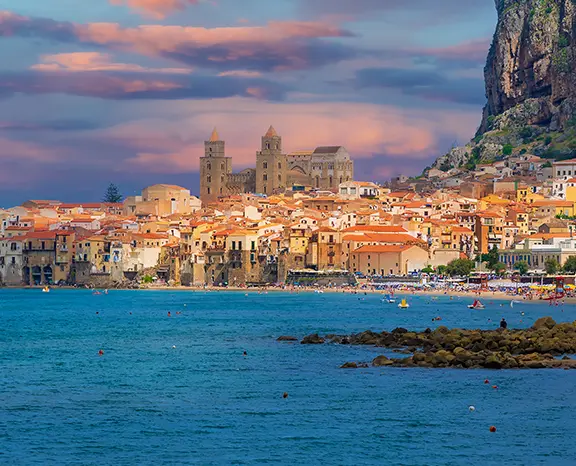
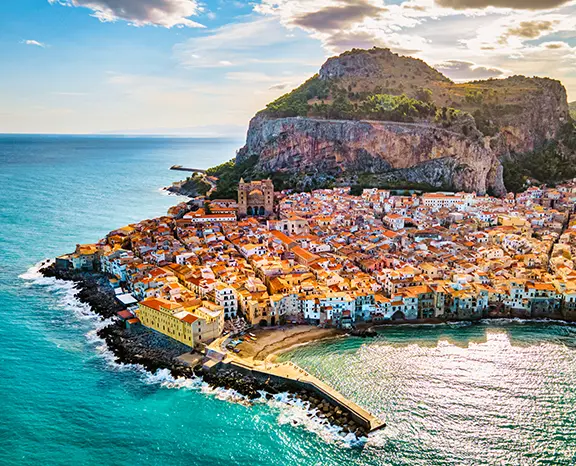
Today is the long one, roughly fifty miles of open Tyrrhenian back to the Sicilian coast, so treat it as a proper passage day. We leave Vulcano at first light and aim to have the anchor down at Cefalù before the afternoon breeze pipes up on the beam. Get the sails set early, keep a watch rotation going, and let the miles roll by. Cefalù comes into view from a long way out, the twin towers of its Norman cathedral standing against the huge crag of La Rocca that shelters the town. Ashore, the old lanes lead down to a medieval washhouse where spring water still runs to the sea, and the crescent of sand fills the moment the sun is out. After a fortnight of small island quays, a real Sicilian town feels like an event.

Things to do

Step inside the Norman cathedral's golden mosaics

Climb La Rocca for the rooftop view

Find the medieval Lavatoio washhouse

Swim off Cefalù's crescent town beach

Mooring tip

Cefalù's old harbour is charming but open to the north and offers little real shelter, so most crews anchor off the beach in settled weather and watch the forecast closely. The small Presidiana marina just east has berths and services if the wind turns onshore; book ahead in summer.

Palermo
12
Day 12

CefalùPalermo

A shorter coastal run today, something like thirty-five miles west along the north shore with the mountains rising green to port the whole way. Palermo is a proper city and a jolt after the islands, loud and layered and endlessly worth it. La Cala marina sits right in the old town, so you can step off the boat and be among the market stalls of the Vucciria or Ballarò within minutes, where swordfish and blood oranges and street food crowd the lanes. Give the afternoon to the Cappella Palatina and the golden Byzantine ceilings above it. Eat where the locals queue, order the pane e panelle or the arancine, and finish with a cannolo filled to order. If you have an evening spare, the sweep of Mondello bay lies just west of the city and makes a fine anchorage.

Things to do

Graze the street food at Ballarò market

See the gold mosaics of the Cappella Palatina

Eat arancine where the locals queue

Swim in the bay at Mondello

Mooring tip

La Cala marina puts you right in central Palermo, which is a huge convenience but books up fast in summer, so reserve well ahead. If it is full, Marina Villa Igiea just north is a smart alternative with good security and an easy taxi into the centre.

Cefalù
13
Day 13

PalermoCefalù

The eastbound run retraces yesterday's water, and with the prevailing northwesterly behind you it is usually a relaxed sail rather than a slog. Take your time. The coast between Palermo and Cefalù hides quiet coves worth a detour, so drop the hook somewhere off the cliffs near Sant'Ambrogio for lunch and a swim before pushing the last few miles east. Back at Cefalù you already know the ground, which is the pleasure of a second night. Skip the sights this time and just live in the place. Book a table in the old town for the evening, order the pasta with sardines and wild fennel that Sicily does better than anywhere, and watch the floodlit cathedral glow above the rooftops. Tomorrow is the short final leg home, so tonight is the one to let run late.

Things to do

Anchor for lunch off Sant'Ambrogio's cliffs

Eat pasta con le sarde in the old town

Evening stroll under the floodlit cathedral

Last swim off the town beach

Mooring tip

Anchoring off the beach works again in fair weather; if the wind backs onshore, the Presidiana marina east of town is the bolt-hole. With only a short leg left tomorrow, pick whichever gives the calmer night and set the alarm early only if the forecast pushes you to.

Portorosa
14
Day 14

CefalùPortorosa

The last leg carries you east along the Sicilian coast to the marina where it all began, a passage of forty-odd miles depending on how the wind sits. Leave Cefalù in good time; charter turnaround waits for nobody, and most bases want the boat back by late afternoon. On a clear day the whole chain you have just circled sits low on the horizon to the north, Vulcano and Lipari and the smoking cap of Stromboli, a fitting last look at where the fortnight was spent. Portorosa is a full-service marina with fuel, water and easy access, so build in time to refuel and pump out before you hand back the keys. Square away the boat, settle up, and let the crew take one more coffee on the quay while the two weeks sink in properly.

Things to do

Spot the whole Aeolian chain on the horizon

Refuel and pump out at Portorosa

Final crew coffee on the marina quay

Settle the boat for handover

Mooring tip

Portorosa is a large, well-marked marina, but the approach channel is shallow in places, so follow the buoyed entrance and call ahead on the radio for a berth assignment. Leave a clear hour for fuelling and the pump-out station, which can queue on changeover days.

Sail this route on your own charter

Check live availability from the departure marina, compare boats and secure your week online — free cancellation included.