Working Remotely From a Charter Yacht: Starlink, Signal & Shoulder-Season Workations
Remote work from a boat sounds like a screensaver until your first video call drops mid-sentence in a beautiful bay with no signal. The lifestyle is real and more workable than ever, but it lives or dies on connectivity — and the truth about connectivity afloat is messier than the brochures suggest.
This is the practical version: what actually works for staying online, country by country, plus how to structure a workation week so the job gets done and the sailing still feels like a holiday. If it nudges you toward booking, our charter search across the Mediterranean lets you filter the calm, well-connected shoulder-season areas that suit this best.
Remote work from a boat: the connectivity reality, ranked
There are three ways to stay online from a charter yacht, and they are not equal.
Starlink: the game-changer, with caveats
Marine and roam Starlink kits have genuinely transformed working afloat. At anchor you can realistically expect somewhere around 50-150 Mbps down, enough for HD video calls and large uploads, in bays where 4G barely registers. The caveats: a flat-mount dish needs a clear sky view, performance dips while the boat swings or sails, and not every charter boat carries one. Ask the operator directly — an increasing number of catamarans now offer it as an extra, but it is far from standard.
4G/5G with a local data SIM
For most of the populated Mediterranean coast, a local data SIM in a phone or a dedicated hotspot is the workhorse. Within a few miles of towns and islands you will often get a solid 4G signal; the further you anchor into an empty bay, the more it fades. A mid-tier router with an external antenna pulls signal from noticeably further out than a bare phone.
Marina wi-fi: treat it as a bonus, not a plan
Marina wi-fi ranges from decent to actively hostile. It is fine for email and the occasional call but rarely stable enough to bet a 9am presentation on. Use it to top up, not to depend on.
Coverage by country: where the signal actually is
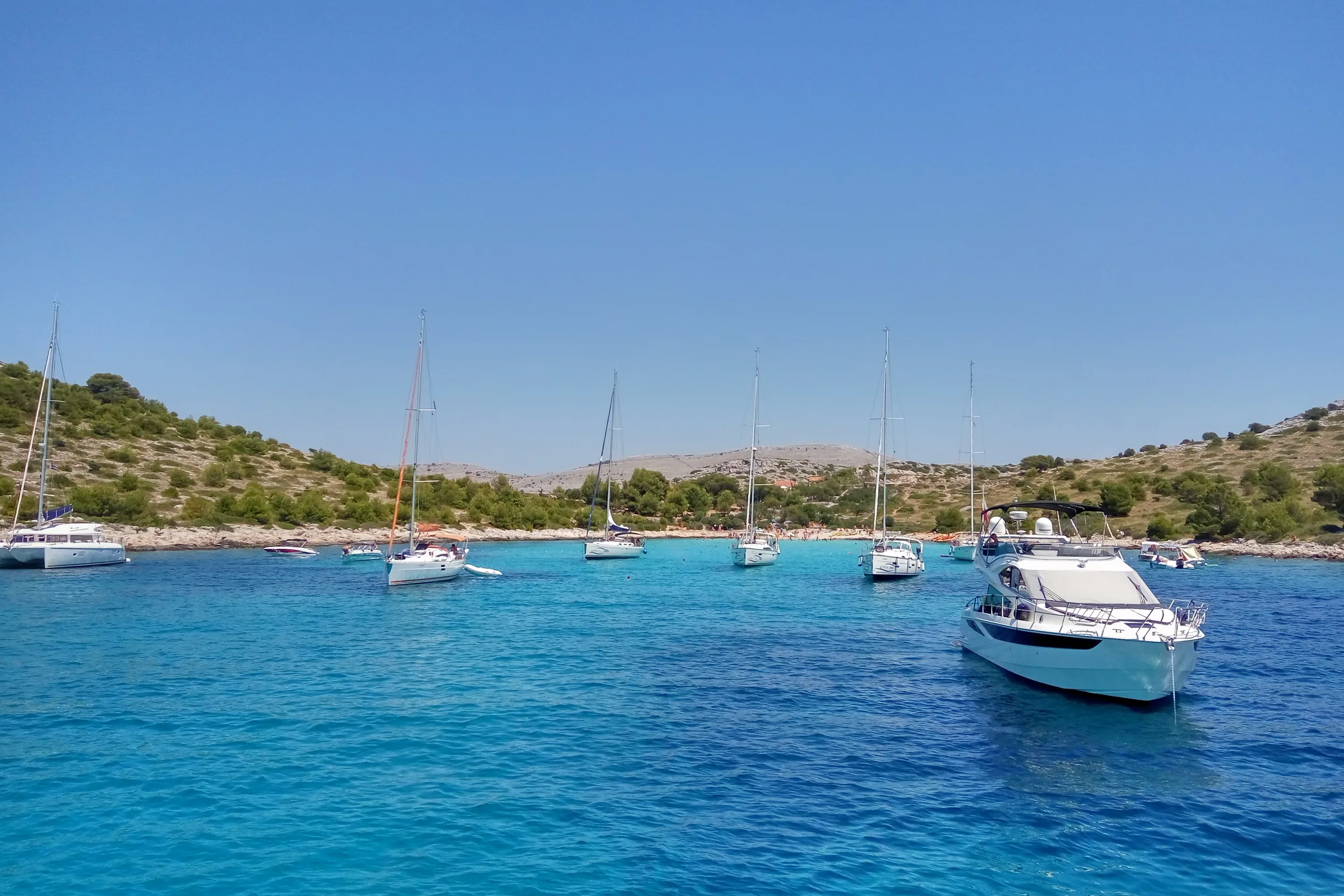
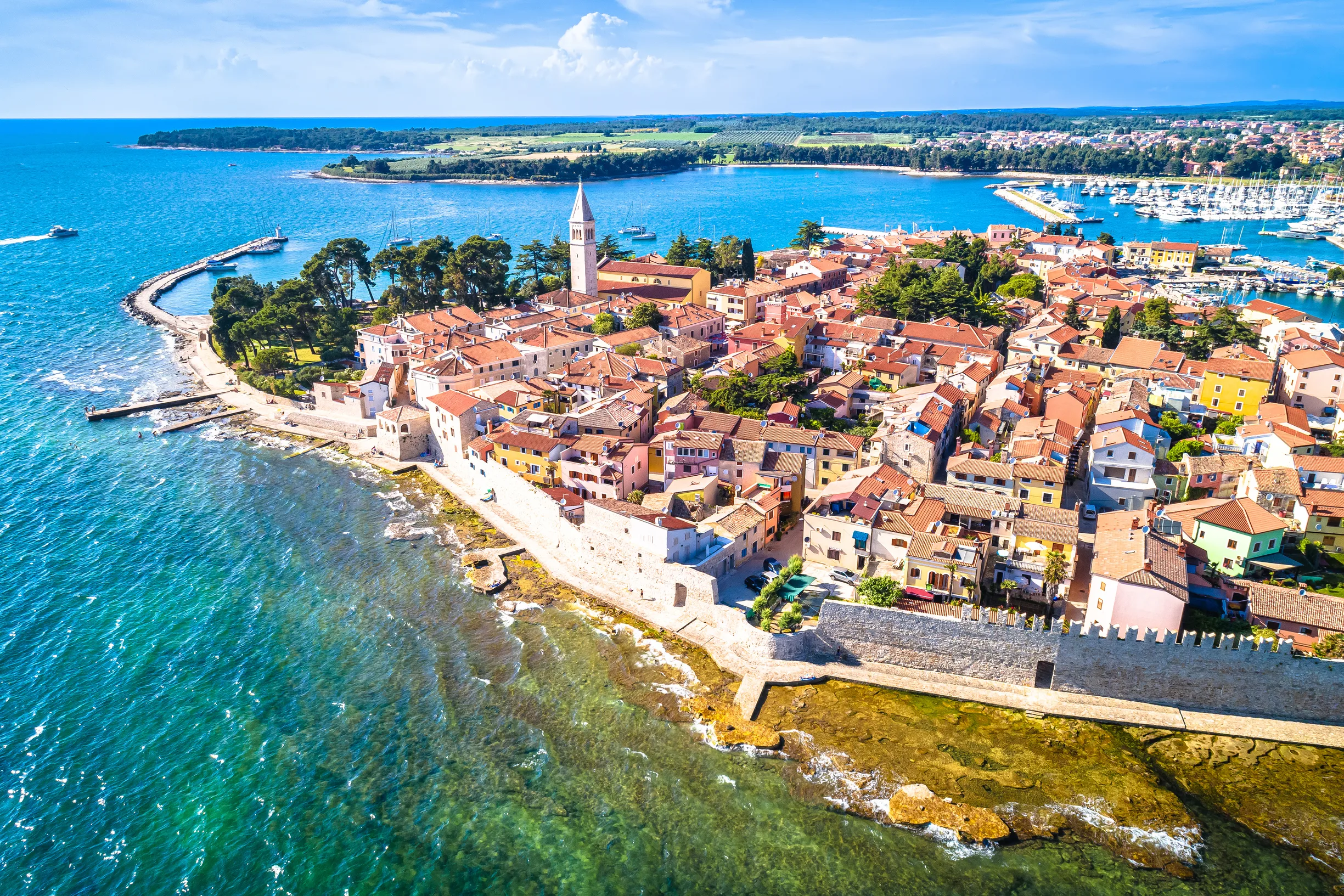
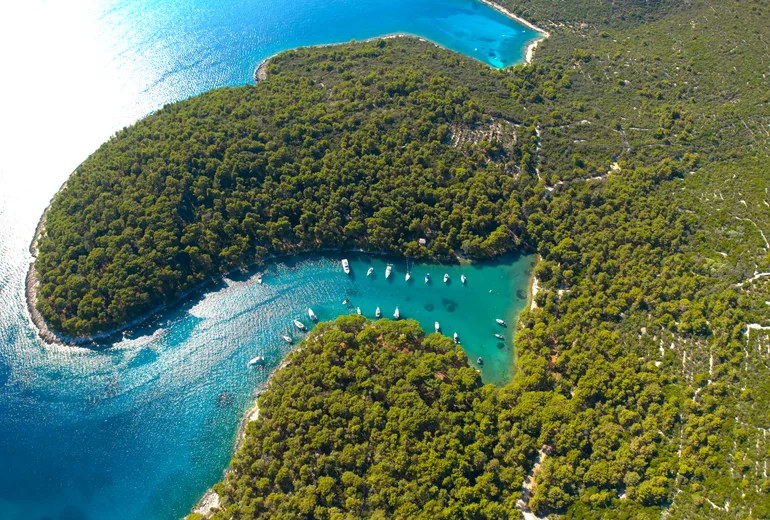
Croatia has strong 4G across the inhabited islands and a dense marina network, which makes it one of the easier places to stay connected; the gaps appear in the emptier Kornati and outer-island anchorages. Greece is more variable — the Ionian and the bigger Cyclades and Dodecanese towns are well covered, but remote bays and the smaller islands can drop to a crawl. Italy is generally reliable along the coast and around Sardinia’s developed bays. Türkiye’s Turquoise Coast has surprisingly good mobile coverage near Göcek, Marmaris and Bodrum, thinning in the deep gulfs. Spain’s Balearics are well served near the resort coasts and patchier in the wilder calas.
The pattern is consistent everywhere: signal tracks population. Plan your working days near towns and save the off-grid bays for evenings and weekends — or carry Starlink and stop worrying about it.
One belt-and-braces approach that works well: carry a local data SIM as your primary connection and treat any onboard Starlink as the backup, or vice versa. Redundancy is the whole game when your income depends on a call connecting. A cheap second SIM from a different network can also save a day — coverage maps overlap imperfectly, and the carrier that fails in one bay often works in the next.
How to structure a workation week that actually works
The mistake people make is treating a workation like a normal charter with a laptop bolted on. It needs its own rhythm. The crews who pull it off tend to sail early or late and work the flat middle of the day, then anchor somewhere with signal for the working hours and move to a prettier, quieter spot once they log off.
A workable daily shape
A pattern that holds up: short morning sail to the day’s working anchorage, calls and focused work through late morning to mid-afternoon, then up-anchor for a 5-10 mile hop to the evening’s bay for a swim and dinner. Weekends go fully off-grid. This keeps daily passages short — nobody does a six-hour beat and a full workday — which is also why shoulder season suits it: gentler winds and shorter hops. Our piece on a day in the life on a charter yacht paints the natural rhythm this slots into.
Two things make or break the working hours. The first is time zones — the Mediterranean is comfortable for European teams but a stretch for North American ones, so check your meeting calendar against the local clock before you book the week. The second is expectations: tell colleagues you are working from a boat and that the occasional bay will have weak signal, so a dropped call is not a crisis. Most people are surprisingly relaxed about it once they know in advance, and a quick heads-up beats a frozen screen with no explanation.
Power, comfort and the unglamorous practicalities
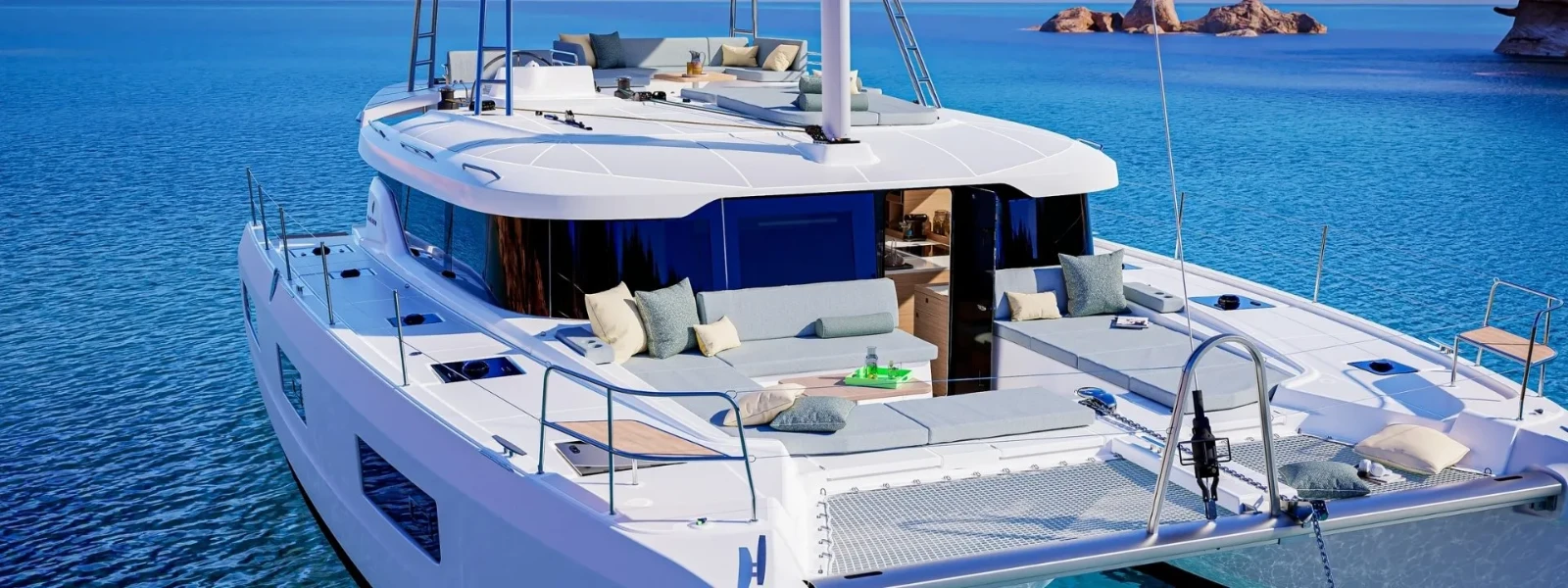
Laptops, routers and a Starlink dish all draw power, and at anchor you are running off the house batteries. A catamaran’s larger battery bank and solar capacity make it the obvious choice for a working week; on a monohull you will be managing your charge more carefully or running the engine. Provisioning matters too — a working crew snacks more and cooks less spontaneously, so plan the galley accordingly; our galley and provisioning guide covers stocking a boat properly.
Comfort is the part nobody mentions until day three. Typing for hours at a saloon table in 30-degree heat is miserable, so the boats that work best for a workation have a shaded cockpit table, decent cushions and a bimini that actually keeps the sun off the screen. Pack a small power bank, a sun-readable approach to where you sit, and a pair of over-ear headphones — the last one quietly transforms a call when there is wind in the rigging or a generator humming two boats over. None of this is expensive; it is just the difference between a working week you would repeat and one you would not.
What to confirm with the operator before you book
A workation hinges on a handful of questions most charter inquiries skip. Ask directly whether the boat carries Starlink and, if so, whether it is included or an extra. Confirm the house battery capacity and whether there is solar, since that decides how long you can work at anchor without running the engine. Check the inverter setup so your laptop chargers actually have sockets that work under way, and ask about the bimini and cockpit shade. None of this is exotic, but the answers separate a boat you can work from comfortably from one that fights you for a week.
It is also worth being honest with yourself about the split. A true working week is not a holiday with emails — it is work with a remarkable view. If you have a heavy deadline or back-to-back calls every day, a shoulder-season week with short hops and reliable signal will serve you far better than a high-summer charter chasing the busiest bays. Match the trip to the workload and both halves come out ahead.
September: the workation sweet spot
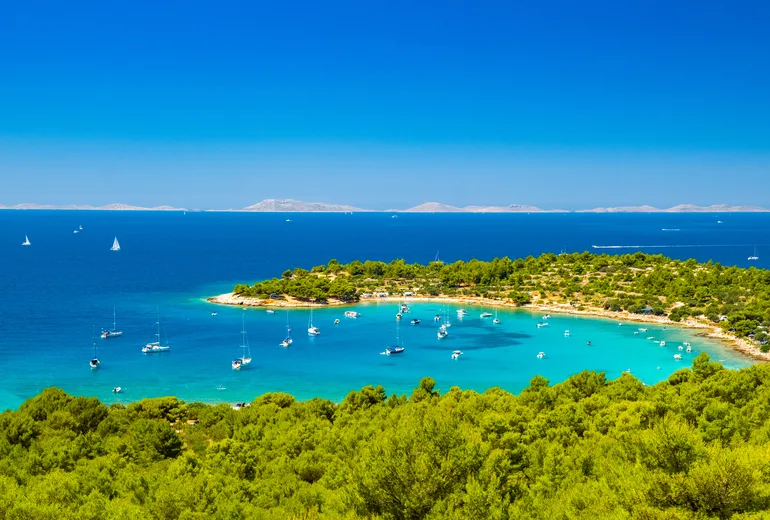
If you can pick your month, September is close to ideal for working afloat. The water is warm, the winds are gentle enough that you are not fighting the boat between calls, the anchorages are emptying, and prices have come off their summer peak. Our ranking of where to sail in September walks through the calmest, best-connected areas — Croatia’s central Dalmatia and the Greek Ionian both score well for a workation because the hops are short and signal near the towns is dependable.
Frequently Asked Questions
Can you really work remotely from a charter yacht?
Yes, increasingly so, but it depends on connectivity. With Starlink on board you can hold HD video calls from most anchorages; relying on a local 4G SIM works well near towns and islands and gets unreliable in remote bays. Structuring your day around signal is the key to making it work.
How fast is Starlink on a boat?
At anchor with a clear sky view, marine Starlink commonly delivers somewhere around 50-150 Mbps down — comfortably enough for video calls and large uploads. Speeds dip while the boat swings or is under way, and you need an unobstructed sky, so it is strongest at anchor rather than mid-passage.
Which country has the best mobile coverage for working afloat?
Croatia stands out for combining strong 4G across its inhabited islands with a dense marina network. Türkiye’s Turquoise Coast and Italy’s developed coasts are also reliable. Everywhere, coverage tracks population — remote anchorages drop off regardless of country.
Is a catamaran better than a monohull for a workation?
Generally yes. The larger battery bank and solar capacity handle the extra power draw of laptops and a router more comfortably, the boat is more stable for typing and calls, and there is more usable deck and saloon space to set up a workspace.
Picture your own working week afloat — calm bays, short hops, a desk with a view. Browse shoulder-season catamarans and well-connected areas on our yacht charter search and start planning the workation.
Idee per la tua prossima vacanza in barca a vela
Più di 40 paesi per il noleggio di barche e yacht con i migliori prezzi