Your search
Bretagne
63
boats available · live
500 € – 200,000 €
500 €200K €
1 – 42 guests
142
0 – 42 berths
042
14.76 – 56 m(48–184 ft)
14.76 m56 m
2000 – 2028
20002028
0 – 20 toilets
020
5 – 7,296 hp(4–5,436 kW)
5 hp7,296 hp
Prices shown are each boat's cheapest available 7-night week. Choose your dates for exact prices.
Bretagne is where French sailing identity lives. This rugged Atlantic corner of France — known for its dramatic granite coastlines, chaotic tides that can swing 14 meters between low and high water, and a sailing culture that has produced some of Europe's most accomplished offshore racers — offers something genuinely different from the Mediterranean. If you've sailed the Côte d'Azur and found it polished but predictable, Bretagne rewards skippers who embrace its character: the granite archipelagos, the tidal streams that flow like rivers, and the rapidly changing Atlantic weather that keeps you sharp.
Bretagne's reputation as a serious sailing destination is earned, not marketed. La Trinité-sur-Mer is literally France's sailing capital — home to generations of America's Cup competitors and Olympic sailors. The Glénan Islands offer turquoise water and a sailing school that's been shaping sailors for decades. The Golfe du Morbihan is an inland sea with hundreds of rocky islands and passages that demand respect from tide planning. And everywhere — the pink granite cliffs of the Côte de Granit Rose, the wild southern shore of Belle-Île-en-Mer, the mysterious Carnac menhirs — there's the visual drama of a landscape shaped by water and time.
Bretagne splits naturally into distinct sailing regions, each with its own texture. The Côte de Granit Rose (Pink Granite Coast) in the northwest — around Perros-Guirec and Trégastel — showcases the peculiar beauty that makes Bretagne unmistakable: rose-colored granite boulders scattered across cliffs and beaches, creating a landscape that feels almost otherworldly. This coast is relatively well-protected from Atlantic swell and offers excellent day sailing for yachts exploring the northern archipelagos.
Moving south along the western coast, you enter the domain of the Finistère (literally "land's end"), where the Atlantic asserts itself more dramatically. Here sit the Glénan Islands and Concarneau, with the notorious Raz de Sein tidal race marking the tip of Brittany — a passage that demands respect during tidal flows but opens access to the wild and beautiful Île de Sein beyond.
The southern coast — the Golfe du Morbihan (Gulf of Morbihan) and Belle-Île-en-Mer — represents Bretagne's most complex sailing environment. The Golfe du Morbihan is essentially an inland sea sheltering hundreds of islands and tiny villages, accessible through narrow entrances where tidal streams can exceed 3 knots. This is where tide planning transitions from helpful to essential.
What unifies all of Bretagne is the tide. Spring tidal ranges here are the largest in France — Saint-Malo, at the northeastern tip, experiences rises of up to 14 meters. This isn't just a number; it changes how you anchor, how you plan passages, and how you read the sea itself. Tidal streams are highways and obstacles in equal measure. Navigate with them, and you can reach distant islands; go against them, and you'll spend hours making slow progress.
The Golfe du Morbihan is Bretagne's crown jewel for cruising, yet it demands engagement. This vast, shallow lagoon dotted with hundreds of islands feels like a world unto itself — part natural park, part living museum. The entrance at Vannes opens to a maze of channels where local knowledge and accurate tide tables are non-negotiable. But inside, the rewards are tangible: hidden anchorages surrounded by granite islands, quiet villages accessible only by water, and the constant geological drama of rocks and sky. Yachts typically base themselves in Vannes or Port-Anna and explore inward; day trips from the entrance can reach the island villages of Saint-Armel or Île-aux-Moines.
This small island paradise sitting off the Côte de Granit Rose is accessible as a day trip or overnight from harbors like Paimpol. Two islands connected by a narrow bridge, surrounded by smaller rocky islands and kelp forests, Île de Bréhat has become a pilgrimage for sailing yachts seeking both scenery and manageable tidal conditions. The northern approach is straightforward; the southern side, with its maze of rocks, rewards careful navigation. Many skippers make Bréhat their turning point before heading south toward the Finistère.
Belle-Île earns its name. As Brittany's largest island, it offers dramatic contrasts: the sheltered eastern anchorages in the harbors of Sauzon and Le Palais, and the wild, cliff-lined southern coast — the Côte Sauvage — where Atlantic swells crash against 70-meter granite faces. Salers (medieval architecture), tuna fishing heritage, and authentic Breton culture make Belle-Île feel like a world away from modern tourism. Sailing around it requires 2-3 days; anchoring on the east side is secure year-round.
No part of Bretagne looks or feels more exotic than the Glénan archipelago, lying south of Concarneau. Ten small islands, turquoise shallow water, white sand beaches, and a sailing school that has trained generations of French sailors create an atmosphere that frankly feels misplaced from the Atlantic. The islands are accessible to small yachts willing to enter shallow anchorages and respect tidal timing; larger boats often anchor in Concarneau and day-sail out. Snorkeling in the crystalline water is a bonus that inland sea sailing elsewhere rarely offers.
Saint-Malo, the walled medieval city, is synonymous with Bretagne's maritime identity. As a sailing harbor, it's a strategic stopover on longer routes south, though the city itself is more tourism hub than sailing town. The draw is historical — François Malo, privateers, the Mont-Saint-Michel nearby. The educational value is tidal: the 12-14 meter tidal range here is staggering, and anchoring must account for dramatic rise and fall. The harbor is secure and well-maintained; many international sailors use it as their Bretagne entry point.
Unlike Saint-Malo or Vannes, Concarneau remains a working fishing port — the largest in Brittany. The Walled Town (Ville Close) sits at its center, a medieval fortification now surrounded by restaurants and galleries, but the soul of the harbor is still commerce and fishing vessels. For sailors, Concarneau serves as the ideal jumping-off point for the Glénan Islands and the southern Finistère coast. The harbor offers good facilities, and the tidal range is more forgiving than Saint-Malo.
This small town on the eastern shore of the Golfe du Morbihan is the beating heart of French offshore sailing. Home to dozens of professional sailing teams, the Grand Large sailing school, and generations of Olympic and America's Cup sailors, La Trinité isn't a tourist destination — it's a working sailing community. The harbor fills with Dehler 46s, Bénéteau performance cruisers, and classic racing yachts. For charter sailors, La Trinité offers top-tier facilities, reliable charter fleet access, and the intangible value of being in a place where sailing is the language everyone speaks.
Sailing Yachts remain the obvious choice for Bretagne. This is France's sailing heartland, and the conditions — moderate winds, tidal streams that create current sailing, and the visual drama of granite coasts — suit sailing vessels perfectly. A 35-45 foot sloop or cutter offers enough comfort for 2-week cruises while maintaining the agility to exploit tidal timing and negotiate the narrow channels of the Golfe du Morbihan. Bretagne sailing rewards sailors; if you're comfortable with tide tables and respect the Atlantic, a sailing yacht is the right choice.
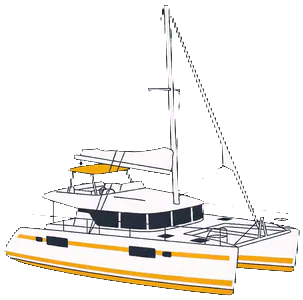
Catamarans have become increasingly popular in recent years, particularly for crews seeking stability and space. The wider hull beam reduces the impact of tidal streams and makes anchoring more secure in moderate conditions. For larger groups or families less interested in sailing technique, a catamaran charter from La Trinité or Concarneau offers comfort without compromising access to the same destinations.
Motorboats and motor cruisers work well for skippers primarily interested in leisurely harbor-hopping and exploration rather than sailing. The Golfe du Morbihan and coastal passages around Belle-Île are equally rewarding under power, and a motor cruiser eliminates weather dependency. However, motorboats are less common in Bretagne — the sailing culture is strong, and the tidal currents that make sailing interesting become less relevant when you're relying on engine thrust.
La Trinité-sur-Mer is the no-nonsense choice if you're a confident sailor. Modern facilities, excellent provisioning, and immediate access to the complex waters of the Golfe du Morbihan and the Côte Sauvage of Belle-Île make it ideal for a 10-14 day Bretagne deep dive. The sailing community here is serious; charter bases are professional and well-equipped.
Lorient (slightly south and east of La Trinité) offers similar sailing access with marginally more tourist infrastructure. The harbor is large and well-protected; provisioning is excellent. It's a reasonable alternative if La Trinité berths are unavailable.
Saint-Malo is the historical entry point and works well if your plan includes northern sites like Île de Bréhat and the Côte de Granit Rose. The tidal range is more extreme, but it's an excellent base for a 7-10 day northern Bretagne cruise. Facilities are modern and abundant.
Concarneau is the logical departure point if your interest centers on the Glénan Islands and the wilder western coast around Île de Sein. The harbor is less picturesque than Saint-Malo or the romantic small towns of the Golfe, but it's practical and well-positioned.
The sailing season runs June through September, with June and September offering the most stable conditions. July and August are the most populated months; if you prefer quieter anchorages and fewer tourist boats, aim for mid-June or early September. The Atlantic doesn't guarantee summer calm, and Bretagne weather can shift rapidly. Spring Atlantic fronts occasionally push into the region even in early summer.
Wind patterns are generally force 3-4 from the west or northwest during the main season. This provides excellent sailing without the brutality of Atlantic winter storms. Local knowledge emphasizes checking meteo marine (the French maritime weather service) regularly — Atlantic systems can intensify faster than you might expect, and Bretagne's exposed western and southern coasts feel weather changes immediately.
The tidal currents are the real variable. In narrow passages like those entering the Golfe du Morbihan or around the Raz de Sein, spring tidal streams can exceed 3-4 knots. Planning daily mileage around tidal timing — typically sailing with the stream, rarely against it — dramatically improves both distance covered and energy expended. Many experienced Bretagne sailors plan their routes first by tide, then by wind.
Anchorage holding varies. Granite and sand dominate; holding is generally good, but the tidal range means anchor scope must account for the rise and fall. Many Bretagne anchorages dry at low water; local charts clearly mark these areas, and planning is straightforward with care.
Day 1-2: Saint-Malo to Île de Bréhat. Depart Saint-Malo early (ideally near slack water on a favorable tide), sail 30 nautical miles south-southwest to Île de Bréhat. Anchor in the northern approaches off the harbor. Explore the island on foot; the architecture and landscape rewards a full day ashore.
Day 3-4: Île de Bréhat to Côte de Granit Rose. Day sail to Perros-Guirec or Trégastel. These harbor towns offer excellent facilities and the unique visual experience of rose granite cliffs. A morning visit to the local market provides fresh provisions for the week ahead.
Day 5: Côte de Granit Rose to Belle-Île-en-Mer. A longer day sail (50+ nautical miles) south-southwest. Anchor at Sauzon on the eastern side of Belle-Île or in the sheltered anchorage at Le Palais. Allow 2-3 days to explore the island fully — the contrast between the sheltered east coast and the wild Côte Sauvage is striking.
Day 7-8: Belle-Île to Île de Glénan. Sail northeast toward the Glénan Islands (45 nautical miles). Approach carefully — the islands are small and shallow, and tidal timing around the entrance to Concarneau matters. Anchor in a designated spot within the islands; snorkeling in the turquoise water is a reward that few Atlantic sailing areas offer.
Day 9-10: Îles de Glénan to La Trinité-sur-Mer. Sail northeast to La Trinité, exploring the eastern shore of the Golfe du Morbihan en route. Spend the final days in the Golfe itself — enter on a favorable tide, anchor among the islands, and marvel at the tidal range that has shaped this unique landscape.
Bretagne's culinary identity is inseparable from its maritime character. Crêpes and galettes are ubiquitous — the savory galette (buckwheat flour) filled with ham, egg, and cheese is a lunch standard at every harbor café. Sweet crêpes with jam or Nutella are equally reliable.
Fruits de mer plateau — the seafood tower of oysters, mussels, clams, scallops, and langoustines — is the classic experience. Cancale, on the northern coast, is famous for its oysters; buying fresh oysters at the harbor market and eating them dockside (bring your own oyster knife) is a ritual many Bretagne sailors practice. Oysters are cheap, fresh, and absurdly good.
Cidre fermier (farm cider) from local producers is the sailing drink of choice — less alcohol than wine, refreshing, and available everywhere. The Loire Valley's Muscadet wine is nearby and pairs perfectly with seafood. Both travel well on deck.
Kouign-amann — a pastry of crispy, caramelized butter layers — is ubiquitous in bakeries and worth seeking out. Far breton, a custard-like dessert with prunes, is another regional classic. Most small harbor towns have a boulangerie with fresh bread and pastries; provisioning is rarely a challenge.
The markets in towns like Quimper, Concarneau, and Saint-Malo offer exceptional produce, fish, and local specialties. Planning your route around market days (typically mornings, several days per week) is a pleasure in itself.
Experience with tidal planning is helpful but not mandatory — charter fleet vessels come with detailed tidal atlases and harbor guides, and pre-charter briefings cover the basics. That said, Bretagne rewards skippers comfortable reading tide tables and respecting tidal streams. If you've sailed in the UK or other tidal regions, you'll adapt quickly. If not, the learning curve exists but is manageable with patience and conservative planning.
The Raz de Sein is a tidal race — a narrow passage between the Pointe du Raz and the Île de Sein where tidal streams accelerate to 4+ knots in spring tides, creating chaotic water conditions. Many sailors avoid it, routing instead around the island via the eastern passage. It's navigable under the right conditions (slack water, favorable tide), but it's not essential to your Bretagne experience. Conservative passage planning treats the Raz as something to transit only when conditions are favorable and the risk is clearly manageable.
The Golfe is complex but not impossible. The entrances (at Vannes, Port-Anna, and Ambon) are the narrowest points, where tidal streams are most dramatic. Once inside, the water is shallower and current-driven rather than turbulent. Many hundreds of yachts anchor in the Golfe each year safely, following basic rules: plan entries and exits for slack water or favorable tide, use detailed charts and a depth sounder, and anchor in designated areas with good holding. The Golfe rewards attentive skippers; it punishes carelessness.
June and September are ideal — winds are reliable (force 3-4), weather is stable, and tourist boat density is lower than July-August. July and August are busier and can have less consistent wind, but they're certainly sailable. The shoulder season (May and October) offers lower charter prices and excellent sailing conditions, though weather can be more variable. Avoid November through April — Atlantic winter storms dominate, and many charter bases reduce winter operations.
Technically yes, but you'll be rushing. A proper 10-14 day Bretagne cruise covers either the northern coast deeply (Saint-Malo to Belle-Île) or the southern Golfe du Morbihan and Glénan islands, not both comprehensively. The sailing is the journey, not the destination count. Resist the urge to hit every harbor; pick a region and immerse yourself in it.
Bretagne is France's last great sailing frontier — rough-edged, tidal, and utterly rewarding to skippers willing to engage with its rhythms. Whether you're exploring the pink granite cliffs of the north, navigating the inland sea of the Golfe du Morbihan, or snorkeling in the turquoise waters of Glénan, Bretagne offers sailing that feels real, challenging, and deeply satisfying.
Explore our partners' fleet of sailing yachts and catamarans across France, including dedicated options for Bretagne yacht charter. Learn more about how we work or discover the Boat4You story. Questions about planning your Bretagne sailing experience? Check our FAQ for answers.
Updated October 12, 2026
Cheapest month: October 2027. Most expensive month: August 2027.
| Month | Typical week | Middle half of weeks |
|---|---|---|
| Apr 2027 | 2,464 € | 1,801 € – 2,803 € |
| May 2027 | 2,628 € | 1,856 € – 2,807 € |
| Jun 2027 | 2,388 € | 1,786 € – 2,732 € |
| Jul 2027 | 2,708 € | 2,043 € – 3,325 € |
| Aug 2027 | 2,799 € | 2,043 € – 3,325 € |
| Sep 2027 | 2,231 € | 1,758 € – 2,803 € |
| Oct 2027 | 2,118 € | 1,574 € – 2,803 € |
Computed every night from the 7-night charter offers of the next 12 months for the boats based here. Prices are for the boat per charter week; skipper, extras and deposit are separate, and figures based on fewer than 5 boats or offers are left out. Amounts in euros (EUR).