Your search
Tyrrhenian Sea
153
boats available · live
500 € – 200,000 €
500 €200K €
1 – 42 guests
142
0 – 42 berths
042
14.76 – 56 m(48–184 ft)
14.76 m56 m
2000 – 2027
20002027
0 – 20 toilets
020
5 – 7,296 hp(4–5,436 kW)
5 hp7,296 hp
Prices shown are each boat's cheapest available 7-night week. Choose your dates for exact prices.
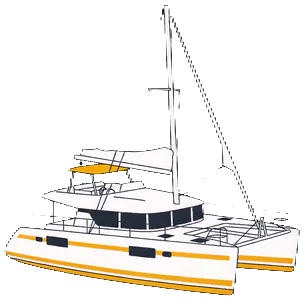
Boat4You specializes in catamaran charters across the Tyrrhenian Sea, offering the perfect blend of stability, space, and comfort for families, mixed-ability crews, and those prioritizing relaxation over intense sailing challenges. Modern catamarans feature twin hulls that eliminate heel angle during turns, spacious cabin layouts with independent cabins and ensuite bathrooms, and generous deck areas for sunbathing and social gatherings. The Tyrrhenian's consistent Libeccio and Maestrale winds combined with catamarans' shallow draft create ideal conditions for accessing hidden anchorages inaccessible to deeper monohull vessels.
Stability is the primary catamaran advantage. When beating into a 15-knot Maestrale, catamarans maintain near-level deck angle compared to monohulls' 20-30 degree heel. This makes cooking, sleeping, and movement easier for those susceptible to motion sickness. Shallow draft (typically 1.0-1.3 meters versus 1.8-2.2 meters on monohulls) allows approach to beaches and coves with sandy or muddy seabeds. Twin engines provide redundancy—if one engine fails, the other maintains directional control and propulsion to harbor. Larger cabin volumes mean private berths for all crew members plus separate saloon space for meals, games, and evening socializing. Charter fleet includes 38-foot catamarans ideal for four to six people and 45-50 foot catamarans accommodating eight to ten crew members with full privacy.
The Leopard 40 catamaran—Boat4You's most popular charter model—features 4-5 cabin configurations, each with private head and shower, air conditioning, and reading lights. The main saloon includes a full galley with refrigeration, stove, and oven. Deck space includes a foredeck sunpad (30+ square meters) and aft cockpit with hardtop bimini for shade. Safety equipment includes life jackets, safety harnesses, and manual lifeboat. Navigation systems feature integrated GPS, chart plotter, AIS receiver, and VHF radio. Optional extras include watermaker (producing fresh water from sea water—critical for long-range island hopping), additional fenders, snorkeling gear, underwater camera, and inflatable tender with outboard motor.
The Fountaine Pajot 45 catamaran offers even greater luxury, with separate crew quarters forward, three or four guest cabins, and a raised pilothouse providing panoramic views during navigation. This model suits upscale charters where multiple couples want independent cabins, or families where adult children prefer separate sleeping quarters. All catamarans in the fleet undergo rigorous pre-charter inspection and maintenance, with crew training updates ensuring proper systems operation and emergency procedures.
Catamarans perform exceptionally well in the Tyrrhenian's moderate wind regime. With 40-50 square meters of sail area spread across two hulls, the Leopard 40 achieves 8-9 knots on reaches in 12-knot winds and 6-7 knots when beating to windward. Motor-sailing (engine plus partial sail) adds 1-2 knots and reduces heel angle further. In strong afternoons when Libeccio exceeds 18 knots, reducing mainsail to 50% and furling the jib maintains comfortable deck conditions. The catamaran's wider beam (approximately 8 meters on 40-foot models) provides generous inner cabin width—contrast this with monohull's pinched cabins where only one cabin extends the full beam width.
Anchoring in the Tyrrhenian often means dropping anchor in open bay settings (Capri, Ponza, Filicudi in the Aeolians) where holding ground is sand or mud and depth ranges 10-25 meters. Catamarans' lightweight hull construction and large waterplane area allow anchoring in shoaler water than monohulls—a significant advantage when approaching Calabrian beaches or the Aeolian islands' dramatic cliffs.
The "Capri & Amalfi Extended Circumnavigation" departs Naples, spends two days exploring Capri's Blue Grotto, Faraglioni, and hidden beach anchorages, then sails 35 kilometers to Salerno as a staging point for the Amalfi Coast. Days three and four visit Positano and Praiano—vertical cliff villages accessible only by sea or expensive cable cars. Day five explores the Sorrentine Peninsula's eastern cliffs before returning to Naples. Total: 6-7 days, optimizing for families wanting concentrated beauty without excessive sailing hours.
The "Pontine Islands and Gulf of Gaeta" itinerary departs Naples, sails north-northwest 70 kilometers to Gaeta (Libeccio-friendly broad reach), explores the Pontine archipelago over four days (Ponza, Ventotene, Palmarola, Zannone), then returns. Duration: 7-8 days. Pontine anchorages are often free, making this economical. The islands' volcanic geology and archaeological interest (Roman Emperor Tiberius' retreat on Capri's near-neighbor) provide rich shoreside exploration.
The "North Tyrrhenian Open Water Circumnavigation" is an advanced multi-week cruise combining Tuscany's Elba and Giglio islands (northeast), then looping around Corsica (west), across to the Tyrrhenian mainland, and down the Amalfi Coast. Requires confidence in 50+ nautical mile open-water passages and catamarans' superior speed advantage. Typical duration: 14-16 days for the complete circuit, ideal for spring and autumn when afternoon winds are moderate and seas are gentler.
Catamarans are ideally suited for family sailing because children remain comfortable during sailing (less heel means less queasiness), have space to move around safely (wide decks, small cockpit step heights), and enjoy independent cabin options for privacy. Many parents report that children aged 8-12 sleep better on level berths compared to heeled monohulls. The shallow draft enables beach visits in Capri's bay-facing coves and Ponza's turquoise lagoons inaccessible to draft-restricted vessels. Inflatable tenders (often included or rented) allow quick excursions to isolated anchorages and snorkeling sites without motoring the main vessel. Boat4You provides family-specific welcome packages including children's safety orientation, snorkeling lessons, and printed Tyrrhenian charts marked with family-friendly stops, shallow-water anchorages, and kid-friendly restaurants.
Catamaran galleys are substantially larger than monohull equivalents, with countertop space for two people to prepare meals simultaneously. Refrigeration capacity (typically 300-450 liters total across freezer and refrigerator sections) allows week-long provisioning without resupplying. Naples' Vomero district markets and Salerno's harborside fish markets provide daily fresh options—many crews provision daily for culinary adventure. The Amalfi Coast villages offer farm-to-table restaurants accessible by dinghy from anchorages. Capri's expensive shore dining can be offset by provisioning fresh pasta, locally-made mozzarella, anchovies, and basil for onboard preparation. Ponza's markets feature simple provisions and excellent local fish. The Aeolian islands' provisioning is more limited—stock durables and frozen proteins before heading south from Palermo or Tropea.
Catamaran bareboat charters typically cost 15-30% more than equivalent monohull sailing yachts but deliver proportional value through space, comfort, and reduced operational stress. A 38-40 foot catamaran accommodating six people costs approximately €2,500-3,500 weekly during shoulder season (May, September-October) and €3,500-5,000 during peak summer. Compare this to a 42-foot monohull sailing yacht at €2,200-3,000 (shoulder) and €3,200-4,500 (peak). The catamaran's fuel consumption is higher (two engines versus one) but offset by reduced heel angle—you sail more efficiently without energy spent fighting weather helm. Insurance, provisioning, and mooring costs remain comparable across vessel types. Boat4You negotiates package rates combining vehicle rental, provisioning pre-shopping, and skipper hiring to reduce overall charter costs.
Visit Boat4You to filter available catamarans by cabin count, beam, and amenity preferences. Boat4You advisors ask about crew composition—are children aboard? Do you have open-water navigation experience? Is cooking a priority or secondary to relaxation? Bareboat catamaran charter requires ICC certification or equivalent coastal sailing credential demonstrating two-years' sailing experience and coastal navigation knowledge. If your group lacks bareboat credentials, consider hiring a professional skipper (€100-150 daily) or joining a flotilla sailing group departing Naples simultaneously with radio support and shared evening anchorages. Learn more about vessel selection and crew planning at Boat4You and Boat4You.
Catamarans require distinct seamanship practices compared to monohulls. Turning radius is larger due to distributed weight across two hulls—plan wider approach angles at marina entrances and anchorages. Twin engines demand independent throttle management—synchronizing engine revolutions maintains straight-line travel. Reverse gear operation differs (ask for crew training on take-off); improper reverse technique causes one hull to slip sideways. Symmetrical design means steering response is immediate with no weather helm bias. All crew should understand emergency procedures: engine shutdown, manual rudder operation (rare but possible), and tender deployment.
Not significantly. Catamarans achieve 7-8 knot average speeds under sail compared to monohulls' 6-7 knots, due to reduced drag and efficient sail designs. Motoring speeds are comparable (8-10 knots). Catamarans excel on reaches and downwind; monohulls point slightly higher to windward but sacrifice comfort and heel.
Not without certification. ICC requirement applies equally to monohulls and catamarans. Hire a skipper (€100-150 daily) to handle navigation while you participate in sail trimming and anchoring. This approach suits learning-minded sailors wanting hands-on experience without the stress of helmsmanship responsibility.
Yes, twin engines consume 30-40% more fuel than single-engine monohulls. However, efficient sailing (wind rather than motors) minimizes cost impact. Budget €0.80-1.20 per liter for Italian diesel, making a typical week's motoring approximately €200-300. Distance to anchorages typically requires 40-60 engine hours weekly in the Tyrrhenian.
Catamarans suit crews of four to ten people comfortably. Six people (three couples) is ideal—each cabin cabin pair enjoys privacy while maintaining manageable watch rotation. Eight people work well on 45+ foot models with crew cabins.
Yes, with navigation advantages. Catamarans' shallow draft access sandier anchorages; monohulls reach steeper-cliffed zones. Both vessel types visit Naples, Capri, Amalfi, Ponza, and the Aeolian Islands. Choose based on crew comfort and sailing preference rather than destination reachability.
Modern catamarans in the charter fleet feature integrated navigation technology: dual-screen chart plotters displaying electronic nautical charts, GPS positioning accuracy to 2-3 meters, radar systems for night navigation and weather monitoring, and autopilot systems enabling hands-free steering during long passages. VHF radios provide communication with harbor authorities, other vessels, and emergency services. Depth sounders alert crews to shallow-water approach, particularly valuable when anchoring in bay-facing locations.
Catamaran cruising attracts vibrant international communities—many anchorages feature "raft-ups" where multiple vessels tie together for evening socializing, shared meals, and mutual aid. Ponza, Ventotene, and Aeolian Island anchorages particularly foster this camaraderie. Boat4You connects charter groups with local sailing clubs and flotilla associations organizing informal gatherings, group provisioning expeditions, and shared excursions. This social dimension appeals to solo sailors, couples seeking companionship, and families wanting children to interact with peers from diverse backgrounds.
Advance booking of 8-12 weeks ensures optimal vessel selection during peak season (July-August). Shoulder season (May-June, September-October) accommodates bookings with 4-6 weeks' notice. Most catamarans include comprehensive provisioning support, local skipper recommendations, and customized pre-charter orientation materials. Deposit requirements are typically 25-30% of total charter cost, with balance due 4-6 weeks prior to departure. Deposit and cancellation terms depend on the operator and are shown before you pay; within 72 hours of booking you can still cancel free of charge.
Catamaran charter guests consistently report exceptional satisfaction—the combination of stability, space, comfort, and accessibility creates perfect conditions for stress-free vacations. Multi-year return clients form strong bonds with preferred vessels and crews, often booking identical itineraries annually or requesting custom variations based on prior-year experiences. Loyalty programs provide returning charterers preferential booking priority, rate discounts, and curated vessel matching reflecting accumulated preferences and experience evolution.
Start by browsing available boats on the search page, or check the FAQ for common questions. New to chartering? See how the booking works.
Updated October 1, 2026
Most expensive month: August 2027.
| Month | Typical week | Middle half of weeks |
|---|---|---|
| Oct 2026 | 4,410 € | 3,684 € – 6,641 € |
| Nov 2026 | 4,865 € | 3,705 € – 6,429 € |
| Dec 2026 | 5,365 € | 3,776 € – 6,796 € |
| Mar 2027 | 5,429 € | 4,048 € – 6,677 € |
| Apr 2027 | 5,567 € | 4,050 € – 7,344 € |
| May 2027 | 5,652 € | 4,446 € – 7,790 € |
| Jun 2027 | 8,199 € | 5,725 € – 9,953 € |
| Jul 2027 | 10,355 € | 7,695 € – 13,072 € |
| Aug 2027 | 10,450 € | 7,780 € – 13,072 € |
| Sep 2027 | 7,227 € | 5,506 € – 9,700 € |
Computed every night from the 7-night charter offers of the next 12 months for the boats based here. Prices are for the boat per charter week; skipper, extras and deposit are separate, and figures based on fewer than 5 boats or offers are left out. Amounts in euros (EUR).