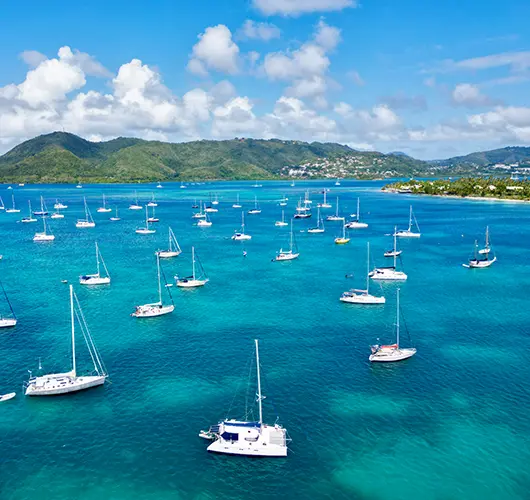
14-day route
Route · 14 days · one-wayYacht charter route · Martinique

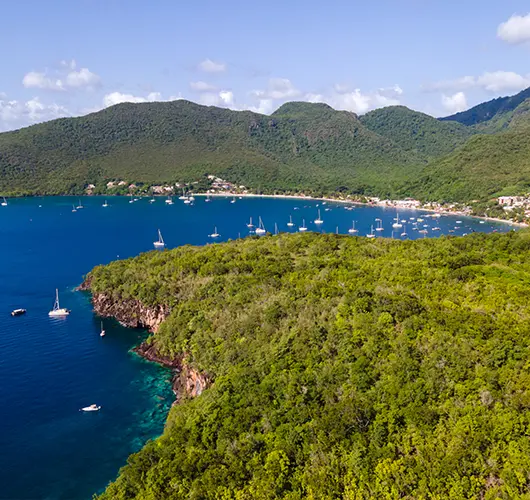
Le Marin via Anse Couleuvre & Anse Dufour.

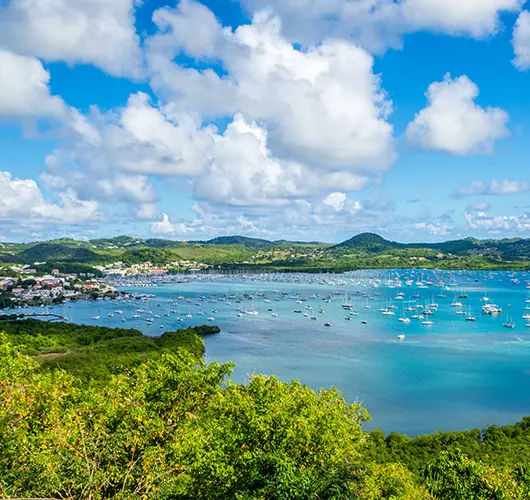
Two weeks from Le Marin, Martinique: turtle bays, the Mont Pelée coast, then a channel hop to St Lucia's Pitons and Marigot Bay.

The route

Day-by-day route

Click any pin on the map or any day in the route summary below to see that day's stop, story and photos.

Day 1

Le MarinSainte-Anne

An easy first afternoon: motor out of the charter base and drop anchor off Sainte-Anne's long white beach at Pointe Marin.

Distance

2 NM

Sailing

~0.4h at 5 kn

At a glance

Route at a glance

Best season

December – May (peak Jan – Apr)

Duration

14 days

Departure

Le Marin

Sailing area

Martinique

Route summary

Click any day to jump back to the map and see its photos, narrative and mooring tip.

The full story

Day-by-day journey

Named anchorages, mooring notes and things to do for every leg of the week — the map follows along as you scroll.

Day 1 / 14
1
Day 1

Le MarinSainte-Anne

Most crews spend the first morning stowing provisions and sorting out the boat, so keep day one short. Sainte-Anne sits barely five miles from the Le Marin marina complex, a gentle shakedown before anything ambitious. The anchorage is huge and rarely full, sand holding under clear water off Pointe Marin. Take the dinghy to the concrete dock in the village, or tie up at the floating pontoon by the Pirates Bar. The town itself is small and unhurried: a church square, a few crêperies, a boulangerie worth an early walk. We usually swim off the transom before dinner, then eat ashore. Fresh baguettes and cold Lorraine beer make a fair start to two weeks. Turn in early; tomorrow you round the southern tip.

Things to do

Swim off Pointe Marin's white beach

Coffee and croissants at the village boulangerie

Dinghy to the Pirates Bar pontoon

Sunset walk around Sainte-Anne church square

Mooring tip

Anchor in sand anywhere off Pointe Marin; the bay is large enough that you rarely fight for room. Holding is good in three to five metres, so no need to arrive early.

2
Day 2

Sainte-AnneGrande Anse d’Arlet

Leaving the south coast means turning the corner at the island's tip, where the swell wraps around and the wind fills in. Once you're on the leeward side the water flattens and the sailing turns easy. Grande Anse d'Arlet is a wide bay backed by a red-roofed church that sits almost on the sand, one of the most photographed spots on the island. The draw here is what lies below: seagrass beds where green turtles graze, plus reef along both headlands. Slip in from the boat and you will often find one within minutes. Ashore, a row of simple restaurants serves grilled fish and accras. Worth leaving Sainte-Anne by nine so you arrive with the light still high for snorkelling.

Things to do

Snorkel the seagrass for green turtles

Photograph the waterfront church on the sand

Grilled fish and accras at a beach shack

Snorkel the reef along both headlands

Mooring tip

Anchor in sand in five to eight metres toward the middle of the bay, clear of the swim zone marked off the beach. The southern side gives a little more shelter if any swell works in.

3
Day 3

Grande Anse d’ArletAnse Dufour

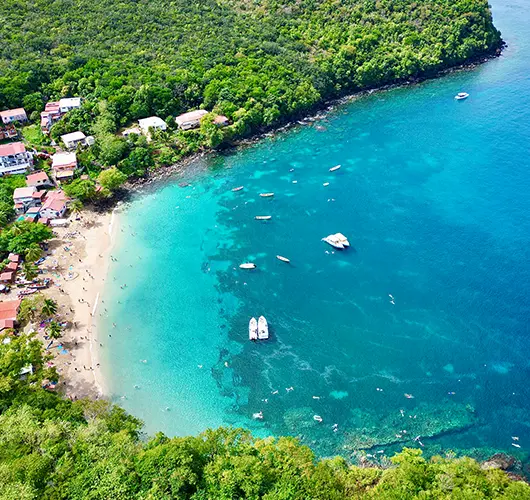
This is barely an hour under sail, so treat it as a lazy morning. Anse Dufour is a pocket bay with a fishing-village feel, a scatter of boats pulled up on the sand and two small restaurants at the back. Green turtles are more abundant here than almost anywhere else on the coast; they come daily to feed on the seagrass and pay swimmers little mind. Next door, a short walk over the headland, Anse Noire shows off black volcanic sand and its own reef. Both bays are small and fill with day boats by late morning, which is the argument for arriving early and taking a mooring while there is one. Lunch ashore, an afternoon in the water, an easy night at anchor.

Things to do

Swim with green turtles at Anse Dufour

Walk over to black-sand Anse Noire

Lunch at a beachfront fishing-village restaurant

Snorkel the reef along the bay's edges

Mooring tip

Anse Dufour is cramped, so grab a mooring buoy or anchor in a sand patch clear of the fishing boats; depths shelve fast to under three metres. Get in before midday, when day-trip boats crowd the little bay.

4
Day 4

Anse DufourSaint-Pierre

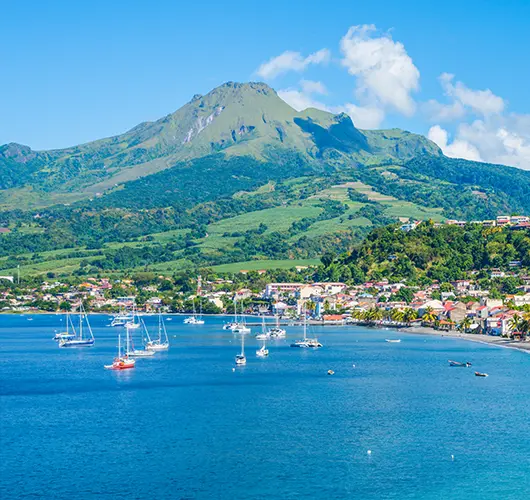
The run north keeps you close under green hills, with Mont Pelée growing ahead. Saint-Pierre was the richest port in the Caribbean until the morning of 8 May 1902, when the volcano loosed a superheated cloud that killed around 28,000 people in minutes and sank almost every ship in the bay. You anchor today over that history. Ashore, the ruined theatre and the cell that saved one of the few survivors are a sobering walk, softened by good bakeries and rum shops in the rebuilt town. The bay is calm, the wind usually light, the holding fair in black volcanic sand. Divers come for the wrecks below, the steamer Roraima among them, one of the finest wreck dives in the region. Give the afternoon to the town and save the diving for tomorrow.

Things to do

Walk the ruined theatre and 1902 ruins

Visit the survivor's cell, the cachot Cyparis

Browse rum shops in the rebuilt town

Photograph Mont Pelée from the anchorage

Mooring tip

The seabed shelves steeply and the sand is soft black volcanic silt, so anchor close in and let out plenty of scope; holding can be patchy on the first try. It is deep near shore, often ten metres or more.

5
Day 5

Saint-PierreAnse Couleuvre

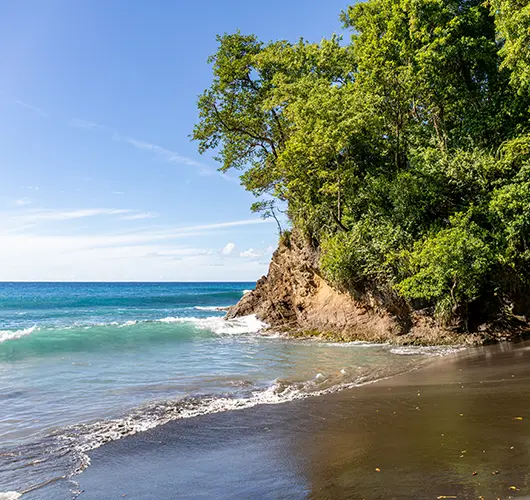
North of Saint-Pierre the coast turns raw. The road runs out past Le Prêcheur and the last bays belong mostly to fishermen and the occasional cruising boat. Anse Couleuvre is the reward: a strip of black sand shut in by high cliffs and dense forest, backed by coconut palms and the ruins of an old rum distillery. A path leads inland to a small waterfall, an easy walk of a mile or so, and the trailhead for longer treks up the flanks of Mont Pelée. Surfers know the break here, and the snorkelling along the rocks is among the best on the island. There are no facilities and little shelter, so it is a daytime anchorage most crews enjoy before dropping back south. Come for the swim and the quiet.

Things to do

Walk the forest path to the waterfall

Snorkel the rocky reef off the black sand

See the ruined rum distillery in the trees

Watch surfers on the north-facing break

Mooring tip

This is an open roadstead with no moorings and swell that can roll in from the north, so it suits a settled day rather than an overnight. Anchor in sand off the beach and keep an anchor watch if any groundswell is running.

6
Day 6

Anse CouleuvreSaint-Pierre

The short return to Saint-Pierre gives you the settled anchorage the north end lacks, and a chance to do what the town does best. Beneath the bay lie a dozen ships lost in the 1902 disaster, sitting in twenty to sixty metres and draped in coral. The Roraima is the famous one, though several barges and schooners are shallower and just as haunting. Local dive centres run trips most mornings if you booked ahead; if not, the Musée Volcanologique and the Depaz distillery on the hillside fill an afternoon well. We like to walk the cobbled backstreets in the cool of late day, then eat at one of the seafront places. The Depaz rhum agricole, distilled almost in the shadow of the volcano, is worth carrying back aboard.

Things to do

Dive the Roraima wreck in the bay

Tour the Depaz rhum agricole distillery

Visit the Musée Volcanologique Frank Perret

Eat seafood on the Saint-Pierre seafront

Mooring tip

Same soft black sand as before, so re-anchor with plenty of scope and check it holds before leaving the boat. If a dive boat is working the wrecks, give its shot line and divers a wide berth when you set the hook.

7
Day 7

Saint-PierreGrande Anse d’Arlet

The sail south retraces familiar water, downwind and gentle, with the whole leeward coast unrolling to starboard. Grande Anse d'Arlet earns a second visit because the bay works so well as a base: good holding, easy landing, and turtles still grazing the seagrass whenever you slip over the side. This time linger. Take the dinghy across to Petite Anse next door, quieter and framed by fishing boats, or walk the coast path over the headland for the view back down the bay. Evening is the town's best hour, when the day boats have gone and the beach restaurants light up. Order the catch of the day and a ti-punch, watch the sun drop behind the far headland. It is the last easy Martinique night before you point at St Lucia.

Things to do

One more turtle swim off the beach

Dinghy over to quiet Petite Anse

Walk the coast path over the headland

Ti-punch and fresh fish at sunset

Mooring tip

Take the same sandy patch mid-bay in five to eight metres and stay clear of the marked swim area. If the anchorage is busy, Petite Anse just north often has room and holds equally well.

8
Day 8

Grande Anse d’ArletLe Marin

Today closes the Martinique loop. You beat back around the southern point into the trades, so expect wind on the nose and a little chop until you fall into the lee of Le Marin's long bay. The marina here is one of the biggest charter bases in the Caribbean, which makes it the place to sort logistics before heading offshore. Fill the water and diesel tanks, run a proper provisioning shop at the Leader Price, and clear out with customs at the Douane office if you have not done it online. There is time in the afternoon to swim back off Sainte-Anne or simply rest at anchor. An early night helps; the St Lucia crossing wants a morning start with the day's light ahead of you.

Things to do

Provision at the Le Marin supermarket

Top up diesel and water at the marina

Clear customs at the Douane office

Last French bakery run before crossing

Mooring tip

You can anchor off in Le Marin's crowded bay or take a marina berth to make fuelling and provisioning simpler. Book a berth ahead in high season, as this base fills with turnaround boats on weekends.

9
Day 9

Le MarinRodney Bay (St. Lucia)

This is the passage the whole route builds toward. From Le Marin it is roughly 22 to 25 miles across open water to Rodney Bay, four to six hours of proper sailing with the trades at 15 to 25 knots off the beam. The channel between the islands can be lumpy where wind meets current, so reef early and stow everything below. Once St Lucia's green mass rises ahead the ride steadies in its lee. Rodney Bay is wide and well protected, with sand holding off Reduit Beach and the marina tucked inside the lagoon. Clear in with customs and immigration at the marina before you relax. Then it is a cold beer earned honestly, with Pigeon Island and its old fort waiting for the morning.

Things to do

Reef down for the open channel

Clear customs at Rodney Bay Marina

Anchor off Reduit Beach for a swim

Sundowner overlooking the lagoon

Mooring tip

Anchor in sand off Reduit Beach in three to six metres, or take a marina berth inside the lagoon for easy customs clearance. Do not anchor in the buoyed swim zones, and complete the clear-in before going ashore anywhere.

10
Day 10

Rodney Bay (St. Lucia)Marigot Bay (St. Lucia)

Short and easy today, maybe ten miles down the coast under the lee of the hills. Marigot Bay narrows to a slot you almost miss from seaward, then opens into a near-enclosed inner harbour ringed by green slopes and a palm-covered sandbar. Sailors have used it as a hurricane hole for generations, and the story goes that a British fleet once hid here under palm fronds. Inside, you pick up a mooring ball on the south side or anchor in the outer pool to the north. The marina village has a chandlery, a small market, and a couple of good waterfront bars; Doolittle's, across the water by ferry, is the classic sundowner stop. It is a snug, protected night, worth an afternoon swim and an early dinner ashore.

Things to do

Pick up a mooring in the inner harbour

Sundowner at Doolittle's across the water

Swim off the palm-covered sandbar

Browse the marina village chandlery and market

Mooring tip

The channel in is narrow but deep; favour the middle and watch for the ferry. Take a mooring ball on the south side or anchor in the outer pool to the north, where holding in mud is good.

11
Day 11

Marigot Bay (St. Lucia)Soufrière (Pitons)

The morning run down to Soufrière brings the Pitons into full view, two forested cones rising sheer from the sea, Gros Piton at 798 metres and Petit Piton at 743. Nothing else on the route looks quite like it. The Soufrière Marine Management Area runs mooring buoys off Sugar Beach, set right in the gap between the peaks, and a permit is required; rangers come by to collect the fee and check you are properly made fast. These moorings are popular and fill by early afternoon, so leave Marigot after breakfast and take one while you can. The water is deep to the shore and the wind funnels between the Pitons in hard gusts. Snorkel the reef under Petit Piton, then let the anchorage do its work as the light goes gold.

Things to do

Take an SMMA mooring off Sugar Beach

Snorkel the reef under Petit Piton

Shore trip to Sulphur Springs and gardens

Photograph the Pitons at golden hour

Mooring tip

You must use an SMMA mooring here, not anchor; the water is too deep and the seabed protected. Arrive by early afternoon, take the ranger's help with a stern line ashore against the gusts, and have the permit fee ready in cash.

12
Day 12

Soufrière (Pitons)Marigot Bay (St. Lucia)

Soufrière rewards a slow morning on land before you leave. A short taxi ride reaches the Sulphur Springs, billed as a drive-in volcano, and the Diamond Falls botanical garden with its hot mineral baths. Boat vendors will offer to run you ashore and guide the trip; agree a price first and it is money well spent. Back aboard, drop the mooring by late morning and reach north again, an easy downwind leg with the Pitons shrinking astern. Marigot makes a natural stop for a second calm night, its inner harbour as sheltered as anywhere on the coast. We tend to time the run so there is a mooring free before the afternoon rush. A swim, a quiet dinner, and the hard sailing is behind you.

Things to do

Visit the Sulphur Springs drive-in volcano

Bathe at Diamond Falls botanical garden

Downwind sail with the Pitons astern

Second calm night on a Marigot mooring

Mooring tip

Same as before at Marigot: mooring balls on the south side or anchor in the northern pool in good mud. Aim to arrive before mid-afternoon, when the ferry-and-charter crowd takes the last balls.

13
Day 13

Marigot Bay (St. Lucia)Rodney Bay (St. Lucia)

The leg back to Rodney Bay is short and forgiving, roughly ten miles up the coast in the island's lee. This is the day to set up for the return crossing. Rodney Bay Marina has a good supermarket, chandlers, and fuel, so provision now rather than after you are back in Le Marin. Clear out with customs and immigration here; you cannot do it at sea. With chores done, there is a fine afternoon on offer. Anchor off Pigeon Island and take the dinghy in to walk up to Fort Rodney, where the old gun batteries look north across the channel toward Martinique, tomorrow's landfall. Reduit Beach has bars for a last St Lucia sundowner. Set the alarm; the crossing wants an early, unhurried start.

Things to do

Walk up to Fort Rodney on Pigeon Island

Provision and fuel at Rodney Bay Marina

Clear out with customs and immigration

Last sundowner on Reduit Beach

Mooring tip

Anchor off Pigeon Island in sand for the walk ashore, or off Reduit Beach nearer the marina. If you want a dawn getaway, a berth inside the lagoon the night before saves weighing anchor in the dark.

14
Day 14

Rodney Bay (St. Lucia)Le Marin

Last leg, and a good one to get right. The return to Le Marin is the same 22 to 25 miles, but the angle changes: with the trades from the east you often lay a close reach or a beat, so leave early and give yourself margin. The channel behaves as it did going out, choppiest in the middle where current opposes wind, easing under Martinique's lee. Aim to raise the coast with hours of daylight to spare, then work back east to Sainte-Anne and into the long bay at Le Marin. Most bases want the boat back mid-afternoon on the final day, fuelled and reasonably tidy. If there is time, a last anchor off Pointe Marin and a swim closes the trip properly before you go alongside.

Things to do

Early start for the channel crossing

Trim for a close reach or beat

Final swim off Pointe Marin

Return the boat fuelled at Le Marin

Mooring tip

Time your arrival for daylight and check the base's return slot; many want you alongside by mid-afternoon. If you reach Le Marin early, anchor off Sainte-Anne for a final swim rather than sitting in the marina.

Sail this route on your own charter

Check live availability from the departure marina, compare boats and secure your week online — free cancellation included.