Your search
Italian Adriatic
16
boats available · live
500 € – 200,000 €
500 €200K €
1 – 42 guests
142
0 – 42 berths
042
14.76 – 56 m(48–184 ft)
14.76 m56 m
2000 – 2027
20002027
0 – 20 toilets
020
5 – 7,296 hp(4–5,436 kW)
5 hp7,296 hp
Prices shown are each boat's cheapest available 7-night week. Choose your dates for exact prices.
The Italian Adriatic occupies a strange middle ground in European sailing. It's not as glamorous as the Amalfi Coast or as trendy as Sardinia, which is precisely why it remains one of the continent's most rewarding cruising grounds. The coast stretches for hundreds of kilometres from the lagoons of Venice in the north to the dramatic Gargano promontory and beyond, offering everything from shallow, sandy anchorages to limestone sea cliffs you can only reach by boat. Most days, you'll sail with fewer yachts around you than you'd encounter on any given afternoon in Portofino—and the sailing is genuinely engaging, not just scenic window-dressing.
This is a coast where medieval fishing villages still function as fishing villages, where local restaurants serve brodetto (Adriatic fish stew) from recipes unchanged for generations, and where the wind patterns reward careful navigation rather than relying on consistent trade winds. An Italian Adriatic yacht charter works best if you're comfortable with variable conditions, genuinely interested in where your food comes from, and willing to trade perfect Caribbean weather for something more textured: real sailing, real culture, real surprises.
The Adriatic is a long, relatively narrow sea—roughly 150 to 200 kilometres wide between the Italian and Croatian coasts—wide enough to generate its own weather, shallow enough to build steep, short seas when the wind picks up. From a sailing perspective, the Italian side divides into three distinct zones.
The northern zone runs from Venice's lagoons south to Rimini, characterised by flat, sandy beaches and silted harbours. This is the coast of long summer sandbanks and of medieval hilltop towns set back from the shore. Depths change with the seasons, so follow the marked channels and the latest charts. Ravenna, once one of the Adriatic's great ports, now stands about 10 kilometres inland—a humbling reminder of how this coastline has evolved.
The central zone, from Rimini to Ancona and the Conero, introduces genuine topography. The Conero Riviera just south of Ancona is the first place where limestone cliffs meet the water, creating dramatic white geology and suddenly deep anchorages. This is where the Adriatic starts to feel like a proper sailing ground rather than a navigation puzzle.
The southern zone, from the Conero down to Puglia, offers the sailing most foreign yachtsmen expect from the Mediterranean. Vieste and Peschici sit on the Gargano promontory, with sea cliffs and caves along much of its coast. The Tremiti Islands—San Domino, San Nicola and Capraia—lie about 20 kilometres off the Gargano's northern shore and serve as the southern anchor of this sailing area. Beyond them, the coast runs on towards Manfredonia and Puglia.
Distances along the Italian Adriatic are longer than they look on a small map. From Ancona to Vieste, count on roughly 250 kilometres; from Venice to the Tremiti Islands, around 450. That is a two-week voyage rather than a one-week charter, which is why most crews explore one part of the coast at a time—the Gargano and the Tremitis from the south, or the Conero and the Marche coast from the centre.
The Tremiti Islands are the emotional centre of a southern Italian Adriatic charter. San Domino and San Nicola sit less than a kilometre apart, with San Domino offering the main anchorage (mooring buoys available, often tight in July and August) and San Nicola providing the historical atmosphere—a fortified abbey dominates the ridge, visible from the water. Capraia, the smallest and most northerly, remains quieter.
The islands sit within a marine protected area with genuinely strong enforcement; fishing is restricted, spearfishing prohibited and anchoring only allowed in designated zones. This protection means the water clarity and marine life are among the best in the central Adriatic. The seabed near San Domino shifts from white sand to seagrass meadows—phenomenal snorkelling if you're inclined, and the reason dive boats visit from the mainland. On a practical level, arrive early if you plan to moor at San Domino; in peak summer, later boats anchor further out in less comfortable water.
Infrastructure on the islands is minimal by charter standards: a handful of small guesthouses, a few restaurants, and that's genuinely it. The point is disconnection, not amenities. Many sailors give the Tremitis two or three days: one to explore both islands and their trails, one to rest at anchor, and one for the passage back to the mainland.
The Gargano juts into the Adriatic like a spur, and sailing its coast is an education in Mediterranean geology and traditional maritime culture. Vieste sits at the promontory's eastern tip, built on a dramatic headland with the Pizzomunno limestone stack rising from the beach—impossible to miss, genuinely spectacular. The town itself is lively without being chaotic, with a working fishing harbour, excellent restaurants and easy provisioning.
Peschici, about 20 kilometres north-west of Vieste along the coast, takes the drama and turns down the volume: fewer tour boats, slightly less crowded, equally good seafood and local wine. Both towns have moorings and small harbours; expect them to be busy in July and August. Both also offer easy dinghy landings on sand and shingle beaches.
Between Vieste and Peschici runs a stretch of coast famous for trabucchi—traditional wooden fishing platforms built out from the rocks, a tradition several centuries old. These aren't museum pieces; some still fish, and a few serve fresh seafood as restaurants. The experience sits squarely in the "best seen from the water" category: anchor nearby for a morning in settled weather, take the dinghy in close and watch how this coast has worked for generations.
South of Vieste, the coast towards Mattinata is lined with sea caves and white cliffs—Grotta Campana, the Baia delle Zagare and the arch of the Architiello—best explored by dinghy on a calm morning.
Ancona is the largest city on the central Italian Adriatic coast and the region's historical trading hub. The modern port handles considerable ferry and cargo traffic, but the Conero Riviera immediately south offers a complete contrast: limestone cliffs rising directly from transparent water, small beaches accessible mostly by boat and genuine silence a short sail from the city.
Due Sorelle (Two Sisters), the Conero's most famous beach, takes its name from two sea stacks just off the shore below Monte Conero. The anchorage is crowded in mid-summer, but outside the peak it's stunning. Numana, just to the south, has a marina for those who prefer a secure berth. Ancona itself offers the Marina Dorica yacht harbour, with good facilities and provisioning.
From a boat-handling perspective, Ancona marks a transition. North of here, the bottom turns to mud and sand, anchorages are more open and the coast flattens towards the Po delta and the Venetian lagoon. South of the Conero, you're in more classic Mediterranean sailing territory, with white cliffs and clear water.
Marina di Ravenna, at the mouth of the Candiano canal, is a large modern marina and the gateway to Ravenna, whose Byzantine mosaics are among Italy's greatest treasures and a UNESCO World Heritage Site. The city lies about 10 kilometres inland and is easy to reach by bus or taxi, so a harbour day here combines well with a cultural afternoon.
Plan the approach to Marina di Ravenna for settled weather; the entrance can be rough in strong onshore winds, and the coast either side is low and featureless, so navigation relies on the chart plotter and the harbour lights.
Rimini is where the Adriatic coast shifts from medieval fortifications to seaside holiday resort. The town mixes genuine history (the Tiberius Bridge, completed in 21 AD) with modern beach amenities. It's touristy in a different way than Mediterranean hotspots—more Italian families, fewer international yacht crews.
South of Rimini, the Marche coast offers small harbour towns at regular intervals—Pesaro, Fano, Senigallia—each with working fishing fleets and surprisingly good restaurants. Marina dei Cesari in Fano provides a proper yacht marina with reliable services. For sailors who want to base themselves in the central Adriatic, this coast delivers easy day hops, good food and quick access to the Conero cliffs.
The Italian Adriatic's variable depths, occasional steep seas and long distances reward different boat types for different sailing preferences.
Sailing yachts—particularly monohulls from 35 to 50 feet—deliver the sailing experience many charterers seek. Summer brings afternoon sea breezes on most days, and the occasional stronger Bora or Scirocco makes genuine sailing possible rather than relying on the engine. A well-handled sailing yacht makes efficient use of these patterns. In the north, where harbour entrances silt up and anchorages are shallow, check the depth at each entrance and keep a close eye on the charts.
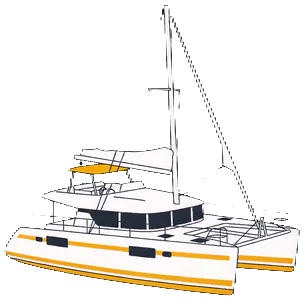
Catamarans have become increasingly popular for Italian Adriatic charters, particularly among families or less experienced crews. The shallow draft copes easily with the sandy northern bottom, and the stability in short Adriatic chop—which can be surprisingly unpleasant on a monohull in windy conditions—offers genuine comfort. Space and motion matter if you're sailing with people prone to seasickness, and a 40-foot catamaran provides more usable interior space than a comparable monohull, a meaningful advantage if your crew is five or six people.
Motorboats and motor yachts deserve consideration if your primary interest is diving, photography or covering distance rather than sailing. The Tremiti Islands' marine reserve, combined with the Gargano's sea caves and clear water, attracts underwater photographers and dive-oriented crews. A sturdy motorboat with reasonable fuel capacity and good stability makes sense for this profile, and it turns the long stretches between the Conero and the Gargano into a day's passage.
Four harbours provide the practical foundation for most Italian Adriatic charters:
Vieste sits directly on the Gargano, the obvious base if your charter focuses on the southern coast, the Tremiti Islands and sea-cliff exploration. The harbour is smaller than the major Mediterranean bases, but it's functional and local. Provisioning is straightforward; for longer charters, plan your shopping carefully.
Ancona is one of Italy's main Adriatic ferry and cargo ports, which means commercial complexity rather than tourist charm. That said, the Marina Dorica yacht harbour has good facilities, and Ancona works well as a base if you want to explore the Conero Riviera while keeping reliable services and provisioning close by. It's not romantic, but it's practical.
Marina dei Cesari in Fano provides well-developed yacht infrastructure on the central coast—secure berths, shore power, water and waste handling—without overwhelming tourism. The town itself is lively and manageable. From Fano, the Conero is roughly 50 kilometres away (a comfortable day's sail), while the Gargano is a passage of several days. Fano works well if you want to combine the Marche coast, the Conero and the northern harbours.
Manfredonia, on the southern side of the Gargano, gives access to the promontory's southern coast and the sea caves towards Vieste. It's less touristy than Vieste, which suits certain sailors. The harbour is functional; plan your provisioning accordingly.
Many charters start from Vieste or Fano, depending on the season and the route. These bases offer the right balance of infrastructure, sailing access and authentic Italian atmosphere without the crowds of major Mediterranean hubs such as Porto Cervo or Portofino.
The Adriatic's weather is neither tropical stability nor Atlantic chaos—it sits in a complex middle ground that rewards knowledge and penalises casual assumptions.
On most summer days, the dominant pattern is a thermal sea breeze from the north-west, the maestrale. It typically fills in around mid-morning, peaks in the afternoon at Force 3-4 and dies towards sunset. This predictability makes it appealing to less experienced crews; you can plan passages knowing that the afternoon breeze will carry you.
The Bora, a cold north-easterly that funnels down from the mountains behind Trieste, is strongest in winter and in the far north. In summer it blows only occasionally, usually for a day or two, and weakens further south; by the time it reaches the Gargano it is often Force 3-5. It brings rough water but clear skies and excellent visibility—fast sailing for experienced crews.
The Scirocco, a south-easterly that originates over North Africa, brings warm, humid air and hazy skies. It can occasionally strengthen to Force 6-7 and build steep Adriatic chop, but such events are infrequent from June to September.
The Adriatic's biggest weather challenge is its long fetch combined with shallow depth. The sea develops steep, short-period waves—often more uncomfortable than deeper Mediterranean waters in the same wind. A Force 4 in the Adriatic can feel rougher than a Force 4 in the Ionian, which matters if crew comfort ranks high in your priorities.
The main sailing season runs from June to September. June and September combine good sailing breezes with fewer boats than July and August. July and August bring the most settled weather and regular afternoon breezes, perfect for less experienced crews, though expect anchorages to be crowded—particularly around San Domino in the Tremitis and Vieste on the mainland. May and October are possible but less predictable, with lighter or more variable winds and quieter harbours.
On most days from June to September, you'll sail. Not necessarily dramatic sailing, but genuine wind sailing rather than motoring. The most typical condition is a 10-16 knot breeze in the afternoon, light and variable mornings and clear skies. Storms pass through occasionally but rarely linger; the high pressure that dominates the Mediterranean summer usually reasserts itself within a day or two.
Most charters run for seven days, Saturday to Saturday, which suits the Gargano and the Tremitis well. This itinerary assumes a monohull based in Vieste, June-July conditions and moderate crew experience.
Day 1: Vieste to Peschici (about 20 kilometres, 2-3 hours). A shakedown sail north-west along the Gargano coast, past the trabucchi. Boat familiarisation happens over modest distances with excellent scenery. Overnight in Peschici; dinner ashore in the old town.
Day 2: Peschici to the Tremiti Islands (about 40 kilometres, 5-6 hours). The first open-water passage. A typical June day brings a light morning breeze and the north-westerly sea breeze filling in around midday. San Domino's anchorage fills up by the afternoon; aim to arrive by 15:00 to secure a mooring buoy. In the evening, explore San Nicola's abbey and the coastal trails.
Day 3: Tremiti Islands rest day. Explore both islands, snorkel in the marine reserve and take a lazy lunch ashore. The moorings hold well in normal summer conditions; this is your decompression day.
Day 4: Tremiti Islands to Vieste (about 55 kilometres, 6-7 hours). A longer passage back around the Gargano's northern tip, usually a comfortable reach in the afternoon breeze. Overnight in Vieste gives you a town evening and a chance to reprovision.
Day 5: Vieste to Mattinata (about 35 kilometres, 4-5 hours). South along the cliffs, with stops at Grotta Campana, the Baia delle Zagare and the Architiello arch. Anchor off Mattinata or tie up in its small harbour.
Day 6: Mattinata to Manfredonia and back along the coast (about 30 kilometres in total). A short hop to Manfredonia for its castle, its fish market and Puglian cooking, or a lazy day between the coves if the weather invites it.
Day 7: Return to Vieste (about 50 kilometres, 5-6 hours). A last sail north along the sea-cave coast, arriving in time for the evening check-in and boat handover.
This itinerary assumes moderate winds and reasonable sea states. Adjust it to the actual weather and your crew's preferences; in total, the week covers roughly 230-250 kilometres and introduces most of the southern Adriatic's character.
The Italian Adriatic's culinary identity is fundamentally different from Mediterranean tourism. This is not Amalfi's lemon territory or Sardinia's expensive harbours. This is working-harbour food: what fishermen catch, what local farmers grow, what generations of recipes have proven reliable.
Brodetto is the signature dish of the central Adriatic coast, particularly around Ancona, the Conero and Fano. The recipe varies by town—fiercely—but the concept is consistent: a rich fish stew using several local species, tomato, vinegar or wine, garlic and herbs, often served over toasted bread. A proper brodetto takes time to prepare, and the Conero coast's restaurants take it seriously; expect it to be among the finest meals of your charter.
On the Gargano coast, some trabucchi still fish, and a few serve their catch as restaurants—grilled with olive oil, lemon and herbs. Orata (gilt-head bream) and branzino (sea bass) appear regularly; the catch varies with the season. Restaurants in Peschici and Vieste buy directly from local fishermen; asking what arrived that morning rather than reading the menu gives you genuine quality.
The Tremiti Islands' small restaurants depend on the daily catch and on supplies brought by ferry. Expect excellent seafood, simple preparation and prices somewhat higher than on the mainland. Book ahead in July and August; most restaurants close in winter.
Wine-wise, Verdicchio dei Castelli di Jesi, from the Marche hills inland from Ancona, is the central coast's signature white: crisp, with enough body to stand up to the region's fish-forward cooking. Rosso Conero, made from Montepulciano grapes on the slopes above the Conero Riviera, is the local red, and Montepulciano d'Abruzzo offers excellent value further south. Puglian reds from around Manfredonia tend towards more alcohol and deeper structure.
The broader cultural experience comes from recognising that this coast has kept much of its everyday character. Towns like Peschici, Fano and Manfredonia aren't theme parks; fishing still matters here, and seasonal tourism adds to local life rather than replacing it. That also means English is less common than in the major Mediterranean charter destinations, that many services slow down outside July and August, and that you're expected to respect local rhythms rather than bend them to charter-boat schedules.
Largely yes, with caveats. July and August see significant Italian domestic tourism; popular anchorages fill with local boats and day-trippers. June, September and early October remain substantially quieter. The Tremitis see crowds in peak season; the trabucchi coast between Peschici and Vieste stays relatively calm. The northern coast around Fano and Rimini attracts Italian families more than international tourists, which means a different kind of tourism rather than none. If quiet is your priority, May and October offer real solitude, with less predictable weather as the trade-off.
The northern Adriatic (Venice to Rimini) calls for more attention to depth than most Mediterranean areas. Harbour entrances and channels are dredged, but silting happens, and anchoring outside the channels means shallow water. Stay in marked channels, check the latest local information on harbour entrances and prefer marinas over open anchorages. From Ancona southwards, depth becomes much less of an issue, and around the Gargano and the Tremitis normal monohull drafts are fine. Catamarans, drawing about 1.1-1.5 metres, have the fewest restrictions along the whole coast.
August brings the most settled weather and the most regular afternoon breezes, which makes it a good choice for crews who value comfort and predictability. However, it also brings the most crowded anchorages, the highest prices and the busiest harbours. June and September offer very similar sailing conditions with far fewer boats and more genuine contact with local life. If your crew is experienced, May and October can be rewarding; if it includes non-sailors or anyone prone to seasickness, the calmer summer months justify the trade-offs.
Possibly, but it needs planning. From the Gargano, the Croatian islands of Vis and Lastovo lie across open water to the north-east, a passage of well over 100 kilometres. Leaving Italian waters requires the charter company's explicit permission, crew documents and entry formalities, and many charter companies do not allow it on a standard week. Ask before you book, and if a crossing is allowed, plan it with a proper weather window.
Vieste puts you straight into the southern Adriatic's best sailing territory; the Tremitis and the Gargano coast are your cruising ground, and anything further north needs deliberate passage planning. Fano puts you centrally; you can reach the Conero Riviera to the south or the Romagna coast to the north with similar effort. Vieste offers more dramatic scenery and more of a "sailing destination" feel; Fano offers more marina infrastructure and flexibility for mixed crews. For a first Italian Adriatic charter, Vieste suits crews who want a single, spectacular focus; Fano suits crews who want variety.
The Italian Adriatic remains one of Europe's most underrated sailing grounds, precisely because it lacks the marketing and famous-name appeal of Sardinia, the Amalfi Coast or the Greek islands. The Adriatic asks for engagement—understanding wind patterns, respecting local harbour customs, accepting that some anchorages won't have postcard backdrops, and recognising that the sailing itself is the point rather than an add-on to resort amenities.
If that appeals to you—if you're drawn to genuine sailing, authentic local food, dramatic sea geology and places most European tourists rarely visit—then the Italian Adriatic delivers in ways that polished Mediterranean hotspots cannot. The Tremiti Islands' water is cool and remarkably clear, the trabucchi coast is quieter than almost any other Mediterranean cliff coast, and Vieste will surprise you with how genuinely it still works as a fishing harbour despite its obvious beauty.
Boat4You helps you match the right yacht with the right cruising ground and the right crew expectations. Our team knows the Italian Adriatic's particular character and the practicalities of chartering from less famous bases. Start by exploring available boats in our Italian sailing destinations, then check the Italian Adriatic availability for your preferred dates.
If questions remain about what's feasible for your crew, experience level or goals, our FAQ section covers the technical and practical details. To see how Boat4You handles your booking, provisioning requests and support before and during the trip, read how we work. And if you'd like to know more about us, our company background provides that context.
The Italian Adriatic is waiting. It's a coast that reveals itself gradually, that rewards attention and seamanship, and that offers memories that last longer than photographs.
Updated October 1, 2026
| Month | Typical week | Middle half of weeks |
|---|---|---|
| Oct 2026 | 3,586 € | 2,954 € – 4,000 € |
| Nov 2026 | 3,282 € | 1,661 € – 4,093 € |
| Dec 2026 | 3,282 € | 1,661 € – 4,093 € |
Computed every night from the 7-night charter offers of the next 12 months for the boats based here. Prices are for the boat per charter week; skipper, extras and deposit are separate, and figures based on fewer than 5 boats or offers are left out. Amounts in euros (EUR).