Your search
Spain
170
boats available · live
500 € – 200,000 €
500 €200K €
1 – 42 guests
142
0 – 42 berths
042
14.76 – 56 m(48–184 ft)
14.76 m56 m
2000 – 2028
20002028
0 – 20 toilets
020
5 – 7,296 hp(4–5,436 kW)
5 hp7,296 hp
Prices shown are each boat's cheapest available 7-night week. Choose your dates for exact prices.
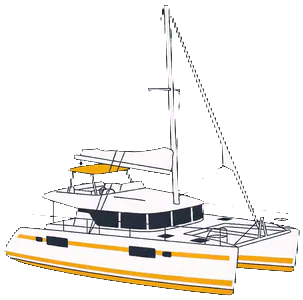
Spain catamaran charter represents one of Europe's most sophisticated sailing markets. The combination of stable twin-hulled platforms, consistent Mediterranean winds, and world-class anchorages makes catamarans the preferred choice for serious charterers exploring Spanish waters. From the glittering Balearic Islands to the rugged Atlantic coast of Galicia, Spain's diverse cruising grounds demand vessel stability and comfort that catamarans deliver with distinction. Whether you're planning a bareboat charter with Boat4You or seeking crew-managed luxury, understanding Spain's catamaran market is essential for optimizing your investment and experience.
The Mediterranean's reputation for stability makes it natural catamaran territory, yet Spanish waters present distinct advantages for twin hulls. The Balearic archipelago—comprising Mallorca, Ibiza, Menorca, and Formentera—experiences predictable thermal wind patterns, particularly the Embat, a reliable afternoon breeze that builds along Mallorca's leeward coast. Catamarans leverage this consistency with superior upwind performance and reduced healing compared to monohulls, allowing guests to remain comfortable during all-day sailing passages.
Shallow-draft catamarans excel in Spanish anchorages where monohull keels create clearance challenges. The Balearics' numerous protected bays and islands demand a vessel that can reach anchorages like Cala Goloritzé, Cala Macarella, and Sa Calobra with confidence. Catamaran platforms also provide unmatched interior volume relative to length—critical in Spain's premium market where onboard amenities command significant charter rates. The spacious saloons, dedicated crew cabins, and expansive sundeck areas justify the premium positioning of catamaran fleets run by our partner operators.
Spanish chartering regulations, including PER (Patrón de Embarcaciones de Recreo) license requirements for bareboat operations, typically favor vessels under 24 meters. Modern catamarans in the 40- to 50-foot range meet these thresholds while delivering the comfort and performance demanded by discerning international charterers. The twin-engine configuration provides redundancy valued by insurance underwriters and safety-conscious operators navigating busy Mediterranean shipping lanes.
Spain's geography creates four distinctive catamaran cruising zones, each offering unique characteristics and charter appeal.
Balearic Islands (Mallorca, Ibiza, Menorca, Formentera): This remains Spain's primary catamaran destination, accounting for 60–70 percent of Mediterranean charter activity. Mallorca's capital, Palma, anchors the region with world-class marinas including Real Club Náutico and Club Marítimo Portopí. A typical week navigates between Mallorca's eastern bays (Cala d'Or, Santueri anchorage) and the Pityusic islands of Ibiza and Formentera. The Ibiza-Formentera passage—approximately 12 nautical miles—represents ideal catamaran sailing, with consistently favorable winds and minimal sea state. Menorca's northern ports of Fornells and Ciudadela attract charterers seeking less-developed but equally magnificent anchorages. Posidonia seagrass beds, protected by Spanish environmental law, restrict anchoring in many Balearic bays; catamarans' shallow draft and reduced anchor damage make them preferable in sensitive zones.
Galician Rías (Costa da Morte, Ría de Muros, Ría de Arousa, Ría de Pontevedra): Spain's Atlantic coast presents a contrasting experience. Based from Vigo or A Coruña, charterers explore the dramatic Rías Bajas—submerged river valleys creating fjord-like conditions. Catamarans thrive in these Atlantic swells, their motion-dampening hulls smoothing the chop common along exposed coastlines. The Estuary of Arousa and protected inner reaches of Pontevedra attract charterers seeking Galician seafood culture, small fishing villages, and unspoiled sailing. Winds here are lighter and more variable than Mediterranean patterns, favoring the twin-engine security catamarans provide.
Costa Brava (Barcelona to Girona): Based from Barcelona, catamaran charters access Spain's northeastern coast with its dramatic cliffs, medieval ports (Tossa de Mar, Lloret de Mar), and proximity to French waters. The Montserrat coastal formation creates natural wind acceleration corridors. Day-charter operations dominate this region, with catamarans' spacious decks and stability preferred for groups of 8–12 guests.
Canary Islands (Tenerife, Gran Canaria, La Palma): Spain's Atlantic holdings present year-round charter potential with consistent trade winds and Atlantic swell. Catamarans' motion characteristics make them exceptionally popular in these exposed waters, where monohulls would generate significant discomfort. Inter-island passages reach 40+ nautical miles, demanding vessel seaworthiness that modern catamarans provide reliably.
Catamaran performance in Spanish waters stems from hull engineering designed for the Mediterranean's specific conditions. The shallow draft—typically 1.2–1.5 meters versus 1.8–2.4 meters for comparable monohulls—enables access to anchorages unavailable to traditional sailing yachts. Palma's marina cluster, including Puerto Portopí and Porto Pí, accommodates thousands of vessels; catamaran skippers navigate tight channel approaches and compress mooring procedures with confidence that monohull crews cannot match.
Interior volume yields practical advantages beyond comfort. Catamaran galleys in the 45-foot range rival luxury motor yachts' culinary spaces, supporting extended provisioning and onboard entertaining. Separate owner's and guest cabin configurations accommodate family groups and diverse crew hierarchies. Air conditioning systems, increasingly standard in charter fleets, utilize the expansive accommodation available in catamaran designs.
Twin-engine redundancy addresses Spanish insurance requirements for bareboat charters. Should a single diesel engine require service during a charter week, catamarans remain maneuverable with alternate propulsion. Fuel efficiency—catamarans cruise at 8–10 knots consuming 15–20 liters per hour—matters economically over week-long itineraries, particularly when accommodating 6–8 guests across multiple cabins.
Stability aloft creates marked advantages for sail handling. Spanish wind patterns, while reliable, can gust rapidly due to coastal orography. Catamarans' inherent resistance to heeling reduces crew fatigue during long-distance passages and allows guests unfamiliar with sailing to move freely on deck during moderate winds. The wide beam improves safety around auxiliary equipment—davit systems for tender deployment, bimini frames, and solar panel arrays position closer to the centerline, reducing overboard risk.
Charter rates reflect vessel condition, season, and base location. Premium bareboat catamarans in the 40–45-foot range based in Palma command €4,500–€7,500 weekly during July-August peak season. Shoulder seasons (May-June, September-October) discount 25–35 percent, positioning rates at €3,200–€5,200 weekly. Winter rates (November-April) in the Balearics decline to €2,500–€4,000 as charter volume decreases, though Christmas and Easter peaks restore higher pricing.
Galician bases (Vigo, A Coruña) operate on lower rate structures: €2,800–€4,500 peak season, reflecting reduced international demand and lower operational overhead. Costa Brava charters from Barcelona occupy mid-market territory: €3,500–€5,800 weekly, with significant variation based on proximity to urban centers.
Skipper and crew fees are shown on each boat's page. Multi-week discounts typically apply: 15–20 percent reductions for 14+ day charters. Boat4You offers comprehensive pricing transparency through its search platform; comparing equivalent vessels across seasons and bases reveals value optimization opportunities unavailable through traditional brokers.
Additional expenses include fuel (typically €1,500–€2,500 weekly), flotilla fees (€150–€400), mooring fees at premium locations like Palma's Real Club Náutico (€50–€80 daily), and damage waiver insurance (typically 10–15 percent of weekly rate). Crewed charters include provisions and staff costs in quoted rates. Budget-conscious groups benefit from May-June or September-October scheduling, when rates decline substantially while weather remains optimal.
Spain's sailing seasons divide into four distinct periods, each with merit for different objectives.
Palma, Mallorca: Spain's premier catamaran base hosts charter vessels across multiple operators. The Real Club Náutico Español de Vela, Club Marítimo Portopí, and extensive private marina infrastructure support bareboat and crewed operations. June-September dominates, with reliable 12–18-knot thermal winds and stable high-pressure systems. October-May operates successfully though with reduced availability; winter storms occasionally necessitate itinerary flexibility. Palma's proximity to the Ibiza-Formentera triangle and Menorca creates natural routing for week-long charters. Provisioning, repair services, and crew availability here exceed all other Spanish bases.
Ibiza: This port combines international tourism infrastructure with authentic Mediterranean sailing. Marina Botafoch accommodates superyacht-scale catamarans; smaller vessels anchor in secure holding areas. Ibiza's 24-hour culture creates synergies for crewed charters serving entertaining clientele. Shorter 3- to 5-day itineraries dominate, with the Ibiza-Formentera passage and nearby Mallorca reaches favored by time-constrained charterers. Peak season (July-August) fills inventory rapidly; June and September offer better availability with comparable weather.
Dénia, Costa Blanca: This emerging catamaran base serves Barcelona-origin demand without navigating busy metropolitan ports. Dénia's proximity to Ibiza (40 nautical miles) and Mallorca (100 nautical miles) positions it as an alternative for guests prioritizing convenience over dramatic coastal scenery. May through October represents optimal sailing; winter wind patterns here shift, reducing appeal for catamarans dependent on coastal thermals.
Vigo, Galicia: Atlantic charters favor this southern Galician port for its position at the Rías Bajas threshold. Vigo's tourism infrastructure, while less developed than Palma's, supports growing catamaran operations. June-September presents consistent trades and manageable Atlantic swells. Spring (April-May) and fall (September-October) often offer superior sailing conditions—stronger wind consistency and lower tourist congestion—making these periods attractive for serious cruisers. Winter Atlantic storms mandate insurance provisions and experienced crew oversight.
Seasonal Considerations: May-June represents the optimal window across all bases: water temperatures reach 18–20°C (comfortable for swimming), provisioning systems operate at full capacity, charter rates discount 20–25 percent from July-August peaks, and wind patterns establish consistency without mid-summer thermal volatility. September-October mirrors these advantages with post-summer availability improvements. July-August prioritizes families requiring school holidays; advanced booking becomes essential. November-April suits experienced sailors comfortable with reduced charter support infrastructure and weather variability; Atlantic-based charters here present particular challenges due to winter storm systems.
A representative 7-day catamaran charter from Palma demonstrates seasonal sailing patterns.
Day 1 (Palma to Andratx): Depart Real Club Náutico early morning, clearing Palma's commercial port and establishing sailing rhythm with guests unfamiliar with the vessel. The 20-nautical-mile southwesterly passage to Andratx's protected harbor generates consistent 12–14 knots, allowing guests to practice sail handling and develop confidence. Afternoon beach visit to Playa de Camp de Mar; evening mooring at Club Náutico d'Andratx.
Day 2 (Andratx to Dragonera): Visit Mallorca's southwestern extremity, navigating past Isla Dragonera (an uninhabited protected nature reserve). The 8-nautical-mile passage provides excellent snorkeling opportunities; afternoon beach lunch at Cala Estellencs. Return to Andratx or progress toward Estallenchs, depending on guest interests and weather patterns.
Days 3–4 (Eastern Mallorca): Traverse Mallorca's eastern coast, visiting Cala d'Or, Santanyí, and the Mondragó National Park coastline. These destinations showcase Balearic topography—dramatic limestone cliffs, sandy coves, and Posidonia meadows visible from shallow anchorages. Catamarans' shallow draft permits secure anchoring within cove sanctuaries where monohulls cannot reach. Snorkeling and beach exploration dominate daily schedules.
Day 5 (Mallorca to Ibiza): Navigate the 50-nautical-mile passage to Ibiza. Depending on wind direction, the routing may encompass Cabrera Island (a national maritime park) or direct coursing. Afternoon arrival at Marina Botafoch; evening provisioning and crew transition (if applicable). Ibiza's restaurant and nightlife scene complements sailing itineraries for groups prioritizing entertainment.
Day 6 (Ibiza to Formentera): The 12-nautical-mile passage represents quintessential Mediterranean catamaran sailing—warm shallow waters, consistent 10–12-knot breezes, and pristine anchorages. Formentera's undeveloped eastern coast provides anchorages unavailable elsewhere in the Balearics. Sunset swimming and beach dinners create memorable experiences. Ibiza Town's night return accommodates late-season schedules.
Day 7 (Return to Palma): Reverse routing northeastward, timing for morning arrival to permit crew changeover and guest departure logistics. This itinerary generates 200+ nautical miles of sailing, optimal for week-long charters balancing transit and destination time.
Spain's position as Europe's premier Mediterranean sailing destination reflects decades of chartering infrastructure development, consistent weather patterns, and protected anchorages ideally suited to catamaran operations. Whether you're planning a family's first bareboat adventure, assembling a crewed charter for corporate entertainment, or executing a multi-week exploration of Spanish waters, catamarans deliver the stability, comfort, and performance demanded by sophisticated international charterers.
Boat4You connects discerning clients with Spain's most comprehensive catamaran inventory across Mallorca, Ibiza, Galicia, and emerging regional bases. Our transparent pricing platform, detailed vessel specifications, and customer reviews eliminate information asymmetries plaguing traditional brokers. Search our Spain catamaran charter inventory, compare rates across seasons and bases, and secure your ideal vessel with confidence. For additional guidance on base selection, crewing services, or complex itinerary planning, consult our how we work guide or explore our company background.
Need answers before committing? Our comprehensive FAQ addresses common chartering questions. For Spain-specific voyaging inquiries, browse our full Spain charter portfolio or contact our team directly for personalized recommendations tailored to your group size, sailing experience, and schedule constraints.
Booking a yacht charter should be transparent from the first enquiry. Boat4You publishes the full price — vessel, mandatory extras, tourist tax, cleaning, transit log — before you commit. You see the boat's inventory, the operator's certifications, and the exact contract terms. No hidden surcharges. No pre-authorisations you discover only at the dock.
Our specialists speak multiple languages and know the local fleets personally. If weather changes your plans, if an item on the inventory is missing, if a port closes unexpectedly — we resolve it quickly, using real relationships built over years of cooperation with verified operators.
Most operators request 30–50% at contract signing with the balance due 4–6 weeks before departure. Exact terms appear on your quotation before you commit.
Yes — typically €2,000–€5,000 blocked on your card at check-in, released after a clean handover. A damage-waiver upgrade reduces or eliminates the hold; ask your consultant for the options on your chosen boat.
Clients book again with us because the experience is simple, human, and reliable. We do the boring parts — contract clauses, fleet vetting, port paperwork, emergency contacts — so you focus on the sailing. We hold operators accountable when something slips, we remember your preferences from trip to trip, and we treat every booking as if it were our own.
Yes — split weeks, multi-boat fleet charters for larger parties, and mixed bareboat-and-skippered packages are all possible. Tell us your group size and dates; our consultants assemble the options.
We coordinate all of it on request: airport transfers, pre-charter hotel nights, skipper-led provisioning runs, crew transfers between ports. Everything on one invoice, one point of contact.
For peak season (July and August), reservations 4–6 months ahead secure the best fleet selection and pricing. Shoulder months (May, June, September) typically allow booking 6–8 weeks out.
Base pricing usually covers the vessel, insurance, and marina fees at the home base. Fuel, provisioning, skipper service, end-cleaning, and tourist tax are generally added separately. Check the specific listing on Boat4You for a full breakdown.
For bareboat charter, a valid skipper licence plus a VHF certificate are typically required, and rules vary by country. If you don't hold one, hiring a professional skipper is straightforward.
Updated October 11, 2026
Cheapest month: January 2027. Most expensive month: August 2027.
| Month | Typical week | Middle half of weeks |
|---|---|---|
| Nov 2026 | 5,310 € | 3,411 € – 9,144 € |
| Dec 2026 | 4,925 € | 3,325 € – 9,500 € |
| Jan 2027 | 4,594 € | 3,420 € – 10,705 € |
| Feb 2027 | 5,124 € | 3,534 € – 10,705 € |
| Mar 2027 | 4,684 € | 3,709 € – 10,602 € |
| Apr 2027 | 5,654 € | 3,962 € – 11,927 € |
| May 2027 | 6,814 € | 5,124 € – 11,927 € |
| Jun 2027 | 9,246 € | 6,775 € – 15,373 € |
| Jul 2027 | 10,190 € | 7,220 € – 17,770 € |
| Aug 2027 | 10,289 € | 7,461 € – 17,281 € |
| Sep 2027 | 7,426 € | 5,773 € – 12,722 € |
| Oct 2027 | 6,136 € | 4,413 € – 10,602 € |
Computed every night from the 7-night charter offers of the next 12 months for the boats based here. Prices are for the boat per charter week; skipper, extras and deposit are separate, and figures based on fewer than 5 boats or offers are left out. Amounts in euros (EUR).