Your search
Sardinia
161
boats available · live
500 € – 200,000 €
500 €200K €
1 – 42 guests
142
0 – 42 berths
042
14.76 – 56 m(48–184 ft)
14.76 m56 m
2000 – 2028
20002028
0 – 20 toilets
020
5 – 7,296 hp(4–5,436 kW)
5 hp7,296 hp
Prices shown are each boat's cheapest available 7-night week. Choose your dates for exact prices.
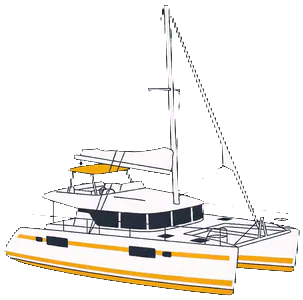
Catamarans dominate Sardinia's charter market because they excel in Mediterranean conditions. The dual-hull design provides unmatched stability in choppy thermal winds, shallow draft (1.2–1.5 meters) enabling exploration of rocky archipelagos, and exceptional cabin space—typically 4 cabins for 8–10 people, each with en-suite heads. Boat4You Sardinia catamaran fleet spans 40–50 feet LOA, offering flexibility from intimate four-person weekends to full-capacity family vacations and corporate retreats.
For Sardinia's signature Maestrale thermal wind (May–September, 12–18 knots typical), catamarans are ideal. The shallow-V hull design maintains speed and directional stability across thermal gusts and lulls without excessive heel; wide beam provides comfortable deck space for crews managing sails or simply relaxing during peak afternoon wind; and generous cabin dimensions allow retreat below during the hottest afternoon hours without feeling confined.
Non-sailor groups particularly favor catamarans. Monohull yachts can feel heeled and claustrophobic to non-sailors in wind; catamarans remain nearly level even in 20+ knot conditions. The open deck layout and cushioned seating areas encourage socializing and lounging. Modern catamarans include hardtop sun canopies covering 60–70% of exterior deck space, providing shade without the closed-feeling of enclosed pilot houses.
A typical Boat4You Sardinia catamaran (45–48 feet) features: twin engines (200–250 hp each, Yanmar diesel standard), dual rudders enabling tight turning radius and responsive helm, and fuel capacity supporting 400+ nautical miles at economical cruising speeds (8 knots motor-sailing). Sails include full mainsail (typically roller-furled for ease of handling), twin jibs or single roller-furling genoa, and spinnaker option for downwind reaching.
Below deck: separate master cabin (queen bed, 8 x 8 feet typical), three guest cabins (singles or doubles, 6 x 7 feet typical), two full heads with shower stalls, full galley with refrigeration and freezing, and spacious saloon with dining table seating 8–10. Auxiliary electronics: chartplotter with detailed Italian hydrographic data, SSB radio and VHF for communication, GPS chartplotter, wind instruments, and depth sounder. Modern catamarans include air-conditioning and cabin heating (diesel burners), ensuring comfort year-round despite Sardinia's thermal wind extremes.
Catamarans achieve 6–8 knots pure sailing in the typical Maestrale (12–15 knots); under power-assist, they sustain 8–9 knots; under power alone, 10–12 knots depending on sea state. Upwind performance is moderate—catamarans tack efficiently but don't point as high as monohulls. Downwind and reaching (Sardinia's typical wind angle to northern route destinations), catamarans excel: wide beam enables large downwind headsail sets, and shallow-V hull maintains speed through varying swell patterns.
Tacking in Maestrale thermal squalls is manageable. The dual-rudder system provides precise directional control even with gusts reaching 25 knots; mainsail and jib handling is straightforward (most catamarans feature roller-furling, minimizing manual sail deployment); and deck layout is spacious enough for three crew to manage sails safely without crowding. The captains brief all crews on catamaran-specific sailing techniques: maintaining pressure on the rudders during tacks, adjusting jib trim for shallow-V hull efficiency, and using auxiliary power to assist in very light wind or complex maneuvering.
Catamarans excel at motor-sailing—combining auxiliary diesel with partial sail set to reduce fuel consumption while maintaining speed. On light Maestrale mornings (8–10 knots), crews often motor-sail: main at 30% power, jib at quarter-set, engines running steady 6 knots. This approach stretches limited Maestrale days and ensures schedule adherence for multi-day itineraries with fixed end dates.
Full-motor passages are common from Olbia to northern La Maddalena islands (20 km, roughly 2.5 hours under power). Motor-sailing provides flexibility: if midday Maestrale builds more than forecast, drop engines and sail; if afternoon conditions underwhelm, continue motor-sailing toward next anchorage. This adaptability is priceless for mixed-experience crews and families with tired children.
Four-cabin catamarans comfortably accommodate 8 people for week-long charters. Master cabin provides privacy for couples; three guest cabins suit families, pairs, or solo travelers. The split-cabin arrangement avoids the claustrophobia of dense monohull layouts. Each cabin includes individual reading lights, adequate ventilation (opening portholes plus through-hulls), and storage for personal gear. Climate-controlled cabins maintain 72–76°F (22–24°C) year-round via reversible air-conditioning systems powered by dual diesel generators.
The galley is fully equipped: residential-range refrigerator and freezer (powered by 110V inverter from engines or shore power), three-burner stove with oven, microwave, dishwasher (on newer models), and ample counter and storage space. Week-long charters typically include a provisioning budget and meal planning guidance; self-catering crews manage their own menus. All-inclusive crewed charters include professional chef, eliminating provisioning and cooking duties.
The saloon functions as social hub: U-shaped seating surrounds a dining table for 8–10; overhead hatches provide light and ventilation; and a television/media system (on newer catamarans) enables evening entertainment. Most crews spend evenings aboard swapping sailing stories, playing board games, or stargazing from the deck. Night sailing (if desired) is managed by professional watch systems; bareboat crews typically stay in harbor overnight, returning to land-based accommodations or sleeping aboard at anchor.
Shallow draft (1.2–1.5 meters) enables catamaran exploration of Sardinia's most pristine anchorages. La Maddalena archipelago islands (Spargi, Budelli, Razzoli, Gabbiani) feature sandy-bottom anchorages in 6–12 meters; monohull yachts with deeper keels (2.0–2.5 meters) must anchor in deeper water farther from shore. Catamarans glide into shallower positions, closer to island beaches and coral reefs, maximizing snorkeling opportunities and aesthetic appeal.
Northwest Corsica (Bonifacio town, Scandola Nature Reserve) includes dramatic granite sea cliffs rising 300+ meters. The Bocche di Bonifacio narrows between Sardinia and Corsica funnels current and wind, creating challenging passages best managed in light wind. Catamarans' shallow draft and dual rudders handle Bocche conditions more gracefully than deep-keeled monohulls; experienced crews find the 12 km transit exhilarating rather than intimidating.
Southwest Sardinia (Carloforte, San Pietro island region) features dramatic rocky outcrops and isolated coves. Monohulls must anchor in deeper water to avoid keels striking rocks; catamarans position closer to dramatic formations, enabling photography, snorkeling, and intimate connection with Sardinian coastal geology.
Dual-hull catamarans provide exceptional stability in rough seas. The wide beam (up to 24 feet on 48-foot catamarans) and dual-hull design enable seas that might heel a monohull 30+ degrees to keep a catamaran nearly level at 10–15 degrees. For non-sailors, families, and those prone to seasickness, this stability is transformative. Sardinia's thermal Maestrale conditions (while strong, rarely exceed 25 knots) produce 2–3 meter seas; catamarans respond with gentle motion rather than dramatic pitching.
Catamarans on Boat4You carry full safety equipment: inflatable life rafts (capacity exceeding vessel population), EPIRB (Emergency Position Indicating Radio Beacon), flares, life jackets, first-aid kits, and fire-suppression systems. Bareboat crew must complete orientation on safety procedures; skippered charters include captain-led safety briefing covering man-overboard recovery, abandon-ship procedures, and emergency communication protocols.
Bareboat Sardinia catamarans require a skipper holding a boating licence recognised in Italy, such as the ICC or a national licence. Evidence of 100+ sea miles in catamarans (or similar multihull) within 5 years is standard requirement. Additional crew (2–3 people) should have basic sailing knowledge: ability to handle lines, trim sails safely, and understand basic navigation. The base team gives a detailed orientation on catamaran-specific systems and Sardinia sailing conditions; most bareboat charters include a 2–3 hour pre-departure briefing covering propulsion, electricity, water, sanitation, navigation tools, and emergency procedures.
Skippered charters bypass certification requirements. Boat4You assigns experienced English-speaking captains familiar with Sardinia's ports, anchorages, and wind patterns. Captains manage navigation and safety; guests participate in sailing (learning hands-on if desired) or relax below and enjoy cruising. Most mixed-experience groups opt for skippered charters, gaining professional guidance while avoiding certification hassles.
7-Day Northern Route (Olbia base): Depart Olbia (Day 1), sail north 15 km to Porto Cervo (Day 2), continue to La Maddalena islands for 3–4 days island-hopping (Razzoli, Spargi, Budelli anchoring), transit dramatic Bocche di Bonifacio passage (Day 5), brief Corsica exploration or return passage, finish with return to Olbia (Day 7).
10-Day Extended Northern Route: Add Alghero and Stintino to the northern itinerary. Depart Olbia, sail north past Porto Cervo to Alghero (50 km, 6 hours), explore north coast (Stintino, 2 hours further), then return south through La Maddalena and Bocche di Bonifacio, finishing Olbia.
10-Day Eastern/Southern Mix (Olbia base): Sail south from Olbia along Costa Smeralda, provisioning stops at small harbors (Portisco, Marinella), explore eastern coast, return north.
Ready for multihull comfort and stability in Sardinia's beautiful waters? Visit Boat4You's Italy catamaran search to explore available vessels, compare pricing, and review capacity and specifications. Each listing includes detailed photos, cabin layouts, equipment inventories, and previous guest reviews. Search by dates, duration, and group size to find your ideal catamaran charter.
Questions about catamaran handling, provisioning, or Sardinia sailing? Visit how we work for transparent information on pricing, cancellation, and crew expectations. Learn why Boat4You is trusted by thousands for Mediterranean sailing at our about us page.
Catamarans cruise at 6–8 knots in typical sailing conditions, similar to performance-cruising monohulls. Racing monohulls are faster upwind; downwind (Sardinia's typical wind angle), catamarans match or exceed monohull speeds. Motor-sailing is faster: 8–9 knots catamaran vs 6–7 knots monohull due to superior hydrodynamics under power.
Absolutely. Catamarans are more forgiving than monohulls: stable, spacious, easier helm response, and excellent visibility from helm. Beginners on skippered charters learn basic sail handling in relaxed environment. Bareboat charters suit experienced crews (hold valid certification) regardless of vessel type.
Eight people maximum for week-long charters (4 cabins, 2 heads). Shorter day charters can accommodate 10–12 if bathroom access is shared and sleeping isn't required. Most charter guests prefer 6–8 people for optimum comfort and social harmony.
Light wind means slower progress but not necessarily disappointment. Motor-sailing at 8–9 knots reaches destinations reliably; anchorages are calm (ideal for swimming, snorkeling, and water sports); and fewer other yachts are sailing (harbors less crowded). Summer Maestrale rarely vanishes entirely; even light-wind days include afternoon thermal build.
Yes. Catamarans offer spacious, safe decks with railings and netting; shallow-water anchorages (2–4 meters) in La Maddalena enable wading and supervised swimming; dingy access to beaches is convenient; and cabin climate control allows rest days if needed. Confirm age and swimming ability when booking; skippers adjust itineraries for family safety.
Start by browsing available boats on the search page, or check the FAQ for common questions. New to chartering? See how the booking works.
Updated October 11, 2026
Most expensive month: August 2027.
| Month | Typical week | Middle half of weeks |
|---|---|---|
| Nov 2026 | 4,703 € | 3,615 € – 5,700 € |
| Dec 2026 | 4,893 € | 4,069 € – 5,993 € |
| Jan 2027 | 5,045 € | 4,208 € – 6,047 € |
| Feb 2027 | 5,045 € | 4,208 € – 6,175 € |
| Mar 2027 | 4,898 € | 3,976 € – 5,918 € |
| Apr 2027 | 4,969 € | 3,976 € – 6,052 € |
| May 2027 | 5,468 € | 4,478 € – 7,313 € |
| Jun 2027 | 7,838 € | 6,345 € – 9,754 € |
| Jul 2027 | 9,813 € | 8,258 € – 12,893 € |
| Aug 2027 | 10,045 € | 7,960 € – 13,264 € |
| Sep 2027 | 6,781 € | 5,445 € – 8,677 € |
| Oct 2027 | 5,344 € | 4,140 € – 6,460 € |
Computed every night from the 7-night charter offers of the next 12 months for the boats based here. Prices are for the boat per charter week; skipper, extras and deposit are separate, and figures based on fewer than 5 boats or offers are left out. Amounts in euros (EUR).