Your search
Italy
549
boats available · live
500 € – 200,000 €
500 €200K €
1 – 42 guests
142
0 – 42 berths
042
14.76 – 56 m(48–184 ft)
14.76 m56 m
2000 – 2028
20002028
0 – 20 toilets
020
5 – 7,296 hp(4–5,436 kW)
5 hp7,296 hp
Prices shown are each boat's cheapest available 7-night week. Choose your dates for exact prices.
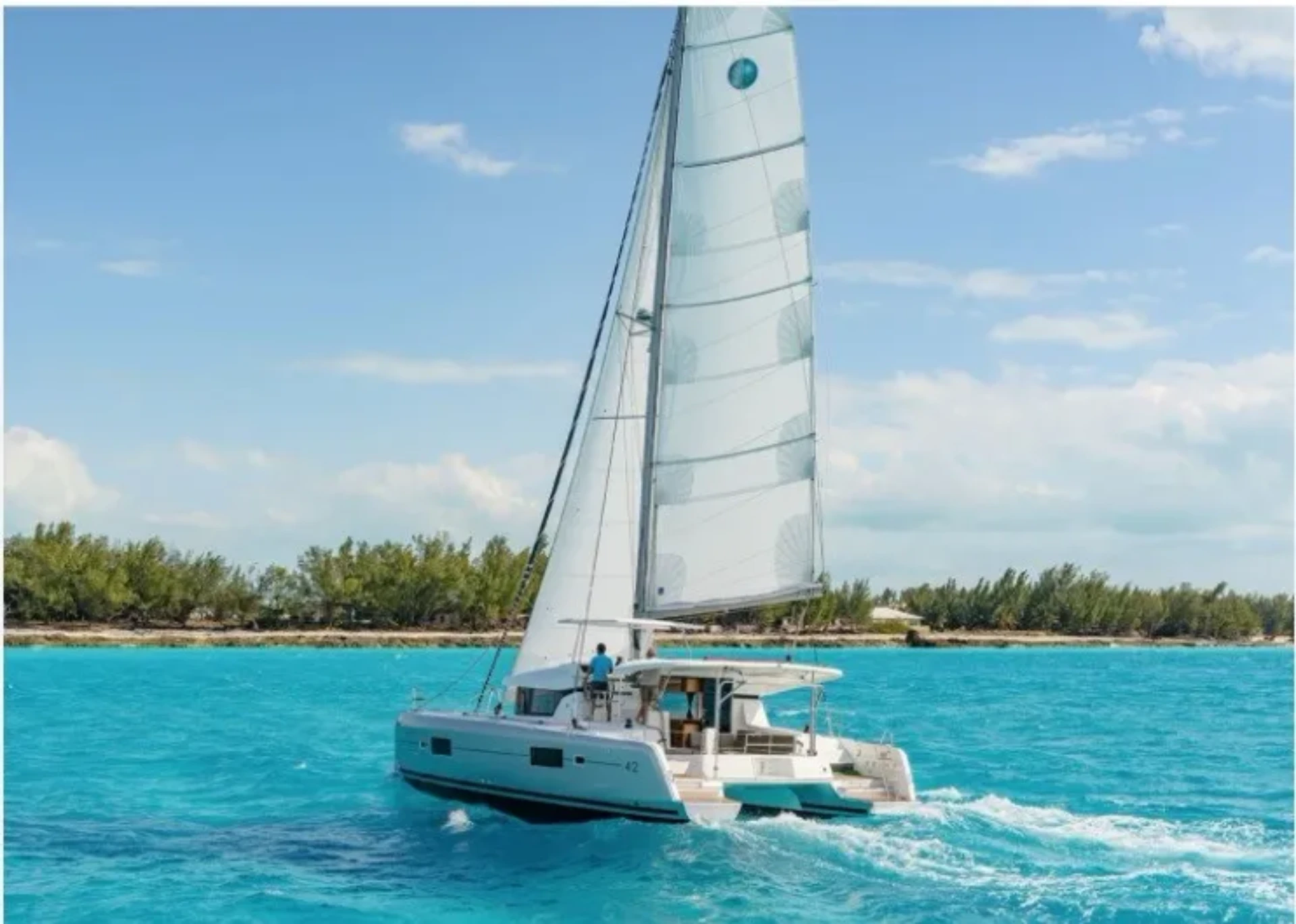
Italy represents the pinnacle of Mediterranean yacht chartering, where ancient coastal landscapes meet modern nautical excellence. A catamaran charter in Italy combines stability, comfort, and exceptional onboard space—the ideal platform for exploring Sardinia's turquoise waters, the Amalfi Coast's dramatic cliffs, Sicily's volcanic islands, and the Tuscan Archipelago's hidden anchorages. Italy's charter fleet, while more selective than Croatia or Greece, emphasizes quality over quantity, with meticulously maintained catamarans operated by experienced brokers who understand regional nuances. Whether you seek cultural immersion in Mediterranean village ports or leisurely bareboat sailing, an Italy catamaran delivers both sophistication and performance.
Italy's diverse coastlines demand a vessel that balances comfort with capability. Catamarans excel in the Mediterranean's variable conditions: their twin hulls provide exceptional stability in the Mistral winds that sweep the Tyrrhenian Sea, while shallow draft designs navigate Sardinia's crystalline bays and Sicily's narrow straits with ease. The spacious salone and aft deck—hallmarks of catamaran design—make multi-day passages around Capri, Ischia, and the Aeolian Islands significantly more enjoyable than monohull equivalents.
Italian mooring infrastructure, particularly in crowded destinations like Portofino and Positano, favors wider-beam vessels. Modern catamarans (45–55 feet) slip into Mediterranean buoy systems designed for stability and shallow-draft cruising, whereas narrower monohulls risk windage issues in tight anchorages. Furthermore, catamarans' superior fuel efficiency reduces operational costs on longer passages from Liguria down to Campania—a critical consideration given Italy's premium fuel pricing.
The Aeolian Islands present volcanic topography with deep water mere meters from shore. Catamaran hull design—particularly shallow draft with robust anchor systems—handles Stromboli's and Vulcano's dramatic bathymetry more reliably. Swell management around these exposed islands benefits from twin-hull motion reduction, allowing guests to relax in moderate swells that would challenge traditional displacement monohulls.
Sardinia stands as Italy's catamaran charter epicenter, with primary bases at Portisco and Cannigione offering direct access to protected La Maddalena Archipelago. This granite-studded preserve spans seven major islands and countless anchorages tailored for catamaran beam and draft. Maddalena Town itself provides provisioning and cultural exploration; nearby Caprera Island preserves Giuseppe Garibaldi's legacy. The Costa Smeralda's glittering Porto Cervo, though pricey, delivers world-class facilities and Michelin-starred dining. Catamarans excel here: La Maddalena's buoy fields accommodate wider vessels, while twin hulls maintain stability when anchoring in 30-meter depths near Spargi and Budelli islands. Cannigione, less fashionable than Porto Cervo, offers authentic Sardinian charm—sardine pasta, murex shell restaurants, and welcoming boatyards familiar with catamaran maintenance.
The Campania region presents Italy's most dramatic coastal scenery: Positano's pastel villages clinging to near-vertical cliffs, Ravello's gardens suspended above azure waters, and Capri's fabled Blue Grotto accessible only by skiff. Catamaran charters here require broker expertise: strict anchoring restrictions protect this UNESCO hotspot, and mooring buoys managed by local authorities demand advance reservation through dedicated apps (typically Mooring Smart or Windy). The Faraglioni rock formations and natural arches around Capri suit catamaran stability; gentle twin-hull motion allows passengers to safely explore sea caves and rock formations via tender. The Sorrentine Peninsula's villages—Sorrento, Meta, Piano—provide provisioning. Italian wines like Lacryma Christi pair with fresh seafood linguine and limoncello digestifs at harborside trattorias.
Sicily's seven Aeolian Islands—Lipari, Vulcano, Salina, Stromboli, Panarea, Filicudi, Alicudi—represent an adventurous frontier for Italy catamaran sailing. Volcanic geology creates stunning anchorages: Stromboli's glowing summit visible at night; Vulcano's sulfurous springs; Salina's twin volcanic cones (the setting for "The Postman," Il Postino). These islands demand catamaran stability; their windward positioning generates Atlantic swell unavailable elsewhere on Italy's coast. Lipari serves as the Aeolian hub, with provisioning, fuel, and technical support. Panarea offers upscale beach clubs and fashionable anchorages. Water temperatures in August exceed 26°C, enabling swimming at anchorages like Filicudi's Pecorini Mare. Catamaran shallow draft proves invaluable approaching Stromboli's black-sand beaches and Vulcano's natural hot springs.
The Tuscan Archipelago—comprising Elba, Capraia, Giglio, Giannutri, and smaller islands—provides gentler sailing than Sardinia or Sicily, ideal for multi-generational charters. Elba Island, famous as Napoleon's exile location, combines history with outstanding anchorages: Rio Marina's mining heritage; Portoferraio's Forte della Stella fortress; and secluded bays like Fetovaia and Biodola favored by catamarans. Capraia, a designated marine reserve north of Elba, offers pristine waters and dramatic granite formations. Giglio Island's tiny village retains authentic fishing-culture atmosphere; nearby Giannutri preserves Roman villas and minimal development. These islands' tighter mooring infrastructure suits catamarans' draft characteristics better than larger monohulls. The Tuscan Archipelago attracts cultural travelers; sunset viewings from Portoferraio's harbor rival any Mediterranean venue.
Catamaran design delivers measurable performance benefits in Mediterranean conditions. Twin hulls reduce pitching in head seas by 40-60% compared to equivalent monohull volumes, allowing guests to remain comfortable during passages. Shallow draft (1.3–1.5 meters for modern cruising cats) navigates Italian anchorages that restrict deeper-keeled vessels; Sardinia's Emerald Coast harbors and Tuscany's tidal anchorages become accessible without draft concerns.
Deck space equals or exceeds monohull capacity despite similar LOA (length overall). A 48-foot catamaran typically features 35-40% more usable exterior space than a 48-foot monohull—critical for Mediterranean sailing where deck lounging defines the charter experience. Galley positioning (bridgedeck forward) improves ventilation and movement compared to enclosed monohull cabins, essential during hot August cruising.
Engine redundancy appeals to risk-averse brokers and insurance underwriters. Twin engines permit single-engine maneuvering in tight Mediterranean ports, a safety margin unavailable on monohull designs. Fuel capacity scales with beam and bridgedeck volume; modern catamarans achieve 1500+ nautical-mile range—essential for transit passages from Portisco to Sicily without intermediate refueling.
Catamaran salone design integrates seamlessly with Mediterranean indoor-outdoor living. Pilothouse styles, abundant skylights, and panoramic windows create spa-like environments while maintaining natural ventilation—critical during thermally demanding mid-summer charters when air-conditioning loads strain generator capacity.
Italy catamaran charters command premium pricing relative to Croatia or Greece equivalents. Weekly bareboat rates for a 45-foot catamaran range €4,500–€7,500 (peak season, August) and €2,800–€4,200 (shoulder season, May–June). Skipper and crew fees are shown on each boat's page.
Price premiums reflect several factors: Italian VAT (IVA) at 22% applies to charter fees; fuel costs exceed northern Europe by 15–25%; premium mooring facilities (particularly around Portofino, Portofino-Kulm, and Costa Smeralda clubs) charge €80–€180 per night; and Boat4You's partner fleet emphasizes newer, better-maintained vessels requiring higher day rates to sustain operations.
Peak-season demand (July–August) drives 40–60% rate premiums over winter months (November–March). Shoulder seasons (April–May, September–October) offer exceptional value: 30–40% discounts, stable weather, fewer crowds at anchorages, and accessible mooring buoys. Late-season Italian sailing (October) provides warm water (22–24°C), calm conditions, and dramatic sunset coloring around volcanic islands.
Provisioning budgets average €400–€600 weekly for four guests (self-catering). Italian fresh markets in Portisco, Lipari, and Portoferraio deliver exceptional produce, fresh seafood, and regional wines at lower cost than pre-provisioning services. Meal expenses accelerate in fashionable ports: Positano harborside dining runs €80–€150 per person; simple fishing-village trattorias in Filicudi or Salina cost €25–€40.
May through September encapsulates optimal Italy sailing conditions. May offers 18–20-knot average winds, calm seas, water temperatures of 18–20°C, and negligible storm risk. June–July deliver sustained thermal conditions and crystalline visibility. August, while popular, concentrates European vacationers and raises fuel costs and mooring fees 30–50%. September replicates May's ideal profile: moderate winds, 24–26°C water, and reduced crowds.
Portisco and Cannigione serve Sardinia charters, with direct La Maddalena Archipelago access within 2–4 nautical miles. Portisco's Yacht Club and modern facilities accommodate 30+ catamarans; Cannigione retains smaller-scale charm. Palermo acts as Sicily's primary base, offering Aeolian Islands access (30–40 nm) and Tyrrhenian Sea routes toward Mainland Italy. Salerno (Campania) positions charters for Amalfi Coast and Capri in protected waters; mooring-buoy infrastructure dominates this route. Piombino or Portoferraio launch Tuscan Archipelago explorations, with calm Tyrrhenian approaches and short day-sails between islands.
Winter sailing remains possible (December–February) with moderated expectations: Atlantic low-pressure systems generate unpredictable Mistral outbursts; water temperature drops to 12–14°C; many island facilities reduce service hours. Dedicated sailors prize winter's solitude and dramatic cloud formations around Stromboli and Vulcano. Our partner network maintains winter-ready catamaran fleets in primary bases; verify insurance and weather routing protocols before committing to off-season charters.
Days 1–2: Portisco to Maddalena Archipelago. Depart Portisco mid-morning (week charter Saturday arrival, boat handover 2 PM). Motor-sail 4 nm to La Maddalena's Cala Spalmatore anchorage. Afternoon swimming and shore exploration of Maddalena Town's main piazza and authentic sardine restaurants. Evening: secure mooring buoy at Garibaldi anchorage (Caprera's southern coast).
Days 3–4: Northern Archipelago Day-Sails. Navigate the granite boulder fields around Spargi and Budelli islands (famed for pink sand beaches). Shallow-draft catamaran advantage: anchor in 8–12 meters off Spiaggia Rosa, where monohulls draw too much water. Afternoon: tender excursion to Razzoli Island's natural pools. Overnight at Budelli's protected bay.
Days 5–6: Costa Smeralda and Porto Cervo. 10 nm northeast passage to Porto Cervo. Full day at anchor observing superyachts, provisioning at local markets, and dining at Michelin-starred Pepe Nero overlooking the harbor. Optional land excursion to Arzachena's Megalithic Tombs. Return to protected Liscia Ruja anchorage south of Porto Cervo.
Days 7–8: Southern Maddalena and Corsican Encounter. Southbound sailing to Spargi's eastern face and Mortorio Island's turquoise shallows. Optional anchorage at Lavezzi Islands (Corsica, 2 nm north) for snorkeling. Water clarity exceeds 40 meters; catamaran stability permits extended underwater exploration without seasickness concerns. Return to Maddalena's center-archipelago buoys.
Days 9–10: Sardinia's Northeast Coast. Head east to Cannigione (origin base for some charters). Explore Arzachena's inland granite formations via tender. Provisioning stop at harborside fish markets; dinner of spaghetti alle arselle (clams) and Vermentino wine. Anchor at Baia Sardonia's sheltered bay.
Days 11–13: Return and Flexibility.** Leisurely passages back toward Portisco with potential detours: Isola Piana (wildlife reserve), Tavolara Island's dramatic limestone cliffs, and San Paolo Island's hermit-monk ruins. Final evening: return to Portisco for Sunday 6 PM boat return (standard charter conclusion). Dinner ashore at waterfront restaurant, provisioning receipt settlements, and handover formalities.
Bareboat charters require a boating licence recognised in Italy—the ICC or a national licence is commonly accepted, but confirm with the operator before booking—usually with a VHF radio certificate. Mediterranean sailing demands mooring-buoy proficiency and Mistral wind awareness; if your experience relies on Caribbean anchorages or protected waters, a skipper booked through Boat4You ensures safety and operational confidence. Mooring buoy systems around Capri and Amalfi require regional knowledge; professional skippers navigate licensing and reservation protocols seamlessly.
A 48-foot catamaran spans 24–26 feet (beam); equivalent monohull widths measure 14–16 feet. Tighter Mediterranean marinas sometimes impose beam restrictions. However, our partners' Italian fleet emphasizes models specifically designed for Mediterranean constraints: Lagoon 46 and Fountaine Pajot models feature 23-foot beams acceptable at primary bases. Sardinia's La Maddalena and Aeolian mooring systems accommodate 24-foot-beam vessels; confirm beam specifications when booking Amalfi or Tuscan charters.
Turnover costs (cleaning, provisioning resets, insurance intervals) mean week-long commitments incur proportionally higher fees. Last-minute bookings (within 2 weeks) sometimes unlock discounts if vessels face empty slots; contact Boat4You brokers for availability and seasonal negotiation.
Twin-engine catamarans consume 8–12 gallons/hour under power (both engines); single-engine motoring reduces consumption to 5–7 gallons/hour at loss of maneuverability. La Maddalena–Amalfi Coast transits (160 nm) require approximately 20–24 hours of motoring, consuming 160–200 gallons (€560–€800 at Italian prices). Modern catamarans achieve 5+ knots motoring efficiency (nm per gallon), enabling fuel-conscious routing via intermediate Corsican ports (Bonifacio, Lavezzi Islands) for provisional refueling. Brokers provide detailed fuel-consumption projections during charter planning.
Our partner network maintains comprehensive hull and third-party liability insurance covering standard Mediterranean sailing. Charterer responsibility extends to extraordinary damage from weather events, navigation errors, or deliberate misuse; damage deposits (€1,500–€3,500) remain refundable absent incident claims. Italian Capitaneria di Porto (Port Authority) operates under EU maritime law; incident reporting within 24 hours is legally mandated. Clarify policy limits and exclusion zones (typically excluding Libya, Tunisia anchorages due to geopolitical risk) before executing charter agreements.
Most La Maddalena, Aeolian, and Tuscan Archipelago anchorages permit overnight swimming from the vessel or designated beach areas. However, Capri's Blue Grotto and some Amalfi buoy fields prohibit unattended swimming due to daytime ferry traffic and underwater conservation zones. Stromboli Island permits night swimming from anchorages 200+ meters offshore; however, nocturnal cargo boat movements require anchored-vessel vigilance. Crew brief charterers on local swimming protocols and hazard zones during handover.
Italy catamaran chartering represents a sophisticated evolution beyond standard Mediterranean cruising. Whether you seek Sardinia's granite archipelago tranquility, Amalfi's dramatic coastal drama, Sicily's volcanic mystique, or Tuscany's cultural layering, a twin-hull vessel delivers uncompromised comfort and reliable performance.
Boat4You's Italian catamaran network comprises meticulously maintained vessels operated by brokers intimate with regional mooring protocols, fuel-sourcing logistics, and cultural navigation. Our platform streamlines bareboat bookings, skipper coordination, insurance administration, and real-time weather routing—eliminating logistical friction endemic to independent charter arrangements.
Contact our Mediterranean specialists to explore Italy catamaran charter options, confirm Italy sailing itineraries, and finalize your summer's most memorable passage. Discover our operational framework, review Boat4You's founding mission, or consult our comprehensive FAQ resource for additional charter guidance. Mediterranean sailing awaits—anchor your next adventure with us.
Booking a yacht charter should be transparent from the first enquiry. Boat4You publishes the full price — vessel, mandatory extras, tourist tax, cleaning, transit log — before you commit. You see the boat's inventory, the operator's certifications, and the exact contract terms. No hidden surcharges. No pre-authorisations you discover only at the dock.
Our specialists speak multiple languages and know the local fleets personally. If weather changes your plans, if an item on the inventory is missing, if a port closes unexpectedly — we resolve it quickly, using real relationships built over years of cooperation with verified operators.
Most operators request 30–50% at contract signing with the balance due 4–6 weeks before departure. Exact terms appear on your quotation before you commit.
Yes — typically €2,000–€5,000 blocked on your card at check-in, released after a clean handover. A damage-waiver upgrade reduces or eliminates the hold; ask your consultant for the options on your chosen boat.
Clients book again with Boat4You because the experience is simple, human, and reliable. We do the boring parts — contract clauses, fleet vetting, port paperwork, emergency contacts — so you focus on the sailing. We hold operators accountable when something slips, we remember your preferences from trip to trip, and we treat every booking as if it were our own.
Yes — split weeks, multi-boat fleet charters for larger parties, and mixed bareboat-and-skippered packages are all possible. Tell us your group size and dates; our consultants assemble the options.
We coordinate all of it on request: airport transfers, pre-charter hotel nights, skipper-led provisioning runs, crew transfers between ports. Everything on one invoice, one point of contact.
Updated October 12, 2026
Most expensive month: August 2027.
| Month | Typical week | Middle half of weeks |
|---|---|---|
| Nov 2026 | 4,608 € | 3,600 € – 6,200 € |
| Dec 2026 | 4,865 € | 3,900 € – 6,373 € |
| Jan 2027 | 5,178 € | 4,019 € – 6,555 € |
| Feb 2027 | 5,085 € | 4,019 € – 6,555 € |
| Mar 2027 | 4,898 € | 3,785 € – 6,379 € |
| Apr 2027 | 4,948 € | 3,848 € – 6,413 € |
| May 2027 | 5,551 € | 4,275 € – 7,268 € |
| Jun 2027 | 7,505 € | 5,982 € – 9,386 € |
| Jul 2027 | 9,550 € | 7,473 € – 12,198 € |
| Aug 2027 | 9,615 € | 7,475 € – 12,649 € |
| Sep 2027 | 6,570 € | 5,184 € – 8,740 € |
| Oct 2027 | 5,046 € | 3,935 € – 6,486 € |
Computed every night from the 7-night charter offers of the next 12 months for the boats based here. Prices are for the boat per charter week; skipper, extras and deposit are separate, and figures based on fewer than 5 boats or offers are left out. Amounts in euros (EUR).