Your search
Croatia
876
boats available · live
500 € – 200,000 €
500 €200K €
1 – 42 guests
142
0 – 42 berths
042
14.76 – 56 m(48–184 ft)
14.76 m56 m
2000 – 2028
20002028
0 – 20 toilets
020
5 – 7,296 hp(4–5,436 kW)
5 hp7,296 hp
Prices shown are each boat's cheapest available 7-night week. Choose your dates for exact prices.
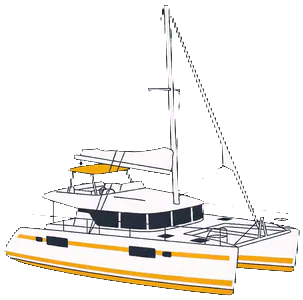
If you're thinking about chartering a catamaran in Croatia, you're already halfway to the right decision. Croatia's 1,244 islands, crystal-line anchorages, and mild Mediterranean waters were practically built for catamaran sailing. A catamaran doesn't just work here—it transforms how you experience the Adriatic. The shallow draft lets you slip into coves where monohulls can only dream. The stability means your family moves freely on deck without gripping rails. The space means you're not stacked on top of each other after a long day. This isn't marketing speak. This is what happens when boat design meets geography.
Start with the draft. Most cruising catamarans draw between 1.0 and 1.2 meters—shallow enough to anchor in the Pakleni Islands bays near Hvar, the Blue Lagoon at Drvenik, or the tighter passages through Kornati National Park. A monohull at 1.8 to 2.2 meters is excluding itself before you even leave the marina. You get more anchorages. You get quieter nights. You get flexibility when a sudden wind shift forces you to find shelter.
Stability matters just as much, especially if you're bringing families or older crew. Catamarans sit flat. No heeling. Children can walk the cabin sole without holding onto something. Cooking dinner doesn't feel like doing it on a moving staircase. The trampoline netting stretched between the hulls becomes the favorite spot on the boat—kids claim it for reading, napping, or just staring at the Adriatic.
Space is the third pillar. Twin hulls mean twin cabins at the bow—four separate sleeping quarters on a 38-footer. The galley sits exposed to the cockpit, so the cook isn't isolated below. The salon is wide, well-lit, and doesn't feel cramped after three weeks of cruising. If you're chartering with two couples or a multi-generation family, a catamaran distributes people across the boat in ways a monohull simply cannot.
Finally, there's the practical matter of how catamarans anchor. Two hulls mean two anchor points. In the light swell and variable winds of the Adriatic, that stability translates to a better night's sleep. You're not swinging in circles. You're not dragging in a backing wind. You anchor and you're done.
The Split-Hvar-Vis Triangle is the classic entry route. Split gives you the biggest catamaran fleet (Lagoon, Bali, and Fountaine Pajot dominate), a UNESCO-listed palace to explore on day one, and direct access to the island chain. Hvar is a working fishing town with decent wine bars and genuinely good dalmatian cooking—no menu for tourists. Vis is quieter, still holds Croatia's military history, and gives you the westernmost anchor on the common charter itinerary. Three nights here, you see the Adriatic in three different moods.
The Zadar-Kornati route is for skippers who've done Croatia once and want something less crowded. Zadar sits north, much less trafficked than Split. Kornati National Park is exactly what it sounds like—a protected archipelago of 89 islands and cays, most of them rocky outcrops with no permanent settlement. Your draft advantage becomes critical here. You can explore passages and anchor in bays that larger boats avoid. Bring good charts. The beauty is uncompromised.
Dubrovnik-South routes take you to Lopud, Sipan, and the Elafiti Islands—older, quieter settlements that feel separated from the coast tourism machine. If you push further, the Peljesac Peninsula and Korčula offer red wine, seafood, and the kind of coastline that photographs better than film can capture. This run appeals to people who've sailed extensively elsewhere and want something that doesn't feel manufactured.
Istria and Kvarner routes point north from the central Dalmatian islands toward Rovinj, Porec, and the Kvarner Gulf. Rovinj is the standout—an Austro-Hungarian fishing village compressed into a few narrow streets, with a catamaran-friendly marina and excellent provisioning. The sailing is gentler, the charter costs drop 20-30 percent, and you get fewer boats in your anchorages. Peak season July and August bring crowds everywhere, but Istria absorbs them less visibly.
The hull design is purpose-built for shallow water. Each hull carries ballast independently, and the wide beam creates stability without relying on deep draft. When a Mediterranean gust hits you at anchor, a catamaran sits planted. A monohull with similar ballast would heel or swing wider. Over two weeks, that translates to better sleep, easier movement on deck, and fewer white-knuckle moments if weather turns faster than forecast.
Cabin layout takes advantage of the twin-hull geometry. Forward cabins sit high and dry, separated from the saloon by actual distance rather than a closed door. The galley—on most modern catamarans—sits open to the helm, so cooking isn't exile. You're part of the day, not below decks. Bimini tops and canvas covers extend this living space to the cockpit. On a Split-based Lagoon 38, you're essentially living in the open air, with the option to duck below when weather demands it.
The trampoline netting between hulls is the feature families mention first. It's the trampoline. It catches sun spray. It's where the youngest crew member reads books. It's where afternoon conversations happen. On a working sailing day, it spreads fenders and loose gear. On an anchor day, it becomes deck furniture. Monohull sailors see it and think: nice addition. Families who've chartered cats think: why doesn't every boat have this?
The galley space on catamarans runs deeper than comparable monohulls. Modern Lagoon and Bali models include full-size refrigeration, three-burner stoves, and counter space for actual cooking. Charter companies understand that group dynamics improve dramatically when people eat well. A catamaran's width accommodates this without sacrificing performance sailing.
Draft advantages in Croatian waters deserve emphasis because they're not abstract. The Pakleni Islands, which everyone wants to visit near Hvar, feature narrow entrances and shallow anchorages. A 38-foot catamaran at 1.1 meters can negotiate these. A 38-foot cruiser at 1.9 meters cannot. That's not opinion. That's geography. You get the anchorage. They motor to a larger bay or motor back to Hvar for another crowded mooring. Over two weeks, this compounds. You see parts of the Adriatic that tour boats rarely reach.
A 38-foot catamaran in Split runs roughly 3,500 to 5,500 euros per week during peak season (July and August). A 45-footer costs 5,000 to 9,000 euros. These prices assume a bareboat charter—you handle the boat yourself with crew, or you hire a skipper separately. Crewed charters run 40-60 percent higher, depending on the skipper's background and the onboard chef situation.
Shoulder season (May-June and September-October) discounts 25-40 percent from peak rates. A 38-footer drops to roughly 2,200-3,300 euros. This is the sweet spot for most groups—cheaper than peak, warmer than winter, fewer boats competing for anchorages. Spring comes with slightly stronger northerly winds (Bora), which experienced skippers often prefer. Early autumn is windier and more temperamental, but the sea remains warm through October.
Deposits typically run 2,000-3,500 euros for peak season bareboat charters, refundable if the boat returns intact. Most companies ask for proof of skipper credentials (RYA or equivalent certifications). Security deposits against damage are separate—usually 1,500-3,000 euros held on your card, released after inspection. Fuel runs 200-400 euros for a week, depending on engine hours and distances. Provisioning costs depend on your appetite for restaurants, but budget 50-80 euros daily per person for groceries and casual meals ashore.
Additional costs: mooring fees in ACI marinas run 35-50 euros nightly for a 38-40 footer (the largest operators in Croatian waters). Advance bookings are essential May-September. Kornati National Park tickets are charged per boat, by length and season, and cost less when bought before you enter the park. Marina Trogir, often recommended for its catamaran-specific berths, charges similar rates but books faster. Provisioning in Trogir, Split, and Zadar is straightforward and cheaper than marinas—supermarkets understand charter crews.
Peak season runs July through August. Water temperatures peak near 26-27 degrees Celsius, winds are reliable (often Maestral, the thermal afternoon breeze), and the atmosphere carries the full Mediterranean summer. It's also peak crowded. Popular anchorages fill with 50-100 boats. Hvar gets impossible on weekends. If you want solitude, peak season isn't your time.
May, June, September, and October offer different advantages. May is warm, lightly crowded, and the Bora (strong northerly wind) is less predictable but shorter-lived. June sits pleasantly between spring variability and summer crowds. September maintains summer warmth but begins the wind pattern shift. October is windy, the sea is still warm, and charter companies price aggressively to keep fleets booked. Most experienced skippers prefer May-June for reliability.
Winter (November-March) drops rates to 50-70 percent below summer pricing, but the Adriatic becomes unpredictable. Bora gales are common. Days shorten. Most charter companies operate skeleton schedules. Unless you're an accomplished cold-weather sailor and genuinely prefer solitude, summer and shoulder season cover your needs.
The Split-area catamaran fleet is spread across several marinas, including Kaštela, Marina Baotić in Seget Donji near Trogir and the marinas in Split itself. ACI stands for Adriatic Croatia International Club—the largest marina group in the country, with marinas along the whole coast. ACI Marina Split is a major base for many international charter companies. The marina accommodates catamarans on reinforced, wider berths (standard ACI berths are 5.5m wide—many older harbors don't accommodate 4-5m beam). Water and fuel are available. Provisioning is minutes away. Customs for international crews is straightforward.
Marina Trogir, about 20 kilometres west of Split, offers smaller-scale operations with sometimes better catamaran accommodation and lower fees. It's less crowded, better provisioned for groups, and popular with repeat charterers who've learned to skip the main Split hub. Trogir itself is a stunning medieval town—honestly more interesting than Split's palace tourism.
Zadar marina serves northern routes and genuinely attracts fewer charter groups. If Kornati National Park and Dalmatia's quieter islands appeal more than Hvar's party scene, basing in Zadar shifts your entire charter. Costs drop 15-20 percent. Crowds drop 30-50 percent. The wind patterns are slightly different—Bora is more frequent, Maestral slightly weaker—but accomplished skippers see this as positive variability, not a negative.
Day one: Arrival at Marina ACI Split, charter briefing with the company (usually three hours), provisioning from Carrefour (500m from marina), departure late afternoon to nearby Trogir or Kaštel Gomilica. This gives your crew time to find the galley stove, check lines, and practice docking in a forgiving setting. Evening meal ashore—Trogir's old town has excellent seafood restaurants within walking distance.
Days two-three: Split-Hvar crossing (early departure to avoid thermal afternoon wind). Hvar's Pakleni Islands anchorages benefit from your catamaran's shallow draft. Anchor in Palmižana Bay or Staninska Bay—places with 1.5m depths where monohulls swing to moorings instead. Explore by dinghy. Evening meal ashore in Hvar Town (it's touristy but competent). Next day, local sailing and swimming, or push to Scedro Island for an overnight anchorage that feels distant despite being 15 kilometers away.
Days four-five: Hvar to Vis. This crossing benefits from the catamaran's speed—50+ kilometers in three-four hours of sailing. Vis is quieter than Hvar, with better wine and less aggressive tourism. Anchor in Vis Town harbor, or push to Komiža on the leeward side for shelter and outstanding local restaurants. Bismarck red wine from local vineyards costs 8-12 euros per bottle. Buy six.
Day six: Vis to Solta or small islands en route. Solta offers excellent anchorages with shallow depths perfect for your draft (Necujam Bay, Maslinica). The island is agricultural, genuinely local, and rarely crowded. Restaurants exist but serve locals first, tourists second—this means better food. One-night anchor, possible two if the crew votes for down time.
Day seven: Return to Split. Morning departure gives 5-6 hours of sailing back to the marina. Afternoon arrival leaves time for refueling, water, final provisioning, and a last dinner ashore. Marina Kaštela, north of Split, offers quieter alternatives if you want to extend one more night. Next morning, return to Marina ACI Split for check-out and handover.
This itinerary assumes moderate sailing experience and 10-12 knots of wind. It skips the busiest anchorages on weekends and keeps you moving enough to see variety without exhausting the crew. Flexibility is essential—if the Bora kicks up on day three, you stay in Hvar. If the crew votes to skip Vis and loop through smaller islands, do that. The catamaran's speed and draft give you options that strict schedules would deny.
The catamaran-Croatia pairing works because both are designed for exploration and comfort over speed and performance. Your shallow draft opens anchorages. Your stability opens crew comfort. Your space opens possibilities for groups and families. Two weeks on a 38-footer costs less than a similar land vacation, covers more geography, and creates memories with sharper detail than resorts produce.
Start by searching available catamarans on Boat4You—filter for Croatia and catamaran type to see what's available in your preferred season. Check the filtered search for Croatia catamarans to compare boats, dates, and pricing. If bareboat feels uncertain, Boat4You's team can guide you toward skippers and certifications. Read the how we work page to understand the process. Browse the FAQ for questions specific to chartering. If you want to understand how Boat4You sources boats and vets companies, the about page explains the model.
May through October is waiting. The islands are accessible. The wind is reliable. Your crew is ready. A catamaran in Croatia isn't a vacation add-on—it's a fundamentally different way to experience the Adriatic. Book it.
Start by browsing available boats on the search page, or check the FAQ for common questions. New to chartering? See how the booking works.
For peak season (July and August), reservations 4–6 months ahead secure the best fleet selection and pricing. Shoulder months (May, June, September) typically allow booking 6–8 weeks out.
Base pricing usually covers the vessel, insurance, and marina fees at the home base. Fuel, provisioning, skipper service, end-cleaning, and tourist tax are generally added separately. Check the specific listing on Boat4You for a full breakdown.
For bareboat charter, a valid skipper licence plus a VHF certificate are typically required, and rules vary by country. If you don't hold one, hiring a professional skipper is straightforward — skipper fees are shown on each boat's page.
Updated October 12, 2026
Cheapest month: March 2027. Most expensive month: July 2027.
| Month | Typical week | Middle half of weeks |
|---|---|---|
| Mar 2027 | 2,625 € | 1,857 € – 3,919 € |
| Apr 2027 | 2,651 € | 1,995 € – 3,957 € |
| May 2027 | 4,195 € | 3,082 € – 6,175 € |
| Jun 2027 | 6,840 € | 5,168 € – 9,747 € |
| Jul 2027 | 8,213 € | 6,406 € – 11,964 € |
| Aug 2027 | 7,914 € | 5,993 € – 11,470 € |
| Sep 2027 | 5,330 € | 4,089 € – 7,653 € |
| Oct 2027 | 2,988 € | 2,244 € – 4,241 € |
Yacht charter prices in Croatia, month by month →
Computed every night from the 7-night charter offers of the next 12 months for the boats based here. Prices are for the boat per charter week; skipper, extras and deposit are separate, and figures based on fewer than 5 boats or offers are left out. Amounts in euros (EUR).