Your search
Abaco Islands
28
boats available · live
500 € – 200,000 €
500 €200K €
1 – 42 guests
142
0 – 42 berths
042
14.76 – 56 m(48–184 ft)
14.76 m56 m
2000 – 2028
20002028
0 – 20 toilets
020
5 – 7,296 hp(4–5,436 kW)
5 hp7,296 hp
Prices shown are each boat's cheapest available 7-night week. Choose your dates for exact prices.
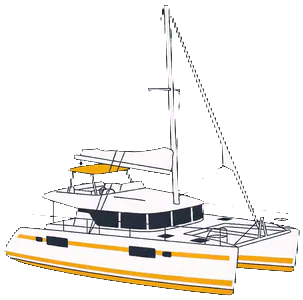
The Abaco Islands demand a shallow-draft vessel, and catamarans deliver exactly that advantage. Forty-eight catamarans operate across Marsh Harbour, each one positioned to exploit the unique advantage of Bahamian sailing: access to the barrier reef's inner lagoon, where water depths average 15–30 feet and anchorages offer pristine holding sand in turquoise shallows that monohulls cannot reach. A catamaran's 1.0–1.4 meter draft opens the entire Sea of Abaco—a protected realm where you can anchor in spots most sailing yachts must skip.
Beyond draft advantage, the catamaran's wide beam and dual-hull design deliver unbeatable comfort. Families, older sailors, and guests uncomfortable with monohull heel find catamarans remarkably stable—shallow heel angles and level living spaces mean children play safely on deck, and passage-making feels less like adventure and more like relaxation. Our partners' Abaco catamaran fleet combines modern navigation systems, reliable auxiliary power, and spacious layouts designed for Caribbean island-hopping.
The Sea of Abaco is defined by its shallowness—a blessing for protection from Atlantic swells, a challenge for deep-draft monohulls. Catamaran charters thrive in this environment. Shallow banks around Guana Cay, the intricate passages between Green Turtle and Man-O-War, and the countless cays dotting the sound—all accessible because a catamaran draws water like a traditional dinghy, not a full-size monohull.
The barrier reef system, which rings the Abaco islands, breaks Atlantic swell and creates calm anchorages inside the reef. Catamaran hulls maintain minimal heel even in the 15–20 knot trade winds typical of winter and spring. This combination makes Abaco catamaran sailing nearly foolproof: flat platform, calm anchorages, predictable weather, and the psychological comfort of knowing your vessel can escape rough water quickly via shallow passages.
Twin engines offer redundancy and maneuvering confidence in tight spaces. Abaco's narrow cuts (passages through the reef) and crowded anchorages at Hope Town and Treasure Cay demand responsive boat handling. Catamaran engines, fed by separate fuel systems and cooled independently, reduce mechanical anxiety on remote anchorages far from professional repair services.
The Classic Hope Town Circuit: Depart Marsh Harbour, sail south-southeast 12 nautical miles to Hope Town's iconic red-and-white striped lighthouse. Anchor in the protected harbor, explore the village, provision at local markets, and dine on grouper sandwiches at waterfront restaurants. Hope Town is the commercial heart of southern Abaco—perfect first stop for shakedown sailing and crew confidence building.
The Green Turtle Discovery Route: From Hope Town, sail northwest 25 nautical miles to Green Turtle Cay. Navigate the narrow cut into the harbor (marked clearly on GPS and charts), and anchor in a lagoon surrounded by 18th-century colonial buildings. Green Turtle is where conch salad transitions from tourist cliché to genuine Bahamian culinary art. The Jolly Roger tavern serves fresh-caught fish and island rum punches that fuel evening conversations with local fishermen. Stay 2–3 days: snorkel the north reef, explore the village on foot, and negotiate with local boat-builders restoring traditional wooden vessels.
The Northern Reach—Treasure Cay and Beyond: Sail northwest from Green Turtle, 15 nautical miles to Treasure Cay. The marina offers full services—fuel, water, provisioning—and the resort beaches are among the Bahamas' finest. Treasure Cay works as a day-stop or a multi-day anchorage. For experienced crews, continue north toward the Berry Islands or west toward the Bahama Banks' deeper blue waters.
The Guana Circuit: From any base, day-sail east to Guana Cay for snorkeling and beach exploration. Guana's outer reef offers dramatic coral gardens and schooling tropical fish. The cay's small bar serves cold drinks and fresh conch salad, reinforcing why catamaran sailors love the Abacos: maximum natural beauty, minimum bureaucratic friction.
A typical 40-foot monohull sailing yacht draws 1.8–2.2 meters; equivalent catamarans draw 1.0–1.3 meters. This 0.8–1.2 meter difference is profound. Monohull sailors must approach reef cuts at precise angles and depths; catamaran crews have flexibility. Monohull crews anchor only in marked, deep-water anchorages; catamaran crews anchor near beaches in 8–10 feet of crystalline water, dinghies unnecessary—swim ladder straight to white sand.
The psychological freedom is immense. No more chart-reading paralysis wondering if your draft allows safe passage. No "we can't go there" limitations. Abaco catamaran sailors enjoy a charter that opens—not closes—possibilities as the cruise progresses.
Fuel efficiency compounds the advantage. Catamaran displacement is lower than monohull equivalents; auxiliary engines consume 8–12 gallons per hour combined at cruise speed (6–8 knots), and the tank range is typically 300+ nautical miles. Most Abaco cruises occur within the protected reef system and rarely require extended motor passages, making fuel a non-issue for week-long charters.
Unlike racing monohulls, charter catamarans heel gently—most heel angles stay under 20 degrees even in solid 20-knot winds. Children play safely on wide, flat decks. Older crew members move around the boat without clinging to life lines. Seasickness is minimal. Galley, saloon, and cabin spaces are expansive—not cramped like monohull equivalents. Overnight passages (rare in Abaco, but possible to northern Bahama Banks) feel like sleeping in a hotel, not wrestling with motion.
For crew rotation and crew comfort, catamarans dominate. One partner drives while the other rests belowdecks. Sailing watches rotate without stress or physical exhaustion. Families appreciate the separation of living and sleeping spaces—no worrying about younger children underfoot while piloting through a reef cut.
Winter trade winds (December–April) are steady 12–20 knots from the northeast. Catamaran stability absorbs these winds without fuss; crews enjoy comfortable, predictable sailing day after day. Spring (March–May) winds ease slightly but remain reliable. Summer (June–August) brings lighter, more variable winds and occasional calm days—precisely when catamaran auxiliary engines shine, transforming windless spells into productive motoring passages between islands.
Hurricane season (June–November) means monitoring weather, but the Abacos sit south of the typical belt. Still, most charters operate May through April to capture optimal conditions. Boat4You provides detailed pre-departure weather briefings and routing advice; real-time satellite imagery and forecast updates keep you informed throughout your charter.
Marsh Harbour is a fully functional Bahamian town. Fuel docks at Boat Harbour Marina and Conch Inn Marina operate daily. Grocery stores and fish markets provide fresh provisions. Water fill-ups take minutes. Wi-Fi connectivity at marinas supports communication and route planning. For crews interested in extended cruises (10–14 days), provisioning between Hope Town and Treasure Cay is straightforward—no resupply anxiety, only relaxation and exploration.
Mechanical support is accessible. Both charter bases maintain technicians, fuel systems specialists, and electrical engineers. Engine issues are rare, but Boat4You's partnership with local operators ensures rapid diagnosis and repair if needed. Life aboard a catamaran means confidence—help is minutes away by radio, not days of sailing to the nearest service port.
Days 1–2: Marsh Harbour to Hope Town — Arrive, provision, depart mid-morning. Sail 12 nm south to Hope Town. Overnight Hope Town Harbour. Next morning, swim from the boat, hike to the lighthouse, dine ashore.
Day 3: Hope Town to Elbow Cay — Day sail along Elbow Cay's eastern shore. Snorkel the outer reef in afternoon. Anchor at isolated beach. Sunset beach barbecue using your catamaran's galley.
Days 4–5: Hope Town to Green Turtle Cay — Motor-sail northwest 25 nm. Navigate the narrow cut into Green Turtle's harbor. Spend 2 days exploring the cay, eating conch salad, enjoying Jolly Roger tavern culture.
Day 6: Green Turtle to Guana Cay — Sail east 12 nm. Snorkel the north reef all afternoon. Swim with nurse sharks in shallow water (supervised). Anchor in the cove.
Day 7: Guana to Treasure Cay — Motor-sail 15 nm northwest. Fuel and water up. Relax at the resort beach. Optional: hire water sports (jet skis, parasailing) from the resort.
Days 8–9: Treasure Cay Circuit — Day sails to nearby cays. Snorkel the Baker's Bay reef. Anchor off Manjack Cay. Return to Treasure Cay for dinner and overnight.
Day 10: Return to Marsh Harbour — Motor-sail 40 nm south to Marsh Harbour. Complete check-out, engine wash-down, handover to the charter base team.
No—catamarans are easier. Flat hulls mean no heeling, simpler sail trimming, and forgiving steering. Crews spend less time managing the boat and more time enjoying the islands. Monohull experience helps, but catamaran-specific instruction from Boat4You takes 30 minutes.
A 40-foot catamaran typically offers 30% more cabin and galley space than a 40-foot monohull. Double berths fit standard Bahamian queen-size mattresses. Saloons are spacious. Multiple heads (bathrooms) reduce crew conflicts. Families of 6–8 live comfortably for weeks.
Yes. The cuts are marked with buoys and GPS waypoints. A 40-foot catamaran drawing 1.0–1.2 meters navigates cuts 12–15 feet deep without hesitation. Even 50-foot catamarans drawing 1.3–1.4 meters clear the cuts safely with standard passage planning.
Fuel is typically $5.50–$6.50 per gallon in the Bahamas. A catamaran consumes 8–12 gallons per hour combined at cruise speed. Most week-long charters average 40–60 hours under power, consuming 320–720 gallons, or $1,760–$4,680. Fuel is sometimes included in charter quotes; verify with us during booking.
Absolutely. Minimal heel and wide decks make catamarans safer and more comfortable for young and older crew. Grab rails, non-slip surfaces, and generous cabin headroom support ease of movement throughout the vessel. Many crews include very young children and grandparents—catamarans accommodate all ages comfortably.
Abaco catamarans deliver the Caribbean sailing experience most crews dream about: shallow, protected anchorages; island-hopping itineraries; stunning natural beauty; and logistical simplicity. Boat4You manages every detail: vessel selection, pre-departure provisioning lists, weather briefings, and 24/7 support during your cruise.
Browse available catamaran listings at Boat4You's Bahamas catamaran search. Compare vessel layouts, pricing by season, and owner reviews. Learn how we work with charter crews and about the Boat4You team. Have questions? Explore our comprehensive FAQ for booking, insurance, and sailing advice.
Start by browsing available boats on the search page, or check the FAQ for common questions. New to chartering? See how the booking works.
Updated October 16, 2026
Cheapest month: July 2027. Most expensive month: March 2027.
| Month | Typical week | Middle half of weeks |
|---|---|---|
| Nov 2026 | 7,311 € | 6,295 € – 9,483 € |
| Dec 2026 | 8,180 € | 7,211 € – 12,219 € |
| Jan 2027 | 8,688 € | 7,586 € – 10,748 € |
| Feb 2027 | 8,814 € | 7,776 € – 10,546 € |
| Mar 2027 | 9,859 € | 8,699 € – 11,947 € |
| Apr 2027 | 8,699 € | 7,561 € – 9,859 € |
| May 2027 | 7,256 € | 7,035 € – 8,730 € |
| Jun 2027 | 7,205 € | 5,980 € – 8,056 € |
| Jul 2027 | 6,966 € | 4,683 € – 7,438 € |
| Oct 2027 | 7,205 € | 5,198 € – 7,544 € |
Computed every night from the 7-night charter offers of the next 12 months for the boats based here. Prices are for the boat per charter week; skipper, extras and deposit are separate, and figures based on fewer than 5 boats or offers are left out. Amounts in euros (EUR).